
CBN for Sleep: The Cannabinoid That Might Replace Your Sleep Aid
Written by Smart Supplements Editorial Team
Key takeaways
- CBN is a weak CB1 receptor agonist with mild sedative properties — formed when THC degrades over time
- Survey data shows 79% of CBN users report improved sleep, but no gold-standard RCT exists yet
- CBN + CBD together may be more effective than either alone via the entourage effect
- Start with 5 mg CBN + 5 mg CBD taken 60 minutes before bed; most users find 10–25 mg effective
- CBN is best for relaxation and sleep maintenance — use melatonin instead for circadian timing issues
- Well-tolerated safety profile similar to CBD, but consult a doctor if taking sedative medications
Table of contents
- Why People Are Excited About CBN for Sleep
- The Science of CBN and Sleep
- CBN vs Melatonin for Sleep
- CBN vs CBD for Sleep
- Dosage Protocol for Sleep
- How Long Does CBN Take to Work?
- Who Is CBN Best For?
- Safety and Drug Interactions
- Product Comparison: CBN Options
- Our Top CBN Recommendations
- Frequently Asked Questions
- The Bottom Line
CBN has become the sleep supplement everyone in the cannabis wellness space is talking about — but is the hype justified by the research? The honest answer: the evidence is early and mostly anecdotal, but the mechanism is plausible, user reports are consistently positive, and CBN combined with CBD may offer something that neither compound delivers alone.
Why People Are Excited About CBN for Sleep
The story of CBN and sleep began in the cannabis community, where users noticed that older, improperly stored cannabis seemed to produce more sedative effects. Since CBN is formed when THC oxidises (exposure to heat, light, and oxygen), aged cannabis contains higher CBN levels — leading to the hypothesis that CBN was the "sleepy cannabinoid."
This observation — while scientifically imprecise — triggered real interest. The supplement industry took notice, and CBN-specific products began appearing around 2020-2021. Today, CBN is the fastest-growing cannabinoid in the European sleep supplement market.
But let's separate fact from marketing. The aged cannabis = sleepy equation probably isn't solely due to CBN. Aged cannabis also has different terpene profiles (more sedating terpenes like myrcene may develop), and the original studies on cannabis sedation used whole-plant preparations, not isolated CBN. Still, CBN does appear to have independent sedative properties worth exploring.
If you're new to cannabinoids in general, our What Is CBN? guide covers the basics. For a broader comparison with CBD, see CBD vs CBN.
The Science of CBN and Sleep
How CBN Interacts with the Body
CBN acts as a weak partial agonist at the CB1 receptor — the same receptor that THC activates to produce its psychoactive effects. However, CBN's binding affinity is roughly 10x weaker than THC's, which is why it produces mild relaxation and sedation without significant intoxication at supplement doses.
CBN also interacts with:
- CB2 receptors — involved in immune modulation and anti-inflammatory effects
- TRPV2 channels — involved in pain perception and body temperature regulation
- 5-HT receptors — serotonin receptors involved in mood and sleep
The Key Research
Karniol et al. (1975) conducted one of the earliest studies on CBN and sleep. They found that CBN enhanced the sedative effects of THC in human subjects. Importantly, CBN alone did not produce significant sedation in this study — it was the combination that mattered. This is an early hint at the entourage effect.
Corroon (2021, Cannabis and Cannabinoid Research — https://pubmed.ncbi.nlm.nih.gov/34468163/) surveyed CBN users and found that 79% reported improved sleep as a primary benefit. While survey data can't establish causation, the consistency of sleep-related reporting across a large sample is notable.
Russo (2011, British Journal of Pharmacology — https://pubmed.ncbi.nlm.nih.gov/21749363/) proposed the entourage effect theory — that cannabinoids work better together than in isolation. This is particularly relevant for CBN, which may be most effective when combined with CBD and specific terpenes.
What We Don't Know Yet
Let's be honest about the gaps:
- No placebo-controlled RCT has tested isolated CBN for sleep outcomes
- Most positive reports are anecdotal or from survey data
- The aged cannabis = sleepy hypothesis may be confounded by terpene changes
- Dose-response data is limited — optimal CBN dosing is based on user reports, not clinical trials
- Several clinical trials are currently underway (as of 2026), which should provide better data within 1–2 years
CBN vs Melatonin for Sleep
These two compounds work through completely different mechanisms, making them potentially complementary rather than competitive.
| Feature | CBN | Melatonin |
|---|---|---|
| Mechanism | Weak CB1 agonism → mild CNS sedation | Circadian rhythm signalling (MT1/MT2 receptors) |
| Primary effect | Relaxation, sedation | "Sleep gate" timing signal |
| Onset | 20–45 min (sublingual) | 30–60 min |
| Best for | Sleep maintenance, relaxation | Jet lag, circadian misalignment, falling asleep |
| Evidence quality | Preliminary (surveys, anecdotal) | Strong (meta-analyses, RCTs) |
| Hormonal? | No | Yes (exogenous hormone) |
| Cost per dose | €1.50–3.00 | €0.10–0.30 |
If your issue is circadian timing (you can't fall asleep at the right time), melatonin is the better choice. If your issue is not feeling relaxed enough to sleep, or waking during the night, CBN may be more appropriate.
Some users combine both: CBN for relaxation and melatonin for circadian signalling. For more on this comparison, see our detailed CBD vs Melatonin for Sleep guide.
CBN vs CBD for Sleep
If you already use CBD for sleep, you might wonder whether CBN offers anything additional.
| Feature | CBN | CBD |
|---|---|---|
| Primary sleep mechanism | Direct mild sedation (CB1) | Indirect — anxiety/cortisol reduction |
| Psychoactivity | Very mild (weak CB1 agonist) | None (CB1 antagonist) |
| Best for | Sleep maintenance, physical relaxation | Anxiety-driven insomnia, stress reduction |
| Onset (sublingual) | 20–45 min | 30–90 min |
| Duration | 5–8 hours | 4–6 hours |
| Research for sleep | Preliminary | Growing (more studies than CBN) |
The key insight is that CBD and CBN target different pathways. CBD primarily reduces the anxiety and elevated cortisol that prevent sleep, while CBN provides a more direct sedative nudge. Together, they address both the mental and physical dimensions of poor sleep.
This is why the most interesting CBN products combine both cannabinoids. For the science behind why combinations work, see our guide on the entourage effect.

5% CBN & 2.5% CBD Oil
Cibdol's CBN & CBD combination oil — 5% CBN (cannabinol) paired with 2.5% CBD. CBN is the cannabinoid most associated with sedation and sleep support, making this oil a strong choice for evening use and sleep quality improvement. Swiss-produced, third-party tested.
- • 5% CBN + 2.5% CBD — cannabinoid combination for sleep
- • CBN is the cannabinoid most associated with sedation and rest
- • Ideal for evening use and sleep quality support
Disclosure: We may earn a commission if you purchase via these links.
Dosage Protocol for Sleep
Since there are no clinical dose-finding studies for CBN, these recommendations are based on user reports, product manufacturer guidance, and extrapolation from CBN's known pharmacology.
Starting Protocol
| Week | CBN Dose | CBD Dose | Timing |
|---|---|---|---|
| Week 1 | 5 mg | 5 mg | 60 min before bed |
| Week 2 | 10 mg | 10 mg | 60 min before bed |
| Week 3 | 15 mg | 10–15 mg | 60 min before bed |
| Week 4+ | 10–25 mg (find your sweet spot) | 10–25 mg | 60 min before bed |
Dosing Tips
- Start low: CBN affects people differently. Some feel significant effects at 5 mg; others need 20–25 mg.
- Sublingual is king: Hold oil under the tongue for 60 seconds before swallowing. This bypasses first-pass liver metabolism and improves bioavailability.
- Consistency matters: Give CBN 2–3 weeks of consistent use to assess your true baseline response. One night isn't enough.
- Don't chase the dose: If 15 mg isn't working after 3 weeks, the issue may not be something CBN can address. Consider adding other compounds or reviewing your sleep hygiene.
For comprehensive dosing guidance for all cannabinoids, see our CBD dosage guide — the principles apply to CBN as well.
How Long Does CBN Take to Work?
| Delivery Method | Onset | Peak Effect | Duration |
|---|---|---|---|
| Sublingual oil | 20–45 min | 1–2 hours | 5–8 hours |
| Capsules | 45–90 min | 2–3 hours | 6–8 hours |
| Edibles/gummies | 60–120 min | 2–4 hours | 6–10 hours |
Sublingual oils are the preferred format for sleep because the onset is fast enough to take before bed and the duration covers most of the night. Capsules work well if you prefer convenience and don't mind the slightly longer onset.
CBN Oil 5% + CBD 2.5%
Zamnesia CBN Oil — hemp-derived cannabinoid oil combining 5% CBN (cannabinol) with 2.5% CBD in an olive oil carrier. Leverages the entourage effect with complementary terpenes and flavonoids. Non-intoxicating formula from European organic hemp. 10ml bottle with built-in dropper. Take 3–4 drops sublingually up to three times daily.
- • 5% CBN + 2.5% CBD — cannabinoid combination for relaxation and rest
- • Non-intoxicating entourage effect formula
- • European organic hemp, industry-leading extraction
Disclosure: We may earn a commission if you purchase via these links.
Who Is CBN Best For?
Ideal Candidates
- People who find CBD alone insufficient — if CBD reduces your anxiety but you still can't physically relax into sleep, CBN adds the sedative component
- Those who want to avoid melatonin — melatonin is a hormone, and some people prefer not to supplement exogenous hormones. CBN provides relaxation without hormonal intervention
- Sleep maintenance issues — if you fall asleep fine but wake at 2–3 AM, CBN's longer duration and sedative properties may help
- Occasional use — CBN can be effective on an as-needed basis (before stressful days, travel, etc.) without requiring daily buildup
- Those interested in the entourage effect — CBN+CBD combinations leverage synergistic cannabinoid interactions
Less Ideal For
- Circadian rhythm issues — jet lag and shift work are better addressed by melatonin
- Those wanting strong clinical evidence — if you need RCT-level proof before trying a supplement, CBN isn't there yet
- Budget-conscious users — CBN products are more expensive than melatonin, magnesium, or valerian
- People on sedative medications — potential additive CNS depression
Safety and Drug Interactions
CBN is generally well-tolerated with a safety profile similar to CBD. However:
Known Considerations
- Additive sedation with other CNS depressants (alcohol, benzodiazepines, antihistamines, opioids)
- CYP450 interactions — like CBD, CBN is metabolised by cytochrome P450 enzymes. It may interact with medications processed by CYP3A4 and CYP2C19
- Mild psychoactivity — at high doses, some users report very mild psychoactive effects (less than 1/10th of THC). At normal supplement doses (5–25 mg), this is unlikely
- Drug testing — while CBN itself shouldn't trigger a standard THC test, some CBN products may contain trace THC. If drug testing is a concern, verify the product's certificate of analysis (COA). For context, see our guide on CBD and drug tests
Who Should Consult a Doctor First
- Anyone taking prescription sedatives, anti-anxiety medications, or sleep aids
- People on blood thinners (warfarin) — cannabinoids may affect metabolism
- Those with liver disease — impaired cannabinoid metabolism
- Pregnant or breastfeeding individuals
Product Comparison: CBN Options
For those ready to try CBN, here's how our partner products compare:
| Product | CBN Content | CBD Content | Format | Price | Best For |
|---|---|---|---|---|---|
| Cibdol 5% CBN + 2.5% CBD Oil | 500 mg CBN / 10 ml | 250 mg CBD / 10 ml | Sublingual oil | €44.95 | Dedicated CBN users, precise dosing |
| Zamnesia CBN Oil 5% + 2.5% CBD | 500 mg CBN / 10 ml | 250 mg CBD / 10 ml | Sublingual oil | €40.49 | Budget CBN oil, same concentrations |
| Zamnesia Solid Sleep | 12.5 mg CBN per capsule | 12.5 mg CBD per capsule | Capsule | €29.96 (30 caps) | Multi-compound approach, convenience |
The Cibdol and Zamnesia CBN oils are very similar in formulation (5% CBN + 2.5% CBD). The Solid Sleep capsules add hops and 5-HTP for a broader multi-pathway approach.
Solid Sleep
Zamnesia Solid Sleep — a multi-compound sleep capsule combining CBD (12.5mg), CBN (12.5mg), hops (50mg), and Griffonia simplicifolia (167mg, 30% 5-HTP) per capsule. Designed for deep, uninterrupted sleep with effects in approximately 20 minutes. 30 plant-based HPMC capsules per bottle.
- • CBD + CBN + hops + 5-HTP — four-compound sleep formula
- • Promotes deep, uninterrupted sleep
- • Fast-acting — effects in approximately 20 minutes
Disclosure: We may earn a commission if you purchase via these links.
Our Top CBN Recommendations
For dedicated CBN supplementation, the Cibdol 5% CBN + 2.5% CBD Oil offers premium quality with precise sublingual dosing — ideal for those who want to titrate their dose carefully.
For a budget-friendly CBN oil at similar concentrations, the Zamnesia CBN Oil provides the same 5% CBN + 2.5% CBD combination at a lower price point.
For a multi-compound approach, the Zamnesia Solid Sleep capsules combine CBN with CBD, hops, and 5-HTP — targeting GABA, cannabinoid, and serotonin pathways in one capsule.
Affiliate disclosure: Smart Supplements earns a commission on purchases made through partner links. This doesn't affect our editorial content or recommendations.
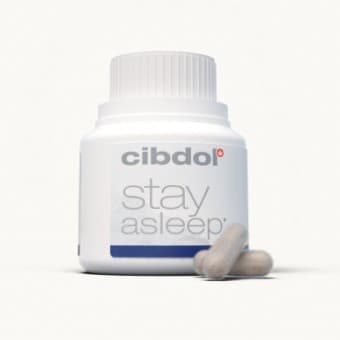
Stay Asleep Capsules
CBD, CBN, hops, 5-HTP for deeper, uninterrupted sleep.
- • CBD + CBN + 5-HTP
- • 60 capsules
- • For light sleepers
Disclosure: We may earn a commission if you purchase via these links.
Frequently Asked Questions
Does CBN actually help you sleep?
Survey data suggests yes — 79% of CBN users report improved sleep (Corroon, 2021). The mechanism is plausible (weak CB1 agonism produces mild sedation), and user reports are consistently positive. However, there's no gold-standard placebo-controlled RCT for CBN-only sleep outcomes yet. The evidence is best described as "promising but preliminary." If you try CBN, give it 2–3 weeks of consistent use to assess your response.
How much CBN should I take for sleep?
Start with 5 mg CBN (ideally combined with 5 mg CBD) taken 60 minutes before bed. Increase by 5 mg per week until you find your effective dose. Most users report optimal effects between 10–25 mg CBN per night. Sublingual oil allows the most precise dosing — each drop of a 5% CBN oil contains approximately 2.5 mg CBN.
Is CBN better than melatonin for sleep?
They serve different purposes. Melatonin is a circadian rhythm signal — best for jet lag, shift work, and sleep timing issues. CBN is a mild sedative — best for relaxation and sleep maintenance. For many people, the answer isn't either/or but both: CBN for physical relaxation plus low-dose melatonin for circadian timing. See our sleep supplement stack guide for specific combination protocols.
Will CBN make me feel high?
At supplement doses (5–25 mg), CBN produces no significant psychoactive effects. While CBN is technically mildly psychoactive (it's a weak CB1 agonist), its potency is roughly 10% of THC's. You may feel relaxed and drowsy, but you shouldn't feel "high" or cognitively impaired. If you do feel psychoactive effects, reduce your dose.
Is CBN legal in Europe?
CBN occupies a similar legal grey area to CBD in most European countries. Since it's derived from hemp and is non-intoxicating at supplement doses, it's generally available as a supplement. In the Netherlands, CBN products are widely sold. However, regulations vary by country and are evolving — always verify local laws. For broader context on cannabinoid legality, see our guide on CBD legal status in Europe.
Can I take CBN every night?
Current evidence suggests CBN is safe for regular use, though long-term studies are limited. Unlike THC, CBN does not appear to cause significant tolerance at supplement doses. However, given the limited long-term data, some users prefer to use CBN 4–5 nights per week rather than nightly, or cycle 3 weeks on / 1 week off. Listen to your body and consult a healthcare professional if you plan extended daily use.
The Bottom Line
CBN is one of the most interesting emerging sleep supplements — but it's important to approach it with realistic expectations. The science is promising but early. The user reports are consistently positive. And the combination of CBN + CBD leverages the entourage effect in a way that may deliver more than either compound alone.
If you've tried CBD for sleep and found it helpful but not quite enough, adding CBN to the equation is a logical next step. If you're starting from scratch, CBN + CBD is a strong combination for relaxation-driven sleep support, while melatonin and magnesium remain the best-evidenced options for circadian and foundational support respectively.
For the complete picture on building a comprehensive sleep routine, check our sleep supplement stack guide and our best natural sleep supplements overview.
This article is for informational purposes only and is not intended as medical advice. Always consult a healthcare professional before starting any new supplement, especially if you take prescription medication.
Last updated: March 2026
Written by the Smart Supplements editorial team
Related topics
Where to buy
Affiliate linksMADMONQ ZEN PLUS
Advanced evening drink for sleep and stress recovery — without melatonin or sedatives. Six natural ingredients: Cyracos® (600mg lemon balm extract), Saffron, Magnesium (170mg elemental), Chamomile, L-Theanine, and Myo-Inositol. Dissolve in hot water 30–60 minutes before bed. Zero morning fog, no habit-forming ingredients. 28 sachets per pack.
- • Cyracos® lemon balm — clinically studied for sleep quality
- • No melatonin — zero morning grogginess or dependency
- • Saffron + Chamomile for natural relaxation
Super Sleep
Zamnesia Super Sleep — a fast-acting liposomal sleep formula combining golden-grade CBD (75mg total), melatonin, and liposomal delivery for enhanced absorption. All-natural ingredients from European organic hemp with no detectable THC. 30ml dropper bottle, take before bed.
- • Fast-acting liposomal formula for enhanced CBD absorption
- • Golden-grade CBD + melatonin — dual-action sleep support
- • All-natural ingredients, no detectable THC
Solid Sleep
Zamnesia Solid Sleep — a multi-compound sleep capsule combining CBD (12.5mg), CBN (12.5mg), hops (50mg), and Griffonia simplicifolia (167mg, 30% 5-HTP) per capsule. Designed for deep, uninterrupted sleep with effects in approximately 20 minutes. 30 plant-based HPMC capsules per bottle.
- • CBD + CBN + hops + 5-HTP — four-compound sleep formula
- • Promotes deep, uninterrupted sleep
- • Fast-acting — effects in approximately 20 minutes
Dream Gummies Cherry
Zamnesia Dream Gummies Cherry — vegan sleep gummies combining valerian root extract (25mg, 10:1), passionflower extract (20mg, 10:1), and melatonin (0.29mg) per gummy. Delicious cherry flavour with natural colouring. 60 gummies per tub. Take one gummy 45 minutes before bed.
- • Valerian + passionflower + melatonin — herbal sleep gummies
- • Vegan-friendly pectin-based formula, no gelatine
- • Delicious cherry flavour with natural colouring
Disclosure: We may earn a commission if you purchase via these links.
Related articles
Building a Sleep Supplement Stack: What to Combine (and What Not To)
Most sleep supplements work better together than alone — but only if you combine them correctly. Here are specific stacks for anxiety-driven insomnia, earl
Best CBD Oil for Sleep: Europe's Top Picks for 2026
Discover the best CBD oils for sleep available in Europe. We compare full-spectrum, broad-spectrum, and isolate options with dosage guides, clinical eviden
Passionflower for Sleep: Benefits, Dosage, and Research
Learn how passionflower improves sleep through GABA-A receptor modulation. Clinically shown to match benzodiazepines for anxiety, get dosage guides for tea