
The Entourage Effect Explained: Why Full-Spectrum CBD Works Better
Written by Smart Supplements Editorial Team
Key takeaways
- The entourage effect is the theory that all cannabis plant compounds — cannabinoids, terpenes, flavonoids — work better together than CBD alone.
- Gallily et al. 2015 found CBD isolate showed a bell-curve dose-response, while full-spectrum extract showed a linear response — more effective at higher doses.
- Terpenes like beta-caryophyllene are CB2 receptor agonists — they are pharmacologically active, not just flavour compounds.
- More THC does not mean a better entourage effect — trace amounts below 0.2% appear sufficient for synergy.
- Check any CBD product's COA for minor cannabinoids (CBG, CBN, CBDA) and terpene profiles — these confirm whether the entourage effect is preserved.
Table of contents
- What Is the Entourage Effect?
- The Key Players in Full-Spectrum CBD
- What Does the Research Actually Show?
- Full-Spectrum vs Broad-Spectrum vs Isolate — Practical Implications
- Does the Entourage Effect Mean You Need More THC?
- How Extraction Method Affects the Entourage Effect
- How to Check If Your CBD Oil Preserves the Entourage Effect
- Frequently Asked Questions
- The Bottom Line
What Is the Entourage Effect?
The term "entourage effect" was coined in 1998 by Israeli pharmacologists Raphael Mechoulam and Shimon Ben-Shabat. Mechoulam — often called the "father of cannabis research" for his role in identifying THC and CBD — proposed that the full range of compounds found in the cannabis plant produces a greater therapeutic effect together than any single compound in isolation.
The idea is intuitive once you frame it the right way. Think of a symphony orchestra: a violin soloist can be technically brilliant, but a full orchestra produces something the soloist simply cannot. CBD is the violin. The entourage is everyone else — the other cannabinoids, the terpenes, the flavonoids — all playing simultaneously.
In pharmacological terms, the entourage effect describes synergistic interactions between plant compounds. Some compounds may amplify the primary compound's effects. Others may reduce unwanted side effects. Others still may act on entirely separate biological pathways, broadening the overall therapeutic profile.
The Key Players in Full-Spectrum CBD
Understanding the entourage effect requires knowing who's in the orchestra. Full-spectrum CBD oil contains a broad cast of compounds, each with its own pharmacological properties.
Cannabinoids
CBD (cannabidiol) is the primary compound and the one most extensively researched. It interacts with the endocannabinoid system indirectly and has a wide range of studied effects including anxiolytic, anti-inflammatory, and neuroprotective properties.
CBG (cannabigerol) is often called the "mother cannabinoid" because other cannabinoids are biosynthetically derived from its acidic precursor. Research suggests CBG has anti-inflammatory and neuroprotective potential, and may have antibacterial properties.
CBN (cannabinol) is a mildly psychoactive cannabinoid formed when THC oxidises over time. It is typically found in very small amounts and is associated with sedative effects — making it relevant for sleep-focused formulations.
CBDA (cannabidiolic acid) is the raw, unheated precursor to CBD. Research is at an early stage, but there is emerging evidence around anti-nausea effects, and some researchers have suggested CBDA may bind more strongly to certain receptors than CBD itself.
Trace THC (<0.2%) sits within the EU legal threshold and is not psychoactive at these concentrations. However, it may contribute to therapeutic synergy — a point explored in more detail below.
Terpenes
Terpenes are the aromatic compounds found across the plant kingdom — they give lavender its scent, citrus its tang, and cannabis its distinctive smell. In full-spectrum CBD oil, they are far more than flavour agents.
Myrcene is the most abundant terpene in most cannabis strains. It has demonstrated sedating and anti-inflammatory properties in preclinical research.
Linalool is also found in lavender and has been studied for anxiolytic effects. It may enhance the calming properties of CBD.
Limonene has mood-lifting associations and has been investigated for antidepressant-adjacent effects in animal models.
Beta-caryophyllene is pharmacologically unique among terpenes: it is a direct agonist at CB2 cannabinoid receptors. This means it doesn't just provide flavour — it is pharmacologically active within the same receptor system CBD targets. This is perhaps the strongest single piece of evidence that terpenes are genuine contributors to cannabis therapeutics, not incidental passengers.
Flavonoids
Flavonoids are polyphenolic compounds found in plants and are best known for their antioxidant properties. Cannabis contains unique flavonoids called cannflavins A and B. In vitro research has shown cannflavins A and B to have anti-inflammatory properties reportedly more potent than aspirin at equivalent concentrations — though it's important to note this is laboratory evidence only, not clinical data.
What Does the Research Actually Show?
The entourage effect is frequently cited in CBD marketing. But what does the science actually say? The honest answer is: the evidence is mechanistically compelling, solid in preclinical settings, and still emerging in human clinical trials.
The Gallily et al. 2015 Study
The most-cited piece of evidence for the entourage effect comes from a 2015 study by Ruth Gallily, Zhannah Yekhtin, and Lumír Hanuš at the Hebrew University of Jerusalem. Their findings were striking.
CBD isolate administered to mice showed a classic bell-curve dose-response: therapeutic effects increased up to a certain dose, then declined at higher doses. This is a known limitation of CBD isolate — you can actually overshoot the optimal dose and see diminishing returns.
Full-spectrum cannabis extract showed a linear dose-response. The effects continued to scale with dose. Practically, this means full-spectrum extracts are more therapeutically predictable and potentially more effective at higher doses than isolate.
This study is the empirical backbone of most entourage effect claims, and it holds up to scrutiny. Its limitation is that it was conducted in mice using a specific inflammatory model — it cannot be directly extrapolated to all human applications.
McPartland and Russo 2001
A foundational review by John McPartland and Ethan Russo examined cannabis terpene pharmacology and made the case for synergistic mechanisms between terpenes and cannabinoids. Russo in particular has continued to be one of the most prominent advocates of the entourage effect as a scientifically serious framework.
Honest Assessment
- Mechanistically plausible: The pharmacological rationale is solid. Multiple compounds acting on overlapping receptor systems should, in principle, produce synergistic effects.
- Preclinical evidence is strong: Animal and in vitro studies consistently support synergistic interactions.
- Human RCTs are limited: There are very few randomised controlled trials specifically designed to compare full-spectrum versus isolate in human subjects. This is the honest gap in the evidence base.
- Emerging clinical support: A 2019 observational study of medical cannabis patients found full-spectrum preparations required lower doses for equivalent effects compared to isolate — consistent with the entourage hypothesis.
The absence of large-scale human RCTs does not mean the entourage effect doesn't exist. It means the clinical evidence is catching up to the pharmacological theory, as often happens in cannabis research given historical regulatory barriers.
Full-Spectrum vs Broad-Spectrum vs Isolate — Practical Implications
Understanding the three CBD product categories is essential for making an informed purchase.
Full-spectrum CBD contains all compounds present in the hemp plant, including trace amounts of THC (within the EU legal limit of <0.2%). This provides the maximum entourage effect. The only meaningful risk: trace THC could theoretically show on an extremely sensitive drug test, though this is uncommon at standard CBD doses.
Broad-spectrum CBD has the THC removed while retaining other cannabinoids and terpenes. It sits in the middle ground — a reduced entourage effect compared to full-spectrum, but substantially better than isolate. A good option for people who need to be completely certain there is no THC in their product.
CBD isolate is pure CBD — nothing else. It is the most predictable product with no risk from other compounds. The downside is the bell-curve dose-response problem identified in the Gallily study: at higher doses, effects may plateau or decline.
When to choose each:
- Job that drug tests → broad-spectrum or isolate
- Maximum therapeutic effect → full-spectrum
- First-time user → any type works; start low and increase gradually (see our CBD dosage guide)
- Sensitive to any THC → broad-spectrum
- Purely predictable dosing → isolate
For users who want the broadest possible effect profile without THC, Cibdol's 2.0 formula is specifically engineered to address this: it removes detectable THC while retaining CBG, CBN, CBDA, and a full terpene profile. This means it functions as a high-quality broad-spectrum product that preserves entourage potential without the THC risk.
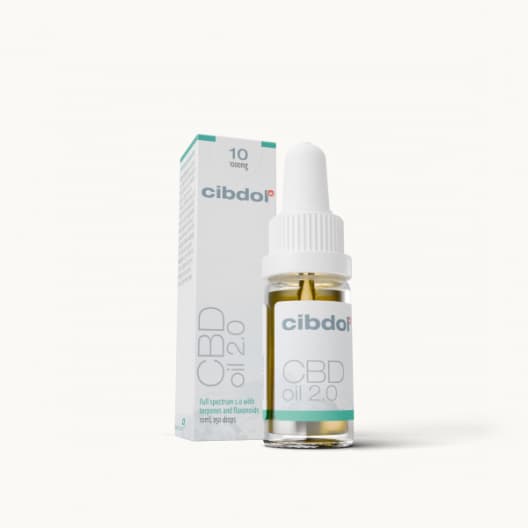

CBD Oil 2.0 10% (1000mg)
The most popular strength — 1000mg full-spectrum CBD oil for balanced, noticeable daily support without going too strong too fast.
- • 1000mg CBD per 10ml bottle
- • Full-spectrum entourage formula
- • Hemp seed oil base
Disclosure: We may earn a commission if you purchase via these links.
For users stepping up from a standard dose or looking for more pronounced effects, the higher-concentration option:
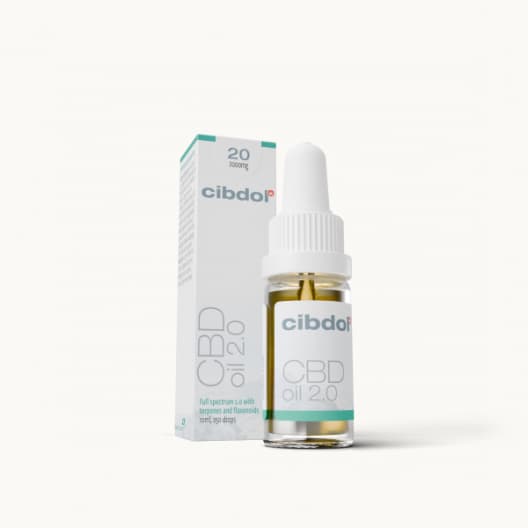
CBD Oil 2.0 20% (2000mg)
Mid-to-high strength full-spectrum CBD oil. 2000mg CBD per 10ml bottle with enhanced cannabinoid ratio for a stronger entourage effect.
- • 2000mg CBD per bottle
- • Full-spectrum entourage formula
- • Hemp seed oil base
Disclosure: We may earn a commission if you purchase via these links.
Does the Entourage Effect Mean You Need More THC?
This is one of the most persistent misconceptions in the CBD space, and it's worth addressing directly.
The entourage effect does not require high-THC cannabis. The evidence does not suggest that more THC equals a better entourage effect. What the research points to is that the synergistic benefit comes from the full spectrum of minor cannabinoids and terpenes — of which THC is just one small part.
Trace amounts of THC below the 0.2% EU legal limit appear sufficient to contribute to synergy. The meaningful components driving entourage effects are just as likely to be CBG, beta-caryophyllene, or myrcene as they are THC.
This distinction matters because it separates entourage effect science from any argument in favour of high-THC products. A well-formulated, THC-free broad-spectrum oil with a preserved terpene profile will outperform a CBD isolate — regardless of its THC content.
If you're concerned about CBD and drug testing, read our dedicated guide: CBD and drug tests.
How Extraction Method Affects the Entourage Effect
Not all full-spectrum products are equal. The extraction method used to produce CBD oil has a significant impact on how many of the entourage-effect compounds survive into the final product.
CO2 extraction is widely considered the gold standard. Supercritical CO2 is highly tuneable — temperature and pressure can be adjusted to selectively preserve terpenes, minor cannabinoids, and flavonoids. It produces a clean extract without solvent residues.
Ethanol extraction is effective and widely used. It is generally good at capturing cannabinoids but can result in some terpene loss, particularly the more volatile compounds. Post-extraction processing can partially compensate for this.
Heat-based distillation (including some short-path distillation processes) involves significant heat exposure. Terpenes are volatile and heat-sensitive — distillation processes that involve high temperatures degrade terpenes substantially. An oil produced via high-heat distillation without terpene reintroduction will have a markedly reduced entourage effect profile, regardless of what the label claims.
This is why extraction method is a legitimate question to ask when evaluating a CBD product. Reputable brands will disclose their extraction method, and it should be documented in their transparency materials.
How to Check If Your CBD Oil Preserves the Entourage Effect
Knowing the theory is one thing. Knowing how to evaluate a specific product is what translates theory into better purchasing decisions.
Read the Certificate of Analysis (COA)
Every legitimate CBD product should come with a Certificate of Analysis from an independent, accredited laboratory. The COA tells you exactly what's in the product.
For full-spectrum or broad-spectrum products, the COA should show:
- CBD (primary cannabinoid — should match label claim)
- Minor cannabinoids: look for CBG, CBN, CBDA at detectable levels
- Terpene profile: ideally a named list of terpenes with concentrations (myrcene, linalool, beta-caryophyllene, etc.)
Red Flags to Watch For
The COA shows only CBD. If a product claims to be full-spectrum but the COA only lists CBD — and zeros everywhere else — the minor cannabinoids and terpenes were likely lost in processing. The entourage effect has been stripped out.
No COA available. This is a basic quality and transparency failure. Do not purchase CBD products from brands that don't publish independent third-party lab results.
"Natural flavour" added. This phrase in an ingredients list often indicates that the original terpenes were stripped during processing and then reintroduced as a flavouring agent — either from cannabis-derived or non-cannabis-derived sources. Reintroduced terpenes may be beneficial, but it is not the same as terpenes preserved through careful extraction from the original plant material.
Vague extraction claims. "Proprietary extraction process" without further detail should be treated as a yellow flag. Transparent brands explain their methods.
You can learn more about reading CBD product labels and COAs in our beginner's guide to CBD and our full-spectrum vs isolate comparison.
Frequently Asked Questions
Is the entourage effect scientifically proven?
The entourage effect has strong preclinical support and a solid mechanistic basis. The 2015 Gallily study showed full-spectrum extract outperformed pure CBD at equivalent doses, with a linear dose-response curve versus CBD isolate's bell curve. However, large-scale clinical trials directly comparing full-spectrum vs isolate in humans are still limited.
Do I need THC for the entourage effect?
No. While THC contributes to the full entourage, broad-spectrum products with no detectable THC still contain minor cannabinoids (CBG, CBN, CBC) and terpenes that contribute to synergy. The entourage effect is about the full chemical profile, not just THC.
How do I know if my CBD oil has the entourage effect?
Check the COA (Certificate of Analysis). A product preserving the entourage effect will show multiple cannabinoids (CBD, CBDA, CBG, CBN, CBC) and ideally a terpene profile. If the COA only shows CBD with everything else at zero, it is likely isolate-based regardless of what the label says.
Is full-spectrum always better than isolate?
Not always. Isolate is better for people who need to avoid THC entirely (drug testing, THC sensitivity), who want precise single-compound dosing, or who need the highest possible CBD concentration. For general wellness use, full-spectrum typically offers more effect per milligram.
Does the extraction method matter for the entourage effect?
Yes, significantly. Supercritical CO2 extraction preserves the broadest cannabinoid and terpene profile. Ethanol extraction can also preserve terpenes if done carefully. Aggressive heat or solvent processes can destroy volatile terpenes, reducing the entourage effect even in technically "full-spectrum" products.
The Bottom Line
The entourage effect is a scientifically grounded hypothesis with strong mechanistic reasoning and solid preclinical evidence. The 2015 Gallily study in particular provides a compelling empirical argument for preferring full-spectrum or broad-spectrum extracts over isolate for general therapeutic use.
The practical implications are clear:
- CBD isolate's bell-curve dose-response is a genuine limitation.
- Full-spectrum and broad-spectrum oils that preserve minor cannabinoids and terpenes offer a broader and more linearly scalable effect profile.
- You don't need THC to benefit from the entourage effect — trace amounts or none at all can still support synergy, provided the rest of the spectrum is intact.
- The extraction method and COA are the two most reliable signals of whether a product has actually preserved the entourage effect.
Experience the full-spectrum difference with Cibdol 2.0 — formulated to preserve CBG, CBN, CBDA, and a full terpene profile, with no detectable THC.
CBD Oil 2.0 10% (1000mg)
The most popular strength — 1000mg full-spectrum CBD oil for balanced, noticeable daily support without going too strong too fast.
- • 1000mg CBD per 10ml bottle
- • Full-spectrum entourage formula
- • Hemp seed oil base
Disclosure: We may earn a commission if you purchase via these links.
For further reading: CBD side effects | Full-spectrum vs isolate | CBD dosage guide
This article is for informational purposes only and is not intended as medical advice.
Last updated: March 2026
Related topics
Where to buy
Affiliate links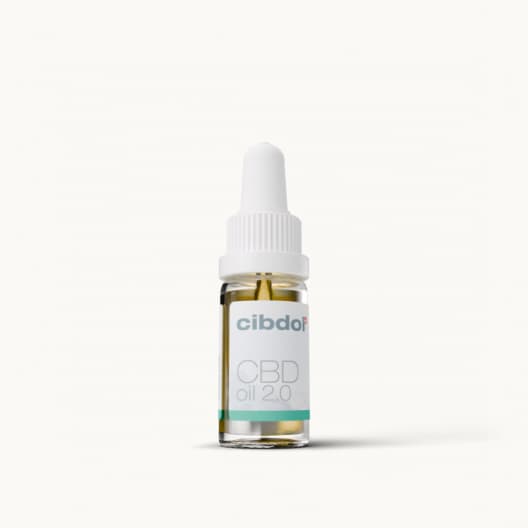
CBD oils
Premium Swiss CBD oils from Cibdol — available in multiple concentrations with full certificates of analysis.
CBD Gummies (25mg)
CBD Gummies — Chill Berry (25mg × 10)
- • 25mg CBD isolate per gummy — strong, precise dose
- • THC-free — CBD isolate, zero psychoactive compounds
- • Vegan formula — pectin-based, no gelatine
CBD capsules
Pre-measured CBD softgels and tablets for precise daily dosing — no taste, no measuring, just consistent CBD.
Disclosure: We may earn a commission if you purchase via these links.
Related articles
Full-Spectrum vs Broad-Spectrum vs CBD Isolate: What's the Difference?
Full-spectrum, broad-spectrum, or isolate — which CBD type should you choose? The differences, the entourage effect, and which suits you.
CBD vs CBN: What's the Difference?
CBD vs CBN: both cannabinoids, both used for sleep — but they work differently. The science, the evidence, and how to choose.
CBD vs THC: Key Differences Explained
CBD vs THC: same plant, very different effects. How their chemistry differs, what each one treats, and how European law handles them.