
CBN: The Sleepy Cannabinoid You Haven't Heard Of
Written by Smart Supplements Editorial Team
Key takeaways
- CBN forms when THC degrades through oxidation — it's found in aged cannabis
- CBN alone has weak evidence as a sleep aid; most claims come from combination studies
- CBN and CBD have different mechanisms — CBN weakly activates CB1 receptors
- CBN is legal in the EU as a hemp-derived cannabinoid and does not cause impairment at standard doses
Table of contents
- What Is CBN, Exactly?
- How CBN Forms: The THC Degradation Story
- CBN vs CBD: Different Molecules, Different Mechanisms
- The Sleep Reputation: Where Did It Come From?
- New Evidence: What the 2023–2024 Studies Found
- The Entourage Effect: Why Combination Products May Work Better
- CBN Dosage: What Products Actually Contain
- CBN vs CBD for Sleep: Which Should You Try?
- EU and Dutch Legal Status
- Who Might Benefit From CBN?
- Where to Buy
- Frequently Asked Questions
You've probably heard of CBD. You might even know a little about THC. But there's a third cannabinoid quietly making its way into sleep supplements — and its story is stranger, and more honest, than most brands will tell you.
What Is CBN, Exactly?
Cannabinol — CBN for short — is one of over 100 cannabinoids found in cannabis. But unlike CBD or THC, it isn't produced directly by the plant. Instead, CBN is what you get when THC breaks down.
Leave cannabis exposed to heat, light, or oxygen long enough, and THC slowly converts to CBN through a process called oxidation. This is why old, poorly-stored cannabis often looks brownish and feels different to smoke — it's accumulated more CBN as the THC has degraded.
In hemp-derived supplement products, CBN is typically extracted from aged hemp or produced through controlled oxidation, then refined into oils, capsules, or gummies. Concentrations in whole cannabis are usually below 1%, but isolate products can deliver precise doses.
How CBN Forms: The THC Degradation Story
To understand CBN, it helps to understand where it comes from.
Fresh cannabis contains mostly THC (or in hemp, mostly CBD). When THC is exposed to oxygen over time — or heated repeatedly — the molecular structure changes. A ring opens, hydrogen atoms are lost, and you end up with cannabinol. The chemical transformation is irreversible: CBN doesn't convert back to THC.
This process happens naturally in any stored cannabis or hemp product. It's accelerated by:
- Heat — warm storage speeds oxidation
- Light — UV exposure breaks down cannabinoids
- Oxygen exposure — improperly sealed containers
The old folk wisdom that aged cannabis "makes you sleepy" likely has roots here — though as we'll see, the sleepiness may not be entirely CBN's doing.
CBN vs CBD: Different Molecules, Different Mechanisms
People often lump CBN and CBD together as "non-psychoactive cannabinoids," but that's an oversimplification. Their mechanisms are quite different.
| Feature | CBN | CBD |
|---|---|---|
| Origin | THC degradation product | Directly synthesised by hemp/cannabis |
| CB1 receptor activity | Weak partial agonist | No direct binding |
| Psychoactive at standard doses? | No (at 5–15mg) | No |
| Primary association | Sleep, mild relaxation | Anxiety, pain, inflammation, sleep |
| Clinical evidence for sleep | Emerging (2023–2024 trials) | Moderate (especially anxiety-related sleep issues) |
| Typical supplement dose | 5–15mg | 10–50mg+ |
| Legal status in EU/NL | Legal (hemp-derived) | Legal (hemp-derived) |
The key mechanical difference: CBN binds weakly to CB1 receptors — the same receptors THC targets, just with much less potency. CBD, by contrast, doesn't bind CB1 directly at all; it works through other pathways including serotonin receptors and FAAH inhibition (which slows the breakdown of the body's own endocannabinoids).
This is why CBN feels slightly more "cannabis-adjacent" to some users, even at doses that cause no impairment.
For a deeper look at how CBD works, see our complete beginner's guide to CBD and our explainer on full-spectrum vs isolate products.
The Sleep Reputation: Where Did It Come From?
Here's where the story gets interesting — and where most supplement brands get it wrong.
The idea that CBN is a potent sleep aid largely traces back to a 1975 study by Karniol IG and Carlini EA, published in the Journal of Pharmacy and Pharmacology. They found that a combination of CBN and THC produced significantly more sedation than THC alone. The conclusion that got passed around: "CBN is sedating."
What got quietly dropped: CBN alone was not found to be strongly sedating in that study. The sedation came from the combination with THC. Without THC present, CBN's sedative effect was minimal.
This nuance has been lost in decades of supplement marketing. By the time CBN hit the wellness market in earnest around 2019–2020, it had acquired a reputation as "the sleepy cannabinoid" — a reputation built more on telephone-game interpretation than solid evidence.
The Corroon 2021 Review: An Honest Assessment
The most thorough scientific audit of CBN sleep claims comes from a 2021 review by Jamie Corroon, ND, MPH, published in Cannabis and Cannabinoid Research (vol. 6, no. 5): "Cannabinol and Sleep: Separating Fact from Fiction".
Corroon searched all published clinical literature and found:
- Only eight clinical studies met inclusion criteria — most from the 1970s and 1980s
- No studies directly investigating CBN against validated sleep questionnaires or polysomnography were found
- Most evidence showed CBN produces minimal cannabis-like effects in humans at typical supplement doses
- Conclusion: "There is insufficient published evidence to support sleep-related claims"
Corroon recommended consumers be sceptical of manufacturers' claims and called for properly designed randomised controlled trials. That was 2021. Since then, those trials have started arriving.
New Evidence: What the 2023–2024 Studies Found
The science has meaningfully moved since the Corroon review. Two significant studies deserve attention.
The Human Trial: 20mg CBN and Nighttime Awakenings
A double-blind, randomised, placebo-controlled trial published in Experimental and Clinical Psychopharmacology in 2024 — Bonn-Miller MO et al. — tested CBN with and without CBD across 293 participants aged 18–55 with poor sleep quality (PubMed).
Key findings:
- 20mg CBN alone significantly reduced nighttime awakenings and overall sleep disturbance compared to placebo
- No meaningful improvement in sleep latency (time to fall asleep) or daytime fatigue
- Adding CBD to CBN did not enhance the effect — in fact, CBD's addition did not positively augment CBN treatment outcomes
This is a genuinely encouraging result. It's not a blockbuster finding, but it's the kind of rigorous human trial the field needed.
The Rat Study: Sleep Architecture Changes
A 2024 study published in Neuropsychopharmacology (a leading pharmacology journal from Nature Publishing Group) used objective measures — EEG sleep architecture analysis — in rats. The findings: CBN increased both NREM and REM sleep, leading to greater total sleep time, with effects broadly comparable to zolpidem (a prescription sleep drug) without apparent intoxication (PMC).
Animal studies don't translate directly to humans, but this provides a plausible mechanism and supports further human research.
The Entourage Effect: Why Combination Products May Work Better
Researcher Ethan Russo has written extensively on the "entourage effect" — the idea that cannabinoids and terpenes work better together than in isolation. The original Karniol and Carlini findings (CBN + THC being more sedating than either alone) fit this framework.
Research suggests that terpenes like myrcene and linalool, often present in full-spectrum cannabis extracts, may contribute meaningfully to the sedative character of aged cannabis preparations. This complicates attribution: when someone reports that a "CBN product" helps them sleep, we can't always be certain whether CBN is doing the work, or whether accompanying compounds are.
This is partly why many commercial CBN products combine CBN with CBD — to provide a broader cannabinoid profile even in the absence of THC.
For more on how cannabinoids interact, read our piece on full-spectrum vs broad-spectrum vs CBD isolate.
CBN Dosage: What Products Actually Contain
Most commercial CBN sleep products use doses of 5–15mg CBN, often combined with CBD. Here's a breakdown of what's commonly available:
| Product Type | Typical CBN Dose | Often Combined With | Onset |
|---|---|---|---|
| CBN oil / tincture | 5–15mg per serving | CBD (10–30mg) | 20–45 minutes |
| CBN capsules | 5–10mg | CBD, melatonin | 30–60 minutes |
| CBN gummies | 5–15mg | CBD, L-theanine | 30–60 minutes |
| CBN + CBD blended oil | 5–10mg CBN + 15–25mg CBD | — | 20–45 minutes |
Note that the most promising human trial used 20mg CBN — higher than many products on the market. If you're not getting results from a 5mg product, this may be a factor.
For general guidance on cannabinoid dosing, our CBD dosage guide covers the principles that apply broadly to hemp-derived cannabinoids. And if you want to compare CBN with other sleep supplement approaches, our sleep supplements guide covering melatonin, magnesium, and glycine puts it in wider context.

5% CBN & 2.5% CBD Oil
Cibdol's CBN & CBD combination oil — 5% CBN (cannabinol) paired with 2.5% CBD. CBN is the cannabinoid most associated with sedation and sleep support, making this oil a strong choice for evening use and sleep quality improvement. Swiss-produced, third-party tested.
- • 5% CBN + 2.5% CBD — cannabinoid combination for sleep
- • CBN is the cannabinoid most associated with sedation and rest
- • Ideal for evening use and sleep quality support
Disclosure: We may earn a commission if you purchase via these links.
CBN vs CBD for Sleep: Which Should You Try?
This is the question most people actually want answered. The honest answer: it depends on why you're having trouble sleeping.
CBD may be more appropriate if:
- Your sleep issues are driven by anxiety or racing thoughts
- You want a compound with a broader evidence base across multiple conditions
- You're new to cannabinoids and want to start with the most researched option
CBN may be worth trying if:
- You've used CBD for sleep without satisfying results
- Your main issue is nighttime awakenings rather than difficulty falling asleep
- You're curious about the "cannabis-adjacent" feel without any THC-related concerns
The two aren't mutually exclusive — many users report that CBN + CBD combinations work well for sleep, and the commercial market has largely moved toward blended products.
For a comparison of how quickly each works, see our guide on how long CBD takes to work — timing principles apply to CBN similarly.
Our dedicated CBD for sleep article covers the CBD side of this comparison in full.
EU and Dutch Legal Status
CBN occupies comfortable legal territory across most of Europe, including the Netherlands.
Because CBN is derived from hemp (not high-THC cannabis) and does not cause intoxication at standard supplement doses, it falls outside controlled substance frameworks in the Netherlands and most EU member states. The EU Novel Food regulation applies to some cannabinoid products, but CBN derived from hemp is generally available as a food supplement.
It does not appear on the Netherlands' Opiumwet (Opium Act) list of controlled substances, and it does not cause impairment. You will not fail a standard drug test from CBN alone at normal doses — though note that some CBN products contain trace amounts of THC if they're full-spectrum.
Always check product COAs (certificates of analysis) to confirm THC content if this is a concern. For more on cannabinoid interactions and what to watch for if you take prescription medications, see our guide on supplement and drug interactions.
Who Might Benefit From CBN?
CBN isn't for everyone, and it's certainly not a cure-all. But research suggests it may be worth trying for a specific group:
- People who've tried CBD for sleep and found it insufficient — the different mechanism (CB1 partial agonism vs CBD's indirect pathways) means CBN may work where CBD didn't
- Those who wake frequently through the night — the Bonn-Miller 2024 trial specifically found benefits for nighttime awakenings
- People who want something "closer to cannabis" in feel, without THC — CBN's weak CB1 activity gives it a subtly different character than CBD
- Supplement-curious users who've exhausted standard options — if melatonin, magnesium, and glycine haven't been enough, CBN adds a genuinely distinct mechanism to try
It is not likely to be the right first choice for someone new to sleep supplements. Evidence remains early-stage, dosing isn't fully characterised, and the cost-per-milligram is higher than more established options.
Where to Buy
CBN products are available from specialist cannabinoid retailers across the EU. When buying, look for:
- Third-party lab testing (COA) confirming CBN content and THC levels
- Clear dosing information — ideally products offering at least 10–15mg CBN per serving
- Reputable extraction methods — CO2 extraction is preferred for purity
Cibdol's CBN & CBD Oil combines CBN with their established CBD oil base, providing both cannabinoids in a single tincture. It's a practical option for those wanting to explore CBN without committing to a CBN-only product.
5% CBN & 2.5% CBD Oil
Cibdol's CBN & CBD combination oil — 5% CBN (cannabinol) paired with 2.5% CBD. CBN is the cannabinoid most associated with sedation and sleep support, making this oil a strong choice for evening use and sleep quality improvement. Swiss-produced, third-party tested.
- • 5% CBN + 2.5% CBD — cannabinoid combination for sleep
- • CBN is the cannabinoid most associated with sedation and rest
- • Ideal for evening use and sleep quality support
Disclosure: We may earn a commission if you purchase via these links.
Frequently Asked Questions
Does CBN get you high?
No. At standard supplement doses (5–20mg), CBN does not cause intoxication. While CBN does weakly interact with CB1 receptors — the same receptors that THC activates — its affinity is far lower than THC's. The 2024 rat study specifically noted no apparent intoxication effects. Users typically describe CBN's effect, if anything, as mild relaxation.
Is CBN the same as THC?
No. CBN is formed when THC degrades through oxidation, but it is a distinct molecule with a different structure and different receptor profile. CBN has roughly one-tenth or less of THC's potency at CB1 receptors. It will not produce the psychoactive effects associated with THC.
How long does CBN take to work?
CBN taken as an oil or tincture typically takes 20–45 minutes to produce effects when taken sublingually (under the tongue). Capsules and gummies may take 30–60 minutes. Based on the human trial data, effects on sleep disturbance were measured over seven nights of consecutive use, suggesting consistent use may be more effective than single-dose use.
Can I take CBN with other sleep supplements?
CBN is generally considered safe to combine with melatonin, magnesium, or glycine based on current evidence. However, if you take prescription medications — particularly sedatives, sleep aids, or anything metabolised by CYP450 liver enzymes — it's worth discussing with a healthcare provider first. See our supplement and drug interactions guide for more detail.
Is CBN legal in the Netherlands and Europe?
Yes. Hemp-derived CBN is legal in the Netherlands and across most EU countries. It is not classified as a controlled substance under the Dutch Opiumwet. As with all cannabinoid supplements, ensure products have COAs confirming they fall within legal THC thresholds (below 0.2% in the EU).
How is CBN different from CBG or CBC?
CBG (cannabigerol) is often called the "mother cannabinoid" because many cannabinoids — including THC and CBD — are derived from it. CBC (cannabichromene) is another minor cannabinoid with anti-inflammatory and mood-related associations. None of these are the same as CBN. CBN is unique in being a degradation product rather than a direct biosynthetic product of the plant.
Last updated: March 2026
Written by the Smart Supplements editorial team
This article is for informational purposes only and is not intended as medical advice. Always consult a healthcare professional before starting any new supplement, especially if you take prescription medication.
Related topics
Where to buy
Affiliate links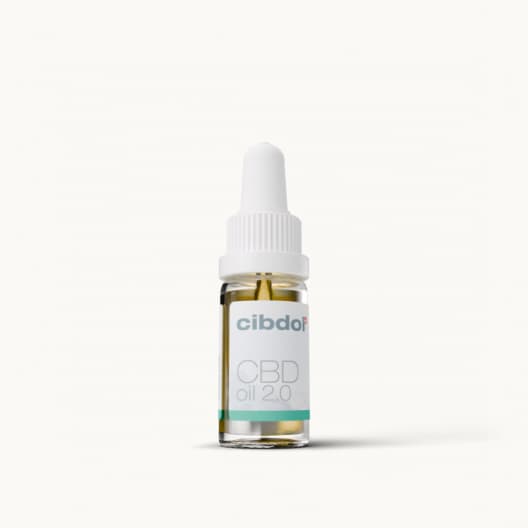
CBD oils
Premium Swiss CBD oils from Cibdol — available in multiple concentrations with full certificates of analysis.
CBD Gummies (25mg)
CBD Gummies — Chill Berry (25mg × 10)
- • 25mg CBD isolate per gummy — strong, precise dose
- • THC-free — CBD isolate, zero psychoactive compounds
- • Vegan formula — pectin-based, no gelatine
CBD capsules
Pre-measured CBD softgels and tablets for precise daily dosing — no taste, no measuring, just consistent CBD.
Disclosure: We may earn a commission if you purchase via these links.
Related articles
CBD vs CBN: What's the Difference?
CBD vs CBN: both cannabinoids, both used for sleep — but they work differently. The science, the evidence, and how to choose.
Full-Spectrum vs Broad-Spectrum vs CBD Isolate: What's the Difference?
Full-spectrum, broad-spectrum, or isolate — which CBD type should you choose? The differences, the entourage effect, and which suits you.
CBD for Sleep: How It Works and What to Expect
Does CBD help you sleep? How CBD affects sleep quality, optimal dosages, best products, and combining it with other supplements.