
How to Choose the Right CBD Dosage: A Practical Guide
Written by Smart Supplements Editorial Team
Key takeaways
- Start with 5–10mg CBD and adjust gradually over 1–2 weeks
- Dosage varies by goal: sleep needs more than general wellness
- Format matters: oils absorb faster than capsules
- Body weight is one factor, but individual sensitivity matters more
Table of contents
- Why There Is No Official CBD Dosage
- The Start-Low-Go-Slow Method
- Dosage by Goal
- Dosage by Format: Oils, Capsules, and Topicals
- Does Body Weight Affect Your CBD Dose?
- Full-Spectrum vs Broad-Spectrum vs Isolate: Does It Change Your Dose?
- When and How to Increase Your Dose
- The EFSA Safe Intake Context
- When to Talk to a Doctor
- Where to Buy
- Frequently Asked Questions
Finding your ideal CBD dose is less about hitting a magic number and more about learning how your body responds. There is no universal dose, no official prescription, and no shortcut — but there is a methodology that works. Start low, go slow, and pay attention.
Why There Is No Official CBD Dosage
If you have searched for a definitive answer to "how much CBD should I take?", you have probably noticed that no authoritative body gives one. That is not an oversight — it reflects the genuine complexity of cannabidiol as a compound.
CBD interacts with the endocannabinoid system (ECS), a network of receptors, enzymes, and endogenous cannabinoids that varies substantially from person to person. Factors including genetics, baseline ECS tone, liver enzyme activity, body composition, and whether you have eaten recently all affect how CBD behaves in your body.
Regulatory bodies like EFSA (European Food Safety Authority) issued a provisional safe intake level of 2mg per day for CBD as a novel food supplement in their February 2026 update — but this figure is a food safety threshold derived from animal toxicology studies, not a therapeutic recommendation. EFSA itself acknowledged significant data gaps and applied an uncertainty factor of 400 to its benchmark dose modelling. Most peer-reviewed human research uses doses of 10–600mg per day, and systematic reviews of clinical populations report average doses of around 9mg/kg/day across conditions (Larsen & Shahinas, 2020, Primary Care Companion for CNS Disorders).
In practical terms: the 2mg/day figure tells you very little about what dose you need to feel a meaningful effect. It is context that matters.
If you are new to CBD, the What Is CBD? The Complete Beginner's Guide is worth reading before diving into dosage.
The Start-Low-Go-Slow Method
The most widely recommended approach — endorsed by researchers, clinicians, and experienced CBD users alike — is start-low-go-slow (SLGS). Here is what that looks like in practice:
- Week 1: Begin with 5–10mg of CBD per day, taken at a consistent time
- Week 2: If you notice no meaningful effect, increase by 5mg
- Weeks 3–4: Continue increasing in 5mg increments every week until you notice the effect you are looking for
- Maintenance: Once you find a dose that works, hold it for 2–4 weeks before deciding whether to adjust further
Why does rushing to a high dose not work? CBD is not like alcohol, where more reliably means stronger effects. Some research suggests a biphasic response — where very high doses may actually produce diminishing returns or opposite effects compared to moderate doses. Additionally, starting too high increases the likelihood of side effects like drowsiness or digestive discomfort.
For a deeper look at what to expect during the first few weeks, see How Long Does CBD Take to Work?
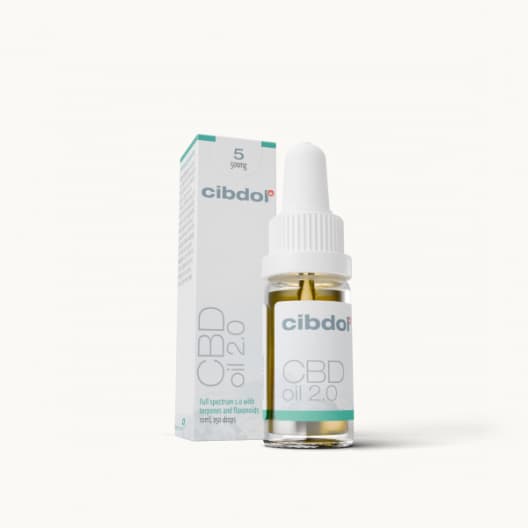

CBD Oil 2.0 5% (500mg)
The ideal starting point for CBD beginners. 500mg full-spectrum CBD oil with enhanced cannabinoid ratio for gentle, daily wellness support.
- • 500mg CBD per 10ml bottle
- • Full-spectrum entourage formula
- • Hemp seed oil base
Disclosure: We may earn a commission if you purchase via these links.
Dosage by Goal
Research suggests that different goals require meaningfully different dose ranges. The table below is general guidance based on reported clinical ranges and user experience — not medical prescriptions. Individual responses vary widely.
| Goal | Starting Dose | Typical Range | Notes |
|---|---|---|---|
| General wellness / daily balance | 5–10mg | 10–25mg/day | Lower end; most people respond well |
| Stress & mild anxiety | 10–20mg | 15–50mg/day | Some evidence for anxiolytic effects at 25–75mg |
| Sleep support | 20–40mg | 25–75mg/day | Take 60–90 min before bed |
| Chronic pain / inflammation | 25–50mg | 25–100mg+/day | Higher end; some studies use 150–300mg |
| Neurological conditions | Variable | 200–600mg/day | Clinical setting only; consult a physician |
A 2019 study in The Permanente Journal found that 25mg/day CBD improved sleep scores in 66.7% of patients within the first month, though scores fluctuated over time (Shannon et al., 2019). For anxiety, a placebo-controlled trial found that 300mg CBD significantly reduced anxiety in a simulated public-speaking test (Bergamaschi et al., 2011, Neuropsychopharmacology).
These numbers are ranges, not targets. Some people get excellent results at 10mg/day; others need 80mg. The individual variation is real and significant.
For sleep-specific guidance, see our CBD for Sleep guide and Sleep Supplements Guide.
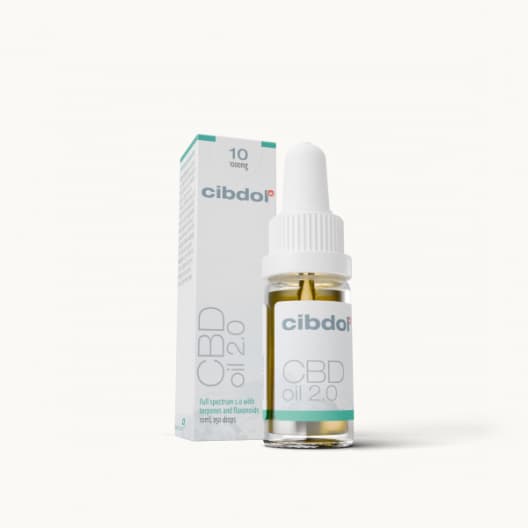
CBD Oil 2.0 10% (1000mg)
The most popular strength — 1000mg full-spectrum CBD oil for balanced, noticeable daily support without going too strong too fast.
- • 1000mg CBD per 10ml bottle
- • Full-spectrum entourage formula
- • Hemp seed oil base
Disclosure: We may earn a commission if you purchase via these links.
Dosage by Format: Oils, Capsules, and Topicals
The format you choose has a substantial impact on how much CBD actually reaches your bloodstream — and therefore how much you need to take.
CBD Oil (Sublingual)
Held under the tongue for 60–90 seconds before swallowing, CBD oil is absorbed directly into the bloodstream through the sublingual mucosa. Bioavailability estimates range from 12–35%, making it the most efficient oral format. Effects typically begin within 15–45 minutes.
Softgels and Capsules
Capsules pass through the digestive system and are metabolised by the liver before entering circulation. This first-pass metabolism reduces bioavailability to roughly 6–15%, meaning you may need a higher stated dose to achieve an equivalent effect to sublingual oil. The trade-off is consistency and convenience — each capsule delivers a fixed amount.
Topicals
CBD creams and balms are applied directly to the skin. They do not produce systemic effects — meaning they do not reach the bloodstream in meaningful quantities. Topicals are useful for localised discomfort but are not relevant to systemic dosing. There is no "systemic dose" to calculate.
| Format | Bioavailability | Onset Time | Best For |
|---|---|---|---|
| Sublingual oil | 12–35% | 15–45 min | Fast onset, precise titration |
| Softgels / capsules | 6–15% | 30–90 min | Convenience, consistent daily dose |
| Topicals | Minimal systemic | 20–45 min (local) | Localised muscle/joint discomfort |
| Edibles / gummies | 4–12% | 45–120 min | Discretion, but harder to titrate |
For a detailed comparison, see CBD Oil vs CBD Capsules.
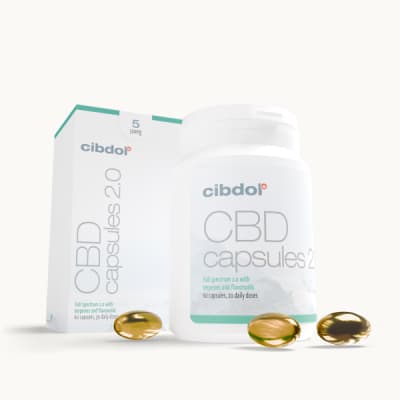
CBD Softgels 5% (500mg)
Entry-level CBD softgel capsules. 500mg full-spectrum CBD in 60 tasteless, pre-dosed softgels — perfect for beginners and daily low-dose use.
- • 500mg CBD per box (60 caps)
- • Tasteless and odourless
- • Full-spectrum oil formula
Disclosure: We may earn a commission if you purchase via these links.
Does Body Weight Affect Your CBD Dose?
Body weight is often presented as the primary dosing variable, with guides recommending 1–6mg of CBD per 10kg of body weight. This can be a useful starting framework — particularly for getting into the right order of magnitude — but research suggests it is not the most predictive factor.
A 70kg person starting with the lower end of that formula would begin at around 7–10mg/day, which aligns well with the start-low-go-slow approach. But two people of identical weight can have very different responses to the same dose, depending on:
- Endocannabinoid tone — how active your ECS already is
- CYP450 enzyme activity — the liver enzymes that metabolise CBD
- Fat mass vs. lean mass — CBD is lipophilic (fat-soluble), affecting distribution
- Gut microbiome — emerging evidence suggests it modulates cannabinoid absorption
The weight-based formula is a reasonable starting point, not a precise prescription. Pay more attention to how you feel than to hitting a number derived from your bathroom scales.
Full-Spectrum vs Broad-Spectrum vs Isolate: Does It Change Your Dose?
Yes — meaningfully. The type of CBD extract you use affects how much you need to achieve the same result.
Full-Spectrum CBD
Contains CBD alongside other cannabinoids (including trace THC up to 0.2–0.3% in the EU), terpenes, and flavonoids. The combined action of these compounds — often called the entourage effect — is thought to enhance CBD's effects. Research suggests full-spectrum extracts may produce greater anxiolytic and anti-inflammatory effects than isolate at equivalent CBD concentrations (Russo, 2011, British Journal of Pharmacology).
In practical terms: you may achieve your desired effect at a lower mg dose with full-spectrum than with isolate.
Broad-Spectrum CBD
Contains multiple cannabinoids and terpenes but no THC. Some entourage benefit is likely, though research is less robust than for full-spectrum products. A reasonable middle ground if you want to avoid THC entirely.
CBD Isolate
Pure CBD with no other cannabinoids. Predictable and consistent, with no THC risk — important if you are subject to drug testing. However, you may need a higher mg dose to achieve effects comparable to full-spectrum.
For a complete breakdown, see Full-Spectrum vs Broad-Spectrum vs CBD Isolate.
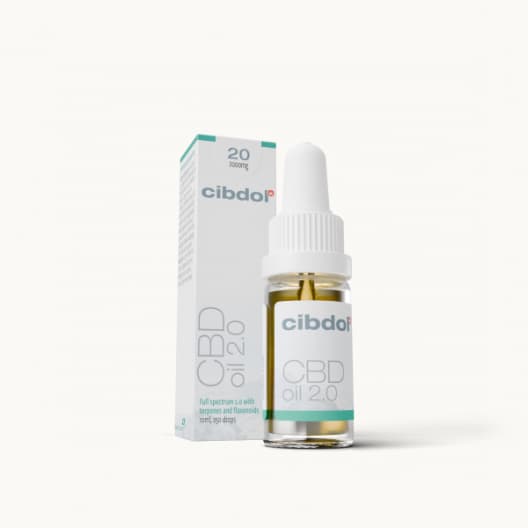
CBD Oil 2.0 20% (2000mg)
Mid-to-high strength full-spectrum CBD oil. 2000mg CBD per 10ml bottle with enhanced cannabinoid ratio for a stronger entourage effect.
- • 2000mg CBD per bottle
- • Full-spectrum entourage formula
- • Hemp seed oil base
Disclosure: We may earn a commission if you purchase via these links.
When and How to Increase Your Dose
If you have been consistent with your starting dose for one to two weeks and notice no meaningful change, it is reasonable to increase. Before you do, check these factors:
- Are you taking it consistently? CBD works better with daily use than occasional doses
- Are you holding oil under your tongue long enough? Sixty to ninety seconds is the minimum
- Did you take it on an empty stomach? CBD absorbs better with food, particularly fats
- Has enough time passed? Some people report that effects become more noticeable after 2–3 weeks of consistent use
If all of those are in order, increase by 5–10mg and hold at that dose for another week before evaluating.
Signs You May Have Taken Too Much
CBD has a favourable safety profile — serious adverse events are rare at consumer doses. But taking more than your body needs is wasteful and can cause:
- Drowsiness or sedation — the most common effect at higher doses
- Dry mouth — due to CBD's effect on saliva production
- Mild digestive upset — nausea or loose stools, more common with oil at very high doses
- Lightheadedness — typically brief and associated with very high single doses
These effects are generally mild and resolve quickly. If you experience them, reduce your dose at the next intake. For a full overview, see CBD Oil Side Effects.
The EFSA Safe Intake Context
You may encounter references to EFSA's 2mg/day provisional safe intake level and wonder whether that means anything above 2mg is unsafe. It does not.
EFSA's 2026 assessment applied this figure as a food safety threshold — a conservative regulatory limit derived from animal toxicology data using an uncertainty factor of 400. It is designed to ensure that CBD sold as a food supplement does not pose population-level risks, not to set a therapeutic dose.
By contrast, the World Health Organization's 2018 review of CBD noted that "CBD is generally well tolerated with a good safety profile" and that studies have used doses up to 1,500mg/day without serious adverse events. Most consumer products are dosed at 10–100mg/day, well within that range.
EFSA does note specific caution for people under 25, pregnant or lactating women, and those taking concurrent medications — all of whom should consult a doctor before using CBD.
When to Talk to a Doctor
CBD is generally safe for healthy adults, but there are specific situations where medical input is important before starting:
- You take prescription medication — CBD inhibits cytochrome P450 enzymes in the liver, which process many drugs. This can raise or lower blood levels of medications including warfarin, statins, antiepileptics, and antidepressants
- You want doses above 70mg/day — the EU novel food upper limit for general supplement use
- You are pregnant, breastfeeding, or under 25 — EFSA flags insufficient safety data for these groups
- You have a liver condition — CBD is metabolised hepatically and high doses may affect liver enzymes
For a comprehensive overview of interactions, see Supplement and Drug Interactions.
Where to Buy
When it comes to CBD dosage, product quality directly affects the result. Inaccurate labelling — a known issue in the CBD market — means a product claiming 10mg per drop may deliver significantly more or less. Look for brands that provide third-party lab reports (Certificates of Analysis) for every batch.
Cibdol is one of the most established CBD brands in Europe, with Swiss-sourced hemp, pharmaceutical-grade CO2 extraction, and publicly available lab reports. Their oil range offers straightforward dose scaling:
- Cibdol 5% CBD Oil — 5mg per drop; ideal for beginners and daily wellness doses of 5–25mg
CBD Oil 2.0 5% (500mg)
The ideal starting point for CBD beginners. 500mg full-spectrum CBD oil with enhanced cannabinoid ratio for gentle, daily wellness support.
- • 500mg CBD per 10ml bottle
- • Full-spectrum entourage formula
- • Hemp seed oil base
Disclosure: We may earn a commission if you purchase via these links.
- Cibdol 10% CBD Oil — 10mg per drop; suited to daily doses of 20–60mg for sleep or anxiety support
CBD Oil 2.0 10% (1000mg)
The most popular strength — 1000mg full-spectrum CBD oil for balanced, noticeable daily support without going too strong too fast.
- • 1000mg CBD per 10ml bottle
- • Full-spectrum entourage formula
- • Hemp seed oil base
Disclosure: We may earn a commission if you purchase via these links.
- Cibdol 20% CBD Oil — 20mg per drop; for experienced users, higher-dose protocols, or those needing maximum cost-per-mg efficiency
CBD Oil 2.0 20% (2000mg)
Mid-to-high strength full-spectrum CBD oil. 2000mg CBD per 10ml bottle with enhanced cannabinoid ratio for a stronger entourage effect.
- • 2000mg CBD per bottle
- • Full-spectrum entourage formula
- • Hemp seed oil base
Disclosure: We may earn a commission if you purchase via these links.
- Cibdol CBD Softgels 5% — 5mg per capsule; consistent dosing without measuring, good for travel or routine
CBD Softgels 5% (500mg)
Entry-level CBD softgel capsules. 500mg full-spectrum CBD in 60 tasteless, pre-dosed softgels — perfect for beginners and daily low-dose use.
- • 500mg CBD per box (60 caps)
- • Tasteless and odourless
- • Full-spectrum oil formula
Disclosure: We may earn a commission if you purchase via these links.
Frequently Asked Questions
How much CBD should a complete beginner take?
Most guidance suggests starting at 5–10mg per day and holding that dose for one to two weeks before adjusting. This gives your endocannabinoid system time to respond and lets you identify any side effects at a low risk level. Resist the urge to take more in the first few days simply because you do not feel an immediate effect — CBD is not acutely psychoactive and effects can be subtle, particularly at the start.
How many mg of CBD should I take for anxiety?
Research suggests meaningful anxiolytic effects in clinical settings at doses ranging from 25–300mg, depending on the severity and context. A reasonable starting point for anxiety is 15–25mg/day with a sublingual oil, assessed over 2–4 weeks. One well-cited study found 300mg effective for acute anxiety in a public-speaking model, but most people find a lower daily maintenance dose sufficient for generalised stress management.
Is it possible to take too much CBD?
At consumer dose ranges (10–100mg/day), serious adverse events are rare. Very high doses (above 300mg/day) may cause liver enzyme elevations, and CBD's interaction with liver enzymes can affect how other medications are processed. The most common signs of excess at moderate doses are drowsiness and dry mouth. If these occur, reduce your dose.
Does CBD work faster on an empty stomach or with food?
CBD is fat-soluble, meaning it absorbs more efficiently when taken with food — particularly fatty foods. A 2019 study found that taking CBD with a high-fat meal increased maximum blood concentration approximately 5-fold compared to fasting (Birnbaum et al., 2019, Epilepsia). If you find your current dose is not working, try taking it with a meal before increasing.
Can I take CBD every day?
Yes — daily use is both common and the approach used in the majority of clinical studies. CBD does not produce physical dependence, and there is no evidence of withdrawal effects at consumer doses. Most people find consistent daily dosing more effective than occasional use because it maintains steadier levels in the body.
Will full-spectrum CBD show up on a drug test?
Full-spectrum products contain up to 0.2–0.3% THC under EU regulations. While this is a very small amount, cumulative use at higher CBD doses could in theory produce detectable THC metabolites on a sensitive urine test. If drug testing is a concern, opt for a broad-spectrum or isolate-based product instead.
This article is for informational purposes only and is not intended as medical advice. Always consult a healthcare professional before starting any new supplement, especially if you take prescription medication.
Last updated: March 2026
Written by the Smart Supplements editorial team
Related topics
Where to buy
Affiliate links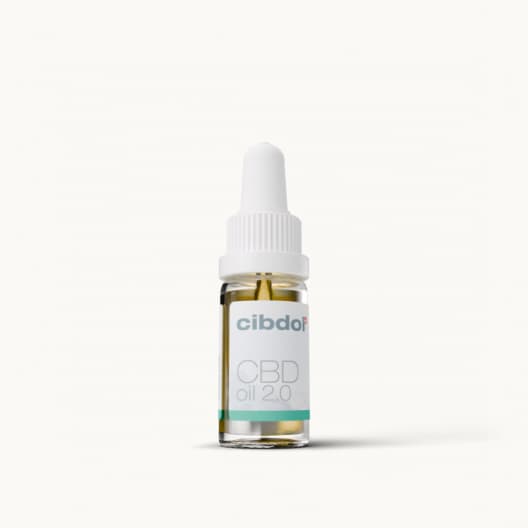
CBD oils
Premium Swiss CBD oils from Cibdol — available in multiple concentrations with full certificates of analysis.
CBD Gummies (25mg)
CBD Gummies — Chill Berry (25mg × 10)
- • 25mg CBD isolate per gummy — strong, precise dose
- • THC-free — CBD isolate, zero psychoactive compounds
- • Vegan formula — pectin-based, no gelatine
CBD capsules
Pre-measured CBD softgels and tablets for precise daily dosing — no taste, no measuring, just consistent CBD.
Disclosure: We may earn a commission if you purchase via these links.
Related articles
CBD for Anxiety: What Does the Research Say?
CBD for anxiety: what the research actually supports, how it works, optimal dosage, best products and who it works best for. Science-based, honest guide.
Does CBD Show Up on a Drug Test?
Drug tests screen for THC, not CBD — but full-spectrum products contain trace THC that could trigger a positive. Here's what to know.
CBD Oil Side Effects: What to Expect
CBD is considered safe by the WHO, but side effects can occur at higher doses or with certain medications. Here's what to expect.