
CBD vs Melatonin for Sleep: Which Is Better?
Written by Smart Supplements Editorial Team
Key takeaways
- Melatonin is a circadian timing hormone — it is most effective for jet lag, shift work, and delayed sleep phase, not for anxiety or stress-driven insomnia.
- CBD works indirectly for sleep by reducing anxiety (via 5-HT1A receptors), easing physical discomfort, and improving sleep architecture — not by sedation.
- Combining CBD and melatonin makes pharmacological sense as they target different mechanisms — several quality products are formulated specifically with this combination.
- Melatonin is most effective at low doses (0.5–3mg); higher doses do not improve sleep further and may cause morning grogginess.
- CBD sleep benefits typically build over 1–2 weeks of consistent nightly use — it is not a one-night intervention like a conventional sleep medication.
Table of contents
Melatonin: How It Works
Melatonin (N-acetyl-5-methoxytryptamine) is a hormone produced by the pineal gland in response to darkness. It does not cause sleep directly — it is a timing signal. When melatonin levels rise, your body receives the message that it is night and time to wind down.
Your body's melatonin production is regulated by your circadian rhythm (internal body clock), which is synchronised primarily by light exposure. Problems arise when this rhythm is disrupted — by travelling across time zones, working night shifts, excessive evening screen time, or delayed sleep phase disorder.
Supplemental melatonin is most effective when:
- You need to shift your sleep timing earlier or later (jet lag, shift work)
- You have a delayed sleep phase — a night owl who cannot sleep before 2am
- You are over 55 (natural melatonin production declines significantly with age)
Melatonin is not a sedative in the classical sense — it does not knock you out, and higher doses do not produce proportionally stronger sleep effects. The standard therapeutic dose is 0.5–3mg taken 30–60 minutes before target bedtime. Higher doses (5–10mg) are common in supplements but are not more effective and can cause morning grogginess.
CBD for Sleep: How It Works
CBD is not a sedative and does not directly cause drowsiness at typical doses. Its sleep benefits appear to be largely indirect, operating through three main mechanisms:
1. Anxiety and stress reduction CBD activates 5-HT1A serotonin receptors, reducing anxiety — one of the most common causes of difficulty falling and staying asleep. A 2019 study in The Permanente Journal (Shannon et al.) found that 66.7% of patients reported improved sleep scores within the first month of CBD use, alongside measurably reduced anxiety.
2. Physical discomfort Pain and physical discomfort are major sleep disruptors. CBD's anti-inflammatory and analgesic mechanisms (via TRPV1 and CB2 receptors) may reduce the physical tension and discomfort that keeps people awake at night.
3. Regulation of sleep architecture Research suggests CBD influences REM sleep and overall sleep architecture. At lower doses, CBD appears to promote daytime alertness, which builds sleep pressure and improves night-time sleep quality. At higher doses, it may prolong slow-wave (deep) sleep. This dose-dependent effect means how much you take, and when, matters.
What CBD does not do: It does not shift your circadian rhythm. If jet lag or shift work is the root cause of your sleep disruption, melatonin is the appropriate tool. CBD addresses the conditions that prevent sleep — not the timing of sleep.
Evidence Comparison
| Outcome | Melatonin | CBD |
|---|---|---|
| Sleep onset (time to fall asleep) | ✅ Strong RCT evidence | ⚠️ Moderate — mainly via anxiety reduction |
| Jet lag / shift work | ✅ Consistently effective | ❌ Not applicable |
| Delayed sleep phase | ✅ Effective at low doses | ❌ Not applicable |
| Anxiety-related insomnia | ❌ Not indicated | ✅ Promising |
| Pain-related sleep disruption | ❌ Not indicated | ⚠️ Possible — limited human data |
| Sleep quality / deep sleep | ⚠️ Mixed evidence | ⚠️ Promising but limited |
| Morning grogginess | ⚠️ Possible at high doses | ✅ Rare |
| Dependency risk | Very low | Very low |
Which One Should You Choose?
Choose melatonin if:
- You are jet-lagged or adjusting to a new time zone
- You work shifts with irregular or rotating hours
- You have a delayed sleep phase — you cannot fall asleep before midnight
- You are over 55 and natural melatonin production has declined
- Your problem is when you sleep, not the quality of sleep once you are under
Choose CBD if:
- You fall asleep eventually but wake repeatedly during the night
- Anxiety or racing thoughts are keeping you awake at bedtime
- Physical discomfort — back pain, muscle tension, inflammation — disrupts your sleep
- You feel wired but exhausted at bedtime — overstimulated rather than un-tired
- You want to avoid the next-day grogginess that higher melatonin doses can cause
Consider combining both if:
- You have circadian disruption AND anxiety or stress contributing to poor sleep
- You travel frequently for work (jet lag plus work stress)
- You work rotating shifts (timing disruption plus stress)
- One alone is not providing sufficient benefit
The Case for Combination Products
The two compounds address entirely different sleep mechanisms with no direct pharmacological interaction — combining them makes scientific sense. Several products are formulated specifically with this in mind.
Cibdol's Meladol (Fall Asleep) pairs CBD with melatonin in a fast-absorbing sublingual formula — melatonin addresses sleep timing, CBD addresses the anxiety and stress component.
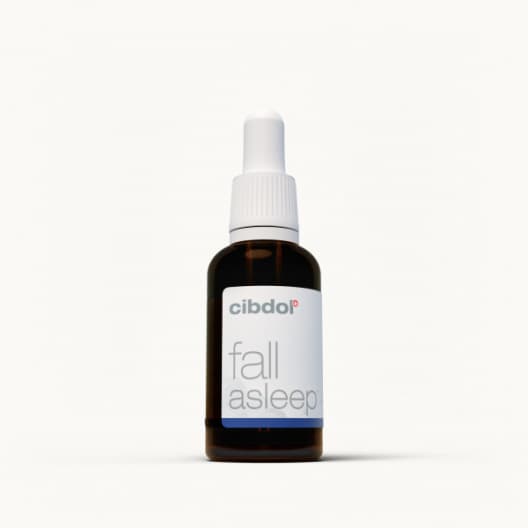

Fall Asleep (Meladol)
Liposomal CBD + melatonin for faster sleep onset.
- • CBD + melatonin
- • Liposomal formula
- • 30ml bottle
Disclosure: We may earn a commission if you purchase via these links.
For those who prefer capsule format, Cibdol's Fall Asleep Capsules help with sleep onset, while Stay Asleep Capsules are formulated for sleep maintenance — waking in the middle of the night rather than difficulty falling asleep. Their Complete Sleep product combines multiple sleep-support compounds for a comprehensive approach.
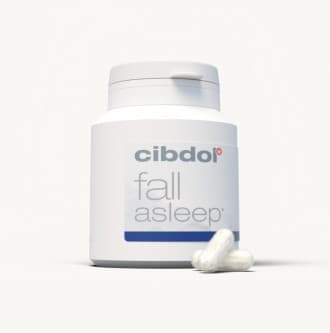
Fall Asleep Capsules
Meladol formula in capsule form. 30 capsules per tub.
- • CBD + melatonin
- • Easy to swallow
- • 30 capsules
Disclosure: We may earn a commission if you purchase via these links.
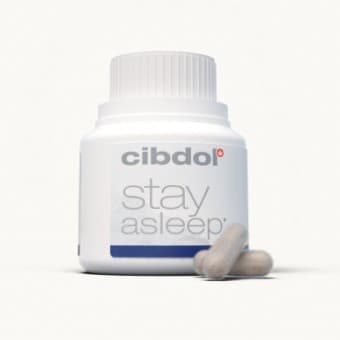
Stay Asleep Capsules
CBD, CBN, hops, 5-HTP for deeper, uninterrupted sleep.
- • CBD + CBN + 5-HTP
- • 60 capsules
- • For light sleepers
Disclosure: We may earn a commission if you purchase via these links.
Nordic Oil's CBD Melatonin Sleep Drops use a full-spectrum CBD base — a good option for those who prefer the entourage effect of whole-plant extract alongside melatonin.
CBD Vital's Ursprung NIGHT oil adds folic acid and Vitamin E to its CBD and melatonin formula. Their CBD Sleep Capsules provide a fixed ~8mg CBD plus melatonin dose in pre-measured capsule form — practical for travel.
CBD Ursprung NIGHT (Sleep Oil)
- • CBD + melatonin + folic acid + Vitamin E
- • Formulated specifically for sleep support
- • Full-spectrum hemp extract base
Disclosure: We may earn a commission if you purchase via these links.
CBD Sleep Capsules (CBD + Melatonin)
- • ~8mg CBD + melatonin per capsule
- • 60 vegan capsules per pack
- • Formulated for sleep onset and quality
Disclosure: We may earn a commission if you purchase via these links.
Dosing Guidance
Melatonin
- Standard dose: 0.5–3mg, taken 30–60 minutes before target sleep time
- For jet lag: 0.5–5mg at bedtime in the new time zone for 3–5 nights
- Higher doses (5–10mg): Common in supplements but not more effective — and more likely to cause next-morning grogginess
- Timing matters: Taking melatonin too early or at the wrong phase of your rhythm can shift sleep in the wrong direction
CBD for sleep
- Starting dose: 15–25mg CBD, taken 1 hour before bed
- If anxiety is the primary issue: 25–50mg may be more effective
- Full-spectrum vs isolate: Full-spectrum extracts appear more effective for sleep in available research — minor cannabinoids and terpenes (myrcene, linalool, terpinolene) contribute to the calming effect
- Be consistent: CBD sleep benefits typically build over 1–2 weeks of nightly use — it is not a one-night intervention
Combination products
Follow product-specific dosing. Most combination products use 1–5mg melatonin paired with 15–30mg CBD.
Other Natural Sleep Supports Worth Considering
Neither CBD nor melatonin alone is a complete solution for chronic insomnia. Other evidence-based approaches that work well alongside them:
- Magnesium glycinate or L-threonate — activates GABA receptors, promotes muscle relaxation and quiet mind
- L-theanine — reduces anxiety without sedation, synergistic with CBD
- Ashwagandha — adaptogen with modest sleep quality improvements in RCT data
- CBN (cannabinol) — CBD's cousin with specific sedative properties, increasingly featured in sleep products. Read our CBD vs CBN guide for a full comparison.
Safety and Side Effects
Melatonin
Melatonin is well tolerated at low doses. At higher doses (above 5mg): morning grogginess, vivid dreams, mild headache, and circadian disruption if taken at the wrong time. Not recommended for children without medical advice, or for pregnant women (limited data).
CBD
See our full CBD side effects guide. For sleep use specifically: some people experience alertness at lower CBD doses (paradoxical stimulation) — if this happens, try a higher dose or switch to capsules for slower release. Check our CBD drug interactions guide if you take prescription medication, as interactions via CYP450 enzymes are clinically relevant.
Frequently Asked Questions
Can I take CBD and melatonin together every night?
Yes — there is no known pharmacological interaction between the two, and many commercial products combine them. Daily melatonin use is considered safe at low doses (0.5–3mg). For long-term daily use, lower doses are preferred to avoid suppressing your body's own melatonin production over time.
Which is better for anxiety-related insomnia?
CBD. Melatonin does not address anxiety. For anxious insomnia, CBD (25–50mg, sublingual) is the better primary option, with melatonin as an optional add-on if sleep timing is also an issue.
Can I stop melatonin once my sleep improves?
Yes. Melatonin is not habit-forming and does not require tapering. Use it as needed for temporary sleep disruption rather than indefinitely.
Does CBD stop working over time?
Anecdotal tolerance reports exist but clinical evidence is limited. Some users cycle CBD (weekdays on, weekends off) to prevent tolerance effects. Unlike conventional sleep medications, CBD does not cause rebound insomnia if stopped.
This article is for informational purposes only and is not intended as medical advice. Persistent sleep problems lasting more than three months should be assessed by a healthcare professional.
See also: CBD for Sleep | CBD vs CBN | CBD Drug Interactions
Last updated: March 2026
New to CBD? Start with our Complete Beginner's Guide to CBD.
Related topics
Where to buy
Affiliate links
CBD oils
Premium Swiss CBD oils from Cibdol — available in multiple concentrations with full certificates of analysis.
CBD Gummies (25mg)
CBD Gummies — Chill Berry (25mg × 10)
- • 25mg CBD isolate per gummy — strong, precise dose
- • THC-free — CBD isolate, zero psychoactive compounds
- • Vegan formula — pectin-based, no gelatine
CBD capsules
Pre-measured CBD softgels and tablets for precise daily dosing — no taste, no measuring, just consistent CBD.
Disclosure: We may earn a commission if you purchase via these links.
Related articles
CBD vs CBN: What's the Difference?
CBD vs CBN: both cannabinoids, both used for sleep — but they work differently. The science, the evidence, and how to choose.
CBD for Sleep: How It Works and What to Expect
Does CBD help you sleep? How CBD affects sleep quality, optimal dosages, best products, and combining it with other supplements.
Best CBD Gummies in Europe: Top Picks for 2026
Best CBD gummies in Europe: Cibdol, Nordic Oil, and Zamnesia reviewed on potency, ingredients, value, and taste. Full buying guide.