
Does CBD Show Up on a Drug Test?
Written by Smart Supplements Editorial Team
Key takeaways
- Drug tests detect THC-COOH, not CBD — CBD itself won't trigger a positive
- CBD isolate carries essentially zero drug test risk
- Full-spectrum CBD at high doses could accumulate enough THC metabolites to fail a test
- If you're regularly tested, choose broad-spectrum or isolate products with third-party COAs
Table of contents
- What Drug Tests Actually Detect
- The Three Types of CBD Products and Their Real Risk
- When Full-Spectrum CBD Could Actually Cause a Positive Test
- How Long Does CBD Stay in Your System?
- Cross-Contamination: The Hidden Risk Even with Isolate
- Who Is at Real Risk? The EU and Netherlands Context
- What to Do If You're Regularly Drug Tested
- What to Do If You Test Positive
- Choosing the Right CBD Product if You're Tested
- Where to Buy
- Frequently Asked Questions
The honest answer is: it depends entirely on which type of CBD product you're using — and most articles bury this detail. CBD itself is invisible to standard drug tests. But some CBD products contain trace amounts of THC, and THC is exactly what those tests are looking for. Here's what you actually need to know before your next test.
What Drug Tests Actually Detect
This is the single most important point in this article: drug tests do not screen for CBD.
Standard workplace urine immunoassay tests look for THC-COOH — 11-nor-9-carboxy-Δ9-tetrahydrocannabinol — which is the primary metabolite your body produces when it processes THC. Your body does not produce THC-COOH from CBD. These are chemically distinct compounds, and CBD metabolism follows a completely different pathway.
So if you took a pure CBD product with zero THC, there is no chemical mechanism by which you would test positive for cannabis.
The confusion arises because many CBD products are not pure CBD. They're made from hemp extract that contains a spectrum of cannabinoids — including small amounts of THC — and if you consume enough THC regularly, it accumulates as THC-COOH in your urine and can cross the detection threshold.
Standard Urine Test Thresholds
| Test Stage | Method | THC-COOH Cutoff |
|---|---|---|
| Initial screening | Immunoassay (EMIT/CLIA) | 50 ng/mL |
| Confirmatory test | GC-MS (gas chromatography–mass spec) | 15 ng/mL |
| Workplace (some EU employers) | Immunoassay | 20–50 ng/mL |
The 15 ng/mL GC-MS threshold is the harder bar to clear. Full-spectrum CBD users at high doses could potentially fail both the initial screen and the confirmatory test.
For a broader look at how CBD interacts with your body, see our complete beginner's guide to CBD.
The Three Types of CBD Products and Their Real Risk
Not all CBD is the same. The product type you choose is the single biggest factor in your drug test risk. For a thorough breakdown, see our guide on full-spectrum vs broad-spectrum vs CBD isolate.
CBD Isolate: Essentially Zero Risk
CBD isolate is pure cannabidiol — all other plant compounds, including THC, have been stripped away during processing. A genuine, third-party-tested isolate should show non-detectable (ND) THC on its COA.
Risk level: essentially zero, provided the product is genuinely pure and has not been contaminated during manufacturing.
Broad-Spectrum CBD: Very Low Risk
Broad-spectrum extracts contain the full range of hemp cannabinoids and terpenes, but with THC specifically removed through an additional processing step. Well-made broad-spectrum products typically show <0.01% THC or ND on their COAs.
Risk level: very low for most users. Some research notes that even "THC-free" broad-spectrum products may carry trace amounts if quality control is poor — always check the COA from a third-party lab.
Full-Spectrum CBD: Small but Real Risk at High Doses
Full-spectrum extracts retain all naturally occurring cannabinoids, including THC up to the EU legal limit of 0.2% (and up to 0.3% in the US). This is where the meaningful drug test risk lies.
Research from Vandrey et al. (2017) published in JAMA documented significant variation in actual cannabinoid content across commercially available CBD products, finding that many were mislabelled — some containing more THC than stated on the label (Vandrey R et al., 2017, JAMA).
Risk level: low to moderate depending on dose, frequency, and individual metabolism.
Product Type Risk Summary
| CBD Type | THC Content | Drug Test Risk | COA to Check |
|---|---|---|---|
| CBD Isolate | None (0%) | Essentially zero | Confirm ND THC |
| Broad-Spectrum | Trace (<0.01%) | Very low | Confirm <0.01% or ND |
| Full-Spectrum | Up to 0.2% (EU) | Low–moderate at high doses | Check actual mg THC per dose |
When Full-Spectrum CBD Could Actually Cause a Positive Test
Let's do the actual maths, because this is where most guides get vague.
A 50mg full-spectrum CBD oil at 0.2% THC contains roughly 0.1mg of THC per dose. Take that twice daily and you're consuming ~0.2mg THC per day. A study by Spindle TR et al. on cannabinoid pharmacokinetics found that even sub-milligram THC doses can produce detectable urinary metabolites, particularly with repeated daily use (Spindle TR et al., 2020, Drug and Alcohol Dependence).
A clinical study cited in research from the Realm of Caring Foundation found that when 15 participants used a full-spectrum CBD extract containing 0.02% THC three times daily for four weeks, seven of them tested positive for THC on urine screening. That's nearly half — at a THC concentration well below the EU legal limit.
Grotenhermen F et al. modelled THC detection thresholds and found that daily consumption of as little as 0.5–1mg of THC can produce urine concentrations of THC-COOH above the 15 ng/mL GC-MS threshold in some individuals (Grotenhermen F et al., 2017, Drug Testing and Analysis).
The key risk factors:
- Daily use (not occasional)
- High doses (50mg+ CBD from full-spectrum)
- Sensitive tests (15 ng/mL GC-MS cutoff rather than 50 ng/mL immunoassay)
- Slow individual THC metabolism
- Products with higher-than-labelled THC content
Occasional low-dose full-spectrum CBD users are very unlikely to fail. Daily high-dose users have a real — if still modest — risk.
How Long Does CBD Stay in Your System?
CBD itself is detectable in blood for 2–5 days with occasional use and up to 10–15 days with daily high-dose use, according to a 2022 urinary pharmacokinetics study published in PMC (Huestis MA et al., PMC 2022).
The THC metabolites from full-spectrum CBD follow a similar timeline to low-dose THC use:
| Usage Pattern | Approximate Detection Window (THC-COOH) |
|---|---|
| Occasional full-spectrum (low dose) | 1–3 days |
| Daily full-spectrum (standard dose) | 3–10 days |
| Daily full-spectrum (high dose, 50mg+ CBD) | Up to 2–4 weeks |
| CBD isolate or broad-spectrum | Typically undetectable |
These are estimates — individual variation in body fat, metabolism speed, and hydration all affect clearance times. For more on timing, see how long does CBD take to work.
Cross-Contamination: The Hidden Risk Even with Isolate
Here's a scenario that catches people off guard: some CBD isolate products have still caused positive drug tests. This happens due to cross-contamination during manufacturing — if a facility also processes full-spectrum products, trace THC can contaminate isolate batches.
A 2023 PMC study analysing commercially available CBD products found measurable Δ9-THC in products labelled as CBD isolate or THC-free, at concentrations that could theoretically contribute to a positive urine test (Gurney SMR et al., 2023, PMC).
This is why third-party COAs are non-negotiable. A COA from the brand's own lab is essentially meaningless — you need a certificate from an independent, accredited laboratory showing the actual cannabinoid profile of that specific batch. Look for:
- Lab name and accreditation number
- Batch/lot number matching your product
- THC result listed as ND (non-detectable) or <0.01%
- Date of testing (ideally within 12 months)
Who Is at Real Risk? The EU and Netherlands Context
Workplace drug testing is far less prevalent in the Netherlands than in the UK or USA. Dutch labour law places significant restrictions on employer-mandated drug testing — it's generally only permitted where there is a direct safety justification, and employees must give explicit consent.
That said, drug testing does exist in specific sectors:
- Transport and logistics — HGV drivers, aviation, maritime (often governed by international regulations)
- Safety-critical roles — construction, heavy industry, chemical plants
- International employers — multinationals with US or UK headquarters may apply group-wide testing policies
- Sports — WADA anti-doping rules apply regardless of nationality
If you work in any of these areas, or for an international employer, it's worth assuming drug testing is possible and choosing your CBD products accordingly.
For context on how supplements in general can interact with workplace policies, see our guide on supplement and drug interactions.
What to Do If You're Regularly Drug Tested
If you know you face regular testing, the practical recommendation is straightforward:
- Switch to CBD isolate or broad-spectrum — eliminate the THC variable entirely
- Always buy from brands with third-party COAs — confirm THC is ND or <0.01%
- Keep a copy of your COA — if you ever face a positive result, this is your first line of evidence
- Declare supplement use before the test — in many EU jurisdictions, pre-declaration of supplement use is relevant context for any positive result
For people who want the entourage effect benefits of broad-spectrum CBD without switching to isolate, Cibdol's CBD softgels offer a well-documented broad-spectrum formula with third-party testing confirming THC removal.
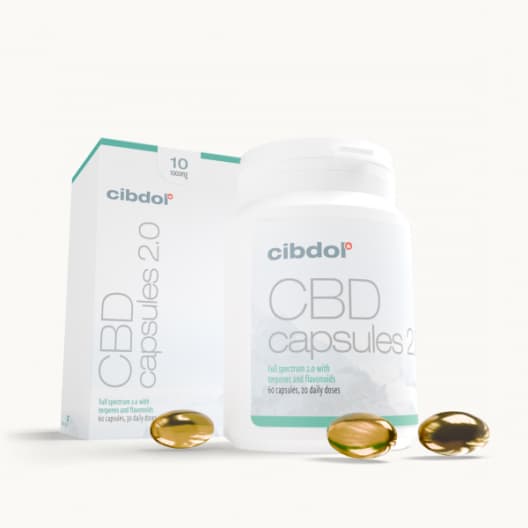

CBD Softgels 10% (1000mg)
The best-selling softgel strength — 1000mg full-spectrum CBD in 60 pre-dosed capsules for convenient daily dosing without any taste or measuring.
- • 1000mg CBD per box (60 caps)
- • Tasteless and odourless
- • Full-spectrum oil formula
Disclosure: We may earn a commission if you purchase via these links.
These softgels are particularly convenient for workplace contexts because the dosing is precise and consistent — unlike oils, there's no risk of accidentally taking a higher dose than intended. For a detailed comparison, see our CBD oil vs CBD capsules guide.
What to Do If You Test Positive
A positive drug test after CBD use is stressful, but it's not necessarily the end of the matter. Here's a practical sequence:
- Don't panic — initial immunoassay screens have a significant false-positive rate for unrelated substances, and a positive screen is not a confirmed result
- Request a confirmatory GC-MS test — this is more specific and set at a lower threshold (15 ng/mL); it will distinguish between incidental THC metabolite exposure and recreational cannabis use
- Disclose your CBD use — explain the product type, dose, and frequency; provide your COA
- Understand the legal context — in the Netherlands, a positive workplace test does not automatically constitute grounds for dismissal; it must be assessed in context
- Consult an occupational health professional or employment lawyer if the situation escalates
Choosing the Right CBD Product if You're Tested
The safest approach is isolate. The next-safest is a reputable broad-spectrum product with a current third-party COA. Full-spectrum is the only category with meaningful risk, and that risk is dose- and frequency-dependent.
If you're unsure about dosing in general, our CBD dosage guide walks through how to find the right amount for your needs without overshooting.
For those who still want the convenience of a quality CBD oil and are in a low-risk testing environment, Cibdol's 10% CBD oil is a full-spectrum option with transparent lab testing — but it should be approached with the understanding that high daily doses carry some theoretical risk.
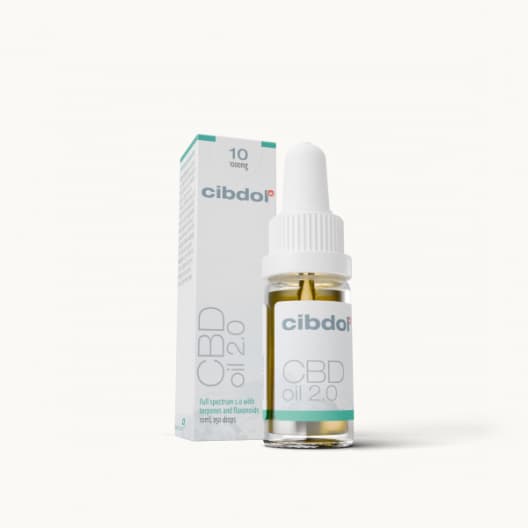
CBD Oil 2.0 10% (1000mg)
The most popular strength — 1000mg full-spectrum CBD oil for balanced, noticeable daily support without going too strong too fast.
- • 1000mg CBD per 10ml bottle
- • Full-spectrum entourage formula
- • Hemp seed oil base
Disclosure: We may earn a commission if you purchase via these links.
When in doubt about product quality or CBD side effects, our guide on CBD oil side effects covers what to watch for.
Where to Buy
If you're concerned about drug testing, these are the product categories worth focusing on:
For regular drug-tested workers: Look specifically for CBD isolate or broad-spectrum products from brands that publish batch-specific third-party COAs. Cibdol is one of the few European brands that meets this standard consistently — their softgels are a practical, low-risk option with precise dosing.
CBD Softgels 10% (1000mg)
The best-selling softgel strength — 1000mg full-spectrum CBD in 60 pre-dosed capsules for convenient daily dosing without any taste or measuring.
- • 1000mg CBD per box (60 caps)
- • Tasteless and odourless
- • Full-spectrum oil formula
Disclosure: We may earn a commission if you purchase via these links.
For low-risk users who prefer oils: Cibdol's 10% CBD oil is a quality full-spectrum product for those who are not regularly tested or who use low doses. The brand's transparency on lab testing makes it one of the more trustworthy options in the European market.
What to avoid: CBD products sold without COAs, or with COAs from the brand's own in-house lab. No independently verified THC data = no way to assess your actual risk.
Frequently Asked Questions
Will CBD definitely show up on a drug test?
No. CBD itself does not appear on standard drug tests, which screen for THC-COOH (a THC metabolite). CBD does not produce this metabolite. The risk is from trace THC present in some CBD products — particularly full-spectrum extracts — not from CBD itself.
What CBD products are safe for drug-tested workers?
CBD isolate is the safest option, as it contains no THC. Broad-spectrum CBD from a reputable brand with a third-party COA confirming non-detectable THC is also a strong option. Full-spectrum products carry a real — if small — risk at high daily doses and are best avoided if you're regularly tested.
How long does CBD stay in your system before a drug test?
CBD itself clears the body in 2–5 days for occasional users, up to 10–15 days for daily high-dose users. THC metabolites from full-spectrum products may remain detectable in urine for 1–3 days (occasional low dose) to 2–4 weeks (daily high dose). These are estimates — individual metabolism varies significantly.
Can I fail a drug test even if I use CBD isolate?
It's very unlikely, but cross-contamination during manufacturing has caused rare cases of detectable THC even in isolate-labelled products. This is why buying only from brands with batch-specific third-party COAs matters — the COA should show non-detectable THC for your specific product lot.
What should I tell my employer if I test positive?
Disclose that you use CBD as a supplement, provide the product name and your COA, and request a confirmatory GC-MS test. In the Netherlands, a positive workplace test requires contextual assessment — a pre-declaration of supplement use strengthens your position significantly.
Does the type of drug test matter?
Yes. Hair follicle tests have a 90-day detection window and may detect THC from even low-level exposure. Urine tests (the most common workplace test) have a detection window of days to weeks. Saliva tests detect very recent use only. A 2022 PMC study confirmed that urinary THC-COOH from oral CBD use is detectable but typically at low concentrations for isolate and broad-spectrum users (Huestis MA et al., PMC 2022).
Last updated: March 2026
Written by the Smart Supplements editorial team
This article is for informational purposes only and is not intended as medical advice. Always consult a healthcare professional before starting any new supplement, especially if you take prescription medication.
Related topics
Where to buy
Affiliate links
CBD oils
Premium Swiss CBD oils from Cibdol — available in multiple concentrations with full certificates of analysis.
CBD Gummies (25mg)
CBD Gummies — Chill Berry (25mg × 10)
- • 25mg CBD isolate per gummy — strong, precise dose
- • THC-free — CBD isolate, zero psychoactive compounds
- • Vegan formula — pectin-based, no gelatine
CBD capsules
Pre-measured CBD softgels and tablets for precise daily dosing — no taste, no measuring, just consistent CBD.
Disclosure: We may earn a commission if you purchase via these links.
Related articles
CBD for Anxiety: What Does the Research Say?
CBD for anxiety: what the research actually supports, how it works, optimal dosage, best products and who it works best for. Science-based, honest guide.
CBD Oil Side Effects: What to Expect
CBD is considered safe by the WHO, but side effects can occur at higher doses or with certain medications. Here's what to expect.
How to Choose the Right CBD Dosage: A Practical Guide
Finding your ideal CBD dose takes some experimentation — but starting low and going slow is the approach backed by both research and experienced users.