
CBD vs CBN: What's the Difference?
Written by Smart Supplements Editorial Team
Key takeaways
- CBN (cannabinol) forms naturally as THC degrades through oxidation — which is why aged cannabis is more sedating than fresh cannabis.
- CBD improves sleep mainly by reducing anxiety via 5-HT1A receptor activity; CBN may work more directly via GABA pathway sedation — different and potentially complementary mechanisms.
- CBD has far stronger clinical evidence for sleep than CBN — CBN's sedative reputation relies heavily on a 1975 study and preclinical data, not robust human RCTs.
- CBD and CBN can be taken together safely; the combination may offer better sleep outcomes than either alone by targeting different pathways.
- Typical effective CBN doses (5–20mg) are much lower than CBD doses (25–75mg) — do not substitute a CBD dose with an equivalent CBN dose.
Table of contents
Origins: Where Each Cannabinoid Comes From
CBD (cannabidiol) is one of the most abundant cannabinoids in hemp, typically making up 10–20% of the plant by dry weight. It is extracted directly from fresh hemp flowers and leaves using supercritical CO₂ or ethanol extraction. This abundance makes CBD relatively affordable and widely available.
CBN (cannabinol) has a more unusual origin. CBN is not synthesised directly by the cannabis plant in significant quantities — instead, it forms as THC degrades. When cannabis is exposed to oxygen, light, and heat over time, THC (tetrahydrocannabinol) oxidises through a process called decarboxylation and aromatisation, eventually converting into CBN.
This means fresh cannabis contains very little CBN. Older, improperly stored cannabis — which experienced users often describe as more sedating — has higher CBN content as a direct result of THC degradation. The "sleepiness" long associated with aged cannabis is, in part, a CBN effect.
Because CBN is present in such small concentrations in fresh hemp, commercial CBN is produced either by extracting from deliberately aged cannabis material or through controlled oxidation of CBD or THC in laboratory conditions. This makes CBN significantly more expensive to produce than CBD — which is reflected in product prices.
CBN is mildly psychoactive in theory — it binds CB1 receptors at roughly 1/10th the potency of THC — but at typical supplement doses (5–20mg), it produces no intoxicating effect.
How They Work — Different Mechanisms
Understanding the mechanisms helps explain why these cannabinoids suit different purposes.
CBD does not strongly activate CB1 or CB2 receptors directly. Its effects come primarily from:
- 5-HT1A serotonin receptor agonism — reduces anxiety, which is the primary pathway through which CBD improves sleep
- FAAH enzyme inhibition — slows the breakdown of anandamide (the "bliss molecule"), maintaining higher endogenous cannabinoid levels
- TRPV1 activation — involved in pain and inflammation modulation
- PPARγ receptor activity — metabolic and anti-inflammatory effects
CBN works through a different set of mechanisms:
- CB1 and CB2 receptor agonism — weak direct binding, but meaningful at higher doses. CB2 binding is relatively stronger, with implications for immune modulation and inflammation
- TRPA1 channel activation — a pain-sensing ion channel involved in both analgesic and potential sedative effects
- GABA receptor modulation — Bhattacharya et al. (2019, European Journal of Pharmacology) found CBN inhibits voltage-gated sodium channels in GABA receptors, a mechanism consistent with sedation and consistent with how some pharmaceutical sleep aids work
The key distinction for sleep: CBD reduces anxiety to enable sleep (indirect pathway); CBN may produce more direct CNS sedation via GABA modulation. These are complementary rather than competing mechanisms.
What the Research Says
CBD's evidence base for sleep
CBD's sleep research is relatively strong by supplement standards. Shannon et al. (2019) found sleep scores improved in 66.7% of participants within the first month of CBD use — with the effect primarily attributable to anxiety reduction. A 2020 systematic review in the Journal of Clinical Medicine (Blessing et al.) confirmed CBD's anxiolytic effects as the dominant mediator of its sleep benefits.
Epidiolex trials (for epilepsy, not sleep) also documented reduced wakefulness and improved sleep architecture as secondary findings at clinical doses.
The picture that emerges is consistent: CBD helps sleep primarily by reducing the anxiety and stress that prevent it, rather than acting as a direct sedative.
CBN's evidence base for sleep
Here it is important to be honest: CBN's "sleepy cannabinoid" reputation is largely built on thin evidence.
The most-cited study supporting CBN sedation is Karniol et al. (1975), which found that CBN combined with THC produced more sedation than THC alone. The critical caveat: this studied CBN in the presence of THC — not CBN in isolation. Whether the sedative effect was synergistic with THC or attributable to CBN alone is unclear from this data.
There are no robust, placebo-controlled human RCTs demonstrating that isolated CBN, at supplemental doses, produces reliable sedation in healthy adults.
What does exist:
- Mechanistic research (GABA pathway, TRPA1) providing plausible sedation mechanisms
- Preclinical (animal) studies showing sedative effects
- Strong user anecdote, particularly for combination CBD+CBN products
- Bhattacharya et al. (2019) GABA sodium channel inhibition (mechanistic, not clinical)
The honest position: CBD has better clinical evidence for sleep than CBN. CBN is an interesting, mechanistically plausible candidate for direct sedation, but the clinical trial data hasn't caught up with the marketing yet.
CBD vs CBN for Sleep: Head-to-Head
| Factor | CBD | CBN |
|---|---|---|
| Evidence quality | ★★★★☆ (good human data) | ★★☆☆☆ (mostly preclinical) |
| Primary mechanism | Reduces anxiety → enables sleep | May act via GABA pathway (direct sedation) |
| Best for | Anxiety-driven insomnia | Primary sleep onset difficulty |
| Onset | 15–90 min (format dependent) | 15–90 min (format dependent) |
| Duration | 4–8 hours | Similar |
| Side effects | Mild (fatigue, appetite changes at high doses) | Possible next-day grogginess (high doses) |
| Drug test risk | Low (pure CBD/broad-spectrum) | Very low |
| Availability | Widely available across Europe | Less common, higher price point |
| Cost | € | €€–€€€ |
Summary: For most people struggling with sleep — particularly anxiety-driven or stress-related insomnia — CBD is the better-evidenced starting point. CBN becomes worth exploring when CBD alone delivers partial results, or when sleep onset (rather than anxiety) is the primary issue.
Other Use Cases — Where They Differ
Beyond sleep, CBD and CBN diverge significantly in their therapeutic profiles:
Pain and inflammation: Both show anti-inflammatory properties. CBD has broader receptor activity and stronger clinical evidence. CBN adds TRPA1 pain channel modulation — potentially useful for pain during sleep, such as night-time joint pain or fibromyalgia. A combined CBD+CBN product may offer complementary analgesia.
Antibacterial: CBN shows notably strong antibacterial activity, including against MRSA in vitro (Appendino et al., 2008). This is one of CBN's most interesting research areas — potentially more relevant for topical formulations than as a consumer sleep supplement.
Appetite: CBN stimulates appetite in rodent models (Farrimond et al., 2012); CBD does not significantly affect appetite. For most wellness consumers this is irrelevant — but for clinical contexts (cancer cachexia, eating disorder recovery), it may be meaningful.
Anxiety: CBD clearly superior. There is no meaningful clinical evidence that CBN reduces anxiety.
Epilepsy and neuroprotection: CBD is EMA/FDA-approved for specific epilepsies. CBN has no approved medical use, though early neuroprotective research is interesting.
Can You Take CBD and CBN Together?
Yes — and for sleep specifically, this may be the optimal approach.
Their mechanisms are complementary: CBD addresses the anxiety and stress that prevent sleep onset (5-HT1A pathway); CBN may contribute direct sedation via GABA modulation. No adverse interactions between the two cannabinoids have been identified.
The entourage effect — the synergistic interaction between cannabinoids — also suggests that combination products containing both, alongside sleep-relevant terpenes like myrcene and linalool, are likely to outperform either cannabinoid taken in isolation.
A note on dosing: CBN is far more active at cannabinoid receptors per milligram than CBD. Typical CBD sleep doses run 25–75mg; typical CBN doses are 5–20mg. Do not simply swap a 50mg CBD dose for 50mg CBN — the effect profile would be very different. In combination products, CBN is typically the minority ingredient (5–15mg) alongside a larger CBD dose.
For a deep dive into CBN specifically — its full mechanism, research, and product guide — see our dedicated articles: What Is CBN? and CBN for Sleep.
How to Choose
Start with CBD if:
- Sleep problems are driven by anxiety, stress, or an overactive mind
- You're new to cannabinoids and want the best-evidenced option
- Budget is a consideration (CBD is substantially cheaper than CBN)
- You want to establish a baseline before adding additional cannabinoids
Add CBN or switch to CBD+CBN if:
- You've tried CBD for 4+ weeks with partial sleep improvement
- Your primary issue is sleep onset rather than sleep anxiety
- You're willing to experiment with the emerging CBN evidence
- You want the most comprehensive cannabinoid sleep support available
Consider combination CBD+CBN products:
- When you want complementary mechanisms in a single dose
- For night-time joint or muscle pain alongside sleep difficulty
- Cibdol's CBN-containing formulations are designed for exactly this use case
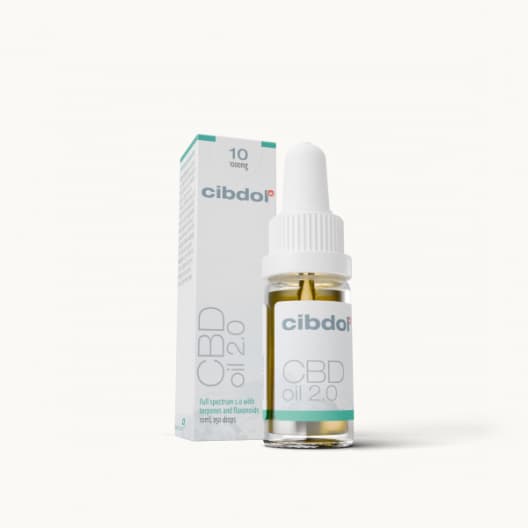

CBD Oil 2.0 10% (1000mg)
The most popular strength — 1000mg full-spectrum CBD oil for balanced, noticeable daily support without going too strong too fast.
- • 1000mg CBD per 10ml bottle
- • Full-spectrum entourage formula
- • Hemp seed oil base
Disclosure: We may earn a commission if you purchase via these links.
For comparison with other sleep supplements, see CBD for Sleep and CBD vs THC.
CBD oils
Premium Swiss CBD oils from Cibdol — available in multiple concentrations with full certificates of analysis.
Disclosure: We may earn a commission if you purchase via these links.
Frequently Asked Questions
Is CBN legal in Europe?
Yes. CBN is not a scheduled controlled substance in the EU. Like CBD, it exists in a regulatory grey zone as a Novel Food ingredient, but it is not illegal to buy, sell, or possess.
Does CBN show up on a drug test?
Standard drug tests screen for THC-COOH (a THC metabolite), not CBN. CBN itself should not trigger a positive result. However, if a CBN product contains trace THC (check the COA), that THC could potentially be detected at high enough doses.
Which is stronger for sleep — CBD or CBN?
"Stronger" depends on the mechanism of your sleep issues. CBD has more clinical evidence overall. CBN may be more direct for sleep onset. Most sleep specialists in the cannabinoid field would suggest starting with CBD and adding CBN if needed.
Are there any risks to taking CBD and CBN together?
No known adverse interactions. Both are generally well-tolerated. As with any CBD product, be aware of potential cytochrome P450 drug interactions if you take prescription medications — particularly relevant for CBD at higher doses.
This article is for informational purposes only and is not intended as medical advice. Always consult a healthcare professional before starting any new supplement.
Last updated: March 2026
New to CBD? Start with our Complete Beginner's Guide to CBD.
Related topics
Where to buy
Affiliate linksCBD oils
Premium Swiss CBD oils from Cibdol — available in multiple concentrations with full certificates of analysis.
CBD Gummies (25mg)
CBD Gummies — Chill Berry (25mg × 10)
- • 25mg CBD isolate per gummy — strong, precise dose
- • THC-free — CBD isolate, zero psychoactive compounds
- • Vegan formula — pectin-based, no gelatine
CBD capsules
Pre-measured CBD softgels and tablets for precise daily dosing — no taste, no measuring, just consistent CBD.
Disclosure: We may earn a commission if you purchase via these links.
Related articles
CBN: The Sleepy Cannabinoid You Haven't Heard Of
CBN is a minor cannabinoid formed as THC ages — and it's gained a reputation as a sleep aid. But does the science support the hype? Here's an honest look.
CBD vs Melatonin for Sleep: Which Is Better?
CBD vs melatonin for sleep: different mechanisms, different strengths. Compare the evidence and find which one fits your sleep problem.
CBD vs THC: Key Differences Explained
CBD vs THC: same plant, very different effects. How their chemistry differs, what each one treats, and how European law handles them.