
How to Read a Probiotic Label: CFU, Strains & What Actually Matters
Written by Smart Supplements Editorial Team
Key takeaways
- Strain identification matters more than CFU count — a probiotic listing only genus and species without a strain code lacks verifiable clinical evidence.
- "Guaranteed at end of shelf life" is the gold standard — CFU counts measured only at manufacture are misleading because bacteria die over time.
- EU labels cannot legally say "probiotic" — EFSA has not approved it as a health claim, so European products use terms like "live cultures" instead.
- The 2020 Lactobacillus reclassification changed many familiar names — Lactobacillus rhamnosus is now Lacticaseibacillus rhamnosus, and over 200 species were renamed.
- More CFU does not automatically mean better — clinical trials typically use 1-50 billion CFU, and mega-dose marketing is rarely supported by strain-specific evidence.
- Third-party testing and GMP certification are non-negotiable quality markers — independent verification ensures the label matches the contents.
Table of contents
- Why Probiotic Labels Are So Confusing
- The Genus-Species-Strain Hierarchy
- The 2020 Naming Revolution
- CFU: What the Numbers Actually Mean
- Multi-Strain vs Single-Strain
- Delivery Technology: Getting Bacteria Where They Need to Go
- Storage: Refrigerated vs Shelf-Stable
- The EU Labelling Problem
- Red Flags: What to Avoid
- Green Flags: What to Look For
- A Practical Label-Reading Checklist
- Complementary Supplements for Gut Health
- Frequently Asked Questions
- Disclaimer
- Related Articles
Why Probiotic Labels Are So Confusing
Walk into any health shop in Europe, and you will find an entire shelf of products containing live bacteria. Some promise digestive harmony. Others claim to support immunity. The packaging is slick, the numbers are big, and the terminology is dense. Yet none of them — not a single one — actually uses the word "probiotic" on the front label. Welcome to the peculiar world of probiotic labelling in the EU.
The confusion starts with regulation. In the European Union, health claims on food supplements must be pre-approved by EFSA. Despite the World Health Organization defining probiotics as "live microorganisms which, when administered in adequate amounts, confer a health benefit on the host," EFSA has consistently rejected applications to use the term "probiotic" as a health claim on product labels. The reasoning? EFSA considers "probiotic" itself to be a health claim, and no applicant has yet provided sufficient evidence — to EFSA's standards — that a specific bacterial preparation meets this definition.
The result is a marketplace where manufacturers dance around the terminology. You will see "live cultures," "bacterial cultures," "microbiotic formula," and every creative synonym imaginable — but never the P-word. For consumers trying to learn how to choose a probiotic, this regulatory landscape makes an already complex category even harder to navigate.
Then there is the science itself. Probiotic research has exploded over the past two decades. We now know that the specific strain of a bacterium matters enormously — far more than the species or genus. We know that colony-forming unit (CFU) counts can be misleading. We know that delivery technology affects whether bacteria survive the journey to your intestines. And we know that the familiar name Lactobacillus has been split into dozens of new genera, creating a transitional naming mess on labels worldwide.
This article is your complete guide to cutting through that confusion. By the end, you will know exactly what to look for, what to ignore, and how to evaluate any probiotic supplement with confidence.

The Genus-Species-Strain Hierarchy
Understanding probiotic nomenclature is the single most important skill for reading labels intelligently. Every probiotic organism is classified using a three-level naming system borrowed from microbiology: genus, species, and strain.
Genus: The Family Name
The genus is the broadest classification. Think of it as a surname shared by a large extended family. Lactobacillus, Bifidobacterium, and Saccharomyces are all genera (the plural of genus) commonly found in probiotic supplements. Members of the same genus share general characteristics, but they can behave very differently from one another — just as members of the same family can have wildly different personalities.
Species: The Given Name
The species narrows things down. Lactobacillus acidophilus and Lactobacillus rhamnosus are both in the Lactobacillus genus, but they are distinct species with different properties, preferred habitats, and clinical evidence. The species name tells you more about what the organism does, but it still does not give you the full picture.
Strain: The Individual Identity
The strain is where the magic — or the evidence — lives. A strain is a specific, genetically identified variant within a species. It is designated by an alphanumeric code following the species name: Lactobacillus rhamnosus GG, Bifidobacterium lactis BB-12, Saccharomyces boulardii CNCM I-745.
Here is why this matters so profoundly: clinical evidence is strain-specific. When a study demonstrates that a particular probiotic reduces antibiotic-associated diarrhoea, that finding applies to the specific strain tested — not to every member of the same species. Lactobacillus rhamnosus GG has decades of clinical evidence behind it. A different strain of Lactobacillus rhamnosus with no published research? That is an entirely different proposition.
| Level | Example | What It Tells You |
|---|---|---|
| Genus | Lactobacillus | Broad bacterial family — very general |
| Species | Lactobacillus rhamnosus | Specific organism — somewhat useful |
| Strain | Lactobacillus rhamnosus GG | Exact variant — clinically relevant |
The bottom line: if a product lists only genus and species but no strain identifier, you have no way of verifying whether any clinical research supports that particular organism. It is a critical omission, and it should give you pause.

The 2020 Naming Revolution
If you have been buying probiotics for years, you may have noticed something odd on recent labels: familiar names have changed. Lactobacillus rhamnosus might now appear as Lacticaseibacillus rhamnosus. Lactobacillus plantarum could be listed as Lactiplantibacillus plantarum. No, the manufacturer has not changed the product — the scientific community changed the names.
In 2020, a landmark paper in the International Journal of Systematic and Evolutionary Microbiology reclassified the genus Lactobacillus. The old genus had become a taxonomic catch-all containing over 260 species that were, genetically speaking, extremely diverse. Researchers split it into 25 new genera to better reflect the evolutionary relationships between species.
This was scientifically overdue, but it created a labelling headache. Manufacturers, regulators, and consumers all had to adjust. During this transitional period — which is still ongoing — you may encounter either the old or new names on products. Both refer to the same organism.
Key Name Changes
| Old Name | New Name | Common Strains |
|---|---|---|
| Lactobacillus rhamnosus | Lacticaseibacillus rhamnosus | GG, HN001 |
| Lactobacillus casei | Lacticaseibacillus casei | Shirota, DN-114 001 |
| Lactobacillus plantarum | Lactiplantibacillus plantarum | 299v, WCFS1 |
| Lactobacillus reuteri | Limosilactobacillus reuteri | DSM 17938, NCIMB 30242 |
| Lactobacillus fermentum | Limosilactobacillus fermentum | ME-3, CECT5716 |
| Lactobacillus gasseri | Lactobacillus gasseri | BNR17 (unchanged — stayed in core genus) |
| Lactobacillus acidophilus | Lactobacillus acidophilus | LA-5, NCFM (unchanged) |
Note that some well-known species — including L. acidophilus and L. gasseri — stayed within the core Lactobacillus genus. The genera Bifidobacterium and Saccharomyces were not affected by this reclassification.
What this means for you as a consumer: do not be alarmed if you see unfamiliar genus names on a product you have used before. Check the species and strain — if those match, it is the same organism under a new family name. A quality manufacturer will often list both old and new names during the transition to avoid confusion.
CFU: What the Numbers Actually Mean
Colony-forming units (CFU) is the standard measurement for live bacteria in a probiotic supplement. One CFU represents a single viable bacterial cell (or a cluster of cells) capable of reproducing to form a colony. When a label says "10 billion CFU," it means the product contains approximately 10 billion live, viable organisms.
Simple enough — except that the number on the label may not reflect what is actually alive in the product when you take it.
At Manufacture vs At Expiry
Bacteria are living organisms, and they die over time. Heat, moisture, oxygen exposure, and simple aging all reduce the viable count in a probiotic product. This creates a crucial distinction:
- CFU at manufacture: The count when the product was made. This number will always be the highest, and it is the least useful for the consumer.
- CFU at expiry (end of shelf life): The count guaranteed to be present at the product's expiry date. This is the number that matters.
A reputable manufacturer will overfill — adding more CFU at production than the label claims — so that even after natural die-off, the guaranteed amount remains at expiry. If a label says "10 billion CFU guaranteed at end of shelf life," the product may have contained 15-20 billion at manufacture.
Red flag: If a product states its CFU count "at time of manufacture" or does not specify when the count applies, you should assume significant die-off may have occurred by the time you consume it.
The "More Is Better" Myth
Marketing departments love big numbers. "50 billion CFU!" "100 billion CFU!" "200 billion mega-strength!" The implication is clear: more bacteria equals more benefit. But the clinical evidence does not support this linear relationship.
Most well-designed clinical trials use doses between 1 billion and 50 billion CFU, depending on the strain and indication. Some of the most extensively studied probiotics — like Saccharomyces boulardii CNCM I-745 for diarrhoea prevention — are effective at just 5-10 billion CFU. Lactobacillus rhamnosus GG has demonstrated benefits across a range of doses, often starting at 10 billion CFU.
There is no robust evidence that taking 100 billion CFU provides meaningfully greater benefit than 20 billion for most applications. What the research does show is that:
- The effective dose is strain-specific — different strains have different clinically validated dosages.
- Viability matters more than count — 10 billion live, well-protected bacteria that reach your intestines will outperform 100 billion dead ones.
- Formulation quality determines survival — a product with superior delivery technology at a lower CFU count may be more effective than a higher-count product with poor survivability.
| CFU Range | Typical Use | Notes |
|---|---|---|
| 1-5 billion | Maintenance, general wellness | Sufficient for many well-studied strains |
| 10-25 billion | Targeted support, post-antibiotic | Most common clinical trial range |
| 25-50 billion | Intensive protocols, specific conditions | Higher end of evidence-based dosing |
| 50-100+ billion | Marketing territory | Rarely supported by strain-specific evidence |
Multi-Strain vs Single-Strain
Another source of confusion on probiotic labels is the number of different strains included. Products range from single-strain formulations to complex blends containing 15 or more strains. Neither approach is inherently superior — the right choice depends on your goal.
When Single-Strain Makes Sense
Single-strain probiotics contain one specific, well-researched strain. The advantage is clarity: the clinical evidence applies directly to what you are taking, at the dose stated. If a particular strain has been shown to help with a specific condition, a single-strain product delivering that exact strain at the studied dose is the most evidence-based approach.
Examples include Saccharomyces boulardii CNCM I-745 for antibiotic-associated diarrhoea, or Lactobacillus rhamnosus GG for a range of gastrointestinal and immune applications. These strains have been studied individually, and their benefits are well-characterised.
When Multi-Strain Makes Sense
Multi-strain probiotics combine several strains, often from different genera and species. The rationale is that the human gut microbiome is a diverse ecosystem, and providing multiple strains may support that diversity more effectively than a single organism. Some research suggests that certain strain combinations can have synergistic effects — working together more effectively than any single strain alone.
Multi-strain products are often appropriate for:
- General gut health maintenance
- Supporting microbiome diversity after disruption
- Broad-spectrum digestive support
The "Kitchen Sink" Problem
However, not all multi-strain products are created thoughtfully. Some manufacturers appear to throw every available strain into a single capsule — the "kitchen sink" approach — without evidence that those particular strains work well together. Worse, in a multi-strain product with a fixed total CFU count, each individual strain may be present at a dose far below its clinically studied amount.
Example: A product advertising "20 billion CFU with 15 strains" may contain fewer than 1.5 billion CFU of each strain. If the clinical evidence for one of those strains was established at 10 billion CFU, the product is delivering a sub-therapeutic dose of that strain — despite the impressive total count.
What to look for: The best multi-strain products will list the CFU count for each individual strain, not just the total. They will also provide a rationale for the specific combination — ideally citing research on the combination itself, or at minimum on each component strain at the included dose.
Delivery Technology: Getting Bacteria Where They Need to Go
A probiotic is only useful if the bacteria arrive alive in your intestines. The journey from capsule to colon is treacherous: stomach acid (pH 1.5-3.5) kills most unprotected bacteria within minutes. This is why delivery technology has become a key differentiator in probiotic quality.
Enteric Coatings
Enteric-coated capsules have a pH-sensitive outer layer that remains intact in the acidic stomach environment but dissolves in the more alkaline conditions of the small intestine (pH 6-7.4). This protects the bacteria from gastric acid destruction. Enteric coatings are one of the most common and well-validated delivery approaches.
Microencapsulation
Microencapsulation involves coating individual bacterial cells or small clusters in a protective matrix — typically made from alginate, chitosan, or other food-grade polymers. This provides a physical barrier against acid, bile, and oxygen. The matrix dissolves gradually in the intestinal environment, releasing the bacteria where they can colonise.
Freeze-Drying (Lyophilisation)
Freeze-drying is a preservation method rather than a delivery technology, but it is critical for shelf stability. Bacteria are frozen and then dehydrated under vacuum, putting them into a state of suspended animation. When moisture is reintroduced (in the gut), they rehydrate and become metabolically active again. Well-executed freeze-drying can maintain viability for years without refrigeration.
Delayed-Release Capsules
Some products use delayed-release capsule technology — typically DRcaps or similar acid-resistant capsule materials — that slow the dissolution of the capsule in gastric fluid. While not as robust as true enteric coatings, they provide meaningful protection compared to standard vegetarian capsules.
Why This Matters
A product with 50 billion CFU in a standard capsule may deliver fewer viable bacteria to your intestines than a product with 10 billion CFU in an enteric-coated, microencapsulated formulation. The delivery technology is not a marketing gimmick — it is a genuine functional differentiator.
What to look for on the label: terms like "enteric-coated," "acid-resistant," "delayed-release," "DRcaps," "microencapsulated," or "BIO-tract" (a specific patented delivery system). If a product provides no information about how its bacteria survive stomach acid, that is a legitimate concern.
Storage: Refrigerated vs Shelf-Stable
The storage requirements of a probiotic product tell you something important about its formulation and stability testing.
Refrigerated Probiotics
Traditionally, most probiotics required refrigeration because bacteria are sensitive to heat and moisture. Refrigerated products are stored in the cold chain from manufacture to retail, maintaining temperatures that slow bacterial die-off. These products tend to have shorter shelf lives (6-18 months) and must remain cold to preserve their CFU count.
Refrigeration is not inherently a sign of quality — it may simply mean the formulation was not designed for room-temperature stability. However, some strains are naturally less stable and genuinely require cold storage to maintain viability.
Shelf-Stable Probiotics
Advances in freeze-drying technology, protective excipients, and moisture-barrier packaging have made shelf-stable probiotics increasingly common and reliable. These products are formulated and tested to maintain their guaranteed CFU count at room temperature (typically up to 25°C) for the duration of their shelf life.
A quality shelf-stable product will have undergone accelerated stability testing — exposing the product to elevated temperatures and humidity to model long-term storage — and will specify its storage conditions clearly on the label.
What "Shelf-Stable" Actually Means
"Shelf-stable" does not mean indestructible. It means the product has been validated to maintain its stated CFU count under specific storage conditions for a defined period. Leaving a shelf-stable probiotic in a hot car or a steamy bathroom will still degrade the product. Always check for:
- Recommended storage temperature (usually "below 25°C" or "store in a cool, dry place")
- Moisture protection (desiccants in the bottle, blister packs rather than loose bottles)
- Packaging quality (amber glass or opaque, moisture-barrier containers; avoid clear plastic bottles)
The EU Labelling Problem
Understanding EU labelling regulations is essential context for European consumers. As mentioned earlier, the word "probiotic" cannot appear on food supplement labels in the EU. Here is the full story.
EFSA and Health Claims
Under Regulation (EC) No 1924/2006 — the EU Nutrition and Health Claims Regulation — any claim suggesting a health benefit must be authorised by the European Commission following a scientific assessment by EFSA. Manufacturers of probiotic products have submitted numerous applications to use claims related to digestive health, immune function, and other benefits. EFSA has rejected virtually all of them, citing insufficient evidence.
More controversially, EFSA has taken the position that the word "probiotic" itself constitutes a health claim — because the WHO definition includes the phrase "confer a health benefit." Therefore, even using the word "probiotic" on a label without any additional health claim is considered non-compliant.
The Practical Impact
This creates a confusing situation for consumers:
- Products sold in Europe as "live culture supplements" may be identical to products sold in the USA, Canada, or Australia as "probiotics."
- European consumers searching for probiotics may not recognise compliant EU products because the familiar terminology is absent.
- Some online retailers selling to EU customers from outside the EU may use the word "probiotic," creating an uneven playing field.
What You Will See Instead
On EU-compliant labels, look for these alternative terms:
- "Live cultures" or "live bacterial cultures"
- "Bacterial cultures" or "microbial cultures"
- "Contains [X] billion live microorganisms"
- "Microbiotic formula" or "microbiome support"
The absence of the word "probiotic" on a European product is a sign of regulatory compliance, not a sign of inferior quality. In fact, some of the world's most rigorously tested bacterial culture products are manufactured in Europe.
Red Flags: What to Avoid
Now that you understand the fundamentals, let us examine the warning signs that indicate a probiotic product may not deliver what it promises.
1. No Strain Identification
If the label lists bacteria only to the species level — Lactobacillus acidophilus, Bifidobacterium longum — without strain codes, you cannot verify whether any clinical research supports those specific organisms. This is the most common red flag and the easiest to spot.
2. Proprietary Blends
"Proprietary blend" is a legal term allowing manufacturers to list ingredients without disclosing individual amounts. In a probiotic context, this means you know the total CFU count but not how much of each strain is included. A product might contain 20 billion CFU total but deliver 19.5 billion of the cheapest strain and only 500 million of the others. Proprietary blends exist to protect "trade secrets," but in practice they more often hide inadequate dosing.
3. Unrealistic Health Claims
Any product claiming to "cure" a disease, "eliminate" a condition, or "guarantee" a specific health outcome is making claims that are not supported by the evidence base and likely violate advertising regulations. Probiotics are supplements, not medicines. They can support health, but they do not treat or cure disease.
4. Mega-CFU Marketing Without Justification
As discussed, CFU counts above 50 billion are rarely supported by strain-specific clinical evidence. A product boasting "150 billion CFU mega-strength" without citing the clinical research justifying that dose is using big numbers as a marketing tool. Ask yourself: is there published evidence for this strain at this dose?
5. Poor Packaging
Probiotics are sensitive to moisture, heat, and light. Products in:
- Clear plastic bottles (light exposure)
- Bottles without desiccants (moisture exposure)
- Single-bottle formats without individual blister packing
...may have compromised viability long before the expiry date.
6. No Mention of Storage Conditions
If a product provides no guidance on storage temperature or conditions, the manufacturer either has not conducted stability testing or is not confident in the results. Either way, it is not a good sign.

Green Flags: What to Look For
Conversely, these are the markers of a quality probiotic product.
1. Full Strain Identification
Every organism is listed with genus, species, and strain code. Example: Lacticaseibacillus rhamnosus GG (ATCC 53103). Bonus points if the manufacturer provides a cross-reference to the culture collection where the strain is deposited.
2. CFU Guaranteed at End of Shelf Life
The label explicitly states that the CFU count is guaranteed through the expiry date, not just at manufacture. This demonstrates that the manufacturer has conducted proper stability testing and has overfilled appropriately.
3. Individual Strain CFU Counts (in Multi-Strain Products)
Rather than a single total, the label breaks down the CFU contribution of each strain. This allows you to verify that each component is present at a clinically meaningful dose.
4. Clinical References
The best products reference the clinical studies supporting their formulation — either on the label, on the website, or in accompanying literature. This is particularly common with branded, trademarked strains like LGG, BB-12, or Howaru.
5. Third-Party Testing
Look for mentions of third-party verification — independent laboratory testing that confirms the product contains what the label states. Certifications from organisations like NSF International, USP, or ConsumerLab provide additional assurance.
6. GMP and ISO Certification
Good Manufacturing Practice (GMP) certification means the product was made in a facility that meets pharmaceutical-grade manufacturing standards. ISO 9001 or ISO 22000 certification provides additional quality system verification. These certifications are particularly important for probiotics because the manufacturing process directly affects bacterial viability.
7. Clear Storage and Handling Instructions
Detailed guidance on temperature, humidity, and handling demonstrates that the manufacturer understands and takes responsibility for product stability.
A Practical Label-Reading Checklist
Use this step-by-step checklist the next time you evaluate a probiotic product:
Step 1: Check the Strain Identification Can you identify every organism to the strain level (genus + species + strain code)? If not, move on.
Step 2: Verify the CFU Guarantee Does the label specify CFU at end of shelf life? If it says "at manufacture" or does not specify, treat the stated count with scepticism.
Step 3: Examine Individual Strain Doses (Multi-Strain) In a multi-strain product, is each strain's CFU listed separately? Can you verify that each strain is at a clinically relevant dose?
Step 4: Research the Strains Do the listed strains have published clinical evidence for your intended use? A quick search on PubMed or Google Scholar using the full strain name will reveal the evidence base.
Step 5: Assess the Delivery Technology Does the product use enteric coating, microencapsulation, delayed-release capsules, or another protective technology? If there is no mention of acid protection, survivability may be compromised.
Step 6: Check Storage Requirements Are storage conditions clearly stated? Does the packaging support those conditions (desiccants, moisture barriers, opaque containers)?
Step 7: Look for Quality Certifications Is the product manufactured under GMP? Is there third-party testing? Are there relevant ISO certifications?
Step 8: Evaluate the Claims Are the product's health claims measured and evidence-based, or are they vague and grandiose? Does the manufacturer reference specific studies?
Complementary Supplements for Gut Health
Probiotics do not work in isolation. Your gut ecosystem benefits from a holistic approach that includes prebiotics (the fibre that feeds beneficial bacteria), foundational nutrition, and targeted supportive compounds.
Prebiotics: Feeding Your Good Bacteria
Prebiotics are non-digestible fibres and compounds that selectively nourish beneficial gut bacteria. Think of probiotics as planting seeds and prebiotics as providing the fertiliser. Common prebiotics include inulin, fructo-oligosaccharides (FOS), galacto-oligosaccharides (GOS), and resistant starch.
Digestive enzyme blends can also complement probiotic supplementation by supporting the complete breakdown of food, reducing the substrate available for gas-producing bacteria, and easing digestive discomfort. Products that combine prebiotic fibre with digestive enzymes offer a practical two-in-one approach.
MADMONQ GREENS
Superfood powder with 77 nutrients — fruits, vegetables, vitamins, minerals, DigeZyme® digestive enzymes, and prebiotics. Each sachet delivers the equivalent of 1 serving of real vegetables and fruits using organic EU-grown ingredients. Includes Vitaberry® and Vitaveggie® proprietary blends, Spirulina, Kale, Broccoli, and Acai Berry.
- • 77 nutrients in one daily sachet
- • DigeZyme® enzymes for digestive support
- • Organic, EU-grown ingredients
Disclosure: We may earn a commission if you purchase via these links.
Gut-Supportive Compounds
Emerging research suggests that certain plant-derived compounds may support gut barrier integrity and modulate the gut-associated immune system. Cannabigerol (CBG), a non-psychoactive cannabinoid, has shown preliminary promise in supporting healthy inflammatory responses in the gut. While the research is still early, CBG represents an interesting complementary avenue for those focused on comprehensive gut support.

5% CBG & 2.5% CBD Oil
Cibdol's CBG & CBD combination oil — 5% CBG (cannabigerol) paired with 2.5% CBD in a full-spectrum formula. CBG is the precursor cannabinoid known as the "mother of cannabinoids", with emerging research pointing to anti-inflammatory, neuroprotective and gut-supportive properties. Swiss-produced, third-party tested.
- • 5% CBG + 2.5% CBD — dual-cannabinoid formula
- • CBG: anti-inflammatory and neuroprotective properties
- • Full-spectrum Swiss-produced oil
Disclosure: We may earn a commission if you purchase via these links.
Foundational Nutrition
No supplement protocol works optimally without a foundation of adequate micronutrition. Ensuring sufficient intake of essential vitamins, minerals, and trace elements supports the immune system, energy metabolism, and the overall environment in which your gut bacteria operate. A broad-spectrum whole-food supplement can fill nutritional gaps that even a well-planned diet may leave.
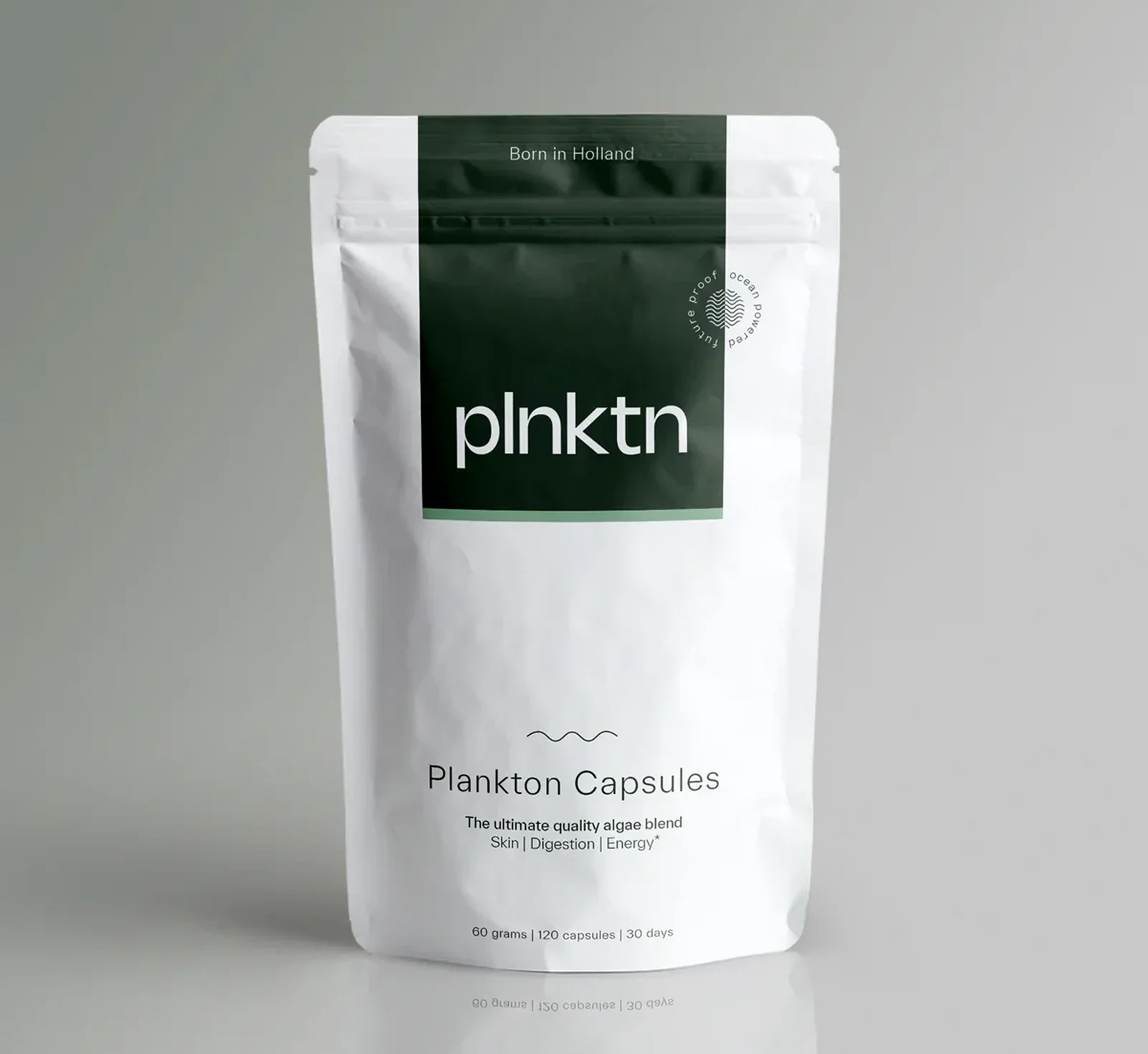

Plankton Capsules
Blend of 4 nutrient-dense micro- and macroalgae from European cultivation. Daily support for gut, skin and energy.
- • 75+ nutrients: minerals, vitamins, pigments, antioxidants and complete proteins
- • 100% natural, plant-based and responsibly grown
- • Supports digestion, energy metabolism and skin health
Disclosure: We may earn a commission if you purchase via these links.
Frequently Asked Questions
Does higher CFU mean a better probiotic?
Not necessarily. Clinical effectiveness depends on the specific strain, the dose validated in research for that strain, and whether the bacteria arrive alive in your intestines. Many well-studied probiotics are effective at 10-25 billion CFU. A product with 100 billion CFU of unresearched strains in a standard capsule is not inherently superior to a 10-billion-CFU product with clinically validated strains in enteric-coated delivery.
Why does my European probiotic not say "probiotic" on the label?
Because EU regulations (specifically EFSA's interpretation of the Nutrition and Health Claims Regulation) classify the word "probiotic" as an unauthorised health claim. European manufacturers must use alternative terms like "live cultures" or "bacterial cultures." This is purely a regulatory distinction and has no bearing on product quality.
Should I choose refrigerated or shelf-stable probiotics?
Either can be high quality. The key question is whether the product has been properly stability-tested under its recommended storage conditions and guarantees its CFU count at expiry. A well-formulated shelf-stable product that has passed accelerated stability testing can be just as reliable as a refrigerated one. Choose based on your lifestyle and storage capabilities.
How do I know if the strains in my probiotic have clinical evidence?
Look for the full strain designation (genus + species + strain code) on the label, then search for it on PubMed (pubmed.ncbi.nlm.nih.gov). Trademarked strain names like LGG, BB-12, or Howaru are also searchable and typically have extensive published research. If you cannot find any clinical studies for a specific strain, that strain lacks demonstrated efficacy.
Can I take probiotics with antibiotics?
Many healthcare professionals recommend probiotic supplementation during and after antibiotic courses to help maintain gut microbiome balance. However, timing matters — take your probiotic at least 2-3 hours apart from your antibiotic dose to minimise the antibiotic killing the probiotic bacteria. Saccharomyces boulardii, a beneficial yeast rather than a bacterium, is naturally resistant to antibiotics and is particularly well-studied in this context. Always consult your healthcare provider for personalised advice.
What does "CFU at time of manufacture" actually tell me?
Very little about what you are consuming. Bacterial die-off begins immediately after manufacture and continues throughout the product's shelf life. A product stating "50 billion CFU at time of manufacture" might contain 30 billion, 20 billion, or even fewer viable organisms by the time you open it — depending on how it was stored, how long ago it was made, and how well the formulation was designed for stability. Always prefer products that guarantee CFU at end of shelf life.
Disclaimer
This article is for informational and educational purposes only. It does not constitute medical advice, diagnosis, or treatment. Probiotic supplements are not intended to diagnose, treat, cure, or prevent any disease. Always consult a qualified healthcare professional before starting any new supplement regimen, particularly if you have a medical condition, are pregnant or breastfeeding, or are taking medication. The information presented here reflects the available evidence at the time of publication and may be updated as new research emerges.
Related Articles
- The Complete Guide to Probiotics, Prebiotics & Postbiotics
- Best Probiotics in Europe: Evidence-Based Picks for 2026
- Postbiotics vs Probiotics: What Science Says About the Next Generation
- Fermented Foods vs Probiotic Supplements: Do You Need Both?
This article is for informational purposes only and is not intended as medical advice. Always consult a healthcare professional before starting any new supplement, especially if you take prescription medication.
Related topics
Related articles
Gut Health for Kids: Safe Probiotics & Building a Healthy Microbiome Early
Your child's microbiome is largely established by age three — and what happens in those first 1,000 days shapes lifelong health. Here is everything parents
The Gut Health Supplement Stack: Building Your Daily Protocol
A complete guide to building an evidence-based gut health supplement stack. Learn the five pillars of gut support — prebiotics, probiotics, anti-inflammato
Probiotics for Women: UTI, Vaginal Health & Hormonal Balance
The vaginal microbiome is a distinct ecosystem dominated by Lactobacillus species. From BV and recurrent UTIs to hormonal shifts during pregnancy and menop