
CBD Oil Side Effects: What to Expect
Written by Smart Supplements Editorial Team
Key takeaways
- CBD has a good safety profile according to the WHO 2018 review
- Most side effects are dose-dependent and mild: drowsiness, dry mouth, nausea
- Drug interactions via CYP450 enzymes are the biggest real concern
- Liver enzyme elevation only occurs at very high doses, not typical wellness doses
Table of contents
- The Good News: A Strong Safety Foundation
- Common Side Effects: What Most Users Actually Experience
- Side Effects by Frequency and Severity
- Uncommon and Serious Effects: The Liver Question
- Drug Interactions: The Most Important Safety Concern
- Dose-Dependency: Why Amount Matters Enormously
- Format-Specific Considerations
- Who Should Be Especially Cautious
- How to Minimise Side Effects
- Where to Buy
- Frequently Asked Questions
CBD is remarkably well-tolerated — but "well-tolerated" doesn't mean zero side effects. Here's what the research actually says, who needs to be careful, and how to get the benefits with minimal risk.
The Good News: A Strong Safety Foundation
Before diving into what can go wrong, it's worth anchoring on what the world's leading drug safety body has actually concluded.
In 2018, the WHO Expert Committee on Drug Dependence published its pre-review of CBD and found it "does not appear to have abuse potential or cause harm" and exhibits a "good safety profile." No fatal overdose attributable solely to CBD has ever been recorded in a human. CBD is not psychoactive and does not cause physical dependence.
This is worth keeping in mind throughout the rest of this article. The side effects discussed below are real, but they exist on a spectrum — and for most people using CBD at sensible doses, they are either mild, manageable, or simply don't occur.
For a broader introduction to how CBD works and where it comes from, see our complete beginner's guide to CBD.
Common Side Effects: What Most Users Actually Experience
Research consistently identifies a cluster of mild, dose-related side effects in a minority of users. A 2024 cross-sectional study published in Frontiers in Psychiatry found that the most commonly reported adverse effects from CBD use were tiredness, diarrhoea, and appetite or weight changes — all consistent with earlier clinical data.
Drowsiness and Fatigue
This is the most frequently reported side effect in clinical trials. In Epidiolex studies (where doses were much higher than typical consumer use), somewhere between 22% and 36% of patients experienced drowsiness — Huestis et al., 2019, Current Neuropharmacology.
At standard wellness doses of 10–50 mg/day, drowsiness is uncommon and, when it does occur, is often actually desirable — many people take CBD specifically to support relaxation and sleep. See our guide to CBD for sleep for more on this.
Dry Mouth
CBD (and cannabinoids in general) interact with CB1 receptors in the salivary glands, which can reduce saliva production. The effect is mild for most users and easily managed by staying hydrated.
Digestive Discomfort and Diarrhoea
Some users experience mild nausea or digestive upset, particularly when taking CBD oil on an empty stomach. At higher doses (above 150 mg/day), diarrhoea becomes more common. Taking CBD with food — especially a small amount of fat, which also improves absorption — significantly reduces this risk.
Appetite Changes
Research shows CBD can alter appetite in either direction — some users report increased appetite, others report decreased appetite. The effect is generally mild at consumer doses and resolves if CBD is stopped or the dose is reduced.
Transient Drop in Blood Pressure
Some users report a brief sense of light-headedness, particularly after their first dose. This appears to be related to a mild, transient drop in blood pressure. It typically passes within minutes and is not a concern for healthy adults, but is worth noting for people with low blood pressure.
Side Effects by Frequency and Severity
| Side Effect | Frequency | Dose Dependency | Notes |
|---|---|---|---|
| Drowsiness / fatigue | Common | Yes — pronounced above 150 mg/day | Often intentional in sleep users |
| Dry mouth | Common | Yes | Mild; managed with hydration |
| Diarrhoea | Moderate | Yes — mainly above 150 mg/day | Take with food to reduce risk |
| Appetite changes | Moderate | Mild | Can go in either direction |
| Nausea | Less common | Yes — mainly on empty stomach | Take with food |
| Light-headedness | Less common | Yes | Transient; passes within minutes |
| Elevated liver enzymes | Rare / clinical doses only | Yes — seen at 20 mg/kg/day (Epidiolex) | Not a concern at consumer doses |
| Mood changes | Rare | Dose-related | Very uncommon at low doses |
Uncommon and Serious Effects: The Liver Question
You may have seen headlines about "CBD and liver damage." Here's what the research actually shows — and why context matters.
Elevated liver enzymes (transaminase elevation) have been documented in clinical Epidiolex trials, primarily at doses of approximately 20 mg/kg/day — meaning a 70 kg adult would need to take around 1,400 mg per day. This is roughly 14–140 times higher than typical wellness doses of 10–100 mg/day.
Critically, the elevation was more pronounced when CBD was combined with valproate (a common epilepsy medication) — Huestis et al., 2019, Current Neuropharmacology. In those clinical settings, liver function was closely monitored and doses were adjusted accordingly.
For someone taking a 5% CBD oil and dropping 5–10 drops under their tongue each day, liver enzyme elevation is not a clinically relevant concern based on current evidence. However, if you have a pre-existing liver condition, it's wise to discuss CBD use with your doctor before starting.
Drug Interactions: The Most Important Safety Concern
This is where most people need to pay closest attention — and where a doctor's input is genuinely valuable.
CBD inhibits several enzymes in the cytochrome P450 (CYP450) system — the family of liver enzymes responsible for metabolising a large proportion of prescription medications. When CBD slows down these enzymes, it can cause certain drugs to accumulate in the bloodstream at higher levels than intended.
How CYP450 Inhibition Works
CBD is a known inhibitor of CYP2C9 and CYP3A4 — two of the most important drug-metabolising enzymes in the body. Research published in PMC confirmed that CBD's IC50 for CYP2C9-mediated metabolism of S-warfarin is approximately 2.67–4.81 μmol/L, indicating meaningful inhibitory activity at relevant concentrations (Damkier et al., 2019, Basic & Clinical Pharmacology & Toxicology).
A systematic review by Smythe et al. (2023) in Pharmacotherapy found evidence supporting a clinically relevant interaction between cannabinoids and anticoagulants including warfarin, recommending close INR monitoring during CBD initiation (Smythe et al., 2023, Pharmacotherapy).
Medications Most Affected
| Drug Category | Examples | Interaction Risk | Action |
|---|---|---|---|
| Blood thinners | Warfarin, acenocoumarol | High — INR can rise significantly | Tell your doctor; monitor INR |
| Antiepileptics | Clobazam, valproate | High — blood levels may rise | Specialist supervision required |
| Some antidepressants | SSRIs, TCAs (varies by drug) | Moderate | Discuss with prescriber |
| Some heart medications | Certain beta-blockers, statins | Moderate | GP review recommended |
| Benzodiazepines | Diazepam, lorazepam | Moderate — additive sedation | Use with caution |
For a broader overview of how supplements can affect prescription medications, see our guide to supplement and drug interactions.
Dose-Dependency: Why Amount Matters Enormously
The dose makes the poison — and in CBD's case, the dose also largely determines whether you experience any side effects at all.
A useful framework from the literature:
- 10–50 mg/day (typical wellness range): Very low side effect risk. The safety profile at this level is well-established and reassuring.
- 50–300 mg/day: Mild side effects become possible, particularly drowsiness and digestive effects, especially without food.
- 300–600 mg/day: The range used in some anxiety and sleep studies. Side effects become more likely. Drug interaction risks are more relevant.
- Above 600 mg/day: Clinical territory. Only appropriate under medical supervision.
Most commercially available CBD products in the Netherlands and wider EU are formulated for the 10–50 mg/day range. A standard 5% CBD oil delivering 25 mg per full dropper sits squarely in the well-tolerated zone.
It's also worth noting the EFSA 2025 Novel Food safety assessment, which set a provisional Acceptable Daily Intake of 0.1 mg/kg/day (approximately 7 mg/day for an average adult). This is an extremely conservative figure applied specifically to CBD as a food supplement — it is not a cap on medicinal or therapeutic use and doesn't reflect the doses used safely in clinical trials. See our CBD dosage guide for practical guidance on finding the right amount for you.
Format-Specific Considerations
The way you take CBD also influences the side effect profile — not which effects can occur, but how quickly they appear and how intense they feel.
Sublingual CBD Oil
Drops held under the tongue absorb through the mucous membranes directly into the bloodstream. Onset is faster (15–45 minutes), which means dose-related effects — including drowsiness or light-headedness — arrive sooner. The upside is you can more precisely judge your response before taking more.
CBD Capsules and Softgels
Softgels and capsules pass through the digestive system, so onset is slower (1–2 hours). They tend to be gentler on the stomach than oil, particularly for people who find sublingual oil causes mild nausea. The trade-off is less precise dose timing. For a detailed comparison, see CBD oil vs CBD capsules.
CBD Topicals
Applied to skin, CBD topicals show minimal systemic absorption. Side effect risk is essentially limited to local skin irritation, which is rare with quality products.
The choice of format also affects how quickly you know whether you're taking the right dose. For more on timing, see how long does CBD take to work.
Who Should Be Especially Cautious
Research suggests certain groups face a higher risk profile and should take additional care — or hold off until they've spoken with a healthcare professional.
People on Prescription Medications
This is the highest-priority caution. If you take any regular prescription medication — particularly blood thinners, antiepileptics, antidepressants, or heart medications — speak with your doctor before starting CBD. The CYP450 interaction risk is real and clinically meaningful for certain drug classes.
Pregnant and Breastfeeding Women
The evidence base here is simply insufficient to make confident safety claims. Both the WHO and EFSA recommend avoiding CBD during pregnancy and breastfeeding due to lack of data, not because harm has been demonstrated.
People with Liver Conditions
If you have pre-existing liver disease, the high-dose liver enzyme concern becomes more relevant. A lower starting dose and monitoring by a healthcare provider is advisable.
Children and Adolescents
Paediatric use of CBD (outside of licensed Epidiolex for specific epilepsy syndromes) should only happen under specialist medical guidance.
How to Minimise Side Effects
The practical steps to reduce your risk are straightforward:
- Start low — Begin with 5–10 mg per day and increase gradually over one to two weeks. Most people find their effective dose without needing to push into higher-risk territory.
- Take with food — A small amount of dietary fat improves CBD absorption and significantly reduces the risk of nausea and digestive discomfort.
- Choose third-party tested products — A 2019 study found more than half of commercially available CBD products contained different doses from what was stated on the label. Certificates of Analysis from accredited labs are non-negotiable for safety.
- Consider the format — If you find oil causes stomach upset, softgels may suit you better.
- Inform your doctor — Particularly if you take prescription medication. This is not optional if you're on anticoagulants or antiepileptics.
- Know what full-spectrum contains — Full-spectrum products include trace THC (up to 0.2% in EU-legal products). Most people tolerate this fine, but it's worth knowing. For the differences between product types, see full-spectrum vs broad-spectrum vs CBD isolate.
Where to Buy
If you're starting out with CBD and want to minimise your side effect risk, product quality matters significantly. Low-quality products with inaccurate labelling are a genuine concern in this market.
Cibdol is one of the most established CBD manufacturers in Europe, with a strong track record of third-party testing and transparent Certificates of Analysis. Their 5% CBD oil is a sensible starting point — the concentration is low enough to allow careful dose titration without risk of accidentally overshooting.
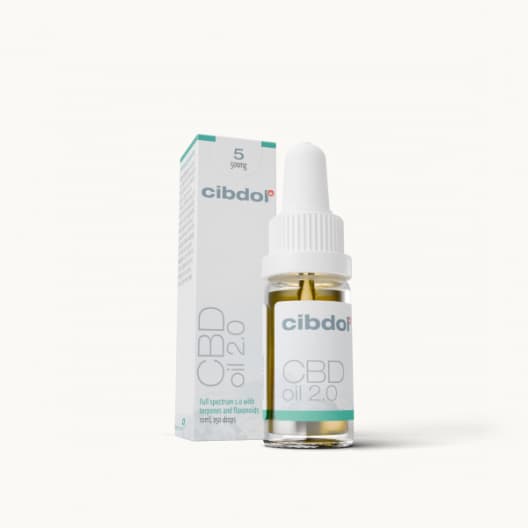

CBD Oil 2.0 5% (500mg)
The ideal starting point for CBD beginners. 500mg full-spectrum CBD oil with enhanced cannabinoid ratio for gentle, daily wellness support.
- • 500mg CBD per 10ml bottle
- • Full-spectrum entourage formula
- • Hemp seed oil base
Disclosure: We may earn a commission if you purchase via these links.
For those who prefer a format that's easier on the digestive system, the Cibdol CBD softgels offer the same 5% concentration in capsule form — slower onset, but often better tolerated by people who experience nausea with sublingual oil.
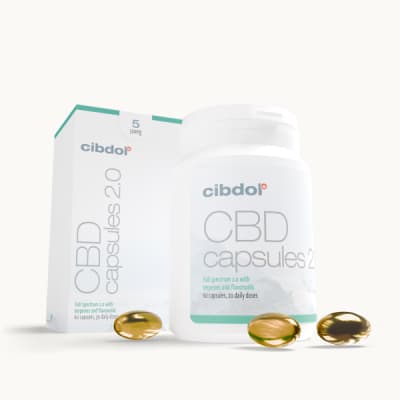
CBD Softgels 5% (500mg)
Entry-level CBD softgel capsules. 500mg full-spectrum CBD in 60 tasteless, pre-dosed softgels — perfect for beginners and daily low-dose use.
- • 500mg CBD per box (60 caps)
- • Tasteless and odourless
- • Full-spectrum oil formula
Disclosure: We may earn a commission if you purchase via these links.
Frequently Asked Questions
Can CBD oil cause liver damage?
Liver enzyme elevation has been documented in clinical trials using very high doses — approximately 20 mg/kg/day in Epidiolex studies. At typical consumer doses of 10–100 mg/day, there is no current evidence of liver damage in otherwise healthy adults. If you have a pre-existing liver condition or take medications that affect the liver, consult your doctor before starting CBD.
Does CBD oil interact with medications?
Yes, this is the most important safety concern for most users. CBD inhibits CYP2C9 and CYP3A4 enzymes, which can increase blood levels of certain medications including warfarin, some antiepileptics, and some antidepressants. Always inform your doctor or pharmacist if you take prescription medication and want to start CBD.
What are the most common side effects of CBD oil?
The most commonly reported side effects are drowsiness/fatigue, dry mouth, diarrhoea, and appetite changes. These are dose-dependent — at typical wellness doses of 10–50 mg/day, most users experience no side effects at all. They become more likely above 150–300 mg/day.
Is it safe to take CBD every day?
Research suggests that daily use of CBD at sensible doses is well-tolerated. The WHO's 2018 safety review found no evidence of harm from regular CBD use in healthy adults. However, "every day" at 10–20 mg looks very different from "every day" at 500 mg — the dose still matters.
Can CBD make anxiety worse?
Some people, particularly at higher doses, report feeling more anxious or experiencing mood changes. This appears to be uncommon and dose-related. If you experience worsened anxiety with CBD, reducing the dose or stopping use is the right step. Starting with a low dose helps avoid this.
How long do CBD side effects last?
Most CBD side effects are transient and resolve within a few hours as the CBD clears your system. If you experience ongoing side effects that persist beyond this, reducing your dose or switching format (e.g., from oil to capsules) is worth trying before stopping entirely.
Last updated: March 2026
Written by the Smart Supplements editorial team
This article is for informational purposes only and is not intended as medical advice. Always consult a healthcare professional before starting any new supplement, especially if you take prescription medication.
Related topics
Where to buy
Affiliate links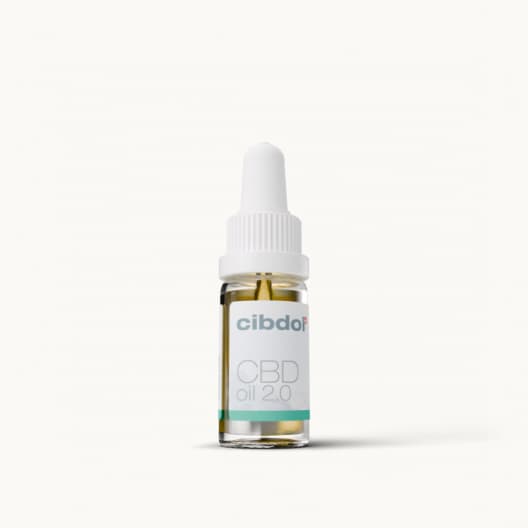
CBD oils
Premium Swiss CBD oils from Cibdol — available in multiple concentrations with full certificates of analysis.
CBD Gummies (25mg)
CBD Gummies — Chill Berry (25mg × 10)
- • 25mg CBD isolate per gummy — strong, precise dose
- • THC-free — CBD isolate, zero psychoactive compounds
- • Vegan formula — pectin-based, no gelatine
CBD capsules
Pre-measured CBD softgels and tablets for precise daily dosing — no taste, no measuring, just consistent CBD.
Disclosure: We may earn a commission if you purchase via these links.
Related articles
CBD for Anxiety: What Does the Research Say?
CBD for anxiety: what the research actually supports, how it works, optimal dosage, best products and who it works best for. Science-based, honest guide.
Does CBD Show Up on a Drug Test?
Drug tests screen for THC, not CBD — but full-spectrum products contain trace THC that could trigger a positive. Here's what to know.
How to Choose the Right CBD Dosage: A Practical Guide
Finding your ideal CBD dose takes some experimentation — but starting low and going slow is the approach backed by both research and experienced users.