
Sustainability and Supplements: How Algae Can Save the Planet
Written by Smart Supplements Editorial Team
Key takeaways
- The global fish oil industry harvests 1-5 million tonnes of fish annually for omega-3 supplements alone — decimating forage fish populations.
- Algae grows 20-30x faster than land plants, uses no arable land, and can be cultivated in seawater or closed bioreactors.
- Spirulina produces more protein per square metre than any land crop — including soy.
- The Netherlands leads European algae innovation, combining controlled-environment agriculture expertise with marine biotechnology.
- Switching from fish oil to algae omega-3 is the single highest-impact sustainability swap in the supplement space.
Table of contents
The Problem with Conventional Supplements
The supplement industry's environmental footprint is rarely discussed. Consumers focus on health benefits and price, not on the ecological cost of production. But that cost is substantial.
Fish Oil: An Ocean-Scale Problem
The global omega-3 supplement market consumes an enormous quantity of marine life:
| Metric | Scale |
|---|---|
| Fish harvested annually for omega-3 (global) | 1–5 million tonnes |
| Species targeted | Anchovies, sardines, menhaden, herring, krill |
| % of global wild fish catch for "reduction" (oil/meal) | ~25% |
| Forage fish stock assessments showing decline | Multiple species, multiple regions |
These are not random fish. They are forage fish — the small, schooling species that sit near the base of the marine food chain. Everything above them depends on their abundance: larger fish (tuna, cod, salmon), seabirds (puffins, gannets), marine mammals (dolphins, whales, seals), and entire coastal ecosystems.
When we remove millions of tonnes of forage fish for supplement production, we are not harvesting a surplus — we are extracting a keystone resource.
The Bycatch Problem
Reduction fisheries (fish caught for oil and meal rather than human food) also produce bycatch — unintended capture of non-target species. Juvenile fish, sea turtles, sharks, and marine mammals are all affected. Even "sustainable" fish oil certifications cannot eliminate bycatch entirely.
Beyond Fish Oil
Other supplement categories carry environmental costs too:
| Supplement | Environmental Concern |
|---|---|
| Whey protein | Dairy industry: land use, water use, methane emissions |
| Collagen | Slaughterhouse byproduct; linked to industrial animal agriculture |
| Krill oil | Krill harvesting threatens Antarctic food webs (penguin, whale food source) |
| Palm oil (in capsules) | Deforestation, orangutan habitat destruction |
| Lanolin vitamin D3 | Sheep farming: land use, methane |

Why Algae Changes Everything
Algae represent a fundamental shift in how we produce nutrition. Instead of extracting nutrients from complex organisms high up the food chain, we go directly to the source — the microscopic photosynthetic organisms that create these nutrients in the first place.
The Algae Advantage
| Property | Impact |
|---|---|
| Growth rate | 20–30x faster than land plants |
| Land use | Zero arable land required |
| Water use | Can use seawater; closed systems recycle water |
| CO₂ | Algae consume CO₂ during growth (carbon sequestration potential) |
| Protein yield | More protein per m² than any land crop |
| Nutrient range | Omega-3, protein, antioxidants, minerals, vitamins |
| Scalability | Industrial fermentation is essentially unlimited |
| Bycatch | Zero |
| Deforestation | Zero |
The Numbers Side by Side
| Metric (per 100g protein) | Beef | Soy | Spirulina |
|---|---|---|---|
| Land use (m²) | 164 | 11 | 0.5–2 |
| Water use (L) | 15,000 | 2,145 | 500–1,500 |
| CO₂ emissions (kg) | 50 | 2 | 0.5–1 (may be negative) |
| Time to harvest | 18–24 months | 3–5 months | 7–14 days |
Spirulina's numbers are striking: it produces more protein per square metre than soy while using a fraction of the water and potentially sequestering CO₂ rather than emitting it. As a protein source, algae are not just competitive — they are in a different league.
Algae Omega-3 vs Fish Oil: Environmental Comparison
| Metric | Fish Oil | Algae Oil |
|---|---|---|
| Fish killed per million servings | ~5,000–50,000 kg | 0 |
| Marine ecosystem impact | Forage fish depletion, bycatch | None |
| Carbon footprint per kg oil | High (fleet, cold chain, processing) | Low (local bioreactor) |
| Contamination risk | Mercury, PCBs, dioxins, microplastics | None (closed system) |
| Scalability limit | Fish stock capacity (finite) | Industrial capacity (essentially unlimited) |
The Netherlands as a World Leader in Sustainable Algae
The Netherlands punches far above its weight in algae innovation. A country the size of Switzerland has become Europe's leading algae producer and researcher — and the reasons are deeply rooted in Dutch agricultural DNA.
Dutch Expertise
Wageningen University and Research (WUR) WUR is consistently ranked among the world's top agricultural research institutions. Its algae research programme covers:
- Strain optimisation for specific nutrient profiles
- Bioreactor engineering and scale-up
- Nutritional science and clinical trials
- Life cycle assessment (sustainability modelling)
- Regulatory pathway support for Novel Food applications
Controlled-Environment Agriculture The Netherlands produces more food per square metre than any country on Earth. Dutch greenhouse technology — environmental control, light optimisation, water recycling, climate management — translates directly to algae bioreactor design.
The parallel is not a metaphor. The same engineering firms that build Dutch tomato greenhouses build algae bioreactors. The same precision agriculture principles apply. The Netherlands simply extended its world-leading controlled-environment expertise from land plants to aquatic organisms.
Dutch Algae Companies
| Company | Focus | Innovation |
|---|---|---|
| PLNKTN | Consumer supplements (full range) | Comprehensive algae supplement brand |
| AlgaSpring | Spirulina and chlorella | Closed-system production |
| Aliga Microalgae | B2B algae ingredients | Food-grade algae for manufacturers |
| Phycom | Algae protein | Novel Food protein applications |
| LGem | Bioreactor technology | Scalable cultivation systems |
| Duplaco | Spirulina production | European-grown spirulina |
EU Support for Algae Innovation
The European Union recognises algae as a strategic food security and sustainability asset:
- Horizon Europe funding programmes include dedicated algae research calls
- European Green Deal identifies algae as a sustainable protein source
- EU Algae Initiative (launched 2022) aims to boost European algae production
- Novel Food Regulation provides regulatory pathways for new algae species and extracts

Algae as Future Protein
The protein sustainability argument may ultimately be more significant than the omega-3 argument.
The Global Protein Challenge
Global protein demand is projected to increase 50–70% by 2050 (driven by population growth and rising living standards). Meeting this demand through conventional animal agriculture would require:
- 50–70% more agricultural land
- Proportional increases in water use and emissions
- Further deforestation for grazing and feed crops
This is not feasible within planetary boundaries.
Where Algae Fit
| Protein Source | Protein % (dry weight) | Land Use (relative) | Water Use (relative) | Growth Cycle |
|---|---|---|---|---|
| Beef | 26% | Very high | Very high | 18–24 months |
| Chicken | 31% | High | High | 6–8 weeks |
| Soy | 36% | Moderate | Moderate | 3–5 months |
| Spirulina | 60–70% | Very low | Low | 7–14 days |
| Chlorella | 50–60% | Very low | Low | 14–21 days |
Algae protein is already approved for human consumption in the EU (spirulina and chlorella have established food use). Emerging applications include:
- Algae-based meat alternatives — using algae protein as a base ingredient
- Fermented algae protein — enhancing digestibility and flavour
- Algae-fortified foods — adding algae protein to pasta, bread, snacks
- Aquaculture feed — replacing fish meal with algae meal (closing the loop)
Biodiversity and the Ocean Connection
The fish oil → algae oil switch has implications beyond the direct fish savings.
The Forage Fish Cascade
When forage fish populations decline, the effects cascade through the ecosystem:
| Level | Impact |
|---|---|
| Forage fish (anchovies, sardines, herring) | Direct population decline from harvesting |
| Predatory fish (tuna, cod, haddock) | Reduced prey availability → population decline |
| Seabirds (puffins, gannets, terns) | Breeding failure due to food shortage |
| Marine mammals (dolphins, seals, whales) | Reduced foraging success → population stress |
| Coastal fishing communities | Reduced commercial fish stocks |
The North Sea, Baltic Sea, and Mediterranean have all experienced forage fish declines associated with industrial harvesting. Seabird breeding failure in the North Sea has been directly linked to sandeel overfishing — sandeels are a key forage fish species.
The Carbon Angle
Marine phytoplankton — the microscopic algae floating in the ocean — produce approximately 50% of Earth's oxygen and are responsible for roughly half of global CO₂ fixation. Healthy ocean ecosystems (supported by intact food webs) are critical for carbon cycling.
By reducing pressure on forage fish populations, the switch from fish oil to algae supplements contributes (indirectly) to healthier ocean ecosystems and more effective marine carbon sequestration.
How to Vote With Your Supplements
Individual consumer choices aggregate into market signals. Here are the highest-impact switches:
Sustainability Swap Guide
| Current Supplement | Sustainable Alternative | Impact |
|---|---|---|
| Fish oil (omega-3) | Algae omega-3 (PLNKTN) | Eliminates fish harvesting for your omega-3 |
| Krill oil | Algae omega-3 | Protects Antarctic krill populations |
| Lanolin vitamin D3 | Algae vitamin D3 | Removes animal agriculture link |
| Whey protein | Spirulina protein | Reduces dairy industry footprint |
| Collagen peptides | Astaxanthin (for skin) | Algae antioxidant vs animal collagen |
| Synthetic minerals | Algae-derived minerals | Whole-food, lower processing footprint |
The single highest-impact swap is fish oil → algae omega-3. This directly removes your personal contribution to forage fish harvesting.
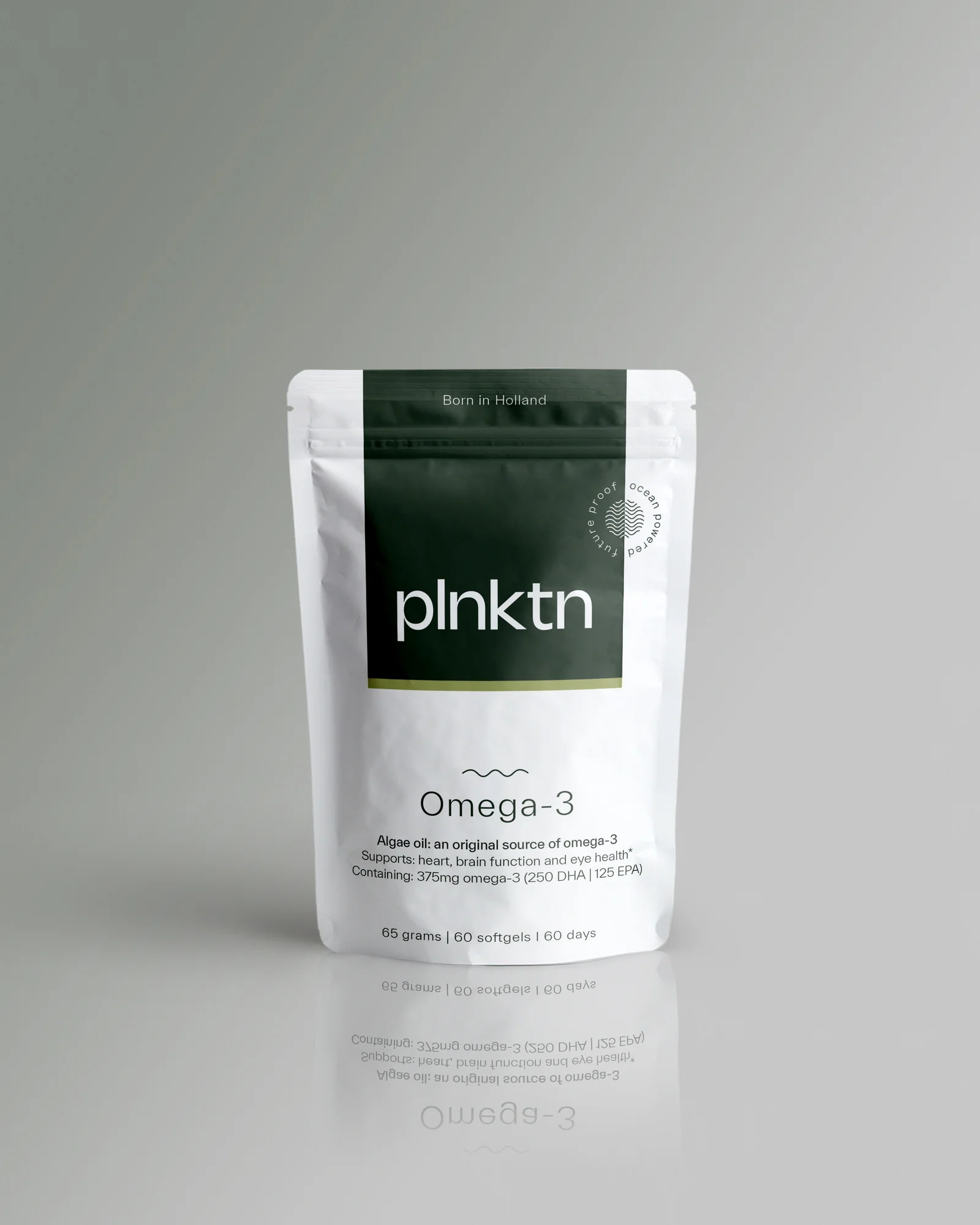

Omega-3 (algenolie)
Daily omega-3 from the original source: algae. With essential EPA and DHA for heart, brain and eyes.
- • 250 mg DHA and 125 mg EPA per capsule
- • 100% fish-free, plant-based algenolie
- • No fishy aftertaste, clean and controlled source
Disclosure: We may earn a commission if you purchase via these links.
What One Person's Switch Means
A single consumer switching from fish oil to algae omega-3 for one year:
- Prevents approximately 1–5 kg of forage fish from being harvested (depending on product and dose)
- Eliminates personal exposure to fish-derived mercury and PCBs
- Reduces carbon footprint of omega-3 supplementation by an estimated 40–60%
Multiply by millions of European omega-3 consumers, and the aggregate impact is transformative.

Frequently Asked Questions
Are algae supplements sustainable?
Yes — algae supplements are among the most sustainable food products available. Algae cultivation uses no arable land, minimal water (especially in closed systems), and algae consume CO₂ during growth. Compared to fish oil, animal protein, and conventional supplement production, algae have a dramatically lower environmental footprint.
Is algae protein better for the environment than animal protein?
By most environmental metrics, yes. Spirulina produces 60–70% protein using a fraction of the land, water, and emissions of beef, poultry, or even soy. The comparison is not close. The main limitations are: algae protein currently costs more, and production scale is still building.
Why is algae omega-3 more sustainable than fish oil?
Fish oil requires harvesting millions of tonnes of forage fish — the foundation of marine food webs. Algae omega-3 produces the same DHA and EPA in closed bioreactors with zero marine impact. The nutrient is identical; the production method is fundamentally different.
Can algae production itself have environmental problems?
At current scale, algae production's environmental footprint is minimal. Potential concerns at massive scale include: energy use for bioreactor lighting and temperature control, water use for open-pond systems, and competition with other land uses for bioreactor facilities. These are manageable engineering challenges, not fundamental obstacles.
Does PLNKTN use sustainable production?
PLNKTN is Netherlands-based, using controlled European algae cultivation. Their products avoid fish-derived ingredients entirely. The brand's founding premise is sustainability — going directly to algae as the nutrient source, bypassing the fish supply chain.
Is buying algae supplements enough to help the ocean?
Supplement switching is one piece of a larger picture. Other high-impact actions include: choosing sustainably sourced seafood (MSC certified), reducing single-use plastic, supporting marine conservation organisations, and reducing carbon footprint. But replacing fish oil with algae omega-3 is one of the most direct, measurable actions available.
Where to Buy
Affiliate disclosure: Smart Supplements earns a commission on purchases made through partner links. This doesn't affect our editorial content or recommendations.
Making the switch from conventional supplements to algae-based alternatives is straightforward. For a comprehensive range of European-produced algae supplements, explore the PLNKTN range — covering omega-3, astaxanthin, vitamin D3, magnesium, spirulina, and plankton capsules.
For the full introduction to what is available in the algae supplement world, start with our algae supplements beginner's guide.
This article is for informational purposes only and is not intended as medical advice. Always consult a healthcare professional before starting any new supplement, especially if you take prescription medication.
Related topics
Where to buy
Affiliate links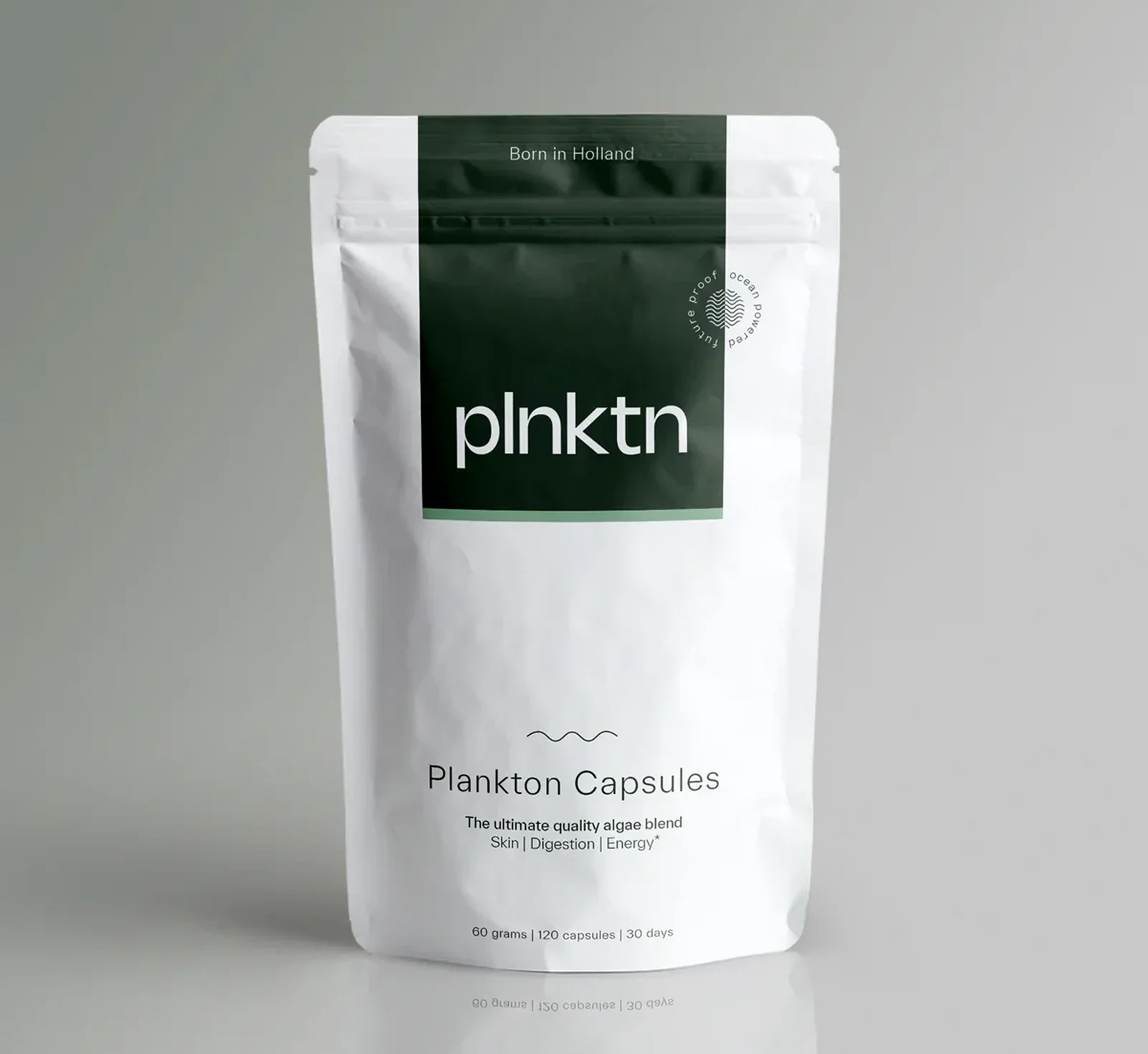
Plankton Capsules
Blend of 4 nutrient-dense micro- and macroalgae from European cultivation. Daily support for gut, skin and energy.
- • 75+ nutrients: minerals, vitamins, pigments, antioxidants and complete proteins
- • 100% natural, plant-based and responsibly grown
- • Supports digestion, energy metabolism and skin health
Omega-3 (algenolie)
Daily omega-3 from the original source: algae. With essential EPA and DHA for heart, brain and eyes.
- • 250 mg DHA and 125 mg EPA per capsule
- • 100% fish-free, plant-based algenolie
- • No fishy aftertaste, clean and controlled source

Vitamine D3 (algen)
Daily vitamin D3 from algae with omega-3 for optimal absorption. Supports immune system, muscles and bones.
- • Vitamine D3 uit algen, geschikt voor vegetariërs en veganisten
- • Ondersteunt immuunsysteem, spieren en sterk botweefsel
- • Bevat ook 250 mg omega-3 DHA per capsule

Magnesium (algen)
Magnesium supplement for an active lifestyle, derived from marine algae.
- • Supports normal muscle function and energy metabolism
- • Plant-based source, gentle on stomach
- • Designed for active lifestyles and recovery
Disclosure: We may earn a commission if you purchase via these links.
Related articles
Algae Omega-3 vs Fish Oil: Why Plant-Based Omega-3 Is the Future
Fish don't make omega-3 — they eat it from algae. So why are we still relying on fish as the middleman? Here is the full comparison: bioavailability, purit
Dutch-Grown Chlorella: Why European Algae Quality Matters
Most chlorella is grown in open ponds across Asia. Dutch chlorella from closed bioreactors offers contamination-free production with full traceability. Her
Spirulina vs Chlorella: Which Algae Supplement Is Better?
Spirulina and chlorella are both algae superfoods — but they are not interchangeable. Here is the definitive side-by-side comparison: nutrition, benefits,