
What Are Algae Supplements? A Beginner's Guide to Spirulina, Chlorella & Beyond
Written by Smart Supplements Editorial Team
Key takeaways
- Spirulina provides up to 70% protein by dry weight with a complete amino acid profile — one of the most protein-dense whole foods available.
- Chlorella cell wall must be mechanically cracked before consumption; always check for cracked cell wall on the label.
- Spirulina contains pseudovitamin B12 that humans cannot use — vegans should not rely on it as a B12 source.
- Algae omega-3 (DHA/EPA from Schizochytrium sp.) is bioequivalent to fish oil DHA, without mercury contamination or environmental fishing impact.
- Astaxanthin from Haematococcus pluvialis is one of the most potent natural antioxidants known, approximately 550x stronger than vitamin E.
Table of contents
- Why Algae?
- Spirulina: The Original Superfood
- Chlorella: The Detox Specialist
- Astaxanthin: The Antioxidant Powerhouse
- Algae Omega-3: The Smarter Fish Oil
- Other Notable Algae
- Spirulina vs Chlorella: Quick Comparison
- Dutch Algae Innovation
- How to Choose Quality Algae Supplements
- How to Take Algae Supplements
- Who Should Use Algae Supplements?
- Where to Buy
- FAQ
Why Algae?
Algae were Earth's first photosynthetic life forms, appearing roughly 3.5 billion years ago. They quietly oxygenated the atmosphere, kickstarted the food chain, and made every subsequent form of animal life possible. They also, it turns out, happen to be extraordinarily nutritious.
For most of human history, algae were eaten mainly by coastal and island communities — spirulina harvested from alkaline lakes by the Aztecs, seaweed incorporated into Japanese and Korean diets for centuries. What's changed is that modern cultivation technology has made it possible to grow specific microalgae in controlled, contamination-free environments at scale, and to concentrate their most valuable compounds into convenient supplement form.
The result is a category that's grown from a niche health food into a genuinely well-researched area of nutritional science. The European algae supplement market is now estimated at over €2 billion, and it's expanding steadily — driven not just by health interest, but by sustainability: algae produce more protein per square metre than any land crop, require no arable soil, and can be cultivated using seawater or wastewater.
But "algae supplements" is a broad category, and the different types serve very different purposes. Here's how they break down.
Spirulina: The Original Superfood
Spirulina (Arthrospira platensis) is technically a cyanobacterium — a blue-green photosynthetic bacteria rather than a true alga — though it's universally grouped and sold as an algae supplement. That small biological distinction doesn't diminish the nutritional case for it, which is genuinely impressive.
Nutritional Profile
Spirulina's headline is its protein content: up to 60–70% protein by dry weight, with a complete amino acid profile including all nine essential amino acids. That makes it one of the most protein-dense whole foods available. It also contains iron in a highly bioavailable form, gamma-linolenic acid (GLA), B vitamins including B1, B2 and B3, and a distinctive blue-green pigment called phycocyanin — the compound responsible for most of its antioxidant and anti-inflammatory activity.
One frequently misunderstood claim is that spirulina is a good source of vitamin B12 for vegans. Research has clarified this: spirulina contains mostly pseudovitamin B12 (analogues that the human body cannot use), not genuine cobalamin. Vegans should not rely on spirulina as a B12 source.
What the Research Shows
The evidence base for spirulina has strengthened considerably in recent years. A 2024 systematic review and meta-analysis of 22 studies covering 5,385 participants found that spirulina supplementation significantly reduced inflammatory biomarkers including CRP, interleukin-6 and TNF-α. A 2024 narrative review published in Nutrients found a consistent pattern of cardiovascular benefits, including reductions in LDL cholesterol and blood pressure. Research also supports its role in supporting exercise recovery: studies show it reduces exercise-induced lipid peroxidation and muscle inflammation in both trained and untrained subjects.
Research suggests spirulina is particularly beneficial for: iron-deficiency support in vegans and vegetarians, reducing inflammation, improving aerobic fitness in untrained individuals, and allergy symptom relief (particularly allergic rhinitis, where multiple studies show meaningful reductions in sneezing, congestion and itching).
Dosage
Standard doses used in clinical studies range from 1g to 8g per day, with most benefits appearing at 3–5g. Start at 1–2g to assess tolerance. Maximum recommended daily intake is around 8g.
Chlorella: The Detox Specialist
Chlorella (Chlorella vulgaris or C. pyrenoidosa) is a true green microalga — round, single-celled, and named after its exceptionally high chlorophyll content, the highest of any known food. It shares some properties with spirulina but has a distinct functional profile.
What Sets Chlorella Apart
Chlorella's most distinctive feature is its cell wall: a tough, indigestible structure that must be mechanically broken down during processing before the nutrients inside can be absorbed. Look for "cracked cell wall" chlorella on any supplement label — this is not a marketing claim, it's a genuine quality indicator. Whole-cell chlorella has significantly reduced bioavailability.
Chlorella's primary claim to attention is its heavy metal binding capacity. The cell wall constituents, particularly a protein called chlorella growth factor (CGF), have demonstrated the ability to bind to mercury, cadmium, lead and other heavy metals in both animal and human studies, helping remove them from the digestive tract before absorption. In clinical settings, chlorella has been studied as a support supplement for people with elevated heavy metal exposure.
CGF itself — a concentrate of nucleotides, peptides and polysaccharides extracted from chlorella — is thought to support cellular repair and immune function, and has generated interest in longevity and recovery contexts.
Like spirulina, chlorella contains meaningful amounts of iron, B vitamins, omega-3 fatty acids, and a broad range of minerals. It's also a source of genuine vitamin B12 in small but measurable quantities, making it a more relevant supplement for vegans than spirulina from a B12 perspective, though still not sufficient as a primary source.
Dosage
Typical doses range from 2g to 10g per day. Start lower if you're new to it — chlorella can cause digestive discomfort or loose stools at higher doses initially, which typically resolves within a week or two.
Astaxanthin: The Antioxidant Powerhouse
Astaxanthin is a red-orange carotenoid produced primarily by the microalga Haematococcus pluvialis — and it may be the most potent natural antioxidant ever identified. Research has put its antioxidant activity at roughly 550 times that of vitamin E and around 10 times that of beta-carotene. It's what makes wild salmon pink, flamingos orange, and shrimp red.
Unlike many carotenoids, astaxanthin is not converted to vitamin A in the body, so there's no risk of vitamin A toxicity even at supplemental doses. It also has a unique molecular structure that allows it to span the full bilayer of cell membranes, providing antioxidant protection both inside and outside the cell — something most antioxidants cannot do.
The research is encouraging across several domains. Studies have shown benefits for skin health (one study found significant improvements in crow's feet and skin elasticity at 6mg per day), eye health (reduced eye strain and improved visual acuity in clinical studies), exercise recovery (reduced muscle damage and joint pain post-exercise), and cognitive function. A randomised, double-blind, placebo-controlled study found that astaxanthin supplementation improved memory and cognitive speed in older adults.
EU regulatory note: Astaxanthin from Haematococcus pluvialis is approved for human consumption in the EU up to certain intake levels. Unlike spirulina and chlorella, it falls under the Novel Food regulation as a relatively newer ingredient, so it tends to cost more and be available in fewer products.
Dosage
Most studies use 4–12mg per day. Take with a fat-containing meal to optimise absorption (it's fat-soluble).
Algae Omega-3: The Smarter Fish Oil
This is arguably the most important algae supplement category from a public health perspective — and the most misunderstood.
Fish don't make omega-3. They accumulate DHA and EPA by eating algae. The omega-3 food chain runs from microalgae → small fish → larger fish → humans. By going directly to the source, algae omega-3 supplements eliminate the intermediaries — and with them, the contamination risks (mercury, PCBs, dioxins) and the environmental problems associated with industrial fishing.
The microalga Schizochytrium sp. is particularly rich in DHA and EPA, and forms the basis of most algae omega-3 supplements on the market. Research has confirmed bioequivalence: a 2008 study by Arterburn et al. found that DHA from algae oil is just as bioavailable as DHA from cooked salmon. The EFSA has approved health claims for DHA and EPA regardless of source — brain function, vision, and heart health — which means algae omega-3 carries exactly the same evidence-backed claims as fish oil.
The advantages over fish oil are straightforward: no mercury contamination risk, produced in closed, sterile fermentation systems rather than the open ocean, fully vegan, no fishy aftertaste or rancidity issues, and a fraction of the environmental footprint.
PLNKTN is a Netherlands-based brand offering algae omega-3 derived from Schizochytrium sp., cultivated in closed sterile fermentors to European quality standards. Each capsule provides at least 250mg DHA and 50mg EPA — sufficient for the EFSA-approved daily intake for heart, brain and vision support. It's plant-based, fish-free, and sourced in Europe to minimise the carbon footprint of the supply chain.
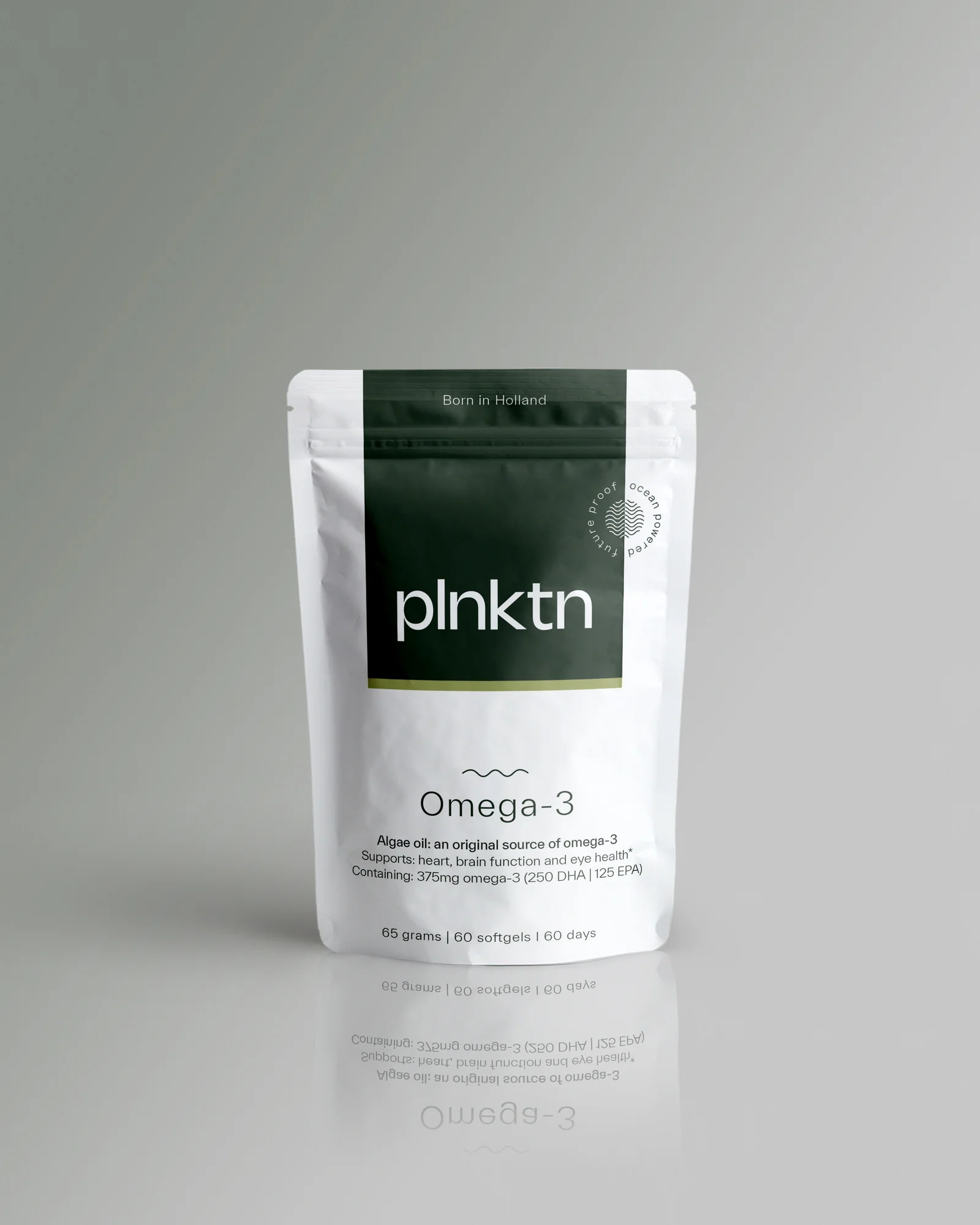

Omega-3 (algenolie)
Daily omega-3 from the original source: algae. With essential EPA and DHA for heart, brain and eyes.
- • 250 mg DHA and 125 mg EPA per capsule
- • 100% fish-free, plant-based algenolie
- • No fishy aftertaste, clean and controlled source
Disclosure: We may earn a commission if you purchase via these links.
Other Notable Algae
Beyond the big four, a few other algae species are worth knowing about:
AFA (Aphanizomenon flos-aquae): A freshwater cyanobacterium sometimes marketed as "blue-green algae" or "Klamath algae." Contains chlorophyll, B vitamins and phenylethylamine (PEA). Less studied than spirulina, and with greater contamination variability from wild-harvest sources.
Dunaliella salina: A green microalga that produces extremely high concentrations of natural beta-carotene — up to 10% of its dry weight. Used in natural beta-carotene supplements and as a natural food colouring.
Fucoxanthin (brown seaweed): A carotenoid from brown macroalgae (like kelp) that has attracted research interest for metabolic health, particularly fat metabolism and thermogenesis. More studied in Japan than in Europe, with mixed results in human trials.
Sea moss (Chondrus crispus): A red algae that has gained significant social media attention in recent years. Contains iodine, carrageenan and various minerals. The evidence base is far thinner than the hype.
Spirulina vs Chlorella: Quick Comparison
| Property | Spirulina | Chlorella |
|---|---|---|
| Type | Blue-green cyanobacterium | Green microalga |
| Protein content | ~60–70% | ~50–60% |
| Primary benefit | Energy, protein, anti-inflammation | Detox, heavy metal binding, immune |
| Chlorophyll | High | Very high (highest of any food) |
| B12 | Pseudovitamin only (not usable) | Small genuine B12 |
| Cell wall | No rigid cell wall | Requires cracking for bioavailability |
| Taste | Earthy, marine, strong | Milder, slightly grassy |
| Best for | Vegans needing protein/iron, athletes, allergy sufferers | Detox support, heavy metal exposure, gut health |
| Typical dose | 3–5g/day | 2–10g/day |
➡️ For a deeper dive, see our Spirulina vs Chlorella comparison guide.
Dutch Algae Innovation
The Netherlands has become one of Europe's most important centres for sustainable algae production — a fact worth knowing if you're looking for clean, locally sourced supplements.
Dutch companies and universities, including Wageningen University & Research (consistently ranked among the world's top agricultural institutions), have pioneered closed photobioreactor systems that grow algae in sealed, controlled environments. Unlike traditional open-pond cultivation, which is vulnerable to contamination by heavy metals, bacteria and competing organisms, these closed systems guarantee consistent quality, eliminate cross-contamination risk, and use significantly less water and land.
PLNKTN is one of the Dutch brands leading this charge — sourcing European-cultivated microalgae to produce omega-3 supplements with a minimal, verifiable supply chain.
The broader implication for European consumers is meaningful: you don't need to import algae supplements from Asian open-pond operations if you're looking for quality. European production is catching up fast.
How to Choose Quality Algae Supplements
Not all algae supplements are equal. Quality varies considerably, and the price difference between a well-made product and a cheaply produced one is often small — but the difference in what's inside can be significant.
What to look for:
Third-party testing. This is non-negotiable. Quality algae supplements will have certificates of analysis (COAs) available for heavy metals, microcystins (natural algae toxins), microbial contamination, and active compound content.
Production method. Closed photobioreactor or closed fermentation systems are the gold standard. Open-pond cultivation (common in Asia) is cheaper but carries higher contamination risk. European production in closed systems is increasingly available.
Cracked cell wall (chlorella only). Always check this for chlorella products. Uncracked chlorella has poor bioavailability.
Active compound declaration. A good spirulina product will declare phycocyanin content. A good astaxanthin product will specify the source (H. pluvialis) and concentration. An algae omega-3 product should state DHA and EPA mg per capsule, not just "total omega-3."
Organic certification. For spirulina and chlorella, EU Organic certification (the green leaf logo) provides meaningful additional reassurance about cultivation conditions.
Red flags to avoid: No country of origin declared; no third-party testing; exaggerated health claims; undisclosed proprietary blends; bulk pricing that seems too good to be true.
How to Take Algae Supplements
The main variables are form, timing, and what to mix with.
Spirulina and chlorella are most commonly available as powder and tablets. Powder is more versatile — add it to smoothies, juices or water — but the taste is strong. If you're sensitive to the flavour, tablets are an easier entry point. Take with food to reduce the chance of nausea.
Astaxanthin comes almost exclusively in softgel capsule form. Take with a fat-containing meal to maximise absorption of this fat-soluble compound.
Algae omega-3 is typically softgel or liquid. Take daily with a meal containing some fat for optimal absorption. Unlike fish oil, a quality algae omega-3 doesn't require refrigeration pre-opening and is far less prone to rancidity.
Dosage guidelines by supplement:
| Supplement | Starting Dose | Maintenance Dose |
|---|---|---|
| Spirulina | 1–2g/day | 3–5g/day |
| Chlorella | 1–2g/day | 3–6g/day |
| Astaxanthin | 4mg/day | 4–12mg/day |
| Algae Omega-3 (DHA+EPA) | 1 capsule/day | 1–2 capsules/day |
Taste tips for powder forms: Mix spirulina or chlorella into strongly flavoured smoothies (mango, pineapple, banana), lemon water, or cold-pressed juices. Avoid hot liquids — heat degrades the chlorophyll and phycocyanin. Some people blend it into guacamole or pesto, where the green colour is natural and the flavour merges in.
Who Should Use Algae Supplements?
Best candidates for spirulina: Vegans and vegetarians needing complete protein; people with iron-deficiency (in consultation with a doctor); regular exercisers looking to reduce inflammation and speed recovery; anyone with frequent allergies or rhinitis.
Best candidates for chlorella: People with elevated heavy metal exposure (certain occupational settings, high fish consumption); those looking for immune and gut support; anyone interested in detox protocols.
Best candidates for astaxanthin: Athletes managing exercise-related joint and muscle stress; anyone with high UV exposure or skin concerns; older adults interested in cognitive and eye health.
Best candidates for algae omega-3: Virtually everyone — but especially vegans and vegetarians who can't get DHA/EPA from fish; pregnant and breastfeeding women (high DHA requirements); anyone dissatisfied with the aftertaste or quality of fish oil.
Who should exercise caution: People with phenylketonuria (PKU) should avoid spirulina due to its phenylalanine content. Anyone on blood thinners should consult their doctor before starting spirulina (it may affect clotting time). People with iodine-sensitive thyroid conditions should check the iodine content of any seaweed-based product. Algae supplements are generally not studied in pregnant women — consult a healthcare professional before starting new supplements during pregnancy.
Where to Buy
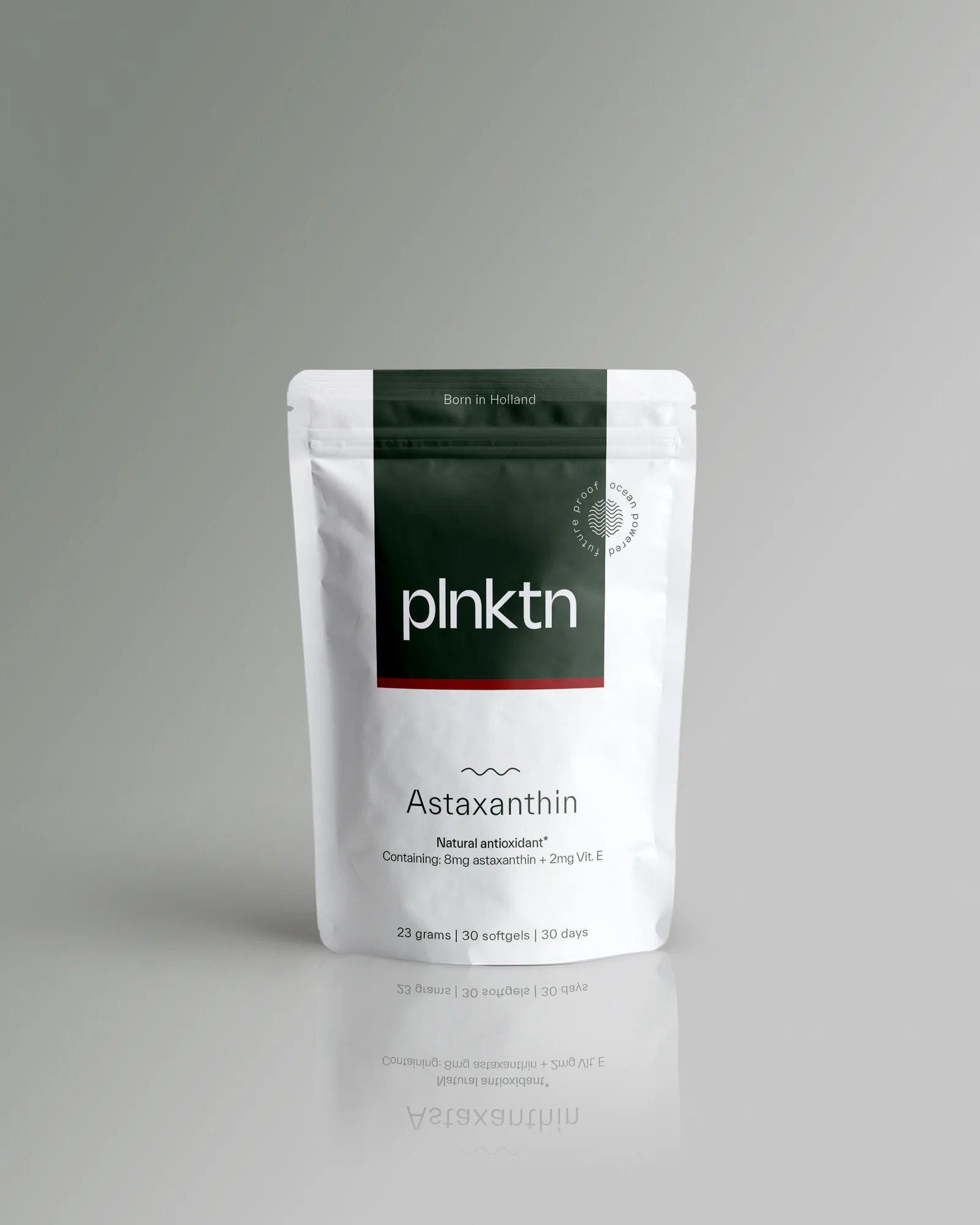
Astaxanthine
Powerful antioxidant from algae for protection from within, supporting skin and cells.
- • Natural astaxanthin from algae
- • Supports protection of cells against oxidative stress
- • Complements omega-3 and plankton in your routine
Disclosure: We may earn a commission if you purchase via these links.
FAQ
Are algae supplements safe?
Spirulina and chlorella have decades of human safety data and are among the most studied food supplements available. They're classified as traditional foods in the EU and are not subject to the Novel Food regulation. Astaxanthin from H. pluvialis and algae oil from Schizochytrium sp. are both EU-approved. Risks primarily involve contamination from poorly produced products — buy from third-party-tested suppliers.
Can you take spirulina and chlorella together?
Yes — many people take both simultaneously, as their benefits are largely complementary rather than overlapping. Spirulina supports energy, protein and anti-inflammation; chlorella supports detox, heavy metal clearance and gut health. Start them separately to understand how each affects you individually.
Is algae omega-3 as effective as fish oil?
Research indicates it is bioequivalent for DHA. A landmark study confirmed that DHA from algae oil is absorbed and incorporated into the body's tissues at the same rate as DHA from cooked salmon. For EPA, the picture is slightly more variable by brand — check the EPA declaration on the label.
Why does spirulina smell and taste so strong?
The earthy, marine flavour comes primarily from the chlorophyll and phycocyanin content. It's most pronounced with raw powder. Tablets and capsules are generally much easier to tolerate if you're new to it. Mixing powder into strongly flavoured smoothies or juices significantly masks the taste.
How long does it take to notice effects?
Depends on the supplement and goal. For spirulina and chlorella, energy and general wellbeing changes are often reported within 2–4 weeks of consistent use. Astaxanthin typically requires 4–8 weeks to reach tissue saturation before its antioxidant effects become noticeable. Algae omega-3 effects on cardiovascular markers are typically studied over 8–12 weeks.
Are algae supplements suitable for children?
Spirulina and chlorella are not recommended for children without medical supervision due to the limited paediatric safety data. Algae omega-3 (DHA specifically) is well-studied in children and recommended by many European paediatric guidelines for brain development support — but check with your doctor for specific dosing.
This content is for informational purposes only and is not medical advice. Consult a healthcare professional before starting any supplement.
Related articles:
Related topics
Where to buy
Affiliate links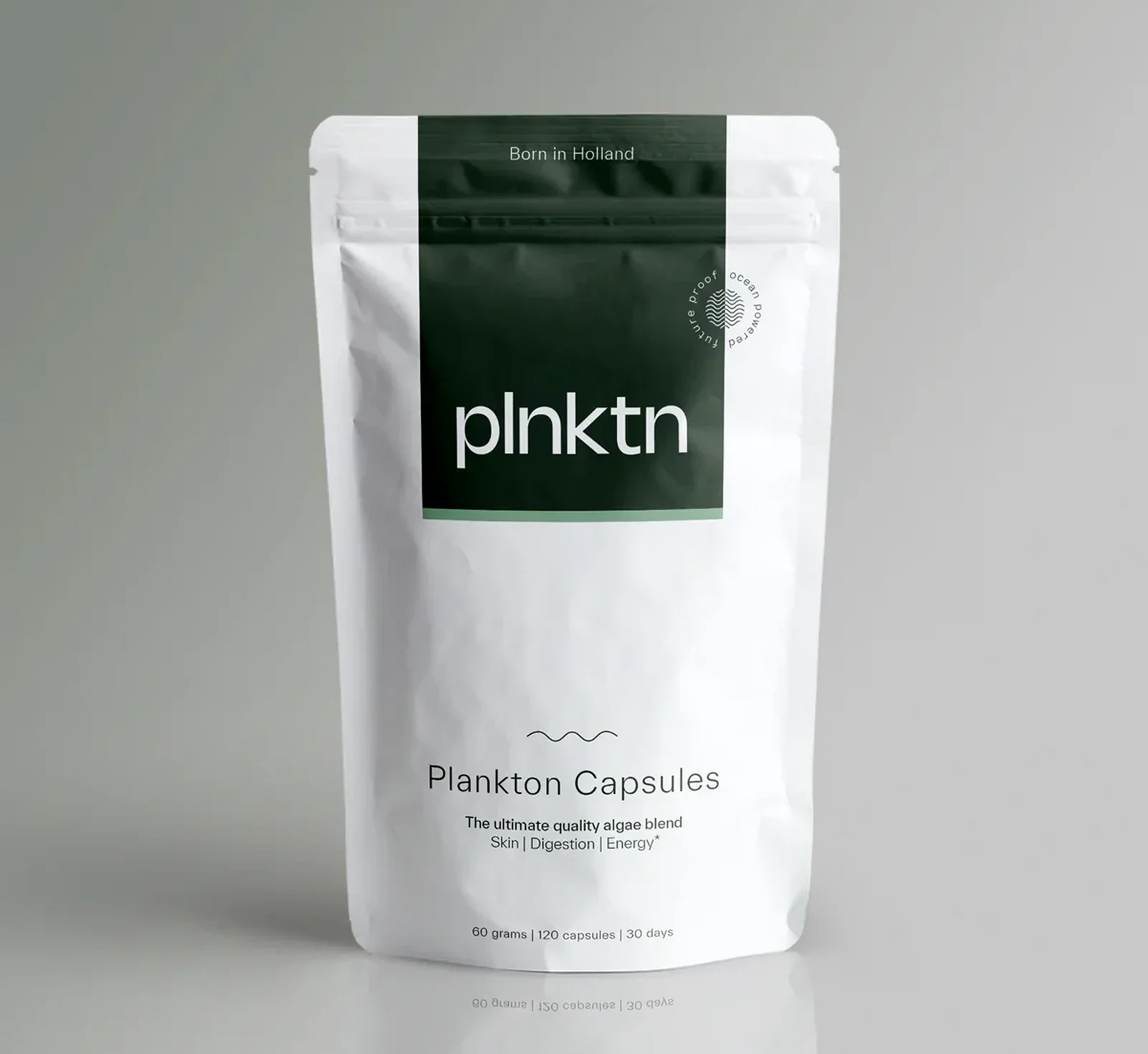
Plankton Capsules
Blend of 4 nutrient-dense micro- and macroalgae from European cultivation. Daily support for gut, skin and energy.
- • 75+ nutrients: minerals, vitamins, pigments, antioxidants and complete proteins
- • 100% natural, plant-based and responsibly grown
- • Supports digestion, energy metabolism and skin health
Omega-3 (algenolie)
Daily omega-3 from the original source: algae. With essential EPA and DHA for heart, brain and eyes.
- • 250 mg DHA and 125 mg EPA per capsule
- • 100% fish-free, plant-based algenolie
- • No fishy aftertaste, clean and controlled source

Vitamine D3 (algen)
Daily vitamin D3 from algae with omega-3 for optimal absorption. Supports immune system, muscles and bones.
- • Vitamine D3 uit algen, geschikt voor vegetariërs en veganisten
- • Ondersteunt immuunsysteem, spieren en sterk botweefsel
- • Bevat ook 250 mg omega-3 DHA per capsule

Magnesium (algen)
Magnesium supplement for an active lifestyle, derived from marine algae.
- • Supports normal muscle function and energy metabolism
- • Plant-based source, gentle on stomach
- • Designed for active lifestyles and recovery
Disclosure: We may earn a commission if you purchase via these links.
Related articles
The Best Algae Supplements in Europe: A Buyer's Guide
The European algae supplement market has exploded — but quality varies enormously. Here is how to cut through the noise: quality criteria, category breakdo
PLNKTN Review: Are Algae-Based Supplements Worth It?
We tested the full PLNKTN range — Omega-3, Astaxanthin, Vitamin D3, Magnesium, Spirulina Nibs, and Plankton Capsules. Here is our honest review of this Dut
PLNKTN Omega-3 vs Omega-3 Plus: Which Should You Choose?
PLNKTN offers three algae omega-3 products at three price points. Here is which one fits your needs — and which is the best value per mg of DHA+EPA.