
Dutch-Grown Chlorella: Why European Algae Quality Matters
Written by Smart Supplements Editorial Team
Key takeaways
- Most chlorella is grown in open ponds across Asia, exposed to environmental contamination including heavy metals, industrial runoff, and microbiological risks.
- Dutch and European chlorella from closed bioreactors offers hermetically sealed, contamination-free production with full batch traceability.
- Chlorella bioaccumulates heavy metals by design — if grown in polluted water, it absorbs the very toxins consumers are trying to avoid.
- European chlorella costs 20-40% more than Asian alternatives, but offers EU regulatory compliance, organic certification, and third-party heavy metal testing.
- Not all Asian chlorella is low quality — Japanese and Taiwanese producers often meet high standards — but source verification matters regardless of origin.
Table of contents
- Where Does Your Chlorella Come From?
- Open Pond vs Closed Bioreactor
- Heavy Metal Contamination: The Hidden Risk
- Why the Netherlands Leads European Algae
- What About Japanese and Taiwanese Chlorella?
- The Price Question
- How to Read a Chlorella Label
- Building an Algae Supplement Stack
- Frequently Asked Questions
- Where to Buy
Where Does Your Chlorella Come From?
The global chlorella production landscape is dominated by a handful of countries:
| Country | Production Share (est.) | Typical Method | Quality Range |
|---|---|---|---|
| Taiwan | ~35% | Open ponds (some closed) | Medium to high |
| Japan | ~25% | Open ponds and closed tanks | High |
| China | ~20% | Primarily open ponds | Variable (low to medium) |
| South Korea | ~10% | Open ponds | Medium |
| Europe (NL, DE, FR) | ~5% | Closed bioreactors | High |
| Other (India, Indonesia) | ~5% | Open ponds | Variable |
The European share is small but growing rapidly. The Netherlands, Germany, and France are the primary producers, leveraging the same controlled-environment expertise that made Dutch greenhouse agriculture the most productive in the world.

Open Pond vs Closed Bioreactor
This is the fundamental quality distinction in the algae industry. Every quality concern about chlorella traces back to how it was cultivated.
Open Pond Production
Open ponds are the traditional and cheapest method of algae cultivation. Chlorella is grown in large, shallow outdoor raceways �� typically concrete or plastic-lined channels where the algae suspension is circulated by paddle wheels under direct sunlight.
Advantages:
- Low capital cost
- Scalable
- Uses natural sunlight
Disadvantages:
- Exposed to environmental contamination (dust, insects, bird droppings, airborne pollution)
- Heavy metal uptake from contaminated water sources
- Inconsistent batch quality (weather-dependent)
- Risk of invasive species and competing microorganisms
- Difficult to maintain sterile conditions
Closed Bioreactor Production
Closed photobioreactors are sealed glass or plastic tube systems where chlorella grows in a completely controlled environment. Light is either natural (through the transparent tubes) or artificial. Temperature, pH, CO₂, and nutrient levels are precisely monitored.
Advantages:
- Zero contamination from external environment
- Consistent batch-to-batch quality
- Higher yields per square metre
- Full traceability
- No heavy metal exposure from environment
Disadvantages:
- Higher capital and operating costs
- More complex engineering
- Higher product price
Head-to-Head Comparison
| Factor | Open Pond | Closed Bioreactor |
|---|---|---|
| Contamination risk | High | Near-zero |
| Heavy metal exposure | Environmental + water source | Controlled water only |
| Consistency | Variable (seasonal, weather) | Highly consistent |
| Yield per m² | Lower | 3–5x higher |
| Energy input | Lower (natural sunlight) | Higher (control systems) |
| Microbial contamination | Possible | Prevented by design |
| Traceability | Difficult | Full batch tracking |
| Cost per kg | Lower | 20–40% higher |
| Regulatory compliance | Varies by country | EU-compliant by design |
Heavy Metal Contamination: The Hidden Risk
This is the most important quality concern for chlorella consumers — and it is deeply ironic.
The Paradox
Chlorella is sought after for its heavy metal binding capacity. Its cell wall contains cellulose and sporopollenin that chelate (bind to) heavy metals in the gastrointestinal tract. This is chlorella's primary "detox" mechanism — it reduces heavy metal absorption from your food and environment.
But this same binding capacity works during cultivation too. If chlorella is grown in water containing heavy metals, it absorbs them. The supplement you take to reduce your heavy metal exposure may itself contain elevated levels of the very metals you are trying to avoid.
Where the Metals Come From
| Source | Pathway |
|---|---|
| Industrial runoff | Open ponds near industrial areas; metals in irrigation water |
| Agricultural runoff | Pesticides and fertilisers contaminate pond water |
| Atmospheric deposition | Airborne heavy metals from nearby industry settle into open ponds |
| Soil contamination | Leaching from contaminated soil into groundwater used for ponds |
| Volcanic soil regions | Natural geological sources (relevant in parts of Taiwan and Japan) |
Testing Results
Independent analyses of retail chlorella products have found significant variation in heavy metal content:
| Metal | EU Safety Limit | Typical Closed-System | Some Open-Pond Products |
|---|---|---|---|
| Lead (Pb) | 3.0 mg/kg | <0.1 mg/kg | 0.5–5.0 mg/kg |
| Cadmium (Cd) | 1.0 mg/kg | <0.05 mg/kg | 0.1–2.0 mg/kg |
| Mercury (Hg) | 0.1 mg/kg | <0.01 mg/kg | 0.01–0.5 mg/kg |
| Arsenic (As) | 3.0 mg/kg (inorganic) | <0.1 mg/kg | 0.1–3.0 mg/kg |
Products from reputable closed-system producers consistently test well below EU limits. Open-pond products from less regulated regions show higher variability — some are fine, others approach or exceed safety thresholds.
The takeaway: always buy chlorella that comes with a third-party heavy metal test certificate. If a product does not disclose testing results, question why.
Why the Netherlands Leads European Algae
The Netherlands has become Europe's algae innovation hub through a convergence of expertise, infrastructure, and institutional support.
Dutch Strengths in Algae Production
Wageningen University and Research (WUR) The world's leading agricultural research university has dedicated algae research programmes covering strain optimisation, bioreactor engineering, and nutritional science. WUR collaborates directly with Dutch algae companies to translate research into commercial production.
Controlled-Environment Agriculture Expertise The Netherlands produces more food per square metre than any other country on Earth, primarily through advanced greenhouse technology. The engineering principles — environmental control, light optimisation, climate management, water recycling — translate directly to algae bioreactor design. Dutch engineers who optimise greenhouses for tomatoes apply the same thinking to optimising bioreactors for chlorella.
Key Dutch Algae Companies
| Company | Focus | Note |
|---|---|---|
| PLNKTN | Consumer supplements (omega-3, astaxanthin, spirulina, plankton) | Full range, European cultivation |
| AlgaSpring | Spirulina and chlorella cultivation | Closed-system specialist |
| Aliga Microalgae | Chlorella and microalgae ingredients | B2B supplier |
| Phycom | Algae protein and ingredients | Novel food applications |
| LGem | Bioreactor technology | Engineering and equipment |
EU Regulatory Framework EU food safety regulations require stricter testing, labelling, and traceability than many Asian markets. European-produced algae supplements must comply with:
- EU heavy metal limits for food supplements
- Novel Food Regulation (for newer algae species/extracts)
- EU Organic certification standards (where applicable)
- HACCP food safety management
- Full batch traceability

What About Japanese and Taiwanese Chlorella?
It would be inaccurate — and unfair — to dismiss all Asian chlorella as low quality. Japan and Taiwan, in particular, have a long history of chlorella production and some producers maintain excellent standards.
Japan
Japanese chlorella production began in the 1960s, and companies like Sun Chlorella and Yaeyama Chlorella have decades of quality track record. Japanese food safety regulations are rigorous, and the cultural tradition of chlorella consumption (Japan is the world's largest chlorella consumer per capita) has driven quality improvement.
- Sun Chlorella: uses a proprietary cell wall pulverisation process (DYNO-Mill)
- Yaeyama: grown in the clean waters of Ishigaki Island, Okinawa
- Both brands routinely pass independent heavy metal testing
Taiwan
Taiwan is the world's largest chlorella producer. Quality varies significantly depending on the facility:
- Premium Taiwanese producers use semi-closed or fully enclosed systems
- Budget producers use open ponds, sometimes in industrial areas
- The range of quality is wider than in Japan or Europe
The Bottom Line on Origin
Origin alone is not sufficient — it is a proxy for quality, not a guarantee. The hierarchy for consumer confidence:
- European closed-system — highest assurance (regulatory framework + production method)
- Japanese premium brands — high quality, long track record
- Taiwanese premium brands — good quality, requires verification
- Unspecified origin or budget products — higher risk, verify independently
The Price Question
European chlorella is more expensive. The price premium is typically 20–40% over comparable Asian products. Here is why:
| Cost Factor | Europe | Asia |
|---|---|---|
| Labour costs | Higher (EU minimum wages) | Lower |
| Energy costs | Higher (especially bioreactor) | Lower (natural sunlight for open ponds) |
| Regulatory compliance | Strict (EU framework, testing, documentation) | Varies by country |
| Production scale | Smaller (5% of global market) | Larger (economies of scale) |
| Capital investment | Higher (bioreactor infrastructure) | Lower (open pond construction) |
Is the Premium Worth It?
For consumers specifically seeking chlorella for its heavy metal binding properties, the answer is clearly yes. Paying 20–40% more for guaranteed low-metal chlorella eliminates the ironic risk of consuming contaminated detox supplements.
For consumers seeking general nutrition from chlorella, the decision depends on risk tolerance and budget. A verified Japanese or Taiwanese product may offer excellent quality at a lower price. An unverified budget product with no test certificate is a gamble.
How to Read a Chlorella Label
Use this checklist when evaluating any chlorella product:
Essential (Non-Negotiable)
| Label Item | What to Look For |
|---|---|
| Species | Chlorella vulgaris or Chlorella pyrenoidosa explicitly stated |
| Cell wall processing | "Cracked cell wall" or "broken cell wall" — essential for absorption |
| Country of origin | Clearly declared; be wary if absent |
| Heavy metal testing | Third-party test certificate available (on website or by request) |
Preferred (Quality Indicators)
| Label Item | What It Tells You |
|---|---|
| Organic certification | EU Organic leaf logo or equivalent; no synthetic inputs |
| Closed-system / bioreactor | Protected from environmental contamination |
| Chlorophyll content declared | Indicates freshness and quality (higher = better) |
| CGF content declared | Indicates premium product with active compound quantification |
| Batch number | Enables traceability |
Red Flags
| Red Flag | Why It Matters |
|---|---|
| No country of origin | Cannot verify production conditions |
| No cell wall processing mentioned | May be whole-cell (poorly absorbed) |
| No heavy metal testing available | Cannot verify safety |
| "Proprietary blend" without species | May contain fillers or mixed algae species |
| Unusually low price with no certifications | Likely open-pond, unverified production |
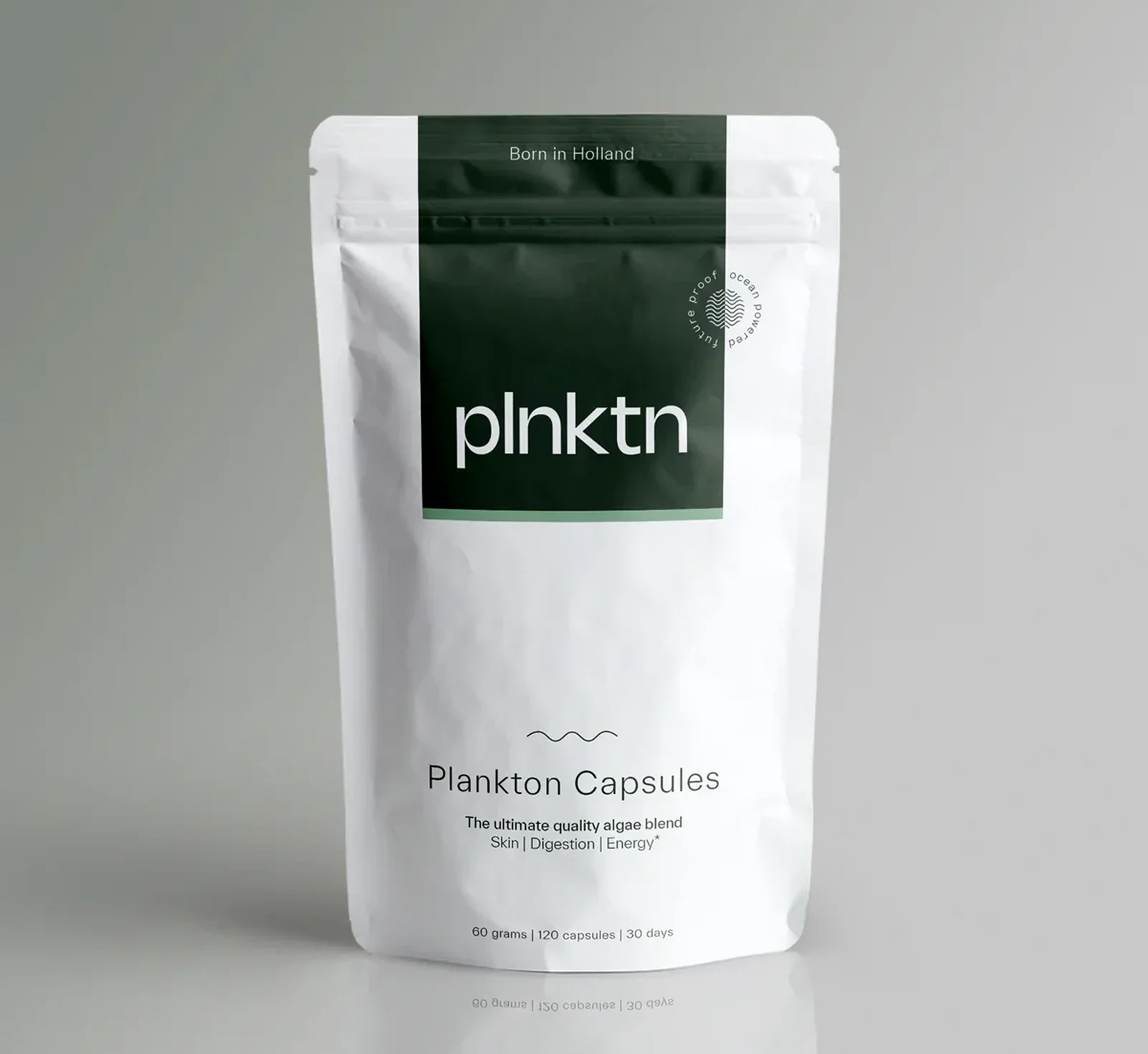

Plankton Capsules
Blend of 4 nutrient-dense micro- and macroalgae from European cultivation. Daily support for gut, skin and energy.
- • 75+ nutrients: minerals, vitamins, pigments, antioxidants and complete proteins
- • 100% natural, plant-based and responsibly grown
- • Supports digestion, energy metabolism and skin health
Disclosure: We may earn a commission if you purchase via these links.

Building an Algae Supplement Stack
For readers who want to maximise their algae supplementation, here is how European-produced chlorella fits into a broader stack:
| Stack Level | Products | Daily Commitment | Monthly Cost (est.) |
|---|---|---|---|
| Starter | Chlorella or spirulina alone | 1 product, 3–5g/day | €15–20 |
| Intermediate | Chlorella + algae omega-3 | 2 products | €30–45 |
| Comprehensive | Chlorella + spirulina + omega-3 + astaxanthin | 4 products | €60–80 |
| Full PLNKTN | All PLNKTN products | 5+ products | €80–120 |
For a comparison of spirulina and chlorella to help decide where to start, see our spirulina vs chlorella guide. For the full product range assessment, see our PLNKTN review.
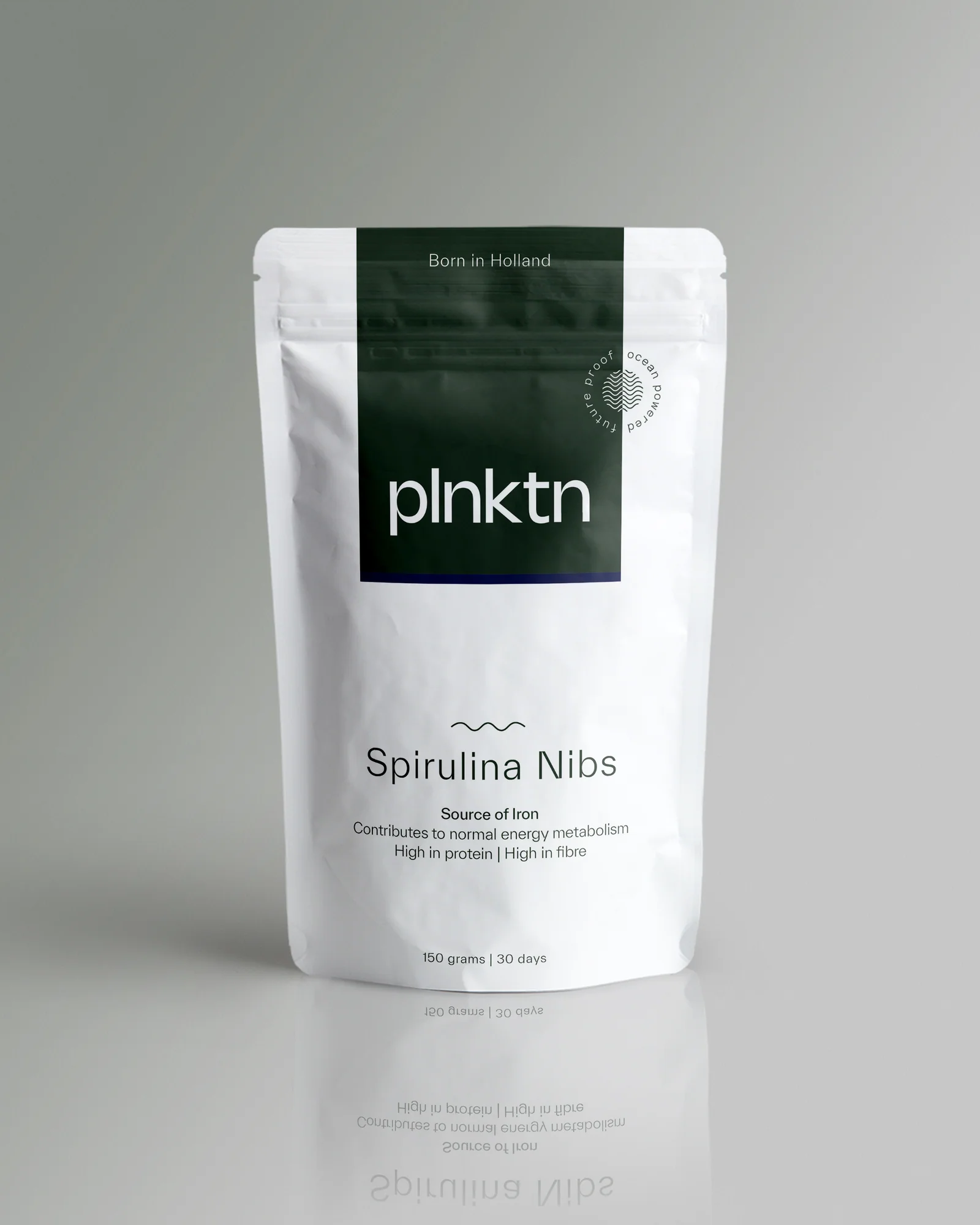
Spirulina Nibs
Crunchy spirulina nibs as an extra natural protein source from algae.
- • High in plant-based protein from spirulina
- • Easy to sprinkle over yoghurt, smoothies or bowls
- • Natural way to add algae to daily meals
Disclosure: We may earn a commission if you purchase via these links.
Frequently Asked Questions
Is European chlorella better than Asian chlorella?
Not categorically. European closed-system chlorella offers the highest contamination safety and traceability. Japanese premium chlorella (Sun Chlorella, Yaeyama) also maintains excellent quality. The key is verification — whatever the origin, demand heavy metal testing results and cell wall processing documentation.
Why does chlorella origin matter?
Because chlorella bioaccumulates whatever is in its growth environment. Open-pond chlorella near industrial areas may contain elevated heavy metals. Closed-system European chlorella grows in controlled, clean conditions. The supplement's safety is directly determined by its production environment.
How do I know if my chlorella is safe?
Request or check for third-party heavy metal test results (lead, cadmium, mercury, arsenic). Reputable brands publish these on their website or provide them on request. If a brand cannot or will not provide testing data, choose a different product.
Is Dutch chlorella organic?
Some is, some is not. Look for the EU Organic certification leaf logo on the label. Organic certification ensures no synthetic pesticides, fertilisers, or GMOs were used in production. Closed-system cultivation makes organic compliance easier because the controlled environment prevents the need for pesticides.
Why is European algae more expensive?
Higher labour costs, energy costs, regulatory compliance requirements, and smaller production scale compared to Asian producers. The premium is typically 20–40% and reflects genuine quality differences in production infrastructure and safety testing.
Can I visit Dutch algae production facilities?
Some companies offer tours or open days. Wageningen University also hosts public events related to algae research. Check individual company websites for visitor information.
Where to Buy
Affiliate disclosure: Smart Supplements earns a commission on purchases made through partner links. This doesn't affect our editorial content or recommendations.
When purchasing chlorella — regardless of origin — verify cracked cell wall processing, heavy metal testing, and country of origin. For European-produced algae supplements with full traceability, explore the PLNKTN range.
For the full overview of algae supplement types, start with our algae supplements beginner's guide. For buying recommendations across all categories, see our best algae supplements in Europe guide.
This article is for informational purposes only and is not intended as medical advice. Always consult a healthcare professional before starting any new supplement, especially if you take prescription medication.
Related topics
Where to buy
Affiliate linksPlankton Capsules
Blend of 4 nutrient-dense micro- and macroalgae from European cultivation. Daily support for gut, skin and energy.
- • 75+ nutrients: minerals, vitamins, pigments, antioxidants and complete proteins
- • 100% natural, plant-based and responsibly grown
- • Supports digestion, energy metabolism and skin health
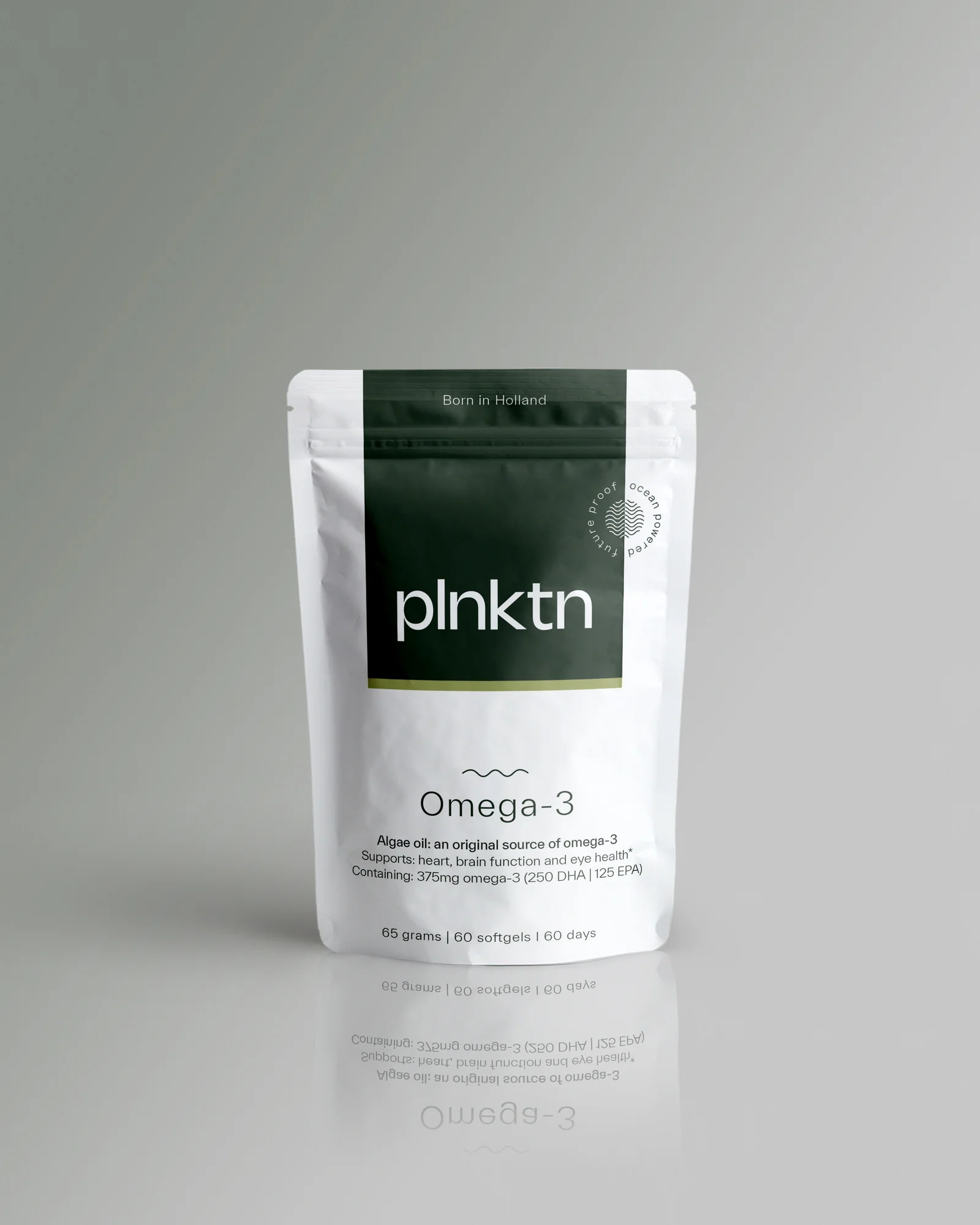
Omega-3 (algenolie)
Daily omega-3 from the original source: algae. With essential EPA and DHA for heart, brain and eyes.
- • 250 mg DHA and 125 mg EPA per capsule
- • 100% fish-free, plant-based algenolie
- • No fishy aftertaste, clean and controlled source

Vitamine D3 (algen)
Daily vitamin D3 from algae with omega-3 for optimal absorption. Supports immune system, muscles and bones.
- • Vitamine D3 uit algen, geschikt voor vegetariërs en veganisten
- • Ondersteunt immuunsysteem, spieren en sterk botweefsel
- • Bevat ook 250 mg omega-3 DHA per capsule

Magnesium (algen)
Magnesium supplement for an active lifestyle, derived from marine algae.
- • Supports normal muscle function and energy metabolism
- • Plant-based source, gentle on stomach
- • Designed for active lifestyles and recovery
Disclosure: We may earn a commission if you purchase via these links.
Related articles
The Best Algae Supplements in Europe: A Buyer's Guide
The European algae supplement market has exploded — but quality varies enormously. Here is how to cut through the noise: quality criteria, category breakdo
Chlorella for Detox: What the Science Actually Says
Chlorella is marketed as a detox superfood that pulls heavy metals from your body. The science is more nuanced — but not as dismissive as sceptics claim. H
Sustainability and Supplements: How Algae Can Save the Planet
If every European replaced their fish oil capsule with an algae equivalent, millions of tonnes of fish would stay in the ocean. Here is the environmental c