
Kratom vs Kava: Two Paths to Natural Relaxation
Written by Smart Supplements Editorial Team
Key takeaways
- Kratom acts on opioid receptors (stimulant at low doses, sedating at high doses); kava modulates GABA receptors for calm without sedation.
- Kava has stronger clinical evidence for anxiety relief, with roughly 12 randomised controlled trials supporting its use.
- Kratom carries a real dependence risk with daily use; kava does not cause physical dependence when using noble-cultivar extracts.
- Both are legal in the Netherlands, but kratom is restricted or banned in several other EU countries — kava is broadly legal across Europe.
- Combining kratom and kava is generally not recommended due to additive CNS depression.
Table of contents
Kratom vs Kava — The Quick Comparison
Before we dive into details, here is the high-level picture. This table summarises the most important differences between kratom (Mitragyna speciosa) and kava (Piper methysticum).
| Feature | Kratom | Kava |
|---|---|---|
| Botanical origin | Mitragyna speciosa — Southeast Asian tree (coffee family) | Piper methysticum — Pacific Island shrub (pepper family) |
| Active compounds | Mitragynine, 7-hydroxymitragynine (40+ alkaloids) | Kavalactones (kavain, dihydrokavain, methysticin, etc.) |
| Primary receptor target | Mu-opioid receptors (also adrenergic, serotonergic) | GABA-A receptors (also dopaminergic, sodium channels) |
| Effect at low dose | Stimulation, focus, mild euphoria | Mild calm, sociability, mental clarity |
| Effect at high dose | Sedation, pain relief, strong euphoria | Deep relaxation, muscle loosening, possible drowsiness |
| Legal status (EU) | Legal in NL; banned or restricted in several EU states | Legal across the EU |
| Dependence potential | Moderate to high with daily use | Very low (noble cultivars) |
| Quality of clinical evidence | Limited — mostly user surveys and case reports | Moderate — ~12 RCTs for anxiety |
The rest of this article unpacks each row in detail.
How They Work (Completely Different Mechanisms)
This is the single most important thing to understand: kratom and kava affect your brain through fundamentally different pathways.
Kratom — Opioid Receptor Agonist
Kratom's primary alkaloid, mitragynine, is a partial agonist at the mu-opioid receptor — the same receptor targeted by morphine, though mitragynine binds with lower affinity and activates downstream signalling differently (Kruegel et al., 2016). At low doses (1–3 g of leaf powder), adrenergic effects dominate, producing stimulation and focus. At higher doses (5–8 g), opioid effects take over, causing sedation and pain relief.
A second alkaloid, 7-hydroxymitragynine, is present in much smaller quantities but is roughly 13 times more potent at the mu-opioid receptor (Takayama, 2004). This compound is largely responsible for kratom's analgesic and sedative properties at higher doses.
Kava — GABA Modulator
Kava's active compounds, called kavalactones, work through a completely different system. They modulate GABA-A receptors — the same target as benzodiazepines and alcohol, but through a distinct binding mechanism (Chua et al., 2016). This produces anxiolytic (anti-anxiety) and muscle-relaxant effects without the cognitive impairment typically associated with GABAergic drugs.
Kavalactones also interact with dopamine receptors and voltage-gated sodium channels, which may explain kava's mood-lifting and mildly analgesic effects (Singh & Singh, 2002). Importantly, kava does not appear to produce tolerance or physical dependence at normal doses — a key distinction from both kratom and pharmaceutical anxiolytics.
The bottom line: kratom's effects are dose-dependent and opioid-driven; kava's effects are GABAergic and more consistent across doses. Different neurochemistry means a fundamentally different experience, even when both are marketed under the same "natural relaxation" banner.
Effects Compared
To really understand how these two plants differ in practice, it helps to compare them by specific use case. Here is how kratom and kava stack up across the scenarios people most commonly ask about.
| Use case | Kratom | Kava | Edge |
|---|---|---|---|
| Anxiety relief | Some relief at moderate doses, but inconsistent | Strong anxiolytic effect, clinically supported | Kava |
| Energy and focus | Clear stimulation at low doses (1–3 g) | Not stimulating; mild clarity at best | Kratom |
| Pain relief | Effective at higher doses (5–8 g) | Mild muscle relaxation only | Kratom |
| Social relaxation | Can be sociable at low-moderate doses | Excellent — traditional social use in Pacific Islands | Kava |
| Sleep support | Sedating strains at high doses may help | Relaxing but not specifically a sleep aid | Slight edge to kratom |
| Mental clarity | Can cloud thinking at higher doses | Preserved even at effective doses | Kava |
| Mood lift | Often reported, especially with white or green strains | Present but subtler | Kratom |
Worth noting: kratom's effects shift dramatically with dose. The "energising" kratom and the "sedating" kratom are not different substances — they are different amounts of the same substance. Kava, by contrast, produces a more predictable range of effects regardless of serving size, though higher amounts do intensify relaxation.
If you are curious about how kratom compares to other natural compounds, we have also covered kratom vs CBD and kratom vs coffee — both worth reading if you are exploring your options.
For Anxiety — Kava Has More Evidence
Let us be direct: if your primary goal is managing anxiety, kava is the better-researched option.
A Cochrane systematic review examined 12 randomised controlled trials (total n = 700+) and concluded that kava extract significantly reduced anxiety compared to placebo, with an effect size comparable to some prescription anxiolytics (Pittler & Ernst, 2003). A later meta-analysis by Savage et al. (2015) confirmed these findings and noted that kava was well-tolerated across studies (Savage et al., 2015).
Kratom, by contrast, has no completed randomised controlled trials for anxiety. The evidence base consists primarily of cross-sectional surveys — notably Grundmann (2017), which found that 66% of kratom users reported using it for anxiety or depression (Grundmann, 2017). Self-reported benefit is not nothing, but it is a much weaker form of evidence than placebo-controlled trials.
This does not mean kratom cannot help with anxiety. Many users report that it does — particularly green-vein varieties at moderate doses. But if you want clinical backing for an anxiety-specific intervention, kava currently has the stronger evidence base. For more on this topic, see our guide to kratom for anxiety.
Safety and Side Effects
Neither kratom nor kava is without risk, but their safety profiles differ in important ways.
Kratom Safety Concerns
- Dependence and withdrawal: Regular daily use (especially at higher doses) can produce physical dependence. Withdrawal symptoms — irritability, insomnia, muscle aches, runny nose — resemble mild opioid withdrawal (Singh et al., 2014).
- Drug interactions: Kratom alkaloids inhibit CYP2D6 and CYP3A4 liver enzymes, which metabolise many common medications. Combining kratom with prescription drugs without professional guidance is risky.
- Contamination risk: Unregulated supply chains have led to kratom products adulterated with other substances. Third-party testing is essential.
- Reported side effects: Nausea, constipation, dry mouth, dizziness at higher doses.
Kava Safety Concerns
- Liver toxicity (context matters): In the early 2000s, several cases of hepatotoxicity led to kava bans in some countries. Subsequent investigation found that most cases involved non-noble kava cultivars, extracts using stems and leaves (rather than root), or products extracted with acetone or ethanol rather than water (Teschke et al., 2012). Noble-cultivar, root-only, water-extracted kava appears to carry minimal liver risk.
- No physical dependence: Unlike kratom, kava does not produce tolerance or withdrawal at normal doses.
- Reported side effects: Mild GI discomfort, skin dryness ("kava dermopathy") with very heavy long-term use.
- Alcohol interaction: Both kratom and kava should be avoided with alcohol. For kava, the combination increases liver stress and sedation.
Safety Comparison Table
| Safety factor | Kratom | Kava (noble cultivar) |
|---|---|---|
| Physical dependence | Yes, with regular use | No |
| Withdrawal symptoms | Moderate (opioid-like) | None reported |
| Liver enzyme interactions | CYP2D6 and CYP3A4 inhibition | Minimal with water extracts |
| Hepatotoxicity risk | Low (some case reports) | Low with noble root extract; higher with non-noble |
| Lethal overdose risk | Very rare in isolation; risk increases with poly-drug use | No fatal overdoses documented for kava alone |
| Recommended max duration | Cycle on/off; avoid daily long-term use | Can be used regularly; traditional cultures use daily |
Honest take: neither substance is zero-risk, but kava's safety profile is more favourable for regular use — provided you source noble-cultivar, root-only products. Kratom's main risk is dependence, which is manageable with responsible cycling but real enough to warrant caution. If you are interested in exploring options beyond both of these, our guide to kratom alternatives in Europe covers several lower-risk options.
Legal Status in Europe
Legal status is a practical concern for European readers. Here is the current picture (as of early 2026).
| Country | Kratom | Kava |
|---|---|---|
| Netherlands | Legal (sold in smartshops) | Legal |
| Germany | Legal (sold as "not for human consumption") | Legal |
| United Kingdom | Banned under Psychoactive Substances Act (2016) | Legal |
| France | Not explicitly banned; grey area | Legal |
| Sweden | Classified as medicinal product (prescription only) | Legal |
| Denmark | Banned | Legal |
| Poland | Banned (since 2009) | Legal |
| Finland | Classified as medicinal product | Legal |
| Italy | Legal (not scheduled) | Legal |
| Spain | Legal (not scheduled) | Legal |
Notice the pattern: kava is broadly legal across the EU with no significant restrictions. Kratom's legal status is a patchwork — fully legal in the Netherlands and some countries, but banned or heavily restricted in others. If you travel within Europe, this matters. For a deeper look at what kratom is and its regulatory landscape, we cover that in our pillar guide.
Green Malay Kratom Powder
Green Malay is known for its unusually long-lasting balanced effects — sustained focus and mild energy without the sharp edge of white vein. Kraatje sources directly from Malaysian-origin trees grown in Indonesia, batch-tested on arrival.
- • Long-duration effects — up to 6–7 hours reported
- • Balanced: energy + calm without overstimulation
- • Direct-sourced, batch lab-tested
Disclosure: We may earn a commission if you purchase via these links.
Can You Combine Kratom and Kava?
We get this question regularly, and the short answer is: most experts advise against it.
Both kratom and kava are central nervous system (CNS) depressants at effective doses. Combining them creates a risk of additive sedation — meaning the sedative effects stack on top of each other unpredictably. Symptoms could include excessive drowsiness, impaired motor coordination, respiratory depression (primarily from kratom's opioid activity), and dangerously low blood pressure.
There are no clinical studies examining the kratom-kava combination specifically. Some online communities report using low doses of both, but this is anecdotal and does not constitute a safety endorsement.
Our position: choose one based on your goals, rather than combining. If you want opioid-receptor-mediated effects (energy, pain relief), kratom is your plant. If you want GABAergic calm without dependence risk, kava is your plant. Stacking both does not give you "the best of both worlds" — it gives you unpredictable CNS depression.
Which Should You Choose?
This is a personal decision, but here is a framework to help you think it through.
Consider kratom if:
- Your primary goal is energy, focus, or a mood lift (low-dose use)
- You are looking for natural pain relief (moderate-to-high dose)
- You are already experienced with dosing and cycling protocols
- You are based somewhere kratom is legal and you can source lab-tested products
- You understand and accept the dependence risk with regular use
Consider kava if:
- Your primary goal is anxiety reduction or social relaxation
- You want something with stronger clinical evidence behind it
- You prefer a substance with no physical dependence potential
- You want something you can use regularly without cycling
- You value mental clarity alongside relaxation
Consider other alternatives if:
- You are in a country where kratom is restricted
- You want the lowest possible risk profile
- You are exploring natural mood support more broadly (see also our piece on kanna / Sceletium tortuosum)
A Note on What We Carry
We want to be transparent: Smart Supplements partners with kratom vendors, so we carry kratom products from trusted brands. We do not currently stock kava products. This does not change our recommendation — if kava better fits your needs, we would rather tell you that honestly than push a product that is not the best match. If kratom does suit your goals, here is one of our most popular options for a balanced, all-round experience:
Green Maeng Da Kratom Powder
EUKratom's Green Maeng Da — a high-quality powder from the lush, humid regions of West Kalimantan. Vibrant green hue, lab-tested for purity. 4.75/5 from 291 reviews — one of their most popular strains.
- • Top-rated: 4.75/5 from 291 reviews
- • West Kalimantan origin — vibrant green profile
- • Fine leaf powder, 100% raw botanical — no additives
Disclosure: We may earn a commission if you purchase via these links.
Frequently Asked Questions
Which is safer — kratom or kava?
For most people, kava (noble cultivar, root extract) has a more favourable safety profile. It does not cause physical dependence, has no documented fatal overdoses, and its main historical safety concern (liver toxicity) has been largely attributed to poor-quality extracts rather than the plant itself. Kratom is not inherently dangerous, but it does carry dependence risk with regular use and interacts with more medications via liver enzymes.
Can you switch between kratom and kava?
Yes, you can use them on different occasions — many people do. The key is to avoid using both on the same day (see the section on combining above) and to respect the distinct dosing and safety profiles of each. Switching is not the same as stacking.
Does kava taste bad?
Honestly, yes — most people find kava's taste earthy, peppery, and somewhat unpleasant. Traditional preparation (kneaded in water and strained through cloth) tastes better than some concentrated extracts. Many kava bars and products now use flavouring or offer capsules to address this. Your tongue may also go slightly numb, which is normal and caused by kavalactones' local anaesthetic effect.
Is kava legal in the Netherlands?
Yes, kava is fully legal in the Netherlands. You can purchase kava root, powder, and extracts without restriction. It is not classified as a controlled substance anywhere in the EU.
Which is better for sleep — kratom or kava?
Neither is primarily a sleep supplement, but they can help indirectly. Kratom's sedating red strains at higher doses may assist with falling asleep, though this comes with dependence risk if used nightly. Kava promotes relaxation and may ease the transition to sleep without sedation per se. For sleep specifically, you may want to explore dedicated options — our wellness guides cover this topic in more depth.
Where to Buy Kratom in Europe
Affiliate disclosure: Smart Supplements earns a commission on purchases made through partner links. This doesn't affect our editorial content or recommendations.
If you have decided that kratom suits your needs, we partner with lab-tested European vendors who ship legally within the Netherlands and to other countries where kratom is permitted. Browse our full selection below.
Red Maeng Da Kratom Powder
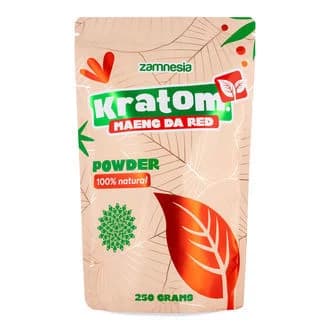
100% natural Red Maeng Da Kratom Powder from true red-veined Thai kratom leaves. Strong relaxation and sedating profile — one of the most popular red vein strains for evening use and sleep. Available in 25g, 50g, 100g and 250g. 271 reviews, 4.5/5. Zamnesia house brand.
- • Red Maeng Da — premium Thai strain
- • Strong relaxation and sedation
- • 4 sizes from 25g to 250g

Kratom
Kratom powders, capsules, and extracts from established suppliers. Multiple strains for different effects.
Kratom Extract
A concentrated kratom extract powder that delivers stronger effects in smaller quantities than regular leaf powder. Made from Maeng Da leaves, this extract offers enhanced focus, clean energy, and a sense of well-being — ideal for experienced kratom users looking for a more potent and efficient format.
- • Highly concentrated — stronger effects than standard powder
- • Maeng Da variety — known for focus, energy, and well-being
- • Versatile powder format — mix into tea, smoothie, or capsules
Kratom Gummies
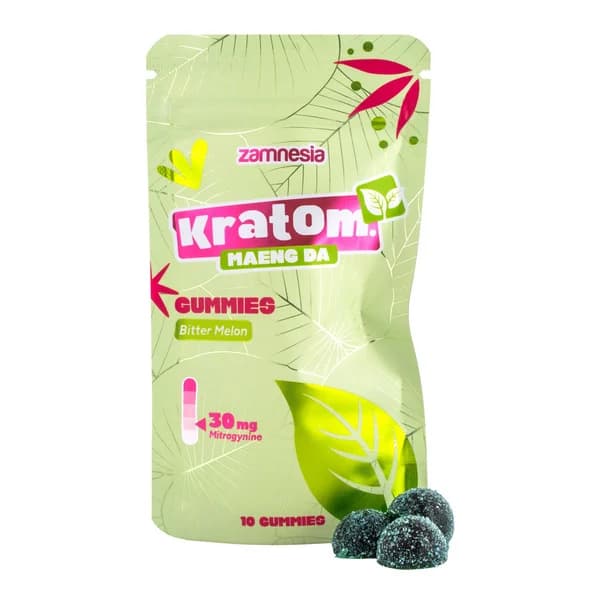
Full-spectrum Maeng Da kratom gummies with 30mg mitragynine each. No powder, no capsules — just bold natural flavour and clean effects.
- • 30mg mitragynine per gummy
- • Full-spectrum kratom extract
- • 4 fruit flavours with 33%+ real fruit content
Disclosure: We may earn a commission if you purchase via these links.
This article is for informational purposes only and is not intended as medical advice. Always consult a healthcare professional before starting any new supplement, especially if you take prescription medication.
Related topics
Where to buy
Affiliate linksRed Maeng Da Kratom Powder
100% natural Red Maeng Da Kratom Powder from true red-veined Thai kratom leaves. Strong relaxation and sedating profile — one of the most popular red vein strains for evening use and sleep. Available in 25g, 50g, 100g and 250g. 271 reviews, 4.5/5. Zamnesia house brand.
- • Red Maeng Da — premium Thai strain
- • Strong relaxation and sedation
- • 4 sizes from 25g to 250g
Kratom
Kratom powders, capsules, and extracts from established suppliers. Multiple strains for different effects.
Kratom Extract
A concentrated kratom extract powder that delivers stronger effects in smaller quantities than regular leaf powder. Made from Maeng Da leaves, this extract offers enhanced focus, clean energy, and a sense of well-being — ideal for experienced kratom users looking for a more potent and efficient format.
- • Highly concentrated — stronger effects than standard powder
- • Maeng Da variety — known for focus, energy, and well-being
- • Versatile powder format — mix into tea, smoothie, or capsules
Kratom Gummies
Full-spectrum Maeng Da kratom gummies with 30mg mitragynine each. No powder, no capsules — just bold natural flavour and clean effects.
- • 30mg mitragynine per gummy
- • Full-spectrum kratom extract
- • 4 fruit flavours with 33%+ real fruit content
Disclosure: We may earn a commission if you purchase via these links.