
Kratom vs Coffee: Which Is Better for Energy and Focus?
Written by Smart Supplements Editorial Team
Key takeaways
- Kratom and coffee are botanical cousins — both from the Rubiaceae family
- Coffee works via adenosine antagonism; kratom via adrenergic/dopaminergic activation — kratom adds a mood component coffee lacks
- Coffee is unambiguously safer for daily use; kratom carries dependency risk
- Kratom lasts 4–6 hours vs coffee 3–4 hours, but at a higher risk cost
- Stacking kratom and coffee increases cardiac load — keep both doses conservative if combining
Table of contents
Kratom and coffee are botanical cousins — both from the Rubiaceae family. At low doses, they even work through overlapping mechanisms. Here's the honest comparison.
The Botanical Connection
Kratom (Mitragyna speciosa) and coffee (Coffea arabica) share more than a passing resemblance. Both belong to the Rubiaceae family — the same botanical lineage that produces madder, quinine, and gardenia (Boyer et al., 2008). This is not a superficial taxonomic coincidence: it partly explains why the two plants have overlapping stimulant properties, even though their active compounds are entirely different.
In Southeast Asia, this overlap was well understood long before pharmacology existed. Thai and Malaysian labourers historically chewed kratom leaves as a substitute for coffee — or to stretch a limited coffee supply. The effect at low doses is similar enough to be interchangeable for basic fatigue reduction. That practical equivalence is exactly what makes the comparison worth examining scientifically today.
PAA: Is kratom in the coffee family? Yes. Both kratom (Mitragyna speciosa) and coffee (Coffea arabica) belong to the Rubiaceae family, making them genuine botanical relatives.
How Each Works
Understanding the comparison starts with mechanism, because coffee and kratom reach similar endpoints via very different routes.
Coffee works primarily through adenosine receptor antagonism. Adenosine is the brain's "tiredness signal" — it accumulates throughout the day and progressively dampens neuronal activity. Caffeine, coffee's primary active compound, blocks adenosine receptors without activating them. The result is a reduction in perceived fatigue rather than a direct stimulation of energy. There is a secondary effect: with adenosine out of the way, dopamine and norepinephrine activity increases modestly — hence the mild mood lift and alertness that follows a good cup of coffee (Nehlig, 2010).
Kratom at low doses works differently. The primary alkaloids — mitragynine and 7-hydroxymitragynine — act as adrenergic agonists at low doses, directly stimulating the sympathetic nervous system. This produces a more immediate energy effect. At the same time, mitragynine has dopaminergic activity, which accounts for the mood component that coffee simply does not deliver in the same way. Users consistently describe low-dose kratom as "coffee with a mood boost" — and the pharmacology supports that description (Kruegel & Grundmann, 2018; Boyer et al., 2008).
Why does the distinction matter? Because the mood component changes the risk profile. Dopaminergic activation is associated with greater reinforcement potential — which is one of the reasons kratom carries a dependency risk that coffee, for most people, does not match in severity.
For a deeper look at kratom's stimulant mechanism, see our guide to kratom for energy.
Head-to-Head Comparison
| Factor | Coffee | Kratom (low dose) |
|---|---|---|
| Onset | 15–30 min | 20–40 min |
| Duration | 3–4 hours | 4–6 hours |
| Mood effect | Mild | Moderate–significant |
| Crash risk | Moderate (caffeine crash) | Low–moderate |
| Tolerance | Builds gradually | Builds faster |
| Dependency risk | Low–moderate | Moderate–high |
| Legal in NL | Yes | Yes (as of 2026) |
The duration gap is practically significant. Kratom's 4–6 hour window versus coffee's 3–4 hours is often cited by users as a reason to choose kratom for long work sessions or extended focus tasks. The trade-off, however, is clearly visible in the dependency row.
When Coffee Wins
For the majority of people and most use cases, coffee is the better choice — and the margin is not close.
Daily use without dependency concern. Habitual coffee drinkers develop caffeine dependence, but the withdrawal profile (headache, irritability for 1–3 days) is mild compared to kratom. Billions of people use coffee daily for decades without significant harm.
Predictability. Coffee is one of the most studied psychoactive substances on earth. Dose-response relationships are well characterised. You know what you're getting.
Social acceptability. Coffee is woven into workplace culture, social rituals, and daily routine in a way that requires no harm reduction consideration for healthy adults.
Zero stigma or legal uncertainty. Kratom's legal status varies by country and is subject to ongoing regulatory review. Coffee has none of that overhead.
If you want a daily driver for energy and focus, coffee wins unambiguously.
When Kratom Might Be Chosen Over Coffee
There are specific situations where kratom makes rational sense as an alternative — provided the user is aware of the risk trade-offs.
Caffeine sensitivity. A meaningful proportion of the population is particularly sensitive to caffeine — experiencing anxiety, palpitations, or sleep disruption even at moderate doses. For these individuals, kratom's adrenergic mechanism may produce stimulation with less cardiac and anxiogenic burden. This is individual and not guaranteed.
Wanting the mood component. If the goal is not just energy but a combined energy-and-mood effect — particularly for tasks requiring sustained motivation — kratom's dopaminergic activity delivers something coffee cannot.
Longer duration needed. For a 5–6 hour work block without re-dosing, kratom's extended window is practical. Coffee typically requires a second cup to cover the same period, which compounds caffeine intake and crash risk.
Caveat: None of these use cases eliminates kratom's dependency risk. Choosing kratom over coffee for any of these reasons requires accepting a higher dependency potential. Our kratom harm reduction guide and kratom dosage guide are essential reading before regular use.
For those new to kratom, what is kratom? provides the full background. For strain selection, see kratom strains explained.
If energy is your goal, white vein varieties are the most appropriate starting point:
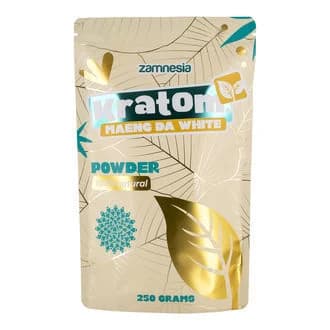
White Maeng Da Kratom Powder
White-veined Maeng Da kratom powder — energising and stimulating. Popular with active users.
- • Energising and stimulating strain
- • Made from select white-veined Thai leaves
- • Ideal for active and busy individuals
Disclosure: We may earn a commission if you purchase via these links.
For tolerance management if you do use kratom regularly, read our kratom tolerance guide.
The Kratom + Coffee Combination
Some users stack kratom and coffee, typically taking a low dose of kratom alongside or instead of a reduced coffee dose. This combination is worth addressing directly.
Both substances have adrenergic activity — kratom through direct agonism, caffeine through adenosine blockade that increases norepinephrine availability. Stacking them amplifies the adrenergic load on the cardiovascular system: increased heart rate, elevated blood pressure, heightened anxiety risk. For most healthy adults in good cardiovascular health, this is unlikely to be acutely dangerous at conservative doses, but it is not trivially safe either.
Swogger & Walsh (2018), examining kratom user motivations and patterns, noted that polydrug use — including combining kratom with caffeine — was common among users. The combination was generally used to modulate effects rather than to intensify them (e.g., using less kratom because of the coffee). This is a reasonable harm reduction approach, but it requires discipline: both doses need to stay well below what you would take of either substance alone.
If combining: Keep kratom to the lower end of your usual dose, use a single standard coffee rather than a strong or large one, avoid combining if you have any cardiovascular sensitivity, and do not use this combination daily.
The Bottom Line
Coffee and kratom are genuine botanical relatives with overlapping stimulant effects. But the comparison does not resolve to a tie.
Coffee is safer for daily use by a clear margin. The dependency profile, the predictability, the absence of legal uncertainty, and the decades of safety data all point in the same direction. If you are choosing a daily energy tool, coffee is it.
Kratom offers something specific that coffee doesn't — a longer duration and a mood component — but at a meaningful cost in dependency risk. It is rationally suited to occasional, deliberate use for specific situations: a long focused session, a day when motivation is the bottleneck, or as an alternative for the caffeine-sensitive. It is not a daily coffee replacement without accepting dependency risk.
Use kratom occasionally. Use coffee daily. Understand the difference before stacking both.
Frequently Asked Questions
Is kratom safer than coffee? For daily use, no. Coffee has a well-established safety profile built over centuries of widespread use. Kratom's dependency risk and less-studied long-term profile make it less appropriate as a daily habit. For specific one-off use cases, the comparison is more nuanced, but coffee remains the lower-risk option overall.
Is kratom in the coffee family? Yes. Both kratom (Mitragyna speciosa) and coffee (Coffea arabica) belong to the Rubiaceae family. This shared lineage is one reason they produce overlapping stimulant effects, despite having completely different active compounds.
Can I take kratom with coffee? You can, but with caution. Both substances have adrenergic activity, so combining them increases cardiovascular load. If you do combine them, keep both doses conservative — less kratom than you would normally take, and a standard rather than large coffee.
Which lasts longer — kratom or coffee? Kratom typically lasts 4–6 hours at a stimulating dose. Coffee's effects last 3–4 hours for most people. Kratom has the longer window, but this comes alongside its higher dependency risk.
References:
- Kruegel, A.C. & Grundmann, O. (2018). The medicinal chemistry and neuropharmacology of kratom. Neuropharmacology, 134, 108–120.
- Nehlig, A. (2010). Is caffeine a cognitive enhancer? Journal of Alzheimer's Disease / Neuroscience & Biobehavioral Reviews.
- Swogger, M.T. & Walsh, Z. (2018). Kratom use and mental health: A systematic review. Drug and Alcohol Dependence.
This article is for informational purposes only and is not intended as medical advice. Always consult a healthcare professional before starting any new supplement, especially if you take prescription medication.
Related topics
Where to buy
Affiliate links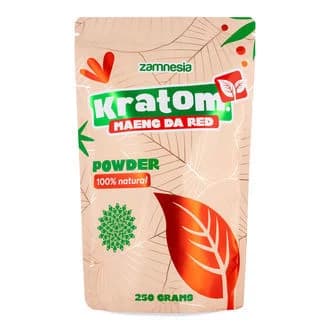
Red Maeng Da Kratom Powder
100% natural Red Maeng Da Kratom Powder from true red-veined Thai kratom leaves. Strong relaxation and sedating profile — one of the most popular red vein strains for evening use and sleep. Available in 25g, 50g, 100g and 250g. 271 reviews, 4.5/5. Zamnesia house brand.
- • Red Maeng Da — premium Thai strain
- • Strong relaxation and sedation
- • 4 sizes from 25g to 250g

Kratom
Kratom powders, capsules, and extracts from established suppliers. Multiple strains for different effects.
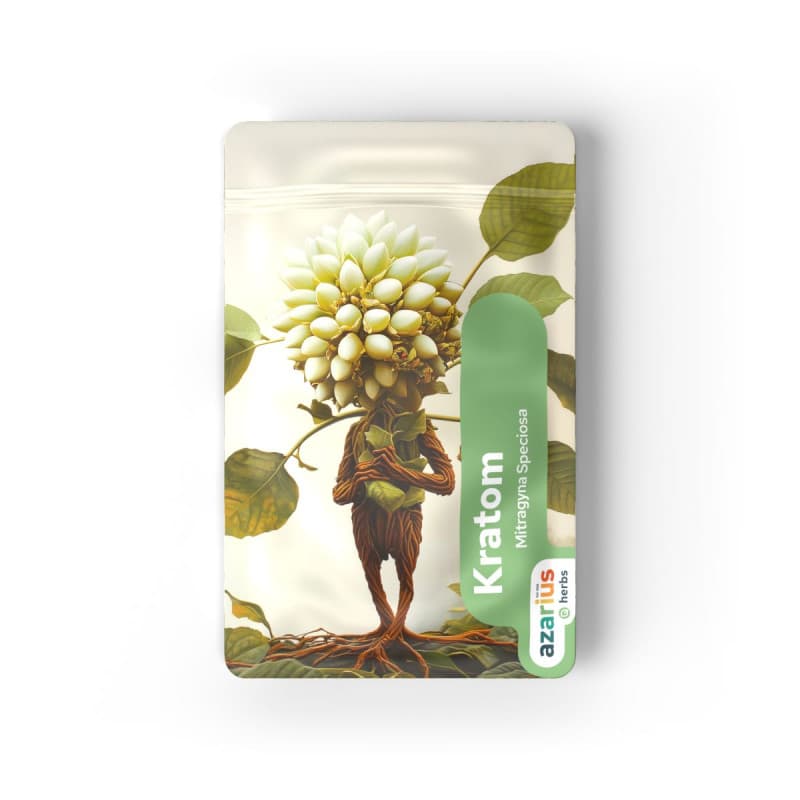
Kratom Extract
A concentrated kratom extract powder that delivers stronger effects in smaller quantities than regular leaf powder. Made from Maeng Da leaves, this extract offers enhanced focus, clean energy, and a sense of well-being — ideal for experienced kratom users looking for a more potent and efficient format.
- • Highly concentrated — stronger effects than standard powder
- • Maeng Da variety — known for focus, energy, and well-being
- • Versatile powder format — mix into tea, smoothie, or capsules
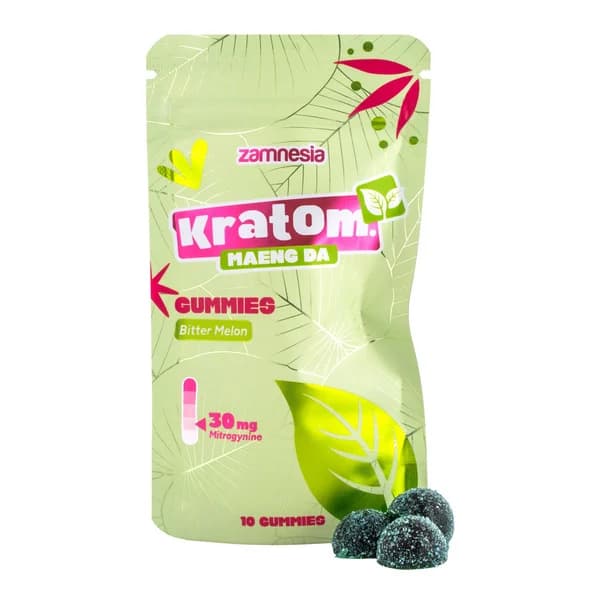
Kratom Gummies
Full-spectrum Maeng Da kratom gummies with 30mg mitragynine each. No powder, no capsules — just bold natural flavour and clean effects.
- • 30mg mitragynine per gummy
- • Full-spectrum kratom extract
- • 4 fruit flavours with 33%+ real fruit content
Disclosure: We may earn a commission if you purchase via these links.
Related articles
Green Malay Kratom: The Long-Duration Strain Explained
Green Malay kratom: what makes it different, why the duration is longer than other green veins, the best use cases, dosage, and top European sources.
Kratom for Energy and Focus: Best Strains and Dosage
White and green vein kratom have a stimulant window at low doses. Getting the strain, dose, and cycling strategy right is everything.
Kratom vs Kava: Two Paths to Natural Relaxation
Kratom and kava both promise relaxation, but they work through completely different mechanisms. We compare effects, safety, legal status in Europe, and who should choose which.