
Kratom for Anxiety and Stress: What Users Report (and What the Research Says)
Written by Smart Supplements Editorial Team
Key takeaways
- Anxiety is a top-3 reason for kratom use in Europe — the pharmacology explains why it works
- Green vein is best for daytime anxiety; red vein for evening/acute anxiety; white vein can worsen anxiety
- Anxiety users are highest-risk for dependency — the self-medication cycle is particularly strong
- Max 1–2g, max 2–3 days per week — daily use almost guarantees dependency for anxiety users
- Withdrawal anxiety rebound can exceed baseline — this is a documented risk
Table of contents
Last updated: March 2026 Written by the Smart Supplements editorial team
Anxiety is one of the top three reasons people start using kratom in Europe (Swogger & Walsh, 2018; García-Romeu et al., 2020). That fact alone is worth sitting with — because it means a large share of kratom users are not recreational consumers chasing a high, but people who are struggling and looking for something that works. The pharmacology gives a plausible explanation for why kratom helps with anxiety. But it also explains why anxiety users are at the highest risk of developing dependency. This article covers both sides honestly.
Why People Use Kratom for Anxiety
Survey data consistently places anxiety and stress relief among the most common reasons people use kratom. In a landmark 2018 study by Swogger and Walsh published in Drug and Alcohol Dependence, anxiety relief ranked as one of the top three self-reported motivations for kratom use — sitting alongside pain management and mood improvement. A 2016 study by Singh et al. in PLOS ONE, surveying kratom users in Southeast Asia, similarly found that emotional regulation and stress reduction were primary drivers.
In Europe, anecdotal reports from kratom communities mirror this pattern. Users describe kratom as something that "takes the edge off" social anxiety, helps them function in stressful work environments, or provides relief during periods of acute stress. A recurring description is that low doses produce a calm, focused state — less cognitive noise, less rumination — without the sedation of alcohol or the blunted affect of some prescription anxiolytics.
It is important to be clear: none of this constitutes evidence that kratom treats anxiety as a medical condition. What the surveys capture is user experience — what people report, subjectively, about why they use it and what they feel. That distinction matters, and we will return to it throughout this article.
What Users Consistently Report
Across forums, surveys, and self-report studies, several themes recur:
- Low-to-moderate doses (1–3g) described as producing calm focus and reduced social inhibition
- Red vein strains reported as more sedating and useful for evening anxiety or acute stress episodes
- Green vein strains reported as providing daytime anxiety relief without sedation or cognitive impairment
- White vein strains frequently described as worsening anxiety — important to flag early
These are user reports, not clinical findings. But they are consistent enough across independent sources to be worth understanding alongside the pharmacology.
The Pharmacology Behind the Effect
Kratom's primary active alkaloids are mitragynine and 7-hydroxymitragynine (7-HMG). Their effects on anxiety involve at least two distinct mechanisms, which operate differently depending on dose.
Low-Dose: Adrenergic and Dopaminergic Activity
At low doses (roughly 1–3g of dried leaf powder), mitragynine acts primarily as an adrenergic and dopaminergic agent. Boyer et al. (2008, CNS Drugs) described this low-dose profile as stimulant-like — increased energy, sociability, and reduced fatigue. From an anxiety perspective, the dopaminergic component likely contributes to mood lift and reduced rumination, while the adrenergic activity can increase alertness without the anxiogenic spikes associated with high-caffeine stimulants.
This is the dose range most green vein users describe as the "anxiety sweet spot" — present, calm, functional, without the drowsiness that makes daily tasks difficult.
Higher Dose: Mu-Opioid Receptor Agonism
At higher doses (roughly 4–6g+), mitragynine and especially 7-HMG engage mu-opioid receptors more significantly. Kruegel and Grundmann (2018, Neuropharmacology) provided a detailed breakdown of alkaloid binding affinities, confirming that 7-HMG has meaningful mu-opioid agonist activity. Mu-opioid agonism produces anxiolytic effects — reduced fear response, emotional blunting, physical relaxation — similar in character (though not identical in mechanism) to benzodiazepines.
This is why red vein kratom at moderate-to-higher doses feels sedating and strongly anxiolytic to many users. It is also why this dose range carries the most dependency risk.
| Dose Range | Primary Mechanism | Anxiety Effect | Dependency Risk |
|---|---|---|---|
| 1–2g | Adrenergic / dopaminergic | Mild calm, focus, mood lift | Low |
| 2–4g | Mixed | Moderate anxiolytic, some sedation | Moderate |
| 4–6g+ | Mu-opioid dominant | Strong anxiolytic, sedation | High |
| 6g+ | Mu-opioid dominant | Heavy sedation, potential dysphoria | Very High |
Why Anxiety Users Are High-Risk
The mechanism that makes kratom effective for anxiety is precisely the mechanism that creates dependency. When someone uses kratom to manage anxiety, they are using an opioid-adjacent substance to regulate an emotional state. The brain adapts — the natural anxiety regulation systems down-regulate because the external chemical is doing the job. When kratom is removed, anxiety rebounds. Often above baseline. This is not a theoretical risk; it is documented in kratom withdrawal case reports and is the mechanism behind benzo-type dependency patterns more broadly.
Anxiety users are in a particularly vulnerable position because the motivation to continue using is strong (it works), the cost of stopping is high (rebound), and the dose tends to escalate over time as tolerance builds (Singh et al., 2016).
Which Strains for Anxiety?
Not all kratom strains are equivalent for anxiety. The vein colour convention (green, red, white) reflects real differences in alkaloid ratios — though these vary by vendor and batch. Here is what the consensus of user reports and available alkaloid data suggests:
Green Vein: Daytime Calm Without Sedation
Green vein kratom occupies the middle of the stimulant-to-sedative spectrum. At 1–2g, most users report a calm, focused state with reduced social anxiety and improved mood. It does not typically impair cognitive function or cause the drowsiness that makes daytime use impractical.
Best green vein strains for anxiety:
- Green Malay — consistently cited for long-lasting, gentle calm. Duration is often reported at 4–6 hours, making it practical for a workday. Lower intensity than Maeng Da, which suits anxious users who find stronger stimulation counterproductive.
- Green Maeng Da — more potent, slightly more energising. Good for anxiety that presents with fatigue or low motivation. Less suitable for those whose anxiety is worsened by stimulation.
Green Malay Kratom Powder
Green Malay is known for its unusually long-lasting balanced effects — sustained focus and mild energy without the sharp edge of white vein. Kraatje sources directly from Malaysian-origin trees grown in Indonesia, batch-tested on arrival.
- • Long-duration effects — up to 6–7 hours reported
- • Balanced: energy + calm without overstimulation
- • Direct-sourced, batch lab-tested
Disclosure: We may earn a commission if you purchase via these links.
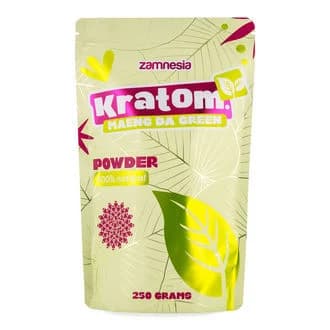
Green Maeng Da Kratom Powder
Pure Green Maeng Da kratom powder from Thailand. Balanced effects suitable for any time of day. Rich alkaloid content.
- • Balanced effects — suitable any time of day
- • Traditionally harvested and dried in Thailand
- • Rich alkaloid profile from green-veined leaves
Disclosure: We may earn a commission if you purchase via these links.
Red Vein: Acute Anxiety and Evening Use
Red vein kratom sits at the sedative end of the spectrum. Higher alkaloid content in the more opioid-active fractions produces a heavier, more relaxing effect. For acute anxiety episodes — a bad day, social event dread, evening wind-down — red vein is the category most users report reaching for.
Best red vein strain for anxiety:
- Red Borneo — frequently described as the smoothest red vein, with deep relaxation and minimal stimulant edge. Preferred for evening use or situations where sedation is acceptable. Not suitable for daytime use if cognitive function matters.
Red Borneo Classic Kratom Powder
A classic red vein from Borneo — Kraatje's bestselling strain for relaxation, sleep support, and discomfort relief. Mature leaves, longer fermentation, and consistent alkaloid profile. Direct-sourced and batch-tested.
- • Mature Borneo leaves for deeper red vein profile
- • Direct-sourced — certified Indonesian growers
- • Every batch independently lab-tested
Disclosure: We may earn a commission if you purchase via these links.
White Vein: Not Recommended for Anxiety
White vein kratom is the most stimulant-dominant category. At the doses where kratom effects are noticeable, white vein tends to increase heart rate, mental activity, and alertness. For anxiety users, this is often counterproductive — it can amplify rather than reduce anxious symptoms. Users who try white vein for anxiety frequently report that it made things worse.
Avoid white vein if your primary concern is anxiety.
| Strain | Vein | Best Use Case | Anxiety Suitability |
|---|---|---|---|
| Green Malay | Green | Daytime, social, work | Excellent — long, gentle calm |
| Green Maeng Da | Green | Daytime, fatigue + anxiety | Good — more potent, energising |
| Red Borneo | Red | Evening, acute anxiety, stress | Excellent — deep relaxation |
| Red Bali | Red | Evening, general anxiolytic | Good — widely available |
| White Maeng Da | White | Energy, focus | Poor — can worsen anxiety |
| White Borneo | White | Stimulation | Poor — avoid for anxiety |
For a full breakdown of all strain types, see our kratom strains guide.
The Problem with Using Kratom for Anxiety
This section deserves to be read carefully, especially by anyone who is currently using kratom for anxiety or considering it.
The Self-Medication Cycle
Kratom relieves anxiety. That relief is real and, for many users, significant. But the relief is borrowed from your future neurochemistry. Each time you use kratom to manage an anxious state, you are training your brain to outsource anxiety regulation to an external substance. Over weeks and months, two things happen:
- The dose required to achieve the same relief increases (tolerance)
- The baseline anxiety level when not using kratom increases (neuroadaptation)
This creates a cycle where kratom goes from being something that helps on hard days to something that is required just to feel normal. The threshold for "needing" it drops steadily.
Tolerance Builds Fast for Anxiety Users
Users who take kratom daily for anxiety report that tolerance develops within 2–4 weeks for most people. The dose that produced calm relief at week one may produce almost no effect by week four. This is documented in user reports and is consistent with the tolerance mechanisms of opioid receptor agonists more broadly.
See our dedicated article on kratom tolerance for strategies to slow this process.
Withdrawal Anxiety Rebound
The most clinically important risk for anxiety users is withdrawal-induced rebound anxiety. When kratom is reduced or stopped after regular use, anxiety commonly returns — and frequently exceeds the original baseline (Swogger & Walsh, 2018; Singh et al., 2016). This is not unique to kratom; it is a documented pattern with benzodiazepines, alcohol, and other substances that engage GABA or opioid systems.
For someone who started using kratom because their anxiety was already difficult to manage, a rebound that exceeds their original baseline can feel unmanageable — which creates powerful pressure to resume use. This is the core of the dependency cycle for anxiety users.
This risk is most acute with:
- Daily use at any dose
- Higher doses (4g+)
- Use of red vein strains (stronger opioid component)
- Use over more than 4–6 weeks continuously
The Benzo Comparison
The dependency pattern for kratom in anxiety users has structural similarities to benzodiazepine dependency — not because the mechanisms are identical, but because the functional dynamic is the same: a substance that effectively reduces anxiety in the short term, builds tolerance requiring dose escalation, and produces rebound anxiety on withdrawal that motivates continued use.
This comparison is not meant to be alarmist. It is meant to be accurate. Kratom's dependency potential is real, and anxiety users are in the highest-risk category. Read our kratom harm reduction guide before starting regular use.
Kratom vs CBD for Anxiety
Many people considering kratom for anxiety have already tried CBD, or are choosing between the two. Here is a direct comparison.
| Factor | CBD | Kratom |
|---|---|---|
| Evidence for anxiety | Moderate (human trials exist) | Weak (user reports only) |
| Dependency risk | Very low | Significant (anxiety users: high) |
| Effect strength | Mild to moderate | Moderate to strong |
| Legal status (Europe) | Generally legal | Varies by country |
| Onset | 30–90 minutes (oral) | 20–40 minutes |
| Duration | 4–6 hours | 3–6 hours |
| Suitable for daily use | Yes | No (for anxiety users especially) |
CBD has a more established evidence base for anxiety — there are human clinical trials, a more understood mechanism (5-HT1A partial agonism, endocannabinoid modulation), and essentially no dependency risk at standard doses. For most people, CBD is the lower-risk starting point.
Kratom is stronger. Users who have found CBD insufficient — who need more than a mild dampening of anxiety — may find kratom more effective. But that stronger effect comes with a significantly higher risk profile.
Who might rationally choose kratom over CBD for anxiety: Someone who has genuinely tried CBD at adequate doses (25–75mg) for at least 4 weeks and found it insufficient, who is committed to using kratom at low doses and low frequency, and who understands the dependency risks going in.
For a full comparison, see our dedicated kratom vs CBD article.
How to Use Kratom for Anxiety Responsibly
If you choose to use kratom for anxiety, the following guidelines reflect the harm reduction consensus from both clinical observers and experienced user communities. These are not guarantees — they are risk-reduction practices.
Strain Selection
Start with a green vein strain. Green Malay is the most commonly recommended starting point for anxiety users because of its gentle, long-lasting effect profile. Avoid white vein entirely. Reserve red vein for specific acute situations (a particularly bad day, an evening where you need to decompress) rather than as a daily option.
Dosing
- Start at 1g — lower than most guides recommend, because anxiety users are more sensitive to adverse effects and more prone to dose escalation
- Maximum 2g for anxiety purposes — higher doses engage opioid mechanisms more strongly and increase dependency risk
- Do not chase the effect — if 1g produces no noticeable effect, wait 48 hours and try 1.5g, not a second dose the same day
Frequency
- Maximum 2–3 times per week — this is the most important harm reduction rule for anxiety users
- Never use on consecutive days — skipping days is not optional; it is required to prevent tolerance from forming at a clinically meaningful rate
- Take one full week off per month — a complete break helps reset tolerance and gives you data on whether your baseline anxiety is worsening
Tracking
Keep a simple log: date, dose, strain, effect, and a 1–5 anxiety rating before and after. If you notice that you are using kratom more frequently than planned, that doses are increasing, or that your anxiety on non-use days is worsening — stop immediately and consult a healthcare professional.
For more detail on dosing by strain and purpose, see our kratom dosage guide.
Where to Buy: Recommended Products for Anxiety
The products below are selected based on their strain profiles and user-reported suitability for anxiety. All are from vendors with third-party testing and consistent quality standards.
If you are also interested in red vein kratom for sleep, see our red vein kratom and sleep article.
Frequently Asked Questions
Does kratom help with anxiety?
Users consistently report that low-to-moderate doses of kratom — particularly green and red vein strains — reduce anxiety and produce a calmer mental state. This is supported by survey data (Swogger & Walsh 2018; Singh et al. 2016) showing anxiety relief as one of the top reasons for use. However, there are no randomised controlled trials confirming kratom as an anxiety treatment, and its dependency risk means it should not be considered a first-line option. Our kratom vs CBD comparison covers lower-risk alternatives.
What kratom is best for anxiety?
Green Malay is the most consistently recommended strain for daytime anxiety — long-lasting, gentle, and less stimulating than stronger green strains. Red Borneo is the preferred option for evening use or acute anxiety episodes. White vein strains are not recommended for anxiety and may worsen symptoms.
Is kratom like a benzo for anxiety?
The functional dynamic has similarities: both provide short-term anxiety relief, build tolerance with regular use, and produce rebound anxiety on withdrawal. The mechanisms differ — benzodiazepines work on GABA receptors, while kratom's anxiolytic effect at higher doses is primarily via mu-opioid agonism. But the dependency cycle for anxiety users looks structurally similar. This is one reason anxiety users are considered the highest-risk population for kratom dependency.
How much kratom should I take for anxiety?
Start at 1g. For most people, 1–2g of a green vein strain is sufficient for noticeable anxiety relief without engaging the opioid mechanisms that carry higher dependency risk. Do not exceed 2g if anxiety is your primary reason for use. Use no more than 2–3 times per week. See our full kratom dosage guide for more detail.
This article is for informational purposes only and is not intended as medical advice. Always consult a healthcare professional before starting any new supplement, especially if you take prescription medication.
References:
- Swogger MT, Walsh Z (2018). Kratom use and mental health: A systematic review. Drug and Alcohol Dependence, 183, 134–140.
- Singh D, Müller CP, Vicknasingam BK (2016). Kratom (Mitragyna speciosa) dependence, withdrawal symptoms and craving in regular users. Drug and Alcohol Dependence, 139, 132–137.
- Boyer EW, Babu KM, Adkins JE, et al. (2008). Self-treatment of opioid withdrawal using kratom. CNS Drugs, 22(7), 635–644.
- Kruegel AC, Grundmann O (2018). The medicinal chemistry and neuropharmacology of kratom. Neuropharmacology, 134, 178–195.
New to kratom? Start with our Complete Guide to Kratom.
Related topics
Where to buy
Affiliate links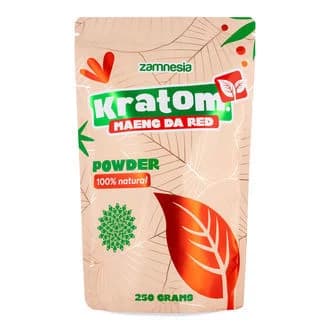
Red Maeng Da Kratom Powder
100% natural Red Maeng Da Kratom Powder from true red-veined Thai kratom leaves. Strong relaxation and sedating profile — one of the most popular red vein strains for evening use and sleep. Available in 25g, 50g, 100g and 250g. 271 reviews, 4.5/5. Zamnesia house brand.
- • Red Maeng Da — premium Thai strain
- • Strong relaxation and sedation
- • 4 sizes from 25g to 250g

Kratom
Kratom powders, capsules, and extracts from established suppliers. Multiple strains for different effects.
Kratom Extract
A concentrated kratom extract powder that delivers stronger effects in smaller quantities than regular leaf powder. Made from Maeng Da leaves, this extract offers enhanced focus, clean energy, and a sense of well-being — ideal for experienced kratom users looking for a more potent and efficient format.
- • Highly concentrated — stronger effects than standard powder
- • Maeng Da variety — known for focus, energy, and well-being
- • Versatile powder format — mix into tea, smoothie, or capsules
Kratom Gummies
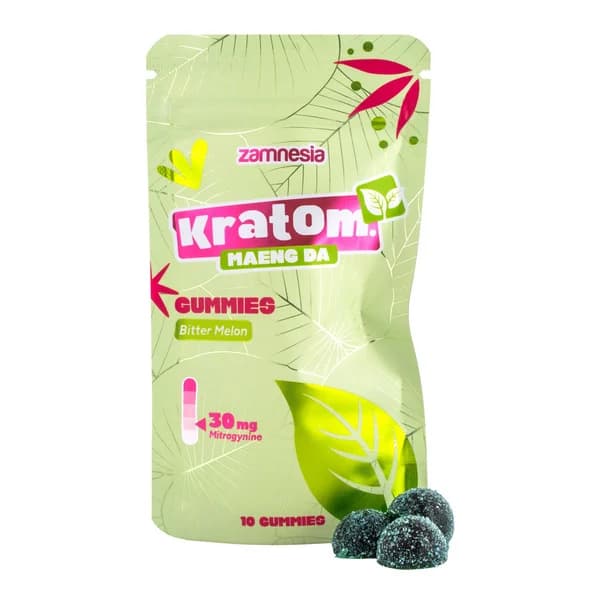
Full-spectrum Maeng Da kratom gummies with 30mg mitragynine each. No powder, no capsules — just bold natural flavour and clean effects.
- • 30mg mitragynine per gummy
- • Full-spectrum kratom extract
- • 4 fruit flavours with 33%+ real fruit content
Disclosure: We may earn a commission if you purchase via these links.
Related articles
Kratom vs Kava: Two Paths to Natural Relaxation
Kratom and kava both promise relaxation, but they work through completely different mechanisms. We compare effects, safety, legal status in Europe, and who should choose which.
Kratom and Drug Interactions: What You Must Know Before Mixing
Kratom can interact dangerously with opioids, SSRIs, MAOIs, benzodiazepines, and other medications. This evidence-based guide covers every major kratom drug interaction, the liver enzyme mechanisms behind them, and a practical safety checklist.
Kratom Microdosing: What It Is, How to Do It, and Whether It Works
Kratom microdosing: what counts as a microdose, the 12mg tablet protocol, who it is for, and honest expectations about sub-threshold use.