
Kratom Alternatives in Europe: Legal Options That Work Similarly
Written by Smart Supplements Editorial Team
Key takeaways
- No alternative perfectly replicates kratom's effects — kratom has a unique dual mechanism (mu-opioid + adrenergic) that no single botanical matches
- Kanna is the most versatile legal alternative — excellent for mood and mild energy through serotonin pathways, without dependency concerns
- Mitragyna hirsuta is the closest botanical relative — same genus, legal where kratom is banned, but significantly weaker
- Akuamma seeds are the closest match for red vein kratom users — genuine opioid-like activity, but far less researched
- CBD is not a kratom replacement but genuinely helps with anxiety, sleep, and mild pain through an entirely different mechanism
- All alternatives listed are legal across the EU, including countries where kratom is banned
Table of contents
- Why People Look for Kratom Alternatives
- The Honest Truth: Nothing Is Exactly Like Kratom
- Kanna (Sceletium tortuosum) — Best for Mood and Mild Energy
- Mitragyna Hirsuta — Closest Botanical Relative
- Blue Lotus (Nymphaea caerulea) — Best for Gentle Relaxation
- Akuamma Seeds (Picralima nitida) — Closest to Red Vein Kratom
- CBD — For Anxiety, Sleep, and Pain (But Not Energy)
- Honourable Mentions
- Master Comparison Table
- Which Alternative Is Best for Your Situation?
- Safety Considerations
- Frequently Asked Questions
Why People Look for Kratom Alternatives
Let''s be direct about why you''re probably reading this. Kratom (Mitragyna speciosa) is either illegal where you live, or you''re looking for something with a lower risk profile. Both are perfectly valid reasons.
Kratom''s Legal Status Across Europe
The legal landscape for kratom in Europe is a patchwork. Here''s where things stand as of early 2026:
| Country | Kratom Status | Notes |
|---|---|---|
| Poland | Banned | Classified as a novel psychoactive substance (NPS) since 2009 |
| Latvia | Banned | Controlled substance |
| Lithuania | Banned | Controlled substance |
| Romania | Banned | NPS legislation |
| Sweden | Banned | Classified as a medicinal product requiring prescription |
| Denmark | Banned | Controlled under medicines legislation |
| Finland | Restricted | Classified as a medicinal product |
| Ireland | Banned | Psychoactive Substances Act 2010 |
| United Kingdom | Banned | Psychoactive Substances Act 2016 |
| Netherlands | Legal | Available in smart shops |
| Germany | Legal | Available for purchase |
| Czech Republic | Legal | Available for purchase |
| Spain | Legal | Available for purchase |
| France | Legal | Available for purchase |
Beyond legal restrictions, people seek alternatives for other solid reasons:
- Tolerance breaks — regular kratom use builds tolerance rapidly, and cycling with alternatives can help reset sensitivity
- Lower dependency risk — kratom activates opioid receptors, and while it''s far less dangerous than classical opioids, physical dependence does develop with daily use
- Different effect profiles — some people want mood support without sedation, or relaxation without the "wobbles" that higher kratom doses can cause
- Curiosity — you might simply want to explore what else is out there
Whatever your reason, you deserve an honest assessment. That''s what this guide provides.
The Honest Truth: Nothing Is Exactly Like Kratom
Before we dive into specific alternatives, we need to set expectations properly. Kratom is pharmacologically unique. Its primary alkaloid, mitragynine, acts as a partial agonist at mu-opioid receptors whilst simultaneously affecting adrenergic and serotonergic systems. At lower doses, the adrenergic activity dominates (producing stimulation), while at higher doses, the opioid activity takes over (producing sedation and pain relief).
This dual mechanism — stimulant at low doses, sedative at high doses — is extraordinarily rare in the botanical world. No single alternative replicates it.
What we can do is match specific aspects of kratom''s effects:
- Mood lift and mild energy → Kanna
- Closest botanical mechanism → Mitragyna hirsuta
- Gentle relaxation → Blue lotus
- Pain relief and sedation → Akuamma seeds
- Anxiety and sleep support → CBD
Think of these as targeted tools rather than drop-in replacements. With that honest framing established, let''s examine each one.
Kanna (Sceletium tortuosum) — Best for Mood and Mild Energy
If we had to recommend just one kratom alternative, it would be kanna. Not because it feels like kratom — it doesn''t — but because it''s the most effective legal botanical for the mood lift and mild energy that many kratom users are actually seeking.
How Kanna Works
Kanna''s primary alkaloid, mesembrine, works through two main mechanisms:
- Serotonin reuptake inhibition (SRI) — it increases serotonin availability in the brain, similar to how SSRIs work but through a different binding profile
- PDE4 inhibition — it inhibits the enzyme phosphodiesterase 4, which is linked to anti-inflammatory and cognitive-enhancing effects
This is fundamentally different from kratom. Where kratom acts on opioid receptors, kanna acts on the serotonin system. You will not get opioid-like effects from kanna. What you will get is a genuine, noticeable mood elevation and a clean sense of energy without the jitteriness of caffeine.
What Kanna Actually Feels Like
Users consistently report:
- A warm sense of well-being that develops within 20–45 minutes
- Reduced social anxiety — conversations feel easier and more natural
- Mild physical energy without restlessness
- Enhanced empathy and emotional openness
- A subtle "everything is fine" feeling that''s more authentic than artificial
At higher doses, some users report mild euphoria, particularly with sublingual administration of concentrated extracts. At standard doses, the effects are present but not overwhelming — you can take kanna and go about your day normally.
Kanna vs. Kratom: Honest Comparison
| Aspect | Kanna | Kratom |
|---|---|---|
| Primary mechanism | Serotonergic (SRI + PDE4i) | Opioidergic (mu-opioid agonism) |
| Energy | Mild, clean | Strong (low doses) |
| Mood lift | Strong | Strong |
| Pain relief | Minimal | Significant |
| Sedation | None at normal doses | Strong (high doses) |
| Dependency risk | Very low | Moderate with daily use |
| Tolerance buildup | Slow | Fast |
| EU legal status | Legal everywhere | Banned in multiple countries |
Forms and Dosing
Kanna comes in several forms, each with different onset times and effect profiles:
Raw/dried plant material — the traditional form, typically chewed or brewed as tea. Effects are milder and slower to develop. Good starting point: 200–500 mg.
Standardised extracts — these are where kanna gets interesting. The most notable include:
- ET2 extract — a high-mesembrine extract standardised for alkaloid content. Significantly more potent than raw kanna. Starting dose: 25–50 mg sublingual.
- UC2 extract — similar potency to ET2 with a slightly different alkaloid ratio
- UB40 extract — contains a broader spectrum of kanna alkaloids
Kanna Extract ET2
Strong kanna extract suitable for vaporizing or insufflation. Takes users to a higher potency level than standard extracts.
- • Most concentrated traditional kanna extract
- • Best used as snuff for fastest onset (3 min)
- • Strong euphoric and relaxing effect
Disclosure: We may earn a commission if you purchase via these links.
Nano Kanna — a modern formulation using nanoparticle technology for improved bioavailability. The smaller particle size means faster onset and more consistent effects. Worth trying if you''ve found raw kanna underwhelming.
Nano Kanna
Ultra-fine kanna powder for faster absorption — dissolves completely under the tongue or in the nose. 1g (20–50 doses). No gritty residue.
- • Ultra-fine powder — dissolves completely, no residue
- • Faster absorption than standard kanna
- • 1g — approx. 20–50 doses
Disclosure: We may earn a commission if you purchase via these links.
For those new to kanna, we''d recommend starting with a quality raw preparation to understand the baseline effects before moving to concentrated extracts.

Kanna (Sceletium tortuosum)
Kanna extract — South African mood-lifting herb used as a natural anxiolytic and mood enhancer.
- • Traditional South African ethnobotanical
- • Mood lift and anxiolytic
- • Serotonin reuptake inhibitor mechanism
Disclosure: We may earn a commission if you purchase via these links.
Safety and Interactions
Kanna has a strong safety profile at recommended doses. However, there is one critical interaction to be aware of: do not combine kanna with SSRIs, SNRIs, MAOIs, or other serotonergic medications. Because kanna inhibits serotonin reuptake, combining it with pharmaceutical serotonergic drugs carries a theoretical risk of serotonin syndrome, which can be serious.
If you are taking any antidepressant medication, consult your doctor before using kanna.
The Verdict on Kanna
Kanna is not a kratom substitute. It does not activate opioid receptors, it will not relieve significant pain, and it won''t produce the heavy sedation of high-dose kratom. But for mood support, mild energy, and social ease — three of the most popular reasons people use kratom — kanna is genuinely effective. It also carries far less dependency risk, is legal across the entire EU, and has a centuries-long history of traditional use in South Africa.
Mitragyna Hirsuta — Closest Botanical Relative
If you''re looking for the alternative that''s most botanically similar to kratom, Mitragyna hirsuta is it. It''s literally kratom''s cousin — same genus (Mitragyna), same family (Rubiaceae), native to the same region of Southeast Asia.
Background and Traditional Use
Known as "kra thum na" in Thailand, Mitragyna hirsuta has been used traditionally as a milder substitute for kratom. Thai labourers would sometimes use it when kratom wasn''t available, chewing the leaves for mild stimulation and pain relief.
How It Works
Here''s where we need to be precise. Mitragyna hirsuta does not contain mitragynine — the primary alkaloid that makes kratom effective. Instead, its main alkaloid is mitraphylline, which has a significantly milder pharmacological profile.
Mitraphylline does interact with opioid receptors, but with much lower affinity than mitragynine. It also has anti-inflammatory and immunostimulant properties that mitragynine lacks.
The Honest Assessment
We''re going to be blunt: Mitragyna hirsuta is noticeably weaker than kratom. If you''re used to regular kratom doses, you will likely find Mitragyna hirsuta underwhelming. Most users report:
- Mild relaxation — present but subtle
- Slight mood improvement — real but less pronounced than kratom
- Very mild pain relief — not comparable to kratom for significant pain
- Minimal stimulation — less energy boost than low-dose kratom
Why It Still Has Value
Despite being weaker, Mitragyna hirsuta has genuine utility in specific situations:
- Legal availability — because it''s a different species from Mitragyna speciosa (kratom), it''s legal in countries where kratom is banned. The bans specifically target speciosa, not the entire Mitragyna genus.
- Tolerance breaks — using hirsuta during a kratom tolerance break can provide mild relief without further stimulating the same receptor pathways at full intensity
- Stepping down — for people reducing their kratom intake, hirsuta can serve as an intermediate step
- Curiosity — it''s genuinely interesting to experience kratom''s closest relative and note the differences
Availability and Dosing
Mitragyna hirsuta is harder to source than kratom. It''s less commercially cultivated, and the supply chain is less established. When you do find it, typical dosing is:
- Tea preparation: 3–7 grams of dried leaf
- Powder (toss and wash): 3–5 grams
Start at the lower end. While hirsuta is milder than kratom, individual responses vary, and it''s always wise to assess your personal reaction before increasing.
The Verdict on Mitragyna Hirsuta
It''s the closest botanical match to kratom, but "closest" doesn''t mean "equivalent." Think of it as kratom''s milder, gentler cousin. It has genuine value for tolerance breaks and for people in countries where kratom is banned who want something from the same botanical family. But if you''re expecting kratom-strength effects, you will be disappointed.
Blue Lotus (Nymphaea caerulea) — Best for Gentle Relaxation
Blue lotus has one of the most fascinating histories of any botanical on this list. Depicted extensively in ancient Egyptian art, it was used in religious ceremonies and social gatherings for thousands of years. Today, it''s experiencing a revival among people seeking natural relaxation.
How Blue Lotus Works
Blue lotus contains two primary active compounds:
- Apomorphine — a dopamine receptor agonist (specifically D1 and D2 receptors). This contributes to mild euphoria and a sense of well-being.
- Nuciferine — an alkaloid with dopamine receptor blocking activity at higher concentrations but agonist activity at lower ones. It also has mild sedative properties.
The dopaminergic activity is what distinguishes blue lotus. It''s not working on opioid receptors (like kratom) or serotonin (like kanna) — it''s primarily affecting the dopamine system, which is associated with pleasure, motivation, and reward.
What Blue Lotus Actually Feels Like
Let''s be honest: blue lotus is mild. Very mild compared to kratom. Users typically report:
- A gentle sense of calm and relaxation
- Mild euphoria — more of a "pleasant contentment" than anything intense
- Slight enhancement of sensory experiences (colours may seem more vivid, music more enjoyable)
- Improved sleep quality when taken in the evening
- A dream-like quality to the relaxation — some users report more vivid dreams
Blue lotus is not going to provide meaningful pain relief, significant energy, or the kind of mood lift that kanna or kratom delivers. It''s best understood as a gentle relaxant — something for unwinding in the evening or enhancing a calm social setting.
Forms and Preparation
Blue lotus can be consumed in several ways:
- Tea — the most traditional method. Steep 3–5 grams of dried flowers in hot (not boiling) water for 10–15 minutes. Add honey if desired.
- Tincture — alcohol-based extracts offer more precise dosing and faster onset
- Smoking/vaporising — some users smoke the dried petals, which provides faster onset but shorter duration
- Wine infusion — the ancient Egyptian method. Steep flowers in wine for several hours. This was likely the original preparation.
Blue Lotus
Blue Lotus (Nymphaea caerulea) — ancient Egyptian flower with mild euphoric, anxiolytic, and aphrodisiac properties.
- • Ancient Egyptian ethnobotanical
- • Mild euphoria and relaxation
- • Aporphine alkaloid content
Disclosure: We may earn a commission if you purchase via these links.
Blue Lotus (Nymphaea caerulea)
EUKratom's Blue Lotus — dried Nymphaea caerulea from Thailand, available as whole flowers or crushed leaves. Contains apomorphine and nuciferine. Lab-tested for microbials and heavy metals. A popular kratom alternative in the smartshop world.
- • Nymphaea caerulea — aquatic plant from Thailand
- • Available as whole flowers or crushed leaves
- • Contains apomorphine and nuciferine
Disclosure: We may earn a commission if you purchase via these links.
Blue Lotus vs. Kratom: Honest Comparison
| Aspect | Blue Lotus | Kratom |
|---|---|---|
| Intensity | Very mild | Moderate to strong |
| Primary mechanism | Dopaminergic | Opioidergic |
| Relaxation | Gentle, dreamy | Deep, sedating (high doses) |
| Pain relief | Negligible | Significant |
| Energy | None | Strong (low doses) |
| Dependency risk | Very low | Moderate |
| Best for | Evening relaxation, sleep | Pain, energy, mood, anxiety |
Legal Status
Blue lotus is legal across the entire EU. It''s not classified as a controlled substance in any European country, though regulations around its sale sometimes vary (in some countries it''s sold as a botanical specimen or incense rather than for consumption).
The Verdict on Blue Lotus
Blue lotus is a lovely botanical for gentle relaxation and evening unwinding, but it''s not a functional kratom alternative for anyone seeking real potency. If you''re looking for something to replace kratom''s pain relief or energy, blue lotus will disappoint. If you want a mild, pleasant relaxant with ancient historical pedigree and zero dependency risk, it''s worth exploring.
Akuamma Seeds (Picralima nitida) — Closest to Red Vein Kratom
If you specifically use red vein kratom for pain relief and sedation, akuamma seeds deserve your attention. They''re the alternative that comes closest to replicating that particular aspect of kratom''s effects.
Background
Picralima nitida is a tree native to West Africa (Ghana, Nigeria, Cameroon, Ivory Coast). Its seeds have been used in traditional African medicine for centuries, primarily for pain, fever, and malaria. The seeds are extremely bitter — significantly more so than kratom.
How Akuamma Works
The primary alkaloid in akuamma seeds is akuammine (sometimes called picralimaine), which has demonstrated activity at opioid receptors in pharmacological studies. Specifically, it appears to act as a mu-opioid receptor agonist — the same receptor type that kratom''s mitragynine targets.
This is important because it means akuamma seeds are one of the few legal botanicals that actually work through a similar mechanism to kratom, rather than an entirely different pathway.
Additionally, akuamma seeds contain akuammine and akuammidine, which have shown:
- Anti-inflammatory activity
- Calcium channel blocking properties
- Mild muscle relaxant effects
What Akuamma Actually Feels Like
Users report effects that are recognisably similar to red vein kratom, but milder:
- Moderate pain relief — genuine analgesic activity, though less potent than kratom
- Sedation and relaxation — a calming, slightly heavy feeling
- Mild mood improvement — less pronounced than with kratom
- Duration of 3–5 hours — similar to kratom
The experience is notably more one-dimensional than kratom. Where kratom offers a complex blend of stimulation, mood lift, and sedation depending on dose and strain, akuamma is primarily sedating and analgesic. There''s no stimulant dose range.
The Safety Caveat
Here''s where we need to be particularly honest: akuamma seeds are significantly less researched than kratom. While traditional use in West Africa spans centuries, formal pharmacological studies are limited. We know the basic mechanism of action, but:
- Long-term safety data is sparse
- Drug interaction profiles are not well-characterised
- Optimal dosing hasn''t been established through clinical research
- The full alkaloid profile''s effects on the body aren''t completely understood
This doesn''t mean akuamma is dangerous — centuries of traditional use carry weight. But it does mean you should approach it with more caution than you might with better-studied alternatives like kanna or CBD.
Dosing
Typical dosing based on user reports (not clinical data):
- Powder: 2–4 grams, taken in capsules (the bitterness is extreme)
- Crushed seeds: 1–3 seeds, ground and capsuled
- Start low — begin with 1–2 grams and assess effects over 2 hours before redosing
The Verdict on Akuamma Seeds
Akuamma is the most "kratom-like" alternative on this list for pain and sedation. If red vein kratom is your thing and you''re in a country where it''s banned, akuamma seeds are the closest legal match. But this comes with caveats: less research, less refined supply chains, extreme bitterness, and a one-dimensional effect profile compared to kratom''s complexity. Use with appropriate caution and start with conservative doses.
CBD — For Anxiety, Sleep, and Pain (But Not Energy)
We need to frame CBD (cannabidiol) correctly from the start: it is not a kratom alternative in the traditional sense. It does not produce mood lift, it does not produce energy, and it does not feel like kratom in any way. But for specific use cases that overlap with kratom — anxiety reduction, sleep improvement, and mild pain management — CBD is genuinely effective and backed by substantial research.
How CBD Works
CBD interacts with the endocannabinoid system (ECS), primarily through:
- CB1 and CB2 receptor modulation — it doesn''t directly activate these receptors (like THC does) but modulates their activity
- Serotonin receptor activity — CBD acts on 5-HT1A receptors, which is likely responsible for its anti-anxiety effects
- TRPV1 activation — these vanilloid receptors are involved in pain perception
- Adenosine reuptake inhibition — contributing to anti-inflammatory and calming effects
This is an entirely different pharmacological universe from kratom. There is zero opioid receptor involvement.
Where CBD Genuinely Helps (and Where It Doesn''t)
CBD is genuinely useful for:
- Anxiety — this is CBD''s strongest application. Multiple clinical studies support its anxiolytic effects, and many former kratom users find CBD adequate for anxiety management
- Sleep — CBD at moderate-to-high doses (50–160 mg) has shown sleep-promoting effects in clinical research
- Mild to moderate pain — particularly inflammatory pain. CBD won''t touch severe pain the way kratom can, but for everyday aches, joint pain, and muscle soreness, it provides real relief
- General calm — a baseline sense of reduced stress without sedation or impairment
CBD does not help with:
- Energy — CBD has no stimulant properties. If you use kratom for energy, CBD is not your answer
- Mood lift/euphoria — CBD does not produce mood elevation in the way kratom or kanna does
- Significant pain — for serious pain conditions, CBD alone is typically insufficient
Advantages Over Kratom
- Zero dependency risk — CBD does not produce physical dependence
- No tolerance buildup — effects remain consistent with regular use
- Legal everywhere in the EU — when derived from hemp with <0.2% THC (or <0.3% in some countries)
- Extensively researched — far more clinical data than any other alternative on this list
- No cognitive impairment — you can use CBD and function completely normally
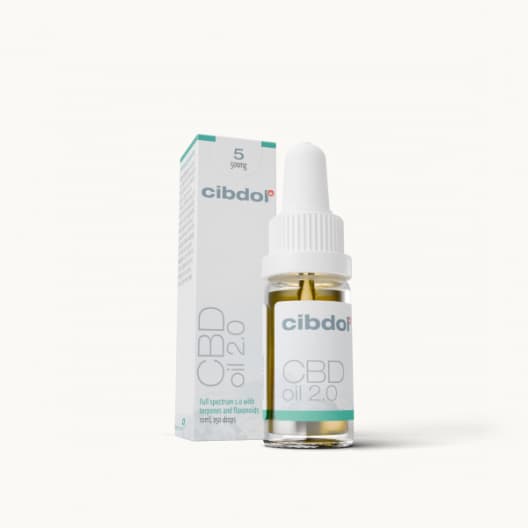

CBD Oil 2.0 5% (500mg)
The ideal starting point for CBD beginners. 500mg full-spectrum CBD oil with enhanced cannabinoid ratio for gentle, daily wellness support.
- • 500mg CBD per 10ml bottle
- • Full-spectrum entourage formula
- • Hemp seed oil base
Disclosure: We may earn a commission if you purchase via these links.
Dosing
CBD dosing is highly individual. General guidance:
- Anxiety: 25–75 mg daily
- Sleep: 50–160 mg, taken 1 hour before bed
- Pain: 25–100 mg daily, split into 2–3 doses
- Start low: Begin with 10–20 mg and increase gradually over a week
Oil/tincture formats offer the most flexible dosing. Hold under the tongue for 60–90 seconds before swallowing for best absorption.
The Verdict on CBD
CBD is the "boring but effective" option on this list. It won''t give you the kratom experience, but for anxiety, sleep, and mild pain, it works reliably, safely, and legally. If those are your primary reasons for using kratom, CBD deserves genuine consideration — not as a replacement, but as a different tool that addresses some of the same underlying needs.
Honourable Mentions
These botanicals don''t warrant full sections but are worth knowing about:
Damiana (Turnera diffusa)
A mild mood-lifting herb from Central America. Damiana has been used traditionally as an aphrodisiac and mild euphoric. Its effects are subtle — a gentle sense of well-being and mild relaxation. It''s sometimes combined with other herbs. Not strong enough to serve as a standalone kratom alternative, but can complement other options on this list.
Valerian (Valeriana officinalis)
A well-known sedative herb that''s been used in European traditional medicine for centuries. Valerian is genuinely effective for sleep and mild anxiety but offers nothing in terms of mood lift, energy, or pain relief. If sleep is your primary concern and you don''t want CBD, valerian is a proven option.
Passionflower (Passiflora incarnata)
Another established calming herb that works through GABAergic mechanisms. Clinical studies support its use for anxiety and insomnia. Like valerian, it''s one-dimensional (calming only) but effective within that niche. It combines well with valerian for sleep.
Master Comparison Table
| Alternative | Legal EU-wide? | Energy | Relaxation | Pain Relief | Mood Lift | Dependency Risk | Similarity to Kratom | Evidence Level |
|---|---|---|---|---|---|---|---|---|
| Kanna | Yes | Mild | Mild | Minimal | Strong | Very low | Low (different mechanism) | Moderate |
| Mitragyna hirsuta | Yes | Mild | Moderate | Mild | Mild | Low | Moderate (same genus) | Low |
| Blue lotus | Yes | None | Moderate | Negligible | Mild | Very low | Low (dopaminergic) | Low |
| Akuamma seeds | Yes | None | Strong | Moderate | Mild | Low–moderate | Moderate (opioidergic) | Low |
| CBD | Yes | None | Mild | Mild–moderate | None | None | Very low | High |
| Damiana | Yes | Minimal | Mild | None | Mild | Very low | Very low | Low |
| Valerian | Yes | None | Strong | None | None | Very low | Very low | Moderate |
| Kratom (reference) | No (varies) | Strong | Strong | Strong | Strong | Moderate | — | Moderate |
Which Alternative Is Best for Your Situation?
Rather than picking a "best" alternative overall, match the option to your specific situation:
"Kratom is banned where I live and I want something similar"
Start with kanna for mood and energy, and consider akuamma seeds if pain relief is your priority. Accept that neither will fully replicate the kratom experience, but together they cover more of the spectrum than either alone.
"I''m taking a kratom tolerance break"
Kanna is ideal here. It works through completely different receptors (serotonin, not opioid), so it won''t interfere with your opioid receptor sensitivity resetting. You''ll still get mood support during the break without defeating its purpose. Mitragyna hirsuta can also help, though since it does have mild opioid receptor activity, it may slightly slow tolerance reduction.
"I mainly use kratom for anxiety"
CBD is your best option, full stop. It has the strongest evidence base for anxiety of anything on this list, zero dependency risk, and is legal everywhere. Kanna is a good secondary option, particularly for social anxiety situations.
"I mainly use kratom for pain"
This is the hardest use case to replace. Akuamma seeds are the closest match but are less researched. CBD can help with inflammatory and mild pain. For significant pain, honestly, none of these alternatives will match kratom''s efficacy — consult a healthcare professional about your pain management options.
"I mainly use kratom for sleep"
CBD (at higher doses, 50–160 mg) combined with valerian provides a solid sleep stack. Blue lotus tea in the evening is a pleasant addition. None of these carry the dependency risk that nightly kratom use does.
"I want something for social situations and mood"
Kanna is purpose-built for this. The serotonergic mechanism reduces social anxiety while lifting mood, and the effects are subtle enough for normal social functioning. Consider a concentrated extract (ET2 or Nano Kanna) for more noticeable effects.
Safety Considerations
Drug Interactions
Several alternatives on this list have important interaction profiles:
- Kanna — do not combine with SSRIs, SNRIs, MAOIs, or any serotonergic medication (risk of serotonin syndrome)
- Akuamma — interactions poorly characterised; avoid combining with opioid medications, sedatives, or CNS depressants
- CBD — inhibits CYP450 enzymes (particularly CYP3A4 and CYP2D6), which can affect the metabolism of many pharmaceutical drugs. If you take any prescription medication, check for CBD interactions
- Blue lotus — avoid combining with dopaminergic medications; limited interaction data available
- Valerian — may potentiate sedative medications; avoid combining with benzodiazepines or sleep medications
Dependency Potential of Alternatives
While all alternatives on this list carry significantly less dependency risk than kratom, they are not all zero-risk:
- CBD — no dependency potential
- Kanna — very low dependency potential; no documented withdrawal syndrome
- Blue lotus — very low dependency potential
- Valerian — low risk, though some rebound insomnia reported with abrupt cessation after heavy use
- Akuamma — low to moderate risk due to opioid receptor activity; insufficient data for definitive assessment
- Mitragyna hirsuta — low risk due to mild opioid receptor activity
Pregnancy and Breastfeeding
None of the alternatives listed in this article should be used during pregnancy or breastfeeding. There is insufficient safety data for any of them in these populations. This includes CBD, despite its generally strong safety profile — the effects on foetal development are not well-enough understood.
General Guidance
- Start with the lowest suggested dose for any new botanical
- Try one new supplement at a time — don''t stack multiple new substances simultaneously
- Keep a simple journal of effects, doses, and any side effects
- If you experience adverse effects, discontinue use and consult a healthcare professional
- Purchase from reputable vendors who provide third-party testing
Frequently Asked Questions
What can I take instead of kratom in Europe?
The best kratom alternatives available across Europe include kanna (for mood and mild energy), blue lotus (for relaxation), akuamma seeds (for pain relief), and CBD (for anxiety, sleep, and mild pain). All of these are legal EU-wide. Your best choice depends on which specific kratom effects you''re trying to replace — no single alternative covers all of kratom''s effects.
Is Mitragyna hirsuta legal in Europe?
Yes. Mitragyna hirsuta is legal throughout Europe, including in countries where kratom (Mitragyna speciosa) is banned. The bans specifically target Mitragyna speciosa, not the broader Mitragyna genus. However, availability is limited as it''s a less commercially cultivated plant.
What is similar to kratom but legal?
The most pharmacologically similar legal option is akuamma seeds, which contain alkaloids that interact with opioid receptors similarly to kratom''s mitragynine. Mitragyna hirsuta is the closest botanical relative (same genus). Kanna is the most popular legal alternative overall, though it works through different mechanisms (serotonin rather than opioid pathways).
Can I use kanna during a kratom tolerance break?
Yes, and it''s actually an excellent choice for this purpose. Kanna works through serotonin reuptake inhibition, not opioid receptors, so it won''t interfere with your mu-opioid receptor sensitivity resetting during the break. You''ll still get mood support and mild energy without defeating the purpose of the tolerance break.
Is blue lotus as strong as kratom?
No. Blue lotus is significantly milder than kratom in all respects. It provides gentle relaxation and mild euphoria through dopaminergic mechanisms, but it does not offer meaningful pain relief, energy, or the intensity of kratom''s effects. It''s best appreciated on its own terms as a subtle relaxant rather than compared directly to kratom.
Are these alternatives safe to combine with each other?
Some combinations are reasonable (such as CBD + valerian for sleep), but others require caution. The key rule: do not combine multiple substances that act on the same receptor system — for example, do not combine akuamma with any other opioid-active substance, and do not combine kanna with other serotonergic compounds. When in doubt, use one alternative at a time.
What is the strongest legal alternative to kratom?
In terms of raw potency, concentrated kanna extracts (such as ET2 or Nano Kanna) are probably the most noticeably psychoactive legal alternatives available in Europe. For pain-specific effects, akuamma seeds come closest to matching kratom''s analgesic properties. However, "strongest" depends on what effect you''re measuring — no legal alternative matches kratom across all its effects simultaneously.
This article is for informational purposes only and does not constitute medical advice. The botanicals and supplements discussed here are not intended to diagnose, treat, cure, or prevent any disease. Always consult a qualified healthcare professional before starting any new supplement, particularly if you take prescription medication, have a medical condition, or are pregnant or breastfeeding. Individual responses to supplements vary, and the effects described are based on user reports and limited research. Smart Supplements does not encourage the use of any substance in jurisdictions where it is prohibited.
Related Articles:
Related topics
Where to buy
Affiliate links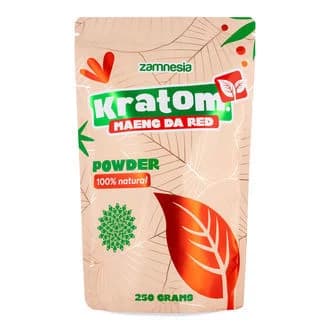
Red Maeng Da Kratom Powder
100% natural Red Maeng Da Kratom Powder from true red-veined Thai kratom leaves. Strong relaxation and sedating profile — one of the most popular red vein strains for evening use and sleep. Available in 25g, 50g, 100g and 250g. 271 reviews, 4.5/5. Zamnesia house brand.
- • Red Maeng Da — premium Thai strain
- • Strong relaxation and sedation
- • 4 sizes from 25g to 250g
Kratom
Kratom powders, capsules, and extracts from established suppliers. Multiple strains for different effects.
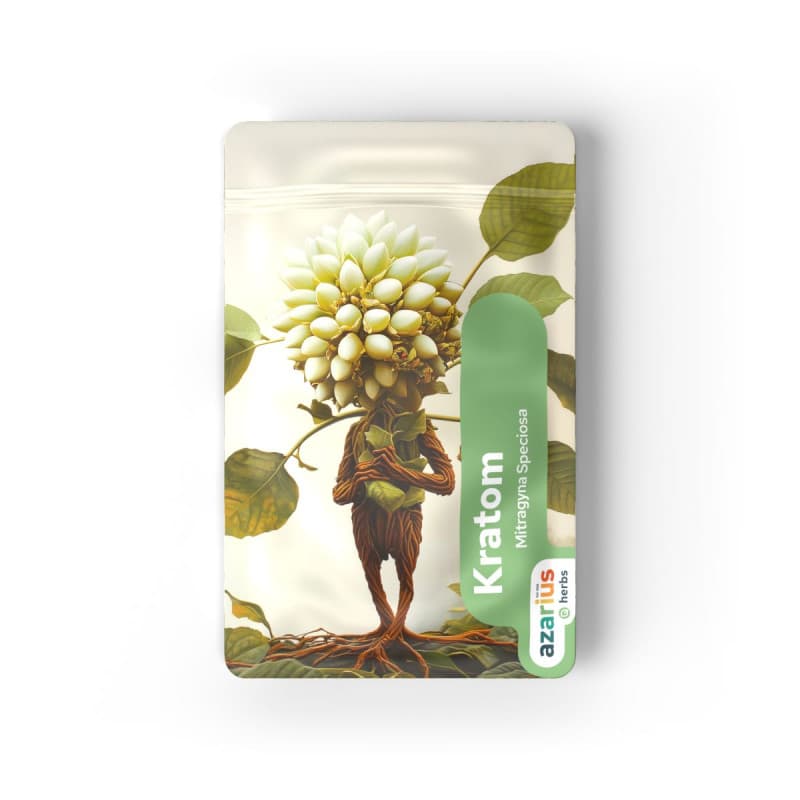
Kratom Extract
A concentrated kratom extract powder that delivers stronger effects in smaller quantities than regular leaf powder. Made from Maeng Da leaves, this extract offers enhanced focus, clean energy, and a sense of well-being — ideal for experienced kratom users looking for a more potent and efficient format.
- • Highly concentrated — stronger effects than standard powder
- • Maeng Da variety — known for focus, energy, and well-being
- • Versatile powder format — mix into tea, smoothie, or capsules
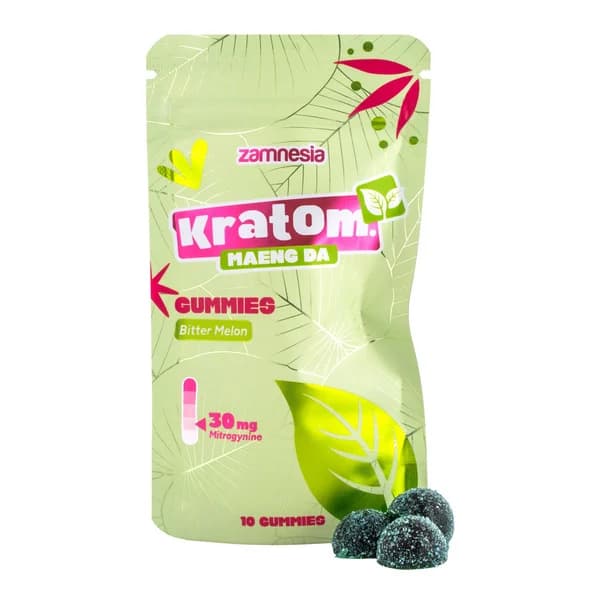
Kratom Gummies
Full-spectrum Maeng Da kratom gummies with 30mg mitragynine each. No powder, no capsules — just bold natural flavour and clean effects.
- • 30mg mitragynine per gummy
- • Full-spectrum kratom extract
- • 4 fruit flavours with 33%+ real fruit content
Disclosure: We may earn a commission if you purchase via these links.
Related articles
Kratom vs Kava: Two Paths to Natural Relaxation
Kratom and kava both promise relaxation, but they work through completely different mechanisms. We compare effects, safety, legal status in Europe, and who should choose which.
Best Kratom in Europe: Top 5 Brands Reviewed (2026)
The 5 best kratom brands in Europe in 2026 — ranked by quality, testing standards, strain range, and shipping. Includes Zamnesia and Azarius.
Best Kratom Capsules in Europe: Top Picks by Format and Dose
Best kratom capsules in Europe compared by dose strength, format type, and brand quality. Picks for beginners and experienced users.