
Kratom Tolerance and Dependence: What You Should Know
Written by Smart Supplements Editorial Team
Key takeaways
- Tolerance develops in 2–4 weeks of daily use via mu-opioid receptor downregulation
- Physical dependence is not addiction — most kratom users develop the former, not the latter
- Withdrawal peaks at days 2–3 and typically resolves within a week
- 2–4 week tolerance breaks effectively restore receptor sensitivity
- Max 2–3 days/week is the sustainable long-term frequency
- Extract formats accelerate tolerance significantly faster than powder
Table of contents
Kratom's dirty secret isn't that it doesn't work — it's that it works so well that stopping can be harder than expected. Tolerance and dependence are the two sides of this problem. Tolerance is pharmacological: the same dose produces less effect over time. Dependence is physiological: the body adapts to kratom's presence and reacts when it's removed. Both are real, both are underreported, and both are manageable if you understand what's happening and act before the pattern is established.
This guide covers the biology of how kratom tolerance develops, clear signs that it has, the honest picture of what withdrawal looks like, and the practical protocols — tolerance breaks, strain rotation, frequency limits — that actually work.
What Is Kratom Tolerance?
Tolerance is the reduction in effect that occurs when you take the same dose repeatedly. Where 3g of kratom powder once produced clear energy and mood lift, after weeks of daily use the same dose may feel like nothing — or worse, simply feel like normal.
The mechanism is receptor downregulation. Kratom's primary active alkaloids — mitragynine and 7-hydroxymitragynine — activate mu-opioid receptors, the same receptor family targeted by opioid medications. When these receptors are activated consistently over days and weeks, the brain responds by reducing their number and sensitivity — a homeostatic response to protect against overstimulation.
The result is predictable: you need more for the same effect. This is pharmacological tolerance, and it's not unique to kratom — it occurs with opioids, benzodiazepines, caffeine, and many other compounds that work through specific receptor systems.
There's also metabolic tolerance: repeated kratom use induces CYP3A4 and CYP2D6 liver enzymes (involved in mitragynine metabolism), which means the compounds are cleared more quickly. Boyer et al. (2008) documented this mechanism in their pharmacological review of Mitragyna speciosa in CNS Drugs (Tanna et al., 2021).
Timeline. With daily use, meaningful tolerance typically develops within 2–4 weeks. With 3–4 days per week use, significant tolerance may take months to appear. With 1–2 days per week use, some users report maintaining sensitivity for a year or more.
Signs You've Built Tolerance
The problem with tolerance is that it builds gradually — each session is only slightly less effective than the last, so the change feels minimal until you compare where you are now with where you started.
Watch for these markers:
- Dose creep. Your dose has increased from where you started without a deliberate decision to increase it. If you started at 3g and are now taking 5–6g routinely, tolerance is driving it.
- Morning dose just to feel normal. If the first dose of the day is no longer about achieving an effect but about not feeling flat or foggy, you've crossed from recreational use into physiological dependence territory.
- Loss of original effects. Early kratom use typically produces clear mood lift, energy, and motivation. As tolerance builds, these effects flatten. What remains is either baseline normalcy or mild stimulation.
- Mood between doses. Irritability, low motivation, or vague restlessness in the hours between doses — not during — is a sign of inter-dose withdrawal, and indicates dependence has developed.
- Effect duration shortening. Where kratom once produced 4–5 hours of effect from a single dose, you're now finding effects wear off after 2–3 hours and the urge to redose arrives earlier.
Singh et al. (2016) found that in a Malaysian sample of regular kratom users, over 40% reported developing tolerance and nearly half who used daily reported withdrawal symptoms on stopping — confirming this is not an edge case (PLOS ONE, doi:10.1371/journal.pone.0167265).
Physical Dependence vs Addiction
This distinction matters and is frequently conflated — including in media coverage of kratom.
Physical dependence means the body has adapted to the presence of a substance such that its absence produces symptoms. This is a physiological response, not a moral failure. It happens with prescription medications taken correctly (beta-blockers, SSRIs, corticosteroids). Most regular kratom users develop some degree of physical dependence if they use daily for more than a few weeks.
Addiction involves compulsive use despite negative consequences, persistent craving, and loss of control over intake. It's a behavioural and psychological pattern, not just a physical one. Most kratom users do not meet clinical criteria for addiction, though a subset do.
The practical difference: if you use kratom daily and then stop, you will likely feel unwell for several days — this is physical dependence. If you continue using kratom despite it damaging your health, relationships, or work, and cannot stop even when you want to, that is addiction.
Swogger & Walsh (2018) reviewed 161 kratom users and found that while withdrawal was common among regular users, most users reported using kratom as a functional tool (for pain, energy, anxiety, opioid substitution) and did not describe compulsive use patterns (Drug and Alcohol Dependence, doi:10.1016/j.drugalcdep.2017.10.012).
Kratom Withdrawal: What to Expect
If you've used kratom daily for more than 3–4 weeks and stop abruptly, some degree of withdrawal is likely. Understanding what to expect reduces anxiety and makes it manageable.
Onset: 12–24 hours after the last dose, as kratom's alkaloids clear.
Acute phase symptoms (days 1–7):
- Muscle aches and joint discomfort
- Insomnia and sleep disruption (often vivid, disturbing dreams)
- Irritability and low mood
- Sweating and temperature dysregulation
- Nausea and GI upset (diarrhoea, cramping)
- Restlessness (similar to restless legs, full-body)
- Anxiety and mild agitation
Duration: The acute phase typically resolves in 3–7 days. Peak intensity is usually days 2–3. In users with longer or heavier use histories, a post-acute phase lasting 2–4 weeks is possible — characterised by low mood, sleep disruption, and reduced energy without the acute physical symptoms.
Compared to opioid withdrawal: Kratom withdrawal is real but significantly milder in most cases. Prozialeck et al. (2012) characterised it as "moderate compared to classic opioid withdrawal" in their clinical review (Journal of the American Osteopathic Association, doi:10.7556/jaoa.2012.112.12.792). Severe complications are rare; most users manage withdrawal at home.
Practical management:
- Hydration — sweating and GI issues cause fluid loss
- Magnesium glycinate — helps with muscle aches and sleep (400mg at night)
- L-Theanine — reduces anxious restlessness without sedation
- Loperamide — for GI symptoms (short-term OTC use)
- Exercise — even light movement significantly reduces restlessness and mood symptoms
- Melatonin (low dose, 0.5–1mg) — helps re-establish sleep where insomnia is the main problem
The Tolerance Break Protocol
A tolerance break (T-break) is a deliberate period of abstinence to allow mu-opioid receptors to resensitise. For most users, 2–4 weeks is sufficient to meaningfully restore sensitivity.
The taper vs cold turkey decision. Cold turkey is faster and produces a cleaner break but involves the full withdrawal experience. Tapering — gradually reducing dose over 1–2 weeks before stopping — smooths the withdrawal curve and is preferable for users with heavier use histories or significant daily dependence. For lighter users (2–3 days/week), cold turkey is usually tolerable.
Taper schedule example:
| Week | Daily dose (if normally 5g/day) |
|---|---|
| Week 1 | 4g/day |
| Week 2 | 3g/day, every other day |
| Week 3 | 2g every 3rd day |
| Week 4 | Stop |
For a taper, precision matters — which is where lower-dose formats help significantly. Kratom Tablets (12mg) allow you to dial down dose far more accurately than measuring powder by eye.
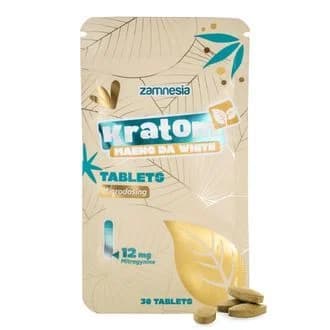
Kratom Tablets
Mild kratom tablets with 12mg of Red, White and Green Maeng Da leaf powder blend. Pre-dosed and easy to use.
- • 12mg mitragynine — mild microdose-friendly tablet
- • Red, White & Green Maeng Da blend
- • 30 tablets per pack
Disclosure: We may earn a commission if you purchase via these links.
45mg capsules are useful for the early stages of dose reduction where you're moving from powder and want a fixed, lower-dose reference point:
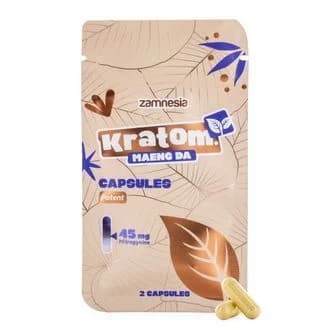
Kratom Capsules 45mg
Maeng Da kratom extract capsules — 45mg mitragynine per plant-based capsule. Mid-strength, great for beginners.
- • 45mg mitragynine per plant-based capsule
- • Entry-level strength — great starting point
- • Available in 2 or 10-pack
Disclosure: We may earn a commission if you purchase via these links.
What to expect during the break. The first 3–4 days are typically the hardest if going cold turkey. Days 5–10, you'll feel functional but flat. By week 2, mood and energy begin to normalise. By week 3–4, most users report effects returning to near-original sensitivity when kratom is re-introduced.
After the break. Restart at a significantly lower dose than you were taking before — your receptors are now more sensitive, and the original dose will feel too strong. Treat it like starting over.
Strain Rotation to Slow Tolerance
Strain rotation works because different kratom strains have slightly different alkaloid ratios. Mitragynine is dominant in all strains, but the ratios of speciociliatine, speciogynine, mitraphylline, and other minor alkaloids differ. These alkaloids activate receptor subtypes and pathways differently.
Using the same strain daily causes tolerance primarily to the specific alkaloid ratio of that strain. Rotating strains means the receptor profile being activated shifts slightly each session — slowing the development of full cross-tolerance.
A simple rotation framework:
| Day | Strain type | Effect profile |
|---|---|---|
| Monday | Green vein | Energy, focus, moderate mood lift |
| Wednesday | White vein | Stimulation, clarity, motivation |
| Friday/Saturday | Red vein | Relaxation, pain relief, sleep support |
Kraatje's Green Malay is a reliable, consistently alkaloid-rich option from a well-reviewed specialist vendor:
Green Malay Kratom Powder
Green Malay is known for its unusually long-lasting balanced effects — sustained focus and mild energy without the sharp edge of white vein. Kraatje sources directly from Malaysian-origin trees grown in Indonesia, batch-tested on arrival.
- • Long-duration effects — up to 6–7 hours reported
- • Balanced: energy + calm without overstimulation
- • Direct-sourced, batch lab-tested
Disclosure: We may earn a commission if you purchase via these links.
Jetpackkratom's Green Kratom Powder is batch-tested for consistency and works well in rotation as a green baseline:
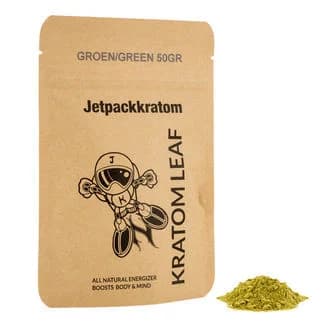
Jetpackkratom Green Kratom Powder
Green vein kratom powder — mild, balanced effects. Great for focus and inspiration during the day.
- • Green vein — mild focus and balanced energy
- • Great for daytime productivity
- • Pure powder with no additives
Disclosure: We may earn a commission if you purchase via these links.
For a full breakdown of how strains differ and when to use each, see the kratom strains guide.
Frequency Rules: How Often Is Too Often?
The most important variable for long-term sustainable use isn't the dose — it's the frequency.
Maximum 2–3 days per week is the evidence-informed recommendation for users who want to maintain sensitivity long-term without developing significant tolerance or dependence. This gives receptors at least 48–72 hours between activations, which is sufficient for meaningful partial recovery.
Never daily long-term. Daily kratom use, regardless of dose, will produce tolerance and physical dependence within weeks. There is no sustainable daily use pattern that doesn't eventually require tolerance management.
Extract use accelerates tolerance. This is the most underappreciated risk in the kratom market. Extracts contain concentrated 7-OH-mitragynine, which is substantially more potent at opioid receptors than mitragynine. Regular extract use produces significantly faster receptor downregulation than equivalent powder use. See the full kratom dosage guide for extract dose equivalents.
| Frequency | Tolerance risk | Dependence risk |
|---|---|---|
| 1 day/week | Very low | Very low |
| 2–3 days/week | Low | Low |
| 4–5 days/week | Moderate | Moderate |
| Daily | High | High |
| Daily extract | Very high | Very high |
Building a Tolerance-Safe Routine
For users who want to use kratom regularly without ending up managing dependency:
- Set your use days in advance. Not "I'll use it when I need it" — that defaults to daily. Pick 2 days per week and keep them fixed.
- Keep a dose log. Dose creep is invisible without a log — with one, you'll catch it early.
- Rotate strains every session. Red → Green → White on a rolling basis.
- Schedule T-breaks proactively. Every 6–8 weeks, take 1 week off minimum. Don't wait until you feel you need one — by then, withdrawal is guaranteed.
- Never use extracts for regular use. Reserve extracts for occasional, specific situations.
For the sleep-use specific dependency risk — the highest-risk pattern — see Red Vein Kratom for Sleep.
For how dosing interacts with tolerance, see the kratom dosage guide. For pain management use and associated tolerance considerations, see Kratom for Pain.
When to Seek Help
Most kratom tolerance and dependence is self-manageable. But some situations warrant professional support:
- You've tried to stop multiple times and haven't been able to stay off
- Your kratom use is affecting work, relationships, or finances
- You're using kratom to manage opioid withdrawal from another substance
- Withdrawal symptoms are severe (prolonged vomiting, extreme mental distress, inability to function)
- You're using kratom alongside opioid medications
Resources in the Netherlands and Europe:
- Jellinek (Netherlands): jellinek.nl / 0900 – 0990 — anonymous addiction support helpline
- Trimbos Institute: trimbos.nl — evidence-based Dutch addiction information
- EMCDDA (EU): emcdda.europa.eu — European drug monitoring and support resources

Kratom
Kratom powders, capsules, and extracts from established suppliers. Multiple strains for different effects.
Disclosure: We may earn a commission if you purchase via these links.
Frequently Asked Questions
How long does it take to build kratom tolerance?
With daily use, meaningful tolerance typically develops in 2–4 weeks. With 3–4 days per week, it may take months. The frequency of use matters more than dose for how quickly tolerance develops.
How do I reset my kratom tolerance?
A 2–4 week tolerance break is the most effective approach. Taper gradually if you've been using daily for more than a month, then stop completely. Restart at a lower dose than you were taking before — your receptors will be significantly more sensitive.
What does kratom withdrawal feel like?
The acute phase (days 1–7) involves muscle aches, insomnia, irritability, sweating, GI upset, and restlessness. It's comparable to a moderate flu with significant mood and sleep disruption. It peaks at days 2–3 and resolves within a week for most users.
Does strain rotation actually prevent tolerance?
It slows it — it doesn't prevent it indefinitely. Rotation works because different strains have different alkaloid ratios that activate receptor subtypes slightly differently, reducing the rate of downregulation compared to using a single strain daily.
Is kratom dependence the same as opioid dependence?
The mechanism is similar (mu-opioid receptor adaptation) but the severity is typically lower. Kratom has partial opioid receptor activity rather than full agonism, which means the tolerance and withdrawal profile is milder. Users with a history of opioid dependence should approach kratom with significant caution.
Can I use kratom daily if I rotate strains?
No. Strain rotation slows tolerance but does not prevent it when used daily. Frequency — daily vs 2–3 times per week — is the primary variable, not the strain variety.
Last updated: March 2026 | Written by Smart Supplements Editorial Team
This article is for informational purposes only and is not intended as medical advice. If you are concerned about substance dependence, please consult a healthcare professional.
New to kratom? Start with our Complete Guide to Kratom.
Related topics
Where to buy
Affiliate links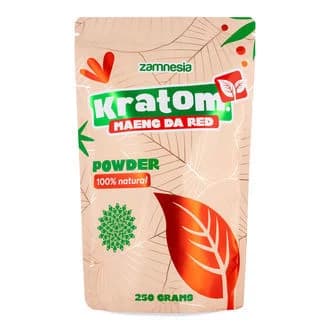
Red Maeng Da Kratom Powder
100% natural Red Maeng Da Kratom Powder from true red-veined Thai kratom leaves. Strong relaxation and sedating profile — one of the most popular red vein strains for evening use and sleep. Available in 25g, 50g, 100g and 250g. 271 reviews, 4.5/5. Zamnesia house brand.
- • Red Maeng Da — premium Thai strain
- • Strong relaxation and sedation
- • 4 sizes from 25g to 250g
Kratom
Kratom powders, capsules, and extracts from established suppliers. Multiple strains for different effects.
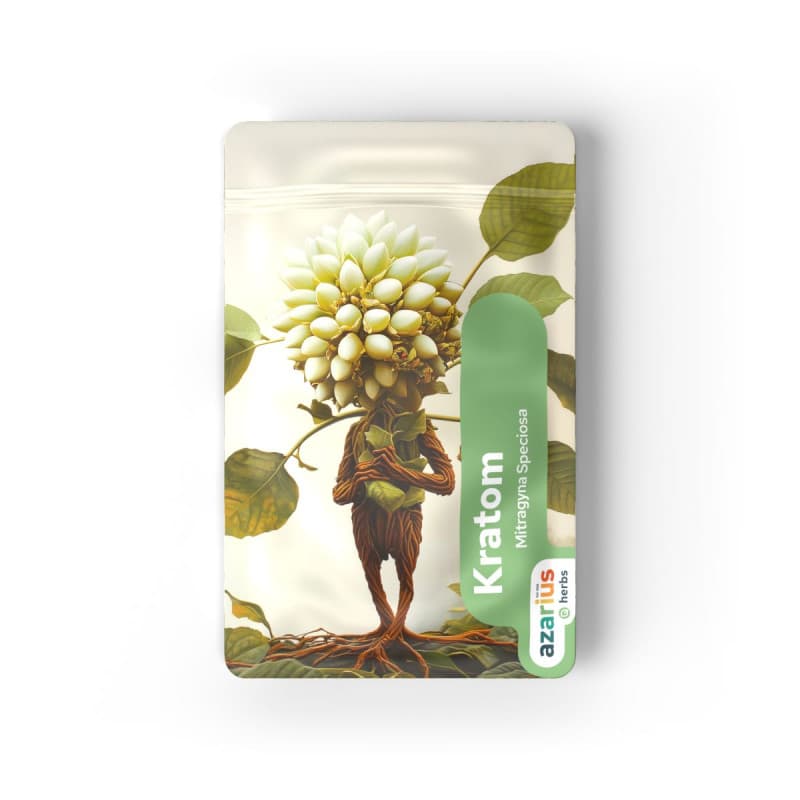
Kratom Extract
A concentrated kratom extract powder that delivers stronger effects in smaller quantities than regular leaf powder. Made from Maeng Da leaves, this extract offers enhanced focus, clean energy, and a sense of well-being — ideal for experienced kratom users looking for a more potent and efficient format.
- • Highly concentrated — stronger effects than standard powder
- • Maeng Da variety — known for focus, energy, and well-being
- • Versatile powder format — mix into tea, smoothie, or capsules
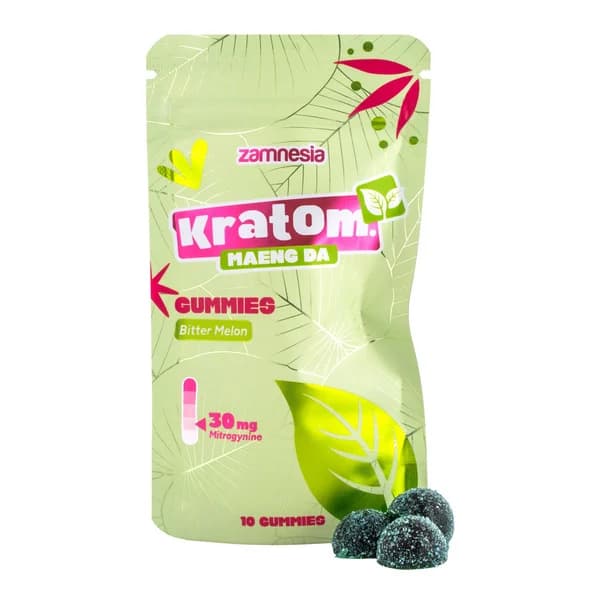
Kratom Gummies
Full-spectrum Maeng Da kratom gummies with 30mg mitragynine each. No powder, no capsules — just bold natural flavour and clean effects.
- • 30mg mitragynine per gummy
- • Full-spectrum kratom extract
- • 4 fruit flavours with 33%+ real fruit content
Disclosure: We may earn a commission if you purchase via these links.
Related articles
Kratom Withdrawal: What to Expect and How to Manage It
Kratom withdrawal explained honestly: what symptoms to expect, how long they last, and practical strategies to manage them safely.
Kratom Microdosing: What It Is, How to Do It, and Whether It Works
Kratom microdosing: what counts as a microdose, the 12mg tablet protocol, who it is for, and honest expectations about sub-threshold use.
Kratom and Drug Interactions: What You Must Know Before Mixing
Kratom can interact dangerously with opioids, SSRIs, MAOIs, benzodiazepines, and other medications. This evidence-based guide covers every major kratom drug interaction, the liver enzyme mechanisms behind them, and a practical safety checklist.