
Sleep Supplements for Anxiety: Calm Your Mind, Improve Your Sleep
Written by Smart Supplements Editorial Team
Key takeaways
- Anxiety and insomnia share overlapping neurobiology — the HPA axis, GABA system, and serotonin pathways drive both conditions
- GABAergic supplements (L-theanine, passionflower, magnesium) calm the neural excitability fuelling both anxiety and sleeplessness
- Adaptogens like ashwagandha reduce chronic cortisol elevation keeping your nervous system on high alert
- CBD addresses both anxiety and sleep through endocannabinoid and serotonin receptor modulation
- A targeted stack of 2-3 complementary supplements often breaks the anxiety-sleep cycle within 2-4 weeks
Table of contents
- The Anxiety-Sleep Connection
- How Anxiety Disrupts Your Sleep Architecture
- Best GABAergic Supplements for Sleep Anxiety
- Adaptogens for Sleep Anxiety
- CBD for Sleep and Anxiety
- Magnesium's Role in Anxiety and Sleep
- Building a Sleep-Anxiety Supplement Stack
- Supplements vs Therapy: When Each Is Appropriate
- Lifestyle Changes That Complement Supplements
- Frequently Asked Questions
- Break the Cycle Tonight
Anxiety and insomnia are locked in a vicious cycle. Anxiety keeps you awake at night, and the resulting sleep deprivation makes your anxiety worse the next day. Repeat for weeks or months, and you've got a self-reinforcing loop that feels impossible to break.
Here's the good news: supplements that target both anxiety AND sleep simultaneously can interrupt this cycle from both directions. Rather than treating anxiety and insomnia as separate problems, the most effective approach addresses the shared neurochemistry driving both conditions.
The Anxiety-Sleep Connection
Shared Neurobiology
Anxiety and insomnia aren't just co-occurring — they share the same underlying brain chemistry:
The HPA Axis: Your hypothalamic-pituitary-adrenal axis is the body's central stress response system. When activated, it releases cortisol — the hormone that keeps you alert, vigilant, and (at bedtime) completely unable to relax. Chronic anxiety keeps the HPA axis permanently activated, preventing the evening cortisol decline that's essential for sleep.
The GABA System: GABA is your brain's primary "off switch." Both anxiety and insomnia involve insufficient GABAergic tone — not enough inhibitory signalling to quiet the brain. This is why benzodiazepines (which boost GABA activity) treat both conditions, and why GABAergic supplements address both simultaneously.
The Serotonin Pathway: Serotonin regulates mood (anxiety) and is the precursor to melatonin (sleep). Low serotonin contributes to both anxiety and poor sleep quality. Supplements that support serotonin address both issues at the biochemical root.
The Vicious Cycle Explained
| Stage | What Happens | Neurochemistry |
|---|---|---|
| 1. Evening anxiety | Racing thoughts, muscle tension, worry | Elevated cortisol, low GABA, high glutamate |
| 2. Can't fall asleep | Hyperarousal prevents sleep onset | Sympathetic nervous system dominance |
| 3. Fragmented sleep | Anxious dreams, frequent waking | Disrupted sleep architecture, REM abnormalities |
| 4. Morning exhaustion | Wake up tired, dreading the day | Cortisol rhythm disrupted, serotonin depleted |
| 5. Daytime anxiety worsens | Sleep deprivation amplifies threat perception | Amygdala hyper-reactivity (fMRI-confirmed) |
| 6. Return to step 1 | Cycle intensifies | Progressive HPA dysregulation |
Research from UC Berkeley (Goldstein & Walker, 2021) showed that just one night of poor sleep increases amygdala reactivity by 60% — meaning your brain literally becomes more anxious after a bad night. This is the biological engine driving the anxiety-sleep cycle.
How Anxiety Disrupts Your Sleep Architecture
Anxiety doesn't just prevent sleep onset — it fundamentally alters the quality of sleep you do get.
Impact on Sleep Stages
| Sleep Stage | Normal Function | Effect of Anxiety |
|---|---|---|
| N1 (Light sleep) | Transition stage | Extended — more time "almost asleep" |
| N2 (Moderate sleep) | Memory consolidation begins | Fragmented by micro-arousals |
| N3 (Deep/slow-wave sleep) | Physical restoration, immune function | Significantly reduced |
| REM sleep | Emotional processing, memory | Disrupted, often with vivid/disturbing dreams |
The most damaging effect is the reduction in N3 (deep sleep). This is the stage where your body does most of its physical repair and your brain clears metabolic waste (including amyloid beta). Chronic anxiety-related deep sleep loss accelerates both physical and cognitive decline.
Types of Anxiety-Related Sleep Disruption
- Pre-sleep rumination: The "can't turn off my brain" phenomenon. Repetitive worry loops prevent sleep onset
- Somatic anxiety: Physical symptoms (rapid heartbeat, muscle tension, stomach churning) that make the body too activated for sleep
- Sleep-state misperception: Anxious individuals often underestimate how much they've slept, creating a perception of insomnia that feeds further anxiety
- Conditioned arousal: After repeated failed attempts to sleep, the bed itself becomes an anxiety trigger (the basis of CBT-I's stimulus control technique)
Best GABAergic Supplements for Sleep Anxiety
These supplements directly increase GABAergic tone — calming the neural excitability that drives both anxiety and insomnia.
L-Theanine (200–400 mg)
Why it works for anxiety-insomnia: L-theanine promotes alpha brain waves and increases GABA synthesis without sedation. It's particularly effective for pre-sleep rumination — the "can't shut off my mind" type of anxiety.
Evidence: Hidese et al. (2019) found 200 mg L-theanine reduced sleep disturbance and stress. Kim et al. (2019) showed improved sleep even in ADHD — a condition characterised by mental hyperactivity.
Timing: 200 mg, 60 minutes before bed Onset: Same night (alpha wave changes within 30–40 minutes)
For the full deep dive, see our L-theanine for sleep guide.
Passionflower (250–500 mg)
Why it works for anxiety-insomnia: Chrysin directly modulates GABA-A receptors — the same receptors targeted by benzodiazepines. A head-to-head study showed passionflower matched oxazepam (a prescription benzodiazepine) for generalised anxiety.
Evidence: Akhondzadeh et al. (2001) demonstrated benzodiazepine-equivalent anxiolytic effects. Ngan & Conduit (2011) showed sleep quality improvement within one week.
Timing: 500 mg extract or 1–2 cups tea, 30–60 minutes before bed Onset: Often same night; strengthens over 1–2 weeks

Passionflower Leaves
Dried Passionflower leaves (Passiflora incarnata) from Azarius — a well-researched calming herb used for anxiety, sleep and nervous tension. GABA-A modulating activity. Brew as tea or encapsulate.
- • Passiflora incarnata — well-researched anxiolytic herb
- • GABA-A modulating calming effect
- • Brew as tea or make your own capsules
Disclosure: We may earn a commission if you purchase via these links.
For more, see our passionflower for sleep guide.
Magnesium Glycinate (300–400 mg)
Why it works for anxiety-insomnia: Magnesium activates GABA receptors, relaxes muscles, and stabilises blood sugar (glucose crashes trigger both anxiety and night waking). The glycinate form delivers calming glycine alongside magnesium.
Evidence: Multiple studies show magnesium supplementation improves both anxiety symptoms and sleep quality, particularly in deficient individuals (estimated 50–60% of Europeans).
Timing: 300–400 mg with dinner or 60 minutes before bed Onset: Progressive over 3–7 days; continued improvement over 2–4 weeks
Magnesium Citrate
Zamnesia Magnesium Citrate — 100% natural magnesium supplement providing 200mg magnesium per tablet (53% reference intake). Supports muscle and nerve function, reduces fatigue, contributes to normal psychological functioning and bone health. 100 tablets per bottle.
- • 200mg magnesium citrate per tablet — 53% reference intake
- • Reduces fatigue and supports normal energy metabolism
- • Supports muscle function, nerve function, and bone health
Disclosure: We may earn a commission if you purchase via these links.
Full guide: magnesium for sleep.
GABA Supplements (100–300 mg PharmaGABA)
Why it works: Direct GABA supplementation may increase inhibitory neural signalling, though debate exists about oral GABA's ability to cross the blood-brain barrier. PharmaGABA (naturally fermented form) shows the most promising results.
Evidence: A 2015 study found PharmaGABA reduced sleep latency and increased non-REM sleep. Subjective reports consistently indicate improved relaxation.
Timing: 100–200 mg, 30 minutes before bed

Adaptogens for Sleep Anxiety
While GABAergic supplements address the symptoms of anxiety, adaptogens address the cause — chronic stress and HPA axis dysregulation.
Ashwagandha KSM-66 (300–600 mg)
Why it's the #1 adaptogen for sleep anxiety: Ashwagandha reduces cortisol by up to 30% (Chandrasekhar et al., 2012), directly addressing the hormonal driver of the anxiety-sleep cycle. It also contains triethylene glycol, a compound with independent sleep-inducing properties.
Evidence: Langade et al. (2019) showed 69% improvement in sleep quality scores with 600 mg/day KSM-66 over 8 weeks. Effects emerged at 2 weeks.
Protocol:
- 300 mg with breakfast (prevents daytime stress cascade)
- 300 mg with dinner (supports evening cortisol decline)
Timeline: 2 weeks for initial effects; 6–8 weeks for full benefit
For the full guide, see ashwagandha for sleep.
Reishi Mushroom (1,000–2,000 mg)
Why it works for sleep anxiety: Reishi's triterpenes calm the nervous system through mechanisms distinct from both GABA drugs and cortisol reducers. Its traditional classification as a "shen tonic" (spirit-calming) reflects millennia of observed anxiolytic effects.
Evidence: Animal studies show increased total sleep time and non-REM sleep. Traditional use for "calming the spirit" is well-documented. Human sleep-specific RCTs are limited but growing.
Timing: With dinner or 60–90 minutes before bed Timeline: 2–4 weeks for initial effects; builds over 6–8 weeks
For more, see our reishi for sleep guide.
CBD for Sleep and Anxiety
CBD occupies a unique position in the anxiety-sleep supplement landscape because it addresses both conditions through the endocannabinoid system — a regulatory network that sits upstream of many anxiety and sleep pathways.
How CBD Addresses Anxiety
- 5-HT1A receptor activation: The same serotonin receptor targeted by buspirone (a prescription anxiolytic)
- Amygdala modulation: CBD may reduce amygdala hyperactivity — the "threat detection centre" that drives anxiety
- Endocannabinoid tone: Supports anandamide (the "bliss molecule") by inhibiting its breakdown
How CBD Addresses Sleep
- Anxiety reduction: By reducing pre-sleep anxiety, CBD removes the primary barrier to sleep
- Pain modulation: Anti-inflammatory effects reduce pain-driven wakefulness
- Cortisol regulation: Studies show CBD can lower cortisol levels
- REM behaviour: May reduce REM sleep disorder symptoms
Dosage for Anxiety-Insomnia
| Anxiety Level | CBD Dose | Notes |
|---|---|---|
| Mild evening anxiety | 15–25 mg | Standard starting dose |
| Moderate anxiety-insomnia | 25–50 mg | Most commonly effective range |
| Severe anxiety-insomnia | 50–100 mg | Higher doses may be needed; titrate slowly |
Timing: 30–60 minutes before bed (sublingual for fastest onset)
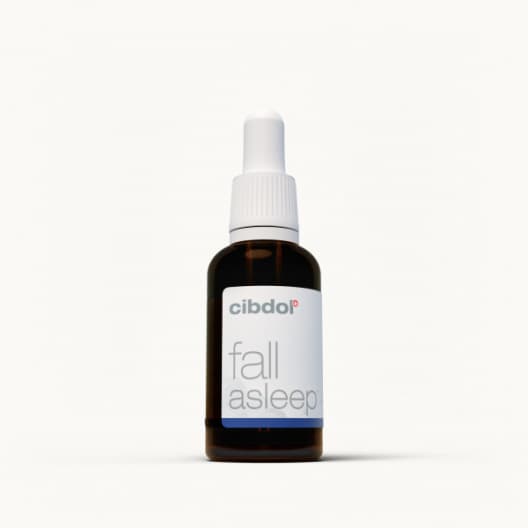

Fall Asleep (Meladol)
Liposomal CBD + melatonin for faster sleep onset.
- • CBD + melatonin
- • Liposomal formula
- • 30ml bottle
Disclosure: We may earn a commission if you purchase via these links.
For product recommendations, see our best CBD oil for sleep guide.
CBN + CBD: The Anxiety-Sleep Cannabinoid Stack
CBN (cannabinol) adds sedative properties that CBD alone doesn't provide. The combination addresses anxiety (CBD) and sleep (CBN) through complementary cannabinoid pathways.
5% CBN & 2.5% CBD Oil
Cibdol's CBN & CBD combination oil — 5% CBN (cannabinol) paired with 2.5% CBD. CBN is the cannabinoid most associated with sedation and sleep support, making this oil a strong choice for evening use and sleep quality improvement. Swiss-produced, third-party tested.
- • 5% CBN + 2.5% CBD — cannabinoid combination for sleep
- • CBN is the cannabinoid most associated with sedation and rest
- • Ideal for evening use and sleep quality support
Disclosure: We may earn a commission if you purchase via these links.
See our CBN for sleep guide for the full evidence review.
Magnesium's Role in Anxiety and Sleep
Magnesium deserves special attention because it may be the single most impactful intervention for anxiety-insomnia, particularly given how common deficiency is.
The Deficiency Connection
An estimated 50–60% of Europeans don't meet recommended magnesium intake. Deficiency directly causes:
- Increased anxiety: Magnesium deficiency activates the HPA axis and increases cortisol
- Poor sleep: Low magnesium reduces GABA activity and increases neural excitability
- Muscle tension: The physical manifestation of anxiety (tight shoulders, jaw clenching) is worsened by low magnesium
- Restless legs: A common sleep disruptor with strong links to magnesium deficiency
Correcting the Deficiency
For many people, simply restoring adequate magnesium levels produces dramatic improvements in both anxiety and sleep — because the deficiency was causing or amplifying both conditions.
| Magnesium Form | Bioavailability | Sleep Benefit | Anxiety Benefit |
|---|---|---|---|
| Glycinate/bisglycinate | Excellent | High (glycine adds sleep benefit) | High |
| Threonate | Good (crosses BBB) | High (brain-specific) | High |
| Citrate | Good | Moderate | Moderate |
| Oxide | Low (5–10%) | Low | Low |
| Taurate | Good | Moderate | High (taurine adds calming) |
Recommendation: Magnesium glycinate is the optimal form for anxiety-insomnia because it delivers both magnesium AND glycine — two independently evidence-based sleep compounds.
Building a Sleep-Anxiety Supplement Stack
The Quick-Relief Stack (Fast-Acting)
For immediate evening anxiety and sleep support:
| Supplement | Dose | Timing | Mechanism |
|---|---|---|---|
| L-theanine | 200 mg | 60 min before bed | Alpha waves, GABA synthesis |
| Magnesium glycinate | 400 mg | 60 min before bed | GABA activation, muscle relaxation |
| Passionflower tea | 1 cup (2g herb) | 45 min before bed | GABA-A receptor modulation |
Onset: Same night Best for: Occasional anxiety-driven sleep difficulties
The Comprehensive Stack (Multi-Pathway)
For persistent anxiety-insomnia requiring broader intervention:
| Supplement | Dose | Timing | Mechanism |
|---|---|---|---|
| Ashwagandha KSM-66 | 300 mg AM + 300 mg PM | With meals | Cortisol reduction |
| Magnesium glycinate | 300 mg | 60 min before bed | GABA, muscle relaxation |
| L-theanine | 200 mg | 60 min before bed | Alpha waves, mental calm |
| CBD oil | 25 mg | 30 min before bed | ECS modulation, serotonin |
Onset: 1–2 weeks for initial improvement; 4–6 weeks for full effect Best for: Chronic anxiety-insomnia cycle
Complete Sleep
CBD, CBN, chamomile, lavender — no melatonin. All-in-one sleep support.
- • CBD + CBN + botanicals
- • No melatonin
- • 10ml or 30ml
Disclosure: We may earn a commission if you purchase via these links.
The Budget Stack
| Supplement | Dose | Approx. Daily Cost |
|---|---|---|
| Magnesium glycinate | 400 mg | ~€0.25 |
| L-theanine | 200 mg | ~€0.20 |
| Total | ~€0.45/night |
Solid Sleep
Zamnesia Solid Sleep — a multi-compound sleep capsule combining CBD (12.5mg), CBN (12.5mg), hops (50mg), and Griffonia simplicifolia (167mg, 30% 5-HTP) per capsule. Designed for deep, uninterrupted sleep with effects in approximately 20 minutes. 30 plant-based HPMC capsules per bottle.
- • CBD + CBN + hops + 5-HTP — four-compound sleep formula
- • Promotes deep, uninterrupted sleep
- • Fast-acting — effects in approximately 20 minutes
Disclosure: We may earn a commission if you purchase via these links.
The Premium Stack
| Supplement | Dose | Approx. Daily Cost |
|---|---|---|
| Ashwagandha KSM-66 | 600 mg | ~€0.50 |
| CBD oil (25 mg) | 25 mg | ~€1.50 |
| Magnesium glycinate | 400 mg | ~€0.25 |
| L-theanine | 200 mg | ~€0.20 |
| Total | ~€2.45/night |
For the complete stacking guide, see building a sleep supplement stack.

Supplements vs Therapy: When Each Is Appropriate
When Supplements May Be Sufficient
- Mild to moderate evening anxiety that disrupts sleep onset
- Situational anxiety (work deadlines, life transitions) causing temporary insomnia
- Nutritional deficiency-driven anxiety (especially magnesium)
- As an adjunct to therapy or lifestyle changes
- When anxiety is subclinical (not meeting diagnostic criteria for an anxiety disorder)
When Professional Help Is Needed
- Anxiety is persistent and severe (most days for 6+ months)
- You experience panic attacks that wake you from sleep
- Insomnia is chronic (3+ months, 3+ nights per week)
- You're using alcohol or drugs to manage anxiety or sleep
- Anxiety significantly impairs daily functioning (work, relationships, health)
- You have thoughts of self-harm
The Gold Standard: CBT-I + Supplements
Cognitive Behavioural Therapy for Insomnia (CBT-I) remains the most effective treatment for chronic insomnia, including anxiety-driven insomnia. It addresses the cognitive patterns (catastrophising about sleep, safety behaviours) and behavioural patterns (irregular schedule, bed as anxiety trigger) that perpetuate the cycle.
Supplements complement CBT-I by:
- Providing physiological support while behavioural changes take effect (4–8 weeks)
- Addressing nutritional deficiencies that CBT-I can't fix
- Reducing neurochemical barriers to the relaxation techniques taught in CBT-I
Lifestyle Changes That Complement Supplements
Supplements work best within a supportive framework.
Evening Anxiety Reduction Protocol
| Time | Action | Why |
|---|---|---|
| 3+ hours before bed | Stop work, close email | Prevents cortisol activation |
| 2 hours before bed | Dim lights, reduce screen brightness | Supports melatonin onset |
| 90 min before bed | Take ashwagandha (if using) with light snack | Cortisol reduction, blood sugar stability |
| 60 min before bed | Take L-theanine + magnesium; start wind-down | GABAergic activation |
| 45 min before bed | Passionflower tea or CBD | Additional calming layer |
| 30 min before bed | Journaling or "worry dump" (write down tomorrow's tasks) | Externalises anxious thoughts |
| 15 min before bed | Progressive muscle relaxation or breathwork | Activates parasympathetic nervous system |
| Bedtime | Lights out, cool room (18–20°C) | Optimal sleep environment |
The "Worry Dump" Technique
Research from Baylor University (Scullin et al., 2018) found that spending 5 minutes writing a to-do list before bed helped participants fall asleep 9 minutes faster than those who wrote about completed activities. The act of externalising worries onto paper reduces the brain's need to keep them active.
For comprehensive lifestyle strategies, see our sleep hygiene guide.
Frequently Asked Questions
What is the best supplement for sleep and anxiety?
For most people, magnesium glycinate is the best starting point — it addresses both anxiety (GABA activation) and sleep (muscle relaxation, glycine) while correcting a common deficiency. For stronger anxiolytic effects, add L-theanine (200 mg). For chronic stress-driven anxiety-insomnia, ashwagandha KSM-66 has the strongest evidence.
Can supplements replace anxiety medication for sleep?
Supplements are not direct replacements for prescribed anxiety medication. However, they can be effective for mild-to-moderate anxiety-related sleep issues. If you're on anxiety medication and want to explore supplements, work with your doctor on a supervised plan — never stop medication abruptly.
How long do supplements take to help with anxiety-related insomnia?
Fast-acting supplements (L-theanine, passionflower) can provide relief the first night. Magnesium shows progressive improvement over 1–2 weeks. Adaptogens (ashwagandha, reishi) need 2–4 weeks for initial effects and 6–8 weeks for full benefit.
Is it safe to take multiple supplements for anxiety and sleep?
Yes, when done thoughtfully. The stacks recommended in this article use supplements with complementary (not overlapping) mechanisms. Start with one supplement, confirm tolerance, then add the next. Avoid combining with prescription sedatives without medical supervision.
Does CBD help with both anxiety and sleep?
Yes — CBD is unique in addressing both conditions through endocannabinoid system modulation and 5-HT1A serotonin receptor activation. Shannon et al. (2019) found improved anxiety in 79.2% and improved sleep in 66.7% of participants.
What should I do if supplements aren't enough?
If supplements + lifestyle changes haven't improved your anxiety-insomnia after 4–6 weeks, seek professional help. A sleep specialist can rule out other conditions (sleep apnoea, thyroid issues), and a therapist trained in CBT-I can address the cognitive-behavioural patterns driving the cycle.
Are there supplements that make anxiety worse?
Some stimulating supplements can worsen anxiety: high-dose caffeine, certain nootropics (racetams), and occasionally high-dose B vitamins (especially B6 and B12 in the evening). Stick to the calming supplements recommended in this guide for evening use.
Break the Cycle Tonight
The anxiety-sleep cycle feels unbreakable, but it's not. Start with the Quick-Relief Stack (L-theanine + magnesium + passionflower tea) tonight for immediate support. If your anxiety-insomnia is chronic, add ashwagandha and give the full protocol 4–6 weeks.
For the complete picture, explore our best natural sleep supplements guide, learn about specific ingredients in our ashwagandha and L-theanine deep dives, or see our insomnia supplements guide for a clinical approach to persistent sleep difficulties.
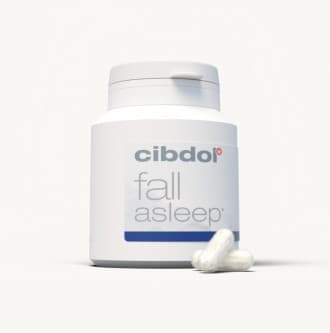
Fall Asleep Capsules
Meladol formula in capsule form. 30 capsules per tub.
- • CBD + melatonin
- • Easy to swallow
- • 30 capsules
Disclosure: We may earn a commission if you purchase via these links.

This article is for informational purposes only and does not constitute medical advice. If you experience severe or persistent anxiety, please seek help from a qualified mental health professional. Supplements are not replacements for therapy or prescribed medication. Crisis resources: contact your local emergency services or mental health crisis line.
Last updated: March 2026 | Author: Smart Supplements Editorial Team
Related topics
Where to buy
Affiliate linksMADMONQ ZEN PLUS
Advanced evening drink for sleep and stress recovery — without melatonin or sedatives. Six natural ingredients: Cyracos® (600mg lemon balm extract), Saffron, Magnesium (170mg elemental), Chamomile, L-Theanine, and Myo-Inositol. Dissolve in hot water 30–60 minutes before bed. Zero morning fog, no habit-forming ingredients. 28 sachets per pack.
- • Cyracos® lemon balm — clinically studied for sleep quality
- • No melatonin — zero morning grogginess or dependency
- • Saffron + Chamomile for natural relaxation
Super Sleep
Zamnesia Super Sleep — a fast-acting liposomal sleep formula combining golden-grade CBD (75mg total), melatonin, and liposomal delivery for enhanced absorption. All-natural ingredients from European organic hemp with no detectable THC. 30ml dropper bottle, take before bed.
- • Fast-acting liposomal formula for enhanced CBD absorption
- • Golden-grade CBD + melatonin — dual-action sleep support
- • All-natural ingredients, no detectable THC
Solid Sleep
Zamnesia Solid Sleep — a multi-compound sleep capsule combining CBD (12.5mg), CBN (12.5mg), hops (50mg), and Griffonia simplicifolia (167mg, 30% 5-HTP) per capsule. Designed for deep, uninterrupted sleep with effects in approximately 20 minutes. 30 plant-based HPMC capsules per bottle.
- • CBD + CBN + hops + 5-HTP — four-compound sleep formula
- • Promotes deep, uninterrupted sleep
- • Fast-acting — effects in approximately 20 minutes
Dream Gummies Cherry
Zamnesia Dream Gummies Cherry — vegan sleep gummies combining valerian root extract (25mg, 10:1), passionflower extract (20mg, 10:1), and melatonin (0.29mg) per gummy. Delicious cherry flavour with natural colouring. 60 gummies per tub. Take one gummy 45 minutes before bed.
- • Valerian + passionflower + melatonin — herbal sleep gummies
- • Vegan-friendly pectin-based formula, no gelatine
- • Delicious cherry flavour with natural colouring
Disclosure: We may earn a commission if you purchase via these links.
Related articles
Passionflower for Sleep: Benefits, Dosage, and Research
Learn how passionflower improves sleep through GABA-A receptor modulation. Clinically shown to match benzodiazepines for anxiety, get dosage guides for tea
Ashwagandha for Sleep: How This Adaptogen Fights Insomnia
Learn how ashwagandha fights stress-driven insomnia by reducing cortisol up to 30%. Compare KSM-66 vs Sensoril extracts, get dosing protocols, and discover
L-Theanine for Sleep: The Calming Amino Acid Guide
Learn how L-theanine promotes sleep through alpha brain waves without sedation. Get the clinically validated 200mg dosage, stacking protocols with magnesiu