
The Runner's Supplement Stack: What to Take Before, During, and After
Written by Smart Supplements Editorial Team
Key takeaways
- Food covers 80% — supplements fill specific gaps, they do not replace a balanced runner's diet
- The daily essentials (creatine, omega-3, magnesium) matter more than race-day supplements — consistency over weeks drives the real benefits
- Caffeine at 3–6 mg/kg is the strongest legal ergogenic aid with documented 2–4% endurance performance gains
- During-run fuelling only matters above 60 minutes — shorter runs need nothing beyond water by thirst
- A budget runner's stack costs under €20/month — premium products are optional, not necessary
Table of contents
- You Don't Need 15 Supplements. You Need the Right 5–6, Timed Properly.
- The Philosophy — Less Is More
- Daily Essentials (Take Every Day)
- Pre-Run (30–60 Minutes Before)
- During Run (60+ Minutes Only)
- Post-Run (Within 1–2 Hours)
- The Budget Stack vs The Premium Stack
- The Complete Runner's Stack — At a Glance
- What You Can Skip
- Frequently Asked Questions
- The Bottom Line
- Disclaimer
- Related Articles
You Don't Need 15 Supplements. You Need the Right 5–6, Timed Properly.
Every running forum has the same thread: "What supplements should I take?" The replies range from "nothing, just eat real food" to a list of 20 products that costs more per month than your running shoes did.
Both extremes miss the point. The evidence-based middle ground is this: food first, supplements to fill specific gaps, and timing matters more than most runners realise. A well-chosen stack of 5–6 supplements — taken at the right time relative to your training — can meaningfully support performance, recovery, and long-term joint health.
This guide breaks the runner's supplement stack into four phases: what you take every day regardless of training, what you take before a run, what you use during longer efforts, and what supports recovery afterward. No filler. No hype. Just what the research actually supports.

The Philosophy — Less Is More
Before we get into specific products, let's establish a principle that most supplement marketing actively works against: food first.
A runner eating 2,500–3,500 kcal/day from varied whole foods is already getting the majority of their micronutrient needs met. Supplements fill the gaps that diet alone struggles to cover — and for runners, those gaps tend to be specific and predictable.
The most common nutritional gaps in European runners include:
| Nutrient | Why Runners Are Often Low | Dietary Sources |
|---|---|---|
| Magnesium | Lost through sweat; depleted by training stress; 60%+ of Europeans are suboptimal | Dark leafy greens, nuts, seeds, dark chocolate |
| Omega-3 (EPA/DHA) | Most Europeans eat fatty fish fewer than 2x/week; omega-6:omega-3 ratio is 15–20:1 | Fatty fish (salmon, mackerel, sardines), algae |
| Vitamin D | Latitude problem in Northern Europe (Oct–Mar); indoor training time | Sunlight, fortified foods, fatty fish |
| Iron (especially female runners) | Foot-strike haemolysis, sweat losses, menstrual losses | Red meat, lentils, spinach, fortified cereals |
| Creatine | Vegetarian/vegan runners get almost none from diet; omnivores get ~1g/day (suboptimal) | Red meat, fish |
The 80/20 rule applies: get 80% of your nutrition from whole foods, and let supplements handle the specific 20% that diet alone struggles to optimise.
Research consistently supports this hierarchy. A 2020 systematic review in Nutrients confirmed that while certain supplements provide measurable ergogenic benefits for endurance athletes, none outperform a well-structured diet as a foundation (Maughan et al., 2018).
Daily Essentials (Take Every Day)
These three supplements form the base layer of the runner's stack. Take them every day — rest days included — because their benefits accumulate over weeks and months, not hours.
Creatine — 3–5g/Day, Any Time
Creatine is the most studied supplement in sports science, with over 700 peer-reviewed papers. Most runners still think it's "for bodybuilders," but the evidence for endurance athletes is compelling and growing.
What it does for runners:
- Enhances phosphocreatine resynthesis — critical for interval sessions, hill repeats, and finishing kicks
- Supports muscle glycogen storage (may increase storage by 9–12%)
- Reduces muscle damage markers (CK, LDH) after hard training (Rawson & Volek, 2003)
- Emerging evidence for tendon and bone health — relevant for injury-prone runners
What it doesn't do: Creatine does not cause meaningful water retention at 3–5g/day maintenance doses. The "weight gain" fear is based on loading protocols (20g/day) that are unnecessary. At maintenance doses, any water increase is intracellular (within the muscle) and amounts to 0.5–1kg — negligible for a runner.
| Specification | Recommendation |
|---|---|
| Form | Creatine monohydrate (cheapest and most studied) |
| Dose | 3–5g/day (no loading required) |
| Timing | Any time — consistency matters more than timing |
| Duration | Indefinite; no cycling needed |
Upfront Creatine
Straightforward creatine monohydrate at an unbeatable price. Clean formula, no nonsense.
- • Pure creatine monohydrate
- • Best price in NL (€8)
- • No fillers
Disclosure: We may earn a commission if you purchase via these links.
Omega-3 — 250mg+ EPA/DHA Daily
Chronic low-grade inflammation is the enemy of consistent training. Every run creates micro-damage; omega-3 fatty acids (specifically EPA and DHA) help regulate the inflammatory response so you recover efficiently rather than accumulating training stress.
What it does for runners:
- Modulates exercise-induced inflammation — faster return to baseline after hard sessions
- Supports cardiovascular efficiency (improved arterial elasticity, reduced resting heart rate in some studies)
- May reduce exercise-induced bronchoconstriction — relevant for runners who train in cold air
- Supports brain health and mood — important for the mental side of endurance training (Philpott et al., 2019)
| Specification | Recommendation |
|---|---|
| Form | Algae-derived (sustainable, no heavy metal concerns) or triglyceride fish oil |
| Dose | 250–500mg combined EPA+DHA (general health); 1000–2000mg (anti-inflammatory/recovery focus) |
| Timing | With a meal containing fat (lunch works well) |
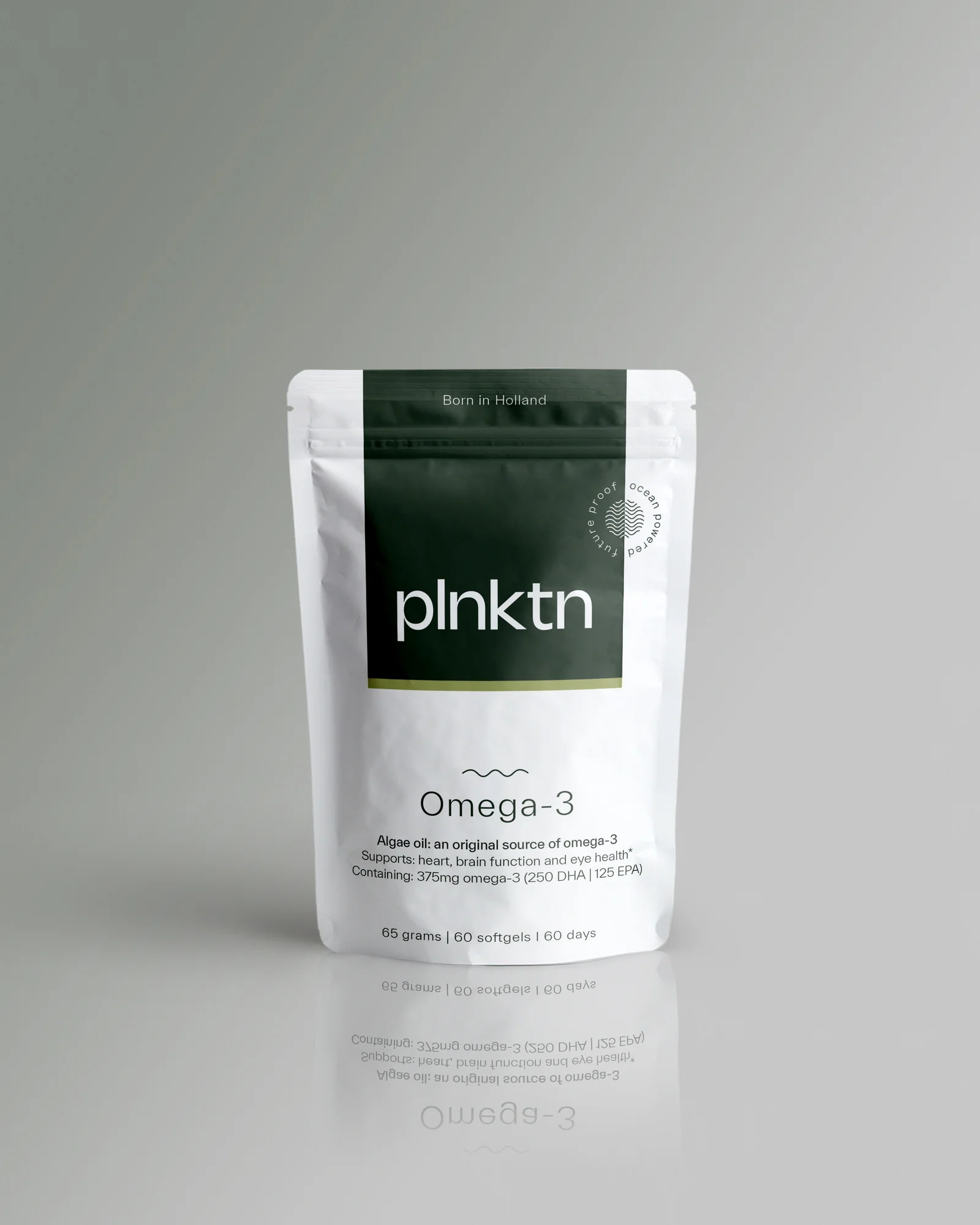

Omega-3 (algenolie)
Daily omega-3 from the original source: algae. With essential EPA and DHA for heart, brain and eyes.
- • 250 mg DHA and 125 mg EPA per capsule
- • 100% fish-free, plant-based algenolie
- • No fishy aftertaste, clean and controlled source
Disclosure: We may earn a commission if you purchase via these links.
Magnesium — 300mg Evening
If there's one mineral runners are almost certainly not getting enough of, it's magnesium. You lose it through sweat (15–20mg per litre), training stress depletes it, and even a "good" European diet often falls short of the 400mg+ daily intake that active people need.
What it does for runners:
- Supports 300+ enzymatic reactions including ATP production (you literally cannot produce energy without magnesium)
- Reduces muscle cramps — the mechanism is more about neuromuscular function than electrolyte balance
- Improves sleep quality — critical for recovery, and glycinate form specifically promotes relaxation via GABA pathways
- May reduce markers of muscle damage and oxidative stress post-exercise (Zhang et al., 2017)
| Specification | Recommendation |
|---|---|
| Form | Glycinate (sleep/recovery) or citrate (budget-friendly, higher bioavailability than oxide) |
| Dose | 200–400mg elemental magnesium |
| Timing | Evening, 1 hour before bed |
Orangefit Magnesium
Plant-based magnesium supplement supporting muscle function, energy production, and recovery.
- • Supports muscle function
- • Aids energy production
- • Plant-based formula
Disclosure: We may earn a commission if you purchase via these links.
Daily Essentials Summary
| Supplement | Dose | Timing | Monthly Cost |
|---|---|---|---|
| Creatine monohydrate | 3–5g | Any time (with meal or shake) | €8–15 |
| Omega-3 (EPA+DHA) | 250–500mg+ | With lunch | €15–25 |
| Magnesium | 300mg elemental | Evening, before bed | €10–16 |
| Total | €33–56 |
Take these every single day. Rest days. Easy days. Race week. The benefits are cumulative and only appear with consistent use over 4–8+ weeks.
Pre-Run (30–60 Minutes Before)
These supplements are situational — you don't need them before every jog. Reserve them for hard sessions, long runs, and race day.
Caffeine — 3–6mg/kg Body Weight
Caffeine is arguably the most effective legal ergogenic aid available to runners. The evidence base is enormous: a meta-analysis of 21 studies found an average endurance performance improvement of 3.3% — which translates to roughly 2–4 minutes in a marathon (Southward et al., 2018).
How it works for runners:
- Reduces perceived exertion (the run feels easier at the same pace)
- Increases free fatty acid mobilisation (spares glycogen early in long efforts)
- Enhances neuromuscular recruitment
- Improves reaction time and concentration (useful in technical trail running or crowded races)
Practical dosing for a 70kg runner:
- Low: 210mg (roughly 2 espressos)
- Moderate: 280–350mg
- High: 420mg (race-day maximum)
| Specification | Recommendation |
|---|---|
| Form | Coffee, caffeine tablets, or caffeinated gel |
| Dose | 3–6mg/kg body weight |
| Timing | 30–60 minutes before effort |
| When to use | Hard sessions, tempo runs, intervals, races — not easy runs |
| When to skip | Afternoon/evening runs (disrupts sleep); if you're caffeine-sensitive |
Important: If you consume caffeine daily, you develop partial tolerance. For maximum race-day benefit, some athletes reduce caffeine intake for 5–7 days before a target race (though this is uncomfortable and individual). At minimum, don't increase your race-day dose beyond what you've practised in training.
Electrolytes — Before Runs Over 60 Minutes
Pre-loading with electrolytes (primarily sodium) before long or hot runs helps maintain plasma volume and delays the onset of hyponatraemia. This is particularly relevant for European runners training through summer, or anyone running longer than 75–90 minutes.
| Specification | Recommendation |
|---|---|
| Form | Electrolyte tablet or powder dissolved in 500ml water |
| Dose | 300–600mg sodium + potassium, magnesium traces |
| Timing | 30–60 minutes before long runs/races |
| When to skip | Short runs (<60 min), cool weather, low sweat rate |
Orangefit Hydrate
Electrolyte formula for optimal hydration before, during, and after exercise. Clean ingredients, no artificial sweeteners.
- • Optimal electrolyte ratio
- • No artificial sweeteners
- • Plant-based
Disclosure: We may earn a commission if you purchase via these links.

During Run (60+ Minutes Only)
If your run is under 60 minutes, you almost certainly don't need anything except water (and even that is debatable for runs under 45 minutes in moderate conditions). Fuelling during a run becomes important at the 60–90 minute mark, when glycogen depletion starts to limit performance.
Energy Gels — Every 30–45 Minutes After the First Hour
The science is straightforward: your muscles can oxidise 60–90g of carbohydrate per hour during exercise. For efforts lasting 60–150 minutes, 30–60g/hour is sufficient. For ultra-distance events (3+ hours), training the gut to handle 80–90g/hour provides measurable benefits (Jeukendrup, 2014).
Practical protocol:
- Start fuelling at 45–60 minutes (don't wait until you feel depleted)
- Take 1 gel (20–25g carbs) every 30–45 minutes
- Combine with water — not sports drink (to avoid carbohydrate overload)
- Practise in training — never try a new gel on race day
| Specification | Recommendation |
|---|---|
| Form | Isotonic gel (no water needed) or standard gel + water |
| Dose | 1 gel every 30–45 minutes after first hour |
| Carb target | 30–60g/hour (training), up to 90g/hour (racing, if gut-trained) |
Upfront Energy Gel
Quick energy gel for mid-run or mid-workout fuel. Compact and easy to carry.
- • Fast-acting energy
- • Easy to carry
- • Mid-run fuel
Disclosure: We may earn a commission if you purchase via these links.
Electrolyte Sipping
During runs lasting 90+ minutes (especially in heat), sipping an electrolyte drink maintains sodium balance and supports fluid absorption. The primary concern isn't cramping (that's multifactorial) — it's maintaining the sodium gradient that drives intestinal water absorption.
| Specification | Recommendation |
|---|---|
| Form | Electrolyte tablet dissolved in water bottle or hydration vest |
| Dose | 300–500mg sodium per hour |
| Timing | Small sips every 15–20 minutes |
Water — By Thirst
The old advice to "drink ahead of thirst" has been largely overturned. Current best practice from the International Marathon Medical Directors Association: drink to thirst. Overdrinking causes hyponatraemia (low blood sodium), which is more dangerous than mild dehydration. Most runners do fine losing 2–3% body weight during a race without performance impairment (Goulet, 2011).
During-Run Fuelling Summary
| Duration | What You Need |
|---|---|
| Under 45 min | Nothing (maybe a sip of water) |
| 45–60 min | Water by thirst |
| 60–90 min | 1–2 gels + water |
| 90 min–3 hours | Gels every 30–45 min + electrolyte drink |
| 3+ hours (ultra) | Gels + electrolytes + real food (train your gut) |
Post-Run (Within 1–2 Hours)
The "recovery window" is more forgiving than supplement marketing suggests — you don't need to slam a shake within 30 seconds of stopping. But getting protein and carbohydrates within 1–2 hours of a hard session does support glycogen resynthesis and muscle protein synthesis, especially if your next session is within 24 hours.
Protein — 20–40g
Endurance runners need more protein than sedentary people (1.2–1.6g/kg/day vs 0.8g/kg/day). A post-run protein dose kickstarts muscle repair and adaptation. The leucine content matters: aim for 2.5g+ leucine per serving to maximally stimulate muscle protein synthesis (Moore et al., 2015).
| Specification | Recommendation |
|---|---|
| Form | Whey, plant-based blend, or whole food (chicken, eggs, Greek yoghurt) |
| Dose | 20–40g protein (higher end for sessions >90 min or if >80kg body weight) |
| Timing | Within 1–2 hours post-run |
| Leucine target | 2.5g+ per serving |
Orangefit Protein
Plant-based protein shake made from yellow split peas. Complete amino acid profile, easy to digest, no artificial sweeteners. Available in multiple flavours.
- • 100% plant-based (yellow split peas)
- • Complete amino acid profile
- • No artificial sweeteners
Disclosure: We may earn a commission if you purchase via these links.
Carbohydrates — 1g/kg Body Weight
Glycogen resynthesis is the priority after long or hard runs. A 70kg runner should aim for roughly 70g of carbohydrates post-run. This doesn't need to come from a supplement — rice, pasta, bread, fruit, or a recovery smoothie all work.
When it matters most:
- After runs >75 minutes
- When you're training twice in one day
- During high-volume training blocks (80+ km/week)
For easy runs under 60 minutes, your next normal meal handles recovery just fine.
Optional: Collagen + Vitamin C
Emerging evidence suggests that collagen peptides (15g) taken with vitamin C (50mg) before exercise may support tendon and ligament health. A 2017 study from the Australian Institute of Sport found that this protocol increased collagen synthesis markers in tendons and ligaments (Shaw et al., 2017).
This is particularly relevant for runners dealing with:
- Achilles tendinopathy
- Plantar fasciitis
- IT band issues
- General joint stiffness after high mileage
The evidence is still developing, but the mechanism is biologically plausible and the risk is essentially zero.
| Specification | Recommendation |
|---|---|
| Form | Collagen peptides (hydrolysed) + vitamin C |
| Dose | 15g collagen + 50mg vitamin C |
| Timing | 30–60 minutes before exercise (for tendon benefit) or post-run |

The Budget Stack vs The Premium Stack
Not every runner needs (or can afford) a premium setup. Here's the honest breakdown:
The Budget Stack — Under €20/Month
| Product | What It Covers | Monthly Cost |
|---|---|---|
| Upfront Creatine | Daily creatine (3–5g) | ~€8 |
| Upfront Electrolytes | Pre-run and during-run hydration | ~€8 |
| Caffeine (coffee or tablets) | Pre-run ergogenic aid | ~€3 (tablets) |
| Total | ~€19/month |
Add magnesium citrate from any pharmacy (€6–8/month) and you're covering the essentials for under €25/month. Omega-3 from two portions of tinned sardines per week is essentially free.
Upfront Electrolytes
Electrolyte sachets for hydration during and after exercise. Affordable and effective.
- • Essential electrolytes
- • Convenient sachets
- • Great value (€8 for 10)
Disclosure: We may earn a commission if you purchase via these links.
The Premium Stack — €60–80/Month
| Product | What It Covers | Monthly Cost |
|---|---|---|
| Orangefit Creatine | Daily creatine (quality-tested, plant-based) | ~€15 |
| Orangefit Magnesium | Evening magnesium (glycinate form) | ~€14 |
| Orangefit Hydrate | Electrolyte mix (pre/during run) | ~€12 |
| Orangefit Protein | Post-run recovery (plant-based) | ~€18 |
| PLNKTN Omega-3 | Daily omega-3 (algae-derived, sustainable) | ~€15 |
| Upfront Energy Gel | During-run fuelling | ~€10 (race days) |
| Total | ~€75/month |
The premium stack gives you higher-quality forms, better taste, and the convenience of purpose-built products rather than generic pharmacy supplements. Whether that's worth 3–4x the cost depends on your budget and preferences.
Orangefit Creatine
Simple, clean, and effective creatine monohydrate. Plant-based and free from fillers. Supports strength, power output, and recovery.
- • Clean creatine monohydrate
- • 100% plant-based
- • No fillers or additives
Disclosure: We may earn a commission if you purchase via these links.
The Complete Runner's Stack — At a Glance
| Timing | Supplement | Dose | Frequency |
|---|---|---|---|
| Daily (AM) | Creatine | 3–5g | Every day |
| Daily (Lunch) | Omega-3 (EPA+DHA) | 250mg+ | Every day |
| Daily (PM) | Magnesium | 300mg | Every day |
| Pre-run | Caffeine | 3–6mg/kg | Hard sessions and races only |
| Pre-run | Electrolytes | 300–600mg sodium | Long runs (60+ min) |
| During run | Energy gel | 1 per 30–45 min | Runs over 60 min |
| During run | Electrolyte drink | 300–500mg sodium/hr | Runs over 90 min |
| Post-run | Protein | 20–40g | After hard/long runs |
| Post-run | Carbohydrates | 1g/kg | After hard/long runs |
| Optional | Collagen + Vit C | 15g + 50mg | If joint issues present |
What You Can Skip
The supplement industry thrives on making runners feel like they need more. Here's what the evidence says you can safely ignore:
BCAAs (Branched-Chain Amino Acids)
If you're eating adequate protein (1.2–1.6g/kg/day) — and especially if you're using a protein supplement post-run — BCAAs are redundant. They're already present in complete protein sources. A 2017 systematic review concluded that BCAA supplementation offers no additional benefit when total protein intake is sufficient (Wolfe, 2017).
Fat Burners
Thermogenic supplements promise to "accelerate fat burning" during runs. The active ingredients are typically caffeine (which you can get from coffee) and proprietary blends with negligible evidence. Running itself is the fat burner. Save your money.
Testosterone Boosters
Marketed primarily to male runners concerned about training-induced testosterone suppression. The supplements in this category (tribulus, fenugreek, D-aspartic acid) have essentially no effect on testosterone levels in controlled trials. If training volume is genuinely suppressing your hormones, the solution is periodisation and recovery — not pills.
Most Greens Powders
While some greens powders offer genuine micronutrient density, most are overpriced vegetable dust with fairy-sprinkle doses of 40+ ingredients. If you eat 5+ servings of vegetables daily, you don't need a greens powder. If you don't, fix your diet first — then consider a greens supplement as a genuine gap-filler, not a replacement.
Glucosamine/Chondroitin
Once the darling of joint-health supplementation, large-scale trials (particularly the GAIT trial) found no significant benefit over placebo for joint pain. If joint health is a concern, collagen peptides with vitamin C have a stronger mechanistic rationale.
Frequently Asked Questions
How much does a runner's supplement stack cost per month?
A budget stack (creatine + electrolytes + caffeine) runs under €20/month. A mid-range stack adding magnesium and omega-3 is roughly €40–55/month. A premium stack with branded products and post-run protein is €60–80/month. Most of the core benefit comes from the first €30/month.
Can I take all my daily supplements together?
The daily trio (creatine, omega-3, magnesium) can be split across the day for optimal absorption: creatine with any meal, omega-3 with a fat-containing lunch, and magnesium in the evening. Taking creatine and omega-3 together at lunch is fine. Magnesium is best kept separate in the evening for sleep benefits.
Is the stack different for 5K vs marathon vs ultra runners?
The daily essentials are the same regardless of distance. What changes is the during-run fuelling:
| Distance | During-Run Needs |
|---|---|
| 5K–10K | Nothing (maybe caffeine pre-race) |
| Half marathon | Caffeine + 1–2 gels |
| Marathon | Caffeine + gels every 30–45 min + electrolytes |
| Ultra (50K+) | All of the above + real food + higher sodium |
Should I take creatine as a runner? Won't it make me heavy?
At maintenance doses (3–5g/day), creatine causes minimal water retention (0.5–1kg, intracellular). This is vastly outweighed by the performance benefits: better interval capacity, improved glycogen storage, and reduced muscle damage. Elite middle-distance and marathon runners increasingly use creatine. The "bulk" fear comes from bodybuilding culture, not from endurance sport evidence.
Do I need iron supplements?
Only if blood work confirms low ferritin (<30 ng/mL for athletes). Never supplement iron without testing — excess iron causes oxidative damage and is one of the few supplements that can genuinely cause harm when taken unnecessarily. Female runners, vegetarian/vegan runners, and high-mileage runners (100+ km/week) are at highest risk and should test annually.
What about vitamin D?
Vitamin D is arguably a "daily essential" for runners in Northern Europe (October–March), but it wasn't included in the core stack because many runners already supplement it or get a combined D3+K2 product. If you don't, add 1000–2000 IU vitamin D3 daily from October to March. Test your levels if possible — aiming for 75–100 nmol/L.
Are plant-based protein supplements as effective as whey?
For post-run recovery, yes — provided the plant blend contains adequate leucine (2.5g+ per serving). Modern plant protein blends (pea + rice, for example) match whey for muscle protein synthesis when leucine content is equivalent. Orangefit Protein is formulated to meet this threshold.
The Bottom Line
The ideal runner's supplement stack is smaller than the industry wants you to believe. Three daily supplements (creatine, omega-3, magnesium), two situational pre-run aids (caffeine and electrolytes), and fuelling during longer efforts (gels, electrolyte drink) covers 95% of what the evidence supports.
Everything else is either conditional (collagen for joint issues, iron if blood work warrants it, vitamin D in northern winters) or unnecessary (BCAAs, fat burners, testosterone boosters).
Start with the daily essentials. Add the pre-run and during-run elements as your training demands them. Skip the noise. Run more. Supplement less — but supplement smart.

Disclaimer
This article is for informational and educational purposes only and does not constitute medical advice. Individual supplement needs vary based on training volume, health status, dietary patterns, and medical history. Some products mentioned contain affiliate links — if you purchase through these links, Smart Supplements may earn a small commission at no extra cost to you. Consult a healthcare professional before starting any new supplement, particularly if you take prescription medications, are pregnant or breastfeeding, or have existing health conditions.
Written by the Smart Supplements editorial team. Last reviewed April 2026.
Related Articles
- The Best Supplements for Running Performance
- Protein for Runners: How Much You Actually Need
- Creatine for Runners: The Evidence-Based Guide
- Electrolytes for Runners: Complete Guide
- Magnesium for Runners: Performance, Recovery, and Sleep
- Caffeine and Athletic Performance: Dosing, Timing, and Tolerance
- The Best Supplements for Muscle Soreness and Recovery
- What Are Nootropics? A Beginner's Guide
This article is for informational purposes only and is not intended as medical advice. Always consult a healthcare professional before starting any new supplement, especially if you take prescription medication.
Related topics
Where to buy
Affiliate linksUpfront Creatine
Straightforward creatine monohydrate at an unbeatable price. Clean formula, no nonsense.
- • Pure creatine monohydrate
- • Best price in NL (€8)
- • No fillers
Orangefit Protein
Plant-based protein shake made from yellow split peas. Complete amino acid profile, easy to digest, no artificial sweeteners. Available in multiple flavours.
- • 100% plant-based (yellow split peas)
- • Complete amino acid profile
- • No artificial sweeteners
Orangefit Protein Blend
Triple-source plant protein: yellow split peas, fava beans, and pumpkin. 24g protein + 5g BCAAs per shake, with turmeric and bioperine.
- • 24g protein per serving
- • 5g BCAAs included
- • Triple protein source
Upfront Crea PRO
Premium creatine formula with enhanced absorption. For athletes who want more from their creatine.
- • Enhanced absorption formula
- • Premium creatine
- • For serious athletes
Disclosure: We may earn a commission if you purchase via these links.
Related articles
Best Supplements for Runners: What Actually Works (Evidence-Based Guide)
An evidence-based guide to the best supplements for runners. Covers protein, creatine, electrolytes, magnesium, caffeine, and omega-3s — what actually work
Creatine for Runners: Not Just for Bodybuilders
Creatine is the most researched supplement in sports science, yet runners rarely consider it. Here is the evidence for how creatine monohydrate can improve
Supplements for Endurance vs Strength Training: Different Goals, Different Stacks
A science-backed guide to choosing the right supplements for endurance running, strength training, or hybrid athletics. Covers metabolic differences, share