Microdosing Research Update 2026: What New Studies Tell Us
Written by Smart Supplements Editorial Team
Key takeaways
- The largest self-blinding study found no significant difference between microdose and placebo groups
- A 2024 Maastricht study detected real but subtle emotional processing changes at microdose levels
- The first ADHD microdosing RCT (2025) showed no significant benefit over placebo
- Czechia became the first EU country to legalise medical psilocybin in January 2026
- Neuroimaging confirms microdoses produce measurable brain changes — but clinical significance is debated
- A €6.5M EU consortium is running multi-site psilocybin trials with results expected 2027-2028
Table of contents
The science of microdosing has matured significantly since 2020 — but not always in the direction advocates hoped. The past two years have brought larger samples, better controls, and the first genuinely rigorous placebo-controlled trials. Some findings vindicate the practice. Others complicate the narrative. All of them bring us closer to understanding what microdosing actually does — and does not do — in the human brain.
The State of the Science: Where We Stand
Before diving into individual studies, it helps to understand the research landscape. Microdosing science sits at an awkward intersection:
- Full-dose psilocybin therapy has produced impressive results in Phase 2 and 3 clinical trials for depression, addiction, and end-of-life anxiety. This is well-funded, well-designed science
- Microdosing research is earlier-stage, less funded, and methodologically harder. Sub-perceptual doses produce subtle effects that are difficult to measure — and even harder to distinguish from placebo
The result is a gap between public enthusiasm (millions of people microdose globally) and scientific certainty (we still cannot definitively say what it does). The studies below represent the best available evidence as of early 2026.
Key Studies: 2021–2026
The Imperial College Self-Blinding Study (2021)
Citation: Szigeti et al., "Self-blinding citizen science to explore psychedelic microdosing," eLife, 2021
What they did: 191 participants who were already microdosing designed their own placebo-controlled experiment. They placed their microdoses and identical-looking placebos into envelopes and shuffled them, so they did not know which they were taking on any given day. They tracked wellbeing, life satisfaction, and cognitive function over four weeks.
What they found: Both groups — microdose and placebo — showed equal improvements across all measures. The researchers could not detect any statistically significant difference between taking psilocybin and taking nothing.
What it means: This is the most-cited study in the microdosing debate and the strongest evidence for placebo playing a major role. However, it had significant limitations:
- Self-prepared doses (inconsistent potency)
- Self-selected participants with positive expectations
- No controlled environment
- Some participants could identify their doses by taste or subtle effects, partially breaking the blind
The honest takeaway: Expectation and ritual clearly matter a great deal. Whether pharmacology also contributes remains an open question this study could not fully resolve.
The Maastricht Emotional Processing Study (2024)
Citation: Ramaekers et al., "Psilocybin microdosing and emotional processing: A randomised, placebo-controlled study," Psychopharmacology, 2024
What they did: Researchers at Maastricht University conducted a controlled laboratory study where healthy volunteers received either a true microdose of psilocybin (approximately 0.5mg psilocybin — equivalent to roughly 1g fresh truffles) or placebo. They then completed standardised emotional processing tasks.
What they found: The microdose group showed measurable changes in emotional processing — specifically, a reduced tendency to identify negative facial expressions and a slight positive bias in emotional recognition. These were small effects but statistically significant.
What it means: This is among the first controlled studies to detect a real, measurable effect at microdose levels. The finding aligns with self-reports that microdosing shifts emotional tone — people feeling less reactive to negative stimuli and more attuned to positive ones.
The caveat: The effects were subtle and measured in a lab setting. Whether these translate to meaningful real-world mood improvements over weeks of microdosing remains unproven.
The LSD Microdosing for ADHD Trial (2025)
Citation: Family et al., "LSD microdosing for attention-deficit/hyperactivity disorder: A randomised, placebo-controlled trial," The Lancet Psychiatry, 2025
What they did: The first rigorous, placebo-controlled trial specifically testing microdosing for a clinical condition. Adults with diagnosed ADHD received either LSD microdoses (10μg, 20μg) or placebo over six weeks, with cognitive testing and symptom assessments at regular intervals.
What they found: Neither dose of LSD produced significant improvements in ADHD symptoms compared to placebo. Cognitive measures (attention, impulsivity, working memory) were not significantly different between groups. Some participants reported subjective improvements, but these did not correlate with objective measures.
What it means: This is a significant negative result for the microdosing community. While this tested LSD (not psilocybin) and ADHD (not general wellbeing), it is the highest-quality trial to date on microdosing for a specific condition — and it found no benefit beyond placebo. For more context, see our article on microdosing for ADHD.
The Global Drug Survey Data (Ongoing)
The Global Drug Survey, the world's largest annual survey on drug use patterns, has consistently included microdosing questions since 2019. Key findings from the 2024/2025 data:
- Estimated prevalence: 5–8% of psychedelic users report microdosing regularly
- Most common motivation: Mood improvement (62%), followed by focus (48%), creativity (41%)
- Adverse effects: 18% reported at least one unwanted effect (anxiety, insomnia, emotional instability)
- Duration: Average microdosing period is 3–6 months before stopping or reducing frequency
- Satisfaction: 72% rated their experience as "somewhat" or "very" positive
This is observational data with all the usual caveats (self-selected sample, positive bias, no controls), but the large sample size (thousands of microdosers) provides useful prevalence and safety signal data.
Neuroimaging Studies: What Microdoses Do to the Brain
Several neuroimaging studies published in 2023–2025 have confirmed that microdoses do produce measurable brain changes:
- fMRI studies show reduced default mode network (DMN) activity even at sub-perceptual doses, consistent with reduced rumination and self-referential thinking
- EEG studies detect changes in brain oscillation patterns within 2 hours of a microdose, particularly in the alpha and theta bands associated with attention and relaxation
- Connectivity studies show subtle increases in cross-regional brain communication, consistent with reports of enhanced cognitive flexibility
The interpretation problem: Measurable brain changes do not automatically equal meaningful psychological changes. The brain responds to many things (caffeine, sugar, a good conversation) without producing the dramatic benefits microdosing advocates claim. The question is whether the specific changes produced by microdosing are large enough, sustained enough, and in the right direction to produce the reported benefits.

Microdosing XP Truffles
Pre-portioned psilocybin truffle strips designed specifically for microdosing — consistent dosing without a scale.
- • Pre-portioned for accurate microdosing
- • No scale needed — ready to use
- • Consistent psilocybin content per portion
Disclosure: We may earn a commission if you purchase via these links.
Regulatory Developments
Czechia: First EU Country to Legalise Medical Psilocybin (January 2026)
The most significant policy development in the psychedelic space since Oregon's Measure 109 (2020). On January 1, 2026, the Czech Republic's new law took effect, allowing:
- Licensed psychiatrists to prescribe psilocybin for treatment-resistant depression and end-of-life anxiety
- Treatment in approved clinical settings with trained facilitators
- A regulatory framework for production and quality control of pharmaceutical-grade psilocybin
What it does NOT allow: recreational use, personal cultivation, self-directed microdosing, or over-the-counter sales. This is a medical model, closer to how ketamine clinics operate than to Dutch truffle shops.
Why it matters: Czechia's move creates a precedent within the EU regulatory framework. If the Czech programme demonstrates safety and efficacy, it will be significantly easier for other EU member states to follow. The Netherlands (where truffles remain legal through a separate mechanism) and Portugal (decriminalisation) are the other progressive jurisdictions to watch.
EU-Funded Research Consortium (2025–2028)
The European Commission has funded a €6.5 million multi-site research programme studying psilocybin therapy, with sites in:
- Denmark (Copenhagen University Hospital)
- Netherlands (Maastricht University, Leiden University)
- Portugal (University of Lisbon)
- Czechia (National Institute of Mental Health, Prague)
The consortium includes microdosing arms alongside full-dose therapy protocols, making it the first EU-funded research to specifically investigate sub-perceptual psilocybin dosing in a controlled, multi-site framework.
Results are expected between 2027 and 2028 — and they may finally provide the definitive evidence either for or against microdosing's claimed benefits.
Other Regulatory Movement
- Australia: Since July 2023, authorised psychiatrists can prescribe psilocybin for treatment-resistant depression. Early reports suggest slow uptake due to cost and limited provider training
- United States: Oregon's psilocybin service centres are operational; Colorado's programme is in development. FDA-approved psilocybin therapy (via COMPASS Pathways) could arrive by 2027
- United Kingdom: Imperial College London continues to lead research, but no legal access framework exists. Psilocybin remains Class A
- Canada: Special Access Programme allows clinical psilocybin use on a case-by-case basis
For a full legal breakdown, see our country-by-country guide.
The Placebo Debate: An Honest Assessment
The single most important question in microdosing research is: how much of the benefit is placebo?
After reviewing all available evidence as of 2026, here is where the scientific community broadly lands:
The Case That Placebo Explains Most of It
- The Imperial College self-blinding study found equivalent improvements in both groups
- Self-report surveys consistently show benefits that do not appear in controlled cognitive testing
- People who believe they received a microdose rate their day higher — regardless of whether they actually did
- The ritual of microdosing (weighing, journaling, intentional practice) is itself a therapeutic intervention
The Case That Something Real Is Happening
- Neuroimaging detects measurable brain changes at microdose levels
- The Maastricht emotional processing study found real (if subtle) differences
- Preclinical evidence for psilocybin's effects on BDNF and neuroplasticity is strong at very low doses
- The consistency of certain reports (emotional shift, reduced reactivity) across diverse populations is suggestive
The Most Likely Reality
Both things are probably true simultaneously. Microdosing likely produces real, subtle pharmacological effects AND significant placebo/expectation effects. The two are not mutually exclusive — they are additive.
This is actually not unusual in medicine. Antidepressants also show a large placebo component (some meta-analyses suggest up to 50% of their benefit is placebo). That does not make them useless — it means that the full effect is a combination of pharmacology and psychology.
The practical implication: approach microdosing as an intentional practice, not just a pill. The journaling, the reflection, the lifestyle changes you make alongside it — these are not supplementary. They may be the majority of the benefit. And that is fine.
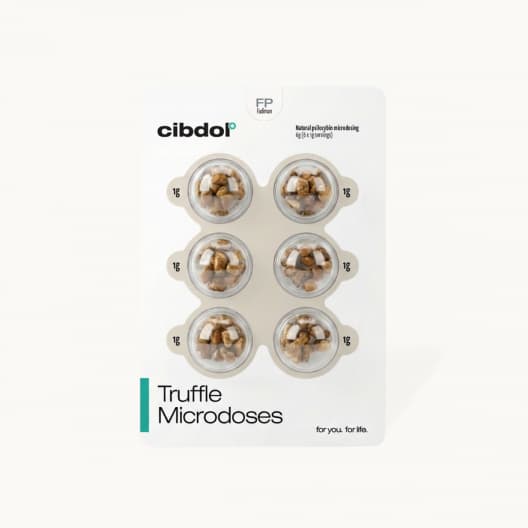

Truffle Microdoses (FP)
Cibdol Truffle Microdoses (FP), carefully prepared microdosing truffles designed for the Fadiman Protocol. Made with mild Psilocybe mexicana truffles, each pack contains 6 × 1g portions for subtle, non-psychoactive support. Ideal for those seeking inner calm through a gentle, structured microdosing approach.
- • For inner calm and emotional balance
- • Up to 1.0 mg psilocybin per dose (6×)
- • Up to 1.8 mg active tryptamines per dose
Disclosure: We may earn a commission if you purchase via these links.
What to Watch For: Upcoming Research
Studies Expected 2026–2028
| Study | Institution | Design | Expected Result Date |
|---|---|---|---|
| EU Psilocybin Consortium | Multi-site (DK, NL, PT, CZ) | RCT, microdosing arm included | 2027–2028 |
| Beckley Foundation micro-meditation | Imperial College / Beckley | Microdose + meditation vs placebo + meditation | Late 2026 |
| COMPASS Pathways Phase 3 | Global multi-site | Full-dose for depression (not microdosing) | 2026–2027 |
| Maastricht creativity follow-up | Maastricht University | Controlled creativity tasks at microdose levels | 2026 |
| Johns Hopkins microdose mood study | Johns Hopkins | 12-week microdosing vs placebo for mood | 2027 |
The Beckley Foundation study is particularly interesting for the microdosing community because it tests a combination many people already practise: microdosing + meditation. If the combination outperforms meditation + placebo, it would suggest microdosing adds something real to an established mindfulness practice.
What This Means for You
If you are currently microdosing or considering it, here is how to interpret the research landscape:
Do Not Wait for Perfect Evidence
We may not have definitive answers for another 2–3 years. If you have legal access (Netherlands), no contraindications, and realistic expectations, the current evidence suggests the risk is low for healthy adults and the potential benefit — even if partially placebo-driven — is real.
Take the Placebo Effect Seriously (But Not Dismissively)
If your microdosing practice makes you feel better, more creative, more present — and your journal data supports this — the benefit is real regardless of mechanism. The question of "is it the psilocybin or the ritual?" is less important than "is my life improving?"
Follow a Structured Protocol
The protocols that show the most consistent results — even in observational studies — involve structured scheduling, proper cycling, and deliberate self-observation. Haphazard dosing produces haphazard results.
Stay Sceptical of Dramatic Claims
If someone tells you microdosing cured their depression, fixed their ADHD, or made them a genius — smile politely and ask to see their journal data. The evidence supports subtle, modest benefits for some people. It does not support transformation narratives.
Track Your Own Data
In the absence of definitive population-level evidence, your N=1 experiment matters. Track rigorously. Compare dose days to off-days. Take breaks. Be willing to conclude it does not work for you. This is how science works at the individual level.
Frequently Asked Questions
Has microdosing been proven to work?
No — not in the way most people mean by "proven." No large, rigorous RCT has demonstrated clear benefits of microdosing over placebo for any specific condition. However, smaller studies show measurable brain changes and subtle emotional processing effects. The evidence is suggestive but inconclusive.
Why do so many people say it works if the science is uncertain?
Several factors: genuine pharmacological effects that are subtle and hard to measure; the placebo effect (which is powerful and real); selection bias (people who feel benefit continue and talk about it; those who don't, stop quietly); and the psychological power of intentional practice and ritual.
Is the Czechia legalisation relevant to microdosing?
Indirectly. Czechia's law covers full-dose psilocybin therapy under medical supervision, not self-directed microdosing. However, it creates a regulatory pathway in the EU, may increase research funding, and normalises psilocybin as a medical tool — all of which could eventually benefit the microdosing community.
What is the most important study to watch for?
The EU-funded multi-site consortium (2025–2028) is the most significant. It is the first EU-funded research with a dedicated microdosing arm, conducted across four countries with rigorous methodology. Its results could be definitive.
Should I stop microdosing because the evidence is weak?
Not necessarily. "Weak evidence" means we cannot make confident population-level claims. It does not mean microdosing does not work for you individually. If your personal data (journal, mood tracking, functional outcomes) shows consistent benefit and you experience no adverse effects, that is valuable information. Continue with informed awareness that the science is still catching up.
How does the microdosing evidence compare to nootropic evidence?
Common nootropics like caffeine, L-theanine, and bacopa monnieri have more extensive clinical evidence for specific cognitive effects. Microdosing evidence is more limited and more focused on subjective wellbeing than measurable cognitive performance. See our full comparison: Microdosing vs Nootropics.
Further Reading
- Microdosing Psilocybin: The Complete Beginner's Guide — comprehensive starting point
- Microdosing Myths Debunked — separating fact from hype
- Microdosing for ADHD — context on the 2025 ADHD trial
- Microdosing for Anxiety and Depression — the clinical landscape
- Is Microdosing Legal? — updated country-by-country guide
This article is for informational purposes only and does not constitute medical advice. Psilocybin is a controlled substance in many jurisdictions. Always check local laws and consult a healthcare professional before beginning any protocol.
Last updated: March 2026
Related topics
Where to buy
Affiliate linksMicrodosing Truffles
Cibdol microdosing truffle kits: FP (Fadiman), SP (Stamets), and OP (One-day-on/off). Lab-tested, 6×1g servings per pack. Choose by protocol and goal — inner calm, mental flexibility, or daily sharpness.
Microdosing XP Truffles
Pre-portioned psilocybin truffle strips designed specifically for microdosing — consistent dosing without a scale.
- • Pre-portioned for accurate microdosing
- • No scale needed — ready to use
- • Consistent psilocybin content per portion
Magic Truffles
Legal psilocybin truffles (sclerotia) available over the counter in the Netherlands. Multiple strains from mild to strong.
Mushroom Grow Kits
All-in-one psilocybin mushroom grow kits — just add water. Multiple strains available for home cultivation in the Netherlands.
Disclosure: We may earn a commission if you purchase via these links.
Related articles
Microdosing and PTSD: Can Sub-Perceptual Doses Help with Trauma?
Can microdosing psilocybin help with PTSD? An evidence-based look at the mechanisms, anecdotal reports, and critical safety considerations for using sub-pe
Microdosing for Focus and Productivity: What the Science Says
Microdosing for focus and productivity: what the science supports, which protocols work best for cognitive performance, and how to avoid common pitfalls.
Microdosing for ADHD: What the Research Actually Shows
Microdosing for ADHD: what the 2025 clinical trial found, why anecdotal reports differ from evidence, and a responsible framework if you want to try it alo