
Kratom for Pain Relief: What Does the Evidence Say?
Written by Smart Supplements Editorial Team
Key takeaways
- Kratom's alkaloids are partial mu-opioid receptor agonists — the same receptors targeted by morphine
- Evidence is observational only: surveys consistently report pain relief but no clinical trials exist
- Red vein strains at 5–8g powder or 85–95mg extract are most used for pain
- Daily use for chronic pain carries the highest dependency risk of any kratom pattern
- Do not combine with opioids, benzodiazepines, or alcohol
Table of contents
- The Pain Relief Claim
- How Kratom Interacts with Pain Pathways
- What the Research Actually Shows
- Kratom vs NSAIDs and Opioids
- Best Kratom for Pain Relief
- Dosage for Pain Relief
- Kratom for Specific Pain Types
- The Hard Truth: Dependency Risk for Daily Pain Users
- Harm Reduction for Pain Users
- Where to Buy
- Frequently Asked Questions
Kratom's reputation for pain relief is the reason it became popular in the West — but the evidence is more nuanced than advocates suggest, and more interesting than critics admit. This isn't a supplement with a clean clinical trial record. It's a plant with a long history of traditional use, a growing body of observational research, and real pharmacological activity on pain pathways. Here's what we actually know.
The Pain Relief Claim
Long before kratom reached European supplement shops, it was used by agricultural workers in Southeast Asia — particularly Thailand and Malaysia — to manage physical pain from manual labour and injuries. Traditional use typically involved chewing fresh leaves, with the stimulant effect at low doses helping workers through long days, and the analgesic effect at higher doses managing pain.
When kratom arrived in Western markets, pain relief quickly became one of the top reported reasons for use — particularly among people trying to reduce or replace opioid painkillers. Grundmann (2017) surveyed over 8,000 kratom users in the US and found that pain management was cited as a primary reason for use by 68% of respondents, with over 90% reporting it was effective (Drug and Alcohol Dependence, doi:10.1016/j.drugalcdep.2017.01.006).
These are self-reported outcomes, not clinical trial results. But the pharmacology behind them is real.
How Kratom Interacts with Pain Pathways
Kratom's two primary active alkaloids — mitragynine and 7-hydroxymitragynine (7-OH-mitragynine) — interact with pain pathways through multiple mechanisms.
Opioid receptor activity. Both mitragynine and 7-OH-mitragynine act as partial agonists at mu-opioid receptors (MORs) — the same receptors activated by morphine, codeine, and oxycodone. This is the central mechanism behind kratom's analgesic effect. "Partial agonist" means the activation is incomplete — kratom produces opioid-like analgesia but with a theoretical ceiling effect that limits respiratory depression compared to full opioid agonists.
7-OH-mitragynine is particularly potent at MORs — Kruegel & Grundmann (2018) note it is considerably more potent than mitragynine at opioid receptors, despite being present in much smaller quantities in raw leaf (Neuropharmacology, doi:10.1016/j.neuropharm.2017.11.026).
Norepinephrine and serotonin. At lower doses, kratom's alkaloids also modulate norepinephrine and serotonin pathways, which play a role in descending pain modulation — the brain's own pain-suppression system. This may contribute to kratom's pain-relieving effects at doses below the opioid-active range.
Dose-response relationship. The opioid-receptor-mediated analgesia becomes the dominant effect at higher doses (5–8g powder or equivalent). At lower doses, the stimulant effect predominates and analgesic activity is minimal.
| Dose range (powder) | Dominant mechanism | Primary effect |
|---|---|---|
| 1–4g | Dopamine/norepinephrine | Energy, mood, mild analgesia |
| 4–6g | Mixed | Moderate analgesia, onset of sedation |
| 6–8g+ | Mu-opioid receptor | Strong analgesia, sedation, relaxation |
What the Research Actually Shows
The honest picture: there are no randomised controlled trials (RCTs) on kratom for pain in humans. What exists is observational data — surveys, case reports, and ethnobotanical studies. That is a significant evidence gap.
What the observational data shows:
Vicknasingam et al. (2010) studied regular kratom users in Malaysia and found that the majority used kratom specifically for pain relief and to manage opioid withdrawal, with most reporting positive outcomes (Journal of Ethnopharmacology, doi:10.1016/j.jep.2010.05.003).
Singh et al. (2014) documented kratom use patterns across multiple Malaysian states, finding pain management and fatigue reduction to be the primary therapeutic drivers (International Journal of Drug Policy, doi:10.1016/j.drugpo.2013.11.002).
Swogger et al. (2015) surveyed kratom users in the US and found that self-treatment of pain was among the most common reasons for use, with a significant proportion reporting that kratom enabled them to reduce or stop prescription opioid use (Drug and Alcohol Dependence, doi:10.1016/j.drugalcdep.2015.04.024).
What it doesn't show: None of this is clinical evidence. We don't have dose-controlled trials, placebo comparisons, or long-term safety data at therapeutic doses. The evidence supports the biological plausibility of kratom's pain-relieving effect — it does not confirm that it works reliably, safely, or better than existing treatments.
Kratom vs NSAIDs and Opioids
It's worth putting kratom in context against the two most common pharmacological approaches to pain.
| NSAIDs (ibuprofen, naproxen) | Opioids (codeine, oxycodone) | Kratom | |
|---|---|---|---|
| Mechanism | COX inhibition (anti-inflammatory) | Full mu-opioid agonist | Partial mu-opioid agonist + norepinephrine |
| Addiction risk | Low | High | Moderate — lower than full opioids |
| Ceiling effect | Yes | No (dose escalation possible) | Theoretical yes — not confirmed in humans |
| Respiratory depression | No | Yes (dose-dependent) | Lower risk than full opioids |
| Evidence base | Strong (RCTs) | Strong (RCTs) | Weak (observational only) |
| Legal status (NL) | OTC | Prescription only | Legal |
Kratom sits in a complicated middle ground. It has meaningful opioid receptor activity — enough to produce genuine analgesia for some users — but the partial agonism and ceiling effect mean it doesn't carry the same risk of dose escalation-driven respiratory failure as full opioids. That said, "lower risk than full opioids" is not the same as "safe", and dependency is a real concern at sustained high doses.
Compared to NSAIDs, kratom targets different pain pathways (opioid-mediated vs. anti-inflammatory), making direct comparisons difficult. NSAIDs are more appropriate for inflammatory pain; kratom's mechanism is closer to opioid analgesia, suggesting potential relevance for nerve pain or chronic pain with a central sensitisation component.
Best Kratom for Pain Relief
Red vein strains are the consistent choice for pain use across ethnobotanical literature and user surveys. The higher 7-OH-mitragynine content in red vein varieties is the pharmacological explanation — these alkaloids are more active at opioid receptors than the stimulant alkaloids that dominate green and white vein profiles.
Red Kratom Powder (Jetpackkratom) — Zamnesia's in-house kratom brand, red vein powder for direct preparation. Powder allows dose precision not possible with pre-measured formats.
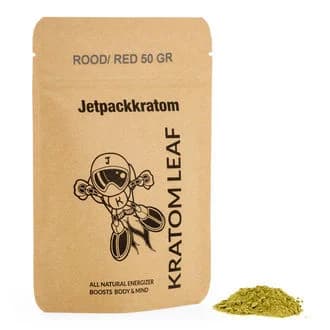
Jetpackkratom Red Kratom Powder
Red vein kratom powder from Jetpackkratom. Relaxing and meditative — ideal for evening use.
- • Red vein kratom — relaxing and meditative
- • Best for evening or wind-down use
- • Pure powder with no fillers
Disclosure: We may earn a commission if you purchase via these links.
Kratom Capsules 95mg — For experienced users wanting a consistent, pre-measured high-potency dose without the taste of powder.
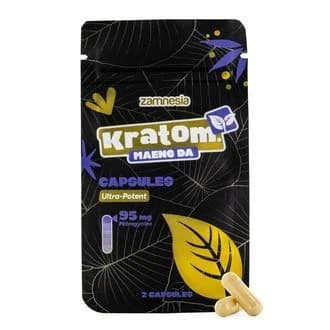
Kratom Capsules 95mg
Maeng Da kratom extract capsules — 95mg mitragynine per plant-based capsule. Maximum strength for experienced users.
- • 95mg mitragynine — maximum strength
- • Equivalent to a very large leaf powder dose
- • Designed for experienced users only
Disclosure: We may earn a commission if you purchase via these links.
Kratom Capsules 85mg — A more accessible step down from 95mg, useful for users building up to higher doses or calibrating their effective dose.
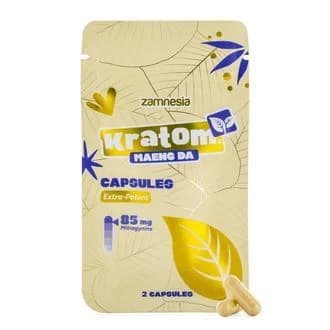
Kratom Capsules 85mg
Maeng Da kratom extract capsules — 85mg mitragynine per plant-based capsule. High potency for experienced users.
- • 85mg mitragynine — high potency extract
- • For experienced kratom users
- • Pure all-natural Maeng Da extract
Disclosure: We may earn a commission if you purchase via these links.
Gold Extract Capsules 80mg (Jetpackkratom) — A concentrated extract format with faster onset than standard capsules. For experienced kratom users who know their dose response well.
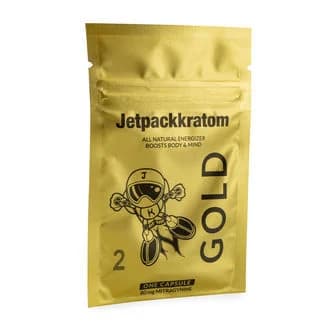
Jetpackkratom Gold Extract Capsules 80mg
Highly concentrated kratom extract capsules — 80mg mitragynine, equivalent to ~9g leaf powder. For experienced users only.
- • 80mg mitragynine — equal to ~9g leaf powder
- • Certified by Columbia & Butterworth Labs
- • For experienced users seeking maximum precision
Disclosure: We may earn a commission if you purchase via these links.
Gold Liquid Extract (Jetpackkratom) — The fastest-onset option — 80mg/ml. Onset in 20–30 minutes. Not for beginners. Start at 0.25ml.
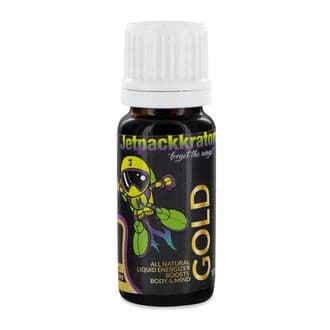
Jetpackkratom Gold Liquid Extract
Liquid kratom extract with 80mg mitragynine per ml. Fully tested, precise dosing with every use.
- • 80mg mitragynine per ml — precise dropper dosing
- • Batch-tested to exact concentration every time
- • Sublingual onset in 5–10 min, lasts up to 8h
Disclosure: We may earn a commission if you purchase via these links.
Kraatje Red Borneo — Among specialist vendors, Kraatje's Red Borneo is widely regarded as one of the most reliable red vein strains for relaxation and pain. Direct Indonesian sourcing, 9.6/10 from over 7,000 reviews.
Red Borneo Classic Kratom Powder
A classic red vein from Borneo — Kraatje's bestselling strain for relaxation, sleep support, and discomfort relief. Mature leaves, longer fermentation, and consistent alkaloid profile. Direct-sourced and batch-tested.
- • Mature Borneo leaves for deeper red vein profile
- • Direct-sourced — certified Indonesian growers
- • Every batch independently lab-tested
Disclosure: We may earn a commission if you purchase via these links.
For a full breakdown of how red, green, and white vein strains differ, see the kratom strains guide.
Dosage for Pain Relief
Pain use requires the higher end of the dosage range — the opioid-receptor-active window. This is not the same dose as kratom for energy or focus.
| Format | Starting dose (pain) | Effective range | Maximum |
|---|---|---|---|
| Leaf powder | 4–5g | 5–8g | 8g |
| Capsules (85mg) | 1 cap | 1–2 caps | 2 caps |
| Capsules (95mg) | 1 cap | 1–2 caps | 2 caps |
| Gold extract capsules (80mg) | 1 cap | 1–2 caps | 2 caps |
| Liquid extract (80mg/ml) | 0.25ml | 0.5–1ml | 2ml |
Timing: Effects arrive in 20–45 minutes for powder and capsules, 20–30 minutes for liquid extract. For acute pain, take on an empty stomach. For chronic use, with food produces more consistent absorption and is gentler on the stomach.
Frequency: For pain management, daily use is common — but this is also the highest-risk pattern for tolerance and dependency. See the full kratom dosage guide for format-by-format breakdowns.
Kratom for Specific Pain Types
Research is insufficient to make strong claims about kratom's effectiveness for specific pain types. What exists is a mix of pharmacological inference and user survey data.
| Pain type | Kratom's likely mechanism | Evidence grade | Notes |
|---|---|---|---|
| Chronic pain | MOR partial agonism | Low (surveys only) | Most commonly reported use case |
| Nerve/neuropathic pain | MOR + norepinephrine | Very low | Plausible mechanism, no clinical data |
| Inflammation-based pain | Minimal anti-inflammatory activity | Very low | NSAIDs are better-evidenced here |
| Muscle pain | MOR + muscle relaxation at higher doses | Very low | Anecdotal only |
| Opioid withdrawal pain | MOR partial agonism | Low (observational) | Used for this — not without its own risks |
The most consistent evidence is for general chronic pain and opioid withdrawal pain management — both supported by multiple user surveys. Anti-inflammatory pain (arthritis, tendinitis) is a weaker fit pharmacologically, where NSAIDs or CBD may be more appropriate options. See our guide to kratom vs CBD for a direct comparison.
The Hard Truth: Dependency Risk for Daily Pain Users
Using kratom daily for chronic pain is the highest-risk pattern of kratom use. The reasons are straightforward.
Pain drives dose escalation. When pain is the motivation, users are more likely to push doses higher in search of relief rather than moderate their intake. This accelerates tolerance far faster than recreational or low-dose use.
Tolerance means declining effect. As tolerance builds, the same dose produces less analgesia. The response is to increase the dose — which accelerates tolerance further. Users can find themselves taking 3–4× their original dose within months and achieving less pain relief than they started with.
Withdrawal amplifies pain. Physical dependency on kratom develops with regular high-dose use. Withdrawal symptoms — muscle aches, irritability, insomnia, nausea — can actually amplify the underlying pain being managed. This creates a difficult cycle to break.
Singh et al. (2016) documented significant dependence and withdrawal in regular kratom users, particularly those using it daily (PLOS ONE, doi:10.1371/journal.pone.0167265).
If you are managing chronic pain with kratom: Tell your doctor. Kratom interacts with opioid receptors and can interact with other medications. Medical supervision matters here.
Harm Reduction for Pain Users
If you are using kratom for pain, these practices significantly reduce dependency and tolerance escalation risk.
Rotate strains. Different red vein strains (Red Borneo, Red Hulu Kapuas, Red Maeng Da) have slightly different alkaloid profiles. Rotating between them slows tolerance build-up.
Schedule breaks. Even for pain use, a 2-day break per week and a full 1–2 week break every 4–6 weeks prevents the tolerance ceiling from compressing. Plan break periods carefully if managing active pain.
Use the lowest effective dose. Not the dose that removes all pain — the dose that makes pain manageable. The difference matters enormously for long-term use.
Do not combine with opioids, alcohol, or benzodiazepines. All three involve additive CNS or respiratory depression when combined with kratom.
Where to Buy
For pain use, product consistency matters more than for any other kratom application. Use a supplier you can reorder from reliably with consistent potency.
Azarius offers a standardised kratom range with clear labelling — a trusted starting point in the Netherlands.

Kratom
Kratom powders, capsules, and extracts from established suppliers. Multiple strains for different effects.
Disclosure: We may earn a commission if you purchase via these links.
EUKratom offers some of the lowest prices in Europe with direct Indonesian sourcing and lab-tested products. A good option for users who need reliable, affordable ongoing supply.
Red Maeng Da Kratom Powder
EUKratom's Red Maeng Da — a premium fermented powder from West Kalimantan, Borneo. Traditional fermentation gives it a distinct red character and clear, distinct aroma. Independently lab-tested. 4.36/5 from 119 reviews.
- • Fermented for distinct red character — Kalimantan origin
- • Fine leaf powder, 100% raw botanical — no additives
- • Independently lab-tested (microbials + heavy metals)
Disclosure: We may earn a commission if you purchase via these links.
Frequently Asked Questions
Does kratom help with pain?
User surveys consistently report pain relief as kratom's most common and effective use case. The pharmacological basis is real — mitragynine and 7-OH-mitragynine are partial mu-opioid receptor agonists. However, no clinical trials exist. Evidence is observational, and results vary significantly between individuals and products.
What kratom is best for pain relief?
Red vein strains at higher doses are most consistently reported for pain. Red Borneo, Red Maeng Da, and Red Hulu Kapuas are among the most frequently mentioned. High-potency formats (85–95mg capsules, gold extract) are preferred by experienced users for chronic pain management.
How much kratom for pain relief?
Typically 5–8g of leaf powder or 85–95mg of extract capsules — the opioid-receptor-active dose range. This is significantly higher than kratom for energy (2–4g). See the kratom dosage guide for full format-by-format reference.
Is kratom safer than opioids for pain?
Kratom has lower respiratory depression risk than full opioid agonists due to its partial agonism. However, physical dependency still develops with regular use. "Lower risk than full opioids" is not the same as "safe" — daily high-dose use carries genuine dependency risk.
Can kratom replace prescription painkillers?
Not without medical supervision. Kratom interacts with opioid receptors and can interact with other medications. Some people use it to reduce opioid dependence — but this should be done under medical guidance.
How quickly does kratom work for pain?
Powder and capsules: 20–45 minutes to onset, peak at 1–2 hours, duration 3–5 hours. Liquid extract: 20–30 minutes. Effects are faster and stronger on an empty stomach.
Last updated: March 2026 | Written by Smart Supplements Editorial Team
This article is for informational purposes only and is not intended as medical advice. Always consult a healthcare professional before starting any new supplement, especially if you take prescription medication.
New to kratom? Start with our Complete Guide to Kratom.
Related topics
Where to buy
Affiliate links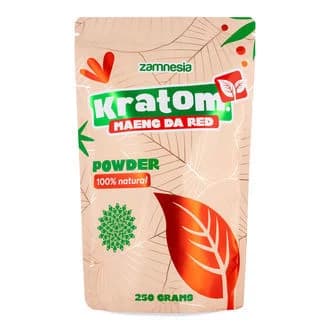
Red Maeng Da Kratom Powder
100% natural Red Maeng Da Kratom Powder from true red-veined Thai kratom leaves. Strong relaxation and sedating profile — one of the most popular red vein strains for evening use and sleep. Available in 25g, 50g, 100g and 250g. 271 reviews, 4.5/5. Zamnesia house brand.
- • Red Maeng Da — premium Thai strain
- • Strong relaxation and sedation
- • 4 sizes from 25g to 250g
Kratom
Kratom powders, capsules, and extracts from established suppliers. Multiple strains for different effects.
Kratom Extract
A concentrated kratom extract powder that delivers stronger effects in smaller quantities than regular leaf powder. Made from Maeng Da leaves, this extract offers enhanced focus, clean energy, and a sense of well-being — ideal for experienced kratom users looking for a more potent and efficient format.
- • Highly concentrated — stronger effects than standard powder
- • Maeng Da variety — known for focus, energy, and well-being
- • Versatile powder format — mix into tea, smoothie, or capsules
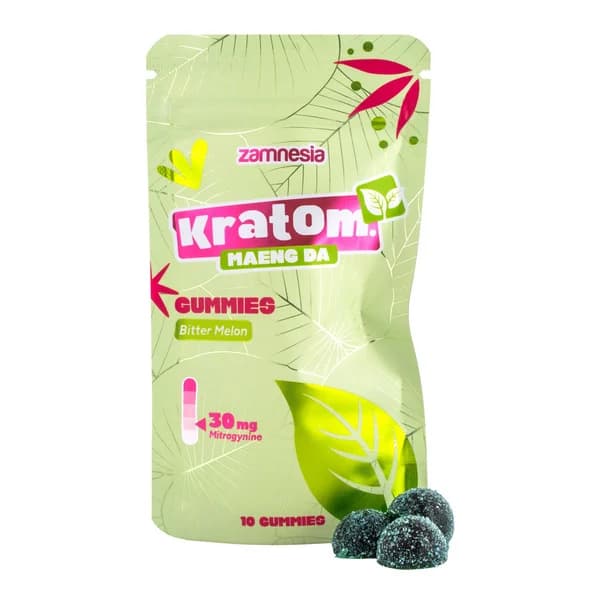
Kratom Gummies
Full-spectrum Maeng Da kratom gummies with 30mg mitragynine each. No powder, no capsules — just bold natural flavour and clean effects.
- • 30mg mitragynine per gummy
- • Full-spectrum kratom extract
- • 4 fruit flavours with 33%+ real fruit content
Disclosure: We may earn a commission if you purchase via these links.
Related articles
Red Borneo Kratom: The Go-To Strain for Sleep and Pain Relief
Red Borneo kratom: the benchmark red vein in Europe. What makes it different, dosage for sleep and relaxation, and the best European sources.
Kratom and Drug Interactions: What You Must Know Before Mixing
Kratom can interact dangerously with opioids, SSRIs, MAOIs, benzodiazepines, and other medications. This evidence-based guide covers every major kratom drug interaction, the liver enzyme mechanisms behind them, and a practical safety checklist.
Kratom Microdosing: What It Is, How to Do It, and Whether It Works
Kratom microdosing: what counts as a microdose, the 12mg tablet protocol, who it is for, and honest expectations about sub-threshold use.