CBD vs THC: Key Differences Explained
Written by Smart Supplements Editorial Team
Key takeaways
- CBD and THC share almost identical molecular formulas but one structural difference makes THC psychoactive and CBD non-intoxicating.
- CBD acts as a negative allosteric modulator of CB1 receptors — it can actually reduce THC's intoxicating and anxiety-inducing effects.
- THC is a controlled substance across the EU; CBD is unscheduled and legal to buy and use, though subject to Novel Food regulations as a supplement.
- Both cannabinoids have proven medical uses: THC for pain and chemo-induced nausea, CBD for epilepsy and anxiety — and many conditions respond best to combinations of both.
- Full-spectrum CBD contains trace THC under 0.2% — legal across the EU, sufficient for the entourage effect, and unlikely (though not guaranteed) to cause a positive drug test.
Table of contents
The Same Plant, Very Different Molecules
Both CBD and THC are cannabinoids — naturally occurring compounds in Cannabis sativa. Both interact with the endocannabinoid system (ECS), both have molecular formula C₂₁H₃₀O₂, and both have a molecular weight of 314.5 g/mol. On paper they are almost indistinguishable.
The difference is in a single structural feature: THC has a cyclic ring at its phenol group; CBD has an open resorcinol structure. This seemingly minor variation changes everything about how the two molecules interact with the brain.
THC's cyclic ring allows it to fit snugly into CB1 receptors in the brain — the receptors responsible for mood, memory, pain perception, and motor control. When THC activates CB1 directly, it triggers the cascade of effects associated with cannabis intoxication: euphoria, altered perception, appetite stimulation, and at high doses, paranoia and anxiety.
CBD lacks this ring structure. It does not directly activate CB1 receptors in the same way. Instead, it acts as a negative allosteric modulator — it binds to CB1 at a different site and changes the receptor's shape in a way that actually reduces THC's ability to activate it. This is why high-CBD cannabis strains cause less anxiety and paranoia than high-THC strains, and why CBD is being researched as a treatment for THC-induced psychosis. (Bhattacharyya et al., 2015, King's College London: CBD antagonises THC-induced paranoia and memory impairment in healthy volunteers.)
How Each Affects the Brain and Body
| Effect | CBD | THC |
|---|---|---|
| Intoxication / high | ❌ None | ✅ Strong |
| Anxiety | ↓ Reduces anxiety | ↑ Can increase anxiety (high doses) |
| Sedation | Mild (high doses) | Yes (certain strains) |
| Appetite | No significant effect | ✅ Stimulates ("the munchies") |
| Pain | Moderate evidence | Strong evidence |
| Inflammation | Strong evidence | Moderate evidence |
| Nausea | ✅ Anti-emetic | ✅ Anti-emetic (especially chemo-induced) |
| Psychosis risk | ❌ No risk — may protect against it | ⚠️ Risk at high doses / chronic use |
| Short-term memory | No impairment | ↓ Impairs short-term memory |
| Drug test result | Usually negative (risk with full-spectrum) | ✅ Positive |
CBD's effects are mediated through a broader range of receptors beyond the ECS: 5-HT1A serotonin receptors (anxiety, mood), TRPV1 (pain, inflammation), and PPARγ (metabolism, inflammation). This multi-target profile explains why CBD has potential across such a wide range of conditions — and also why its effects are subtler and less immediately noticeable than THC.
Medical Uses — Where Each Excels
THC's approved medical applications
THC's potent CB1 agonism translates into powerful therapeutic effects in specific contexts:
Nausea and vomiting: Dronabinol (synthetic THC) and nabilone have been FDA-approved since the 1980s for chemotherapy-induced nausea and vomiting in patients who do not respond to standard antiemetics.
Pain: THC is arguably the stronger analgesic of the two, particularly for neuropathic pain. Sativex — a 1:1 CBD:THC oromucosal spray — is approved in over 30 countries including Germany, Spain, and the UK for multiple sclerosis spasticity-related pain.
Appetite stimulation: Clinically useful for AIDS wasting syndrome, cancer cachexia, and severe anorexia.
CBD's approved medical applications
Epilepsy: Epidiolex (pharmaceutical-grade CBD) received FDA approval in 2018 and EMA approval in 2019 for Dravet syndrome and Lennox-Gastaut syndrome — severe, treatment-resistant childhood epilepsies. This represents the gold standard of evidence for any cannabinoid product.
Anxiety: Shannon et al. (2019) found anxiety improved in 79.2% of participants in the first month of CBD use. Multiple mechanistic studies support the anxiolytic effect through 5-HT1A receptor activity.
Psychosis: Paradoxically, CBD is being researched as a treatment for THC-induced psychosis and as an adjunct treatment for schizophrenia. McGuire et al. (2018) in the American Journal of Psychiatry found CBD improved psychotic symptoms vs placebo.
Where they work best together
The entourage effect — the synergistic interaction between cannabinoids and terpenes — means whole-plant extracts often outperform either cannabinoid in isolation. Sativex (1:1 CBD:THC) is the most clinically validated example. For pain, MS spasticity, and certain cancer symptoms, the combination consistently outperforms CBD alone.
See our full guide on the entourage effect for the science behind cannabinoid synergy.
Legal Status in Europe — The Crucial Distinction
This is where the practical difference matters most for European consumers.
THC
THC is a controlled substance in all EU member states. Possession, sale, and use are illegal in almost all contexts. The two notable recent exceptions:
- Germany (2024): Legalised personal possession of up to 25g of recreational cannabis for adults and home cultivation of up to 3 plants. Commercial cannabis clubs with up to 500 members are permitted. Medical cannabis has been available on prescription since 2017.
- Czech Republic (2024): Decriminalised possession of up to 10g; medical cannabis is legally available.
The EU hemp THC limit is 0.2% — this applies to agricultural crops, not to consumer products.
CBD
CBD is not scheduled as a controlled substance under EU law. However, it falls under the Novel Food regulation (EU 2015/2283) for ingestible products, meaning it requires pre-market authorisation before it can be legally sold as food or a food supplement.
As of early 2026, no CBD product has received full Novel Food authorisation. Several applications are pending with EFSA. In practice, CBD products are sold widely across the EU under existing-products provisions and varying national enforcement.
Country-by-country notes:
- Switzerland (not EU): Most permissive European market — up to 1% THC permitted, fully regulated
- Netherlands: Moderate tolerance; CBD widely available
- Germany: Stricter enforcement since 2024; topical products broadly fine, oral CBD in a regulatory grey zone
- France: CBD legal but hemp flower market restricted; THC must be undetectable
- Austria, Czech Republic: More liberal domestic frameworks
What about full-spectrum CBD and drug tests?
Full-spectrum CBD products contain trace THC — below 0.2% by EU agricultural standards. This is legal, and at typical supplemental doses, it is unlikely (though not impossible) to trigger a positive drug test. The risk increases with very high doses taken consistently.
For zero drug test risk, choose broad-spectrum or CBD isolate products. See our CBD drug test guide for a detailed breakdown.
Can CBD Counteract a THC High?
Yes — and this has practical implications beyond the lab.
CBD's role as a negative allosteric modulator of CB1 means it competes with THC at the receptor level, reducing binding efficiency and weakening the intoxicating effect. Morgan et al. (2010, UCL) found that participants who had smoked cannabis with CBD present showed reduced psychosis-like experiences and better memory retention than those who had smoked CBD-free cannabis.
Bhattacharyya et al. (2015) confirmed this in controlled trials: CBD pretreatment significantly reduced THC-induced paranoia, anxiety, and memory impairment.
Practically: if you are in a jurisdiction where cannabis is legal and have accidentally consumed more THC than intended, CBD may help moderate the experience. High-CBD strains like Charlotte's Web were developed in part for this reason — to provide pain and seizure relief with reduced psychoactive intensity.
Which Should You Choose?
Choose CBD if:
- You want wellness benefits (anxiety, sleep, inflammation, skin) without psychoactive effects
- You need to pass drug tests
- You live in a jurisdiction where THC remains restricted
- You are new to cannabinoids and want to start conservatively
Consider THC (where legal) if:
- You need stronger pain relief, particularly neuropathic pain
- Chemotherapy-induced nausea is a concern
- You are in a medically supervised context
- You want appetite stimulation
Consider full-spectrum CBD if:
- You want the documented benefits of CBD with the added synergy of trace cannabinoids and terpenes
- Drug testing is not a concern
- You want the most comprehensive plant-based endocannabinoid support without intoxication
Most European consumers wanting to use cannabinoids for general wellness — anxiety, sleep, inflammation — will be well served by full-spectrum or broad-spectrum CBD. It is legal, non-intoxicating, and delivers the entourage effect at trace THC levels that are neither psychoactive nor likely to cause drug test issues at normal doses.
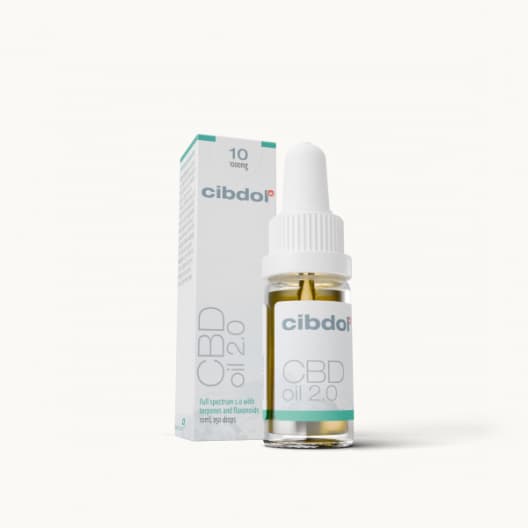

CBD Oil 2.0 10% (1000mg)
The most popular strength — 1000mg full-spectrum CBD oil for balanced, noticeable daily support without going too strong too fast.
- • 1000mg CBD per 10ml bottle
- • Full-spectrum entourage formula
- • Hemp seed oil base
Disclosure: We may earn a commission if you purchase via these links.
For a full guide to product selection and formats, see Full-Spectrum vs Broad-Spectrum vs Isolate and our CBD Dosage Guide.
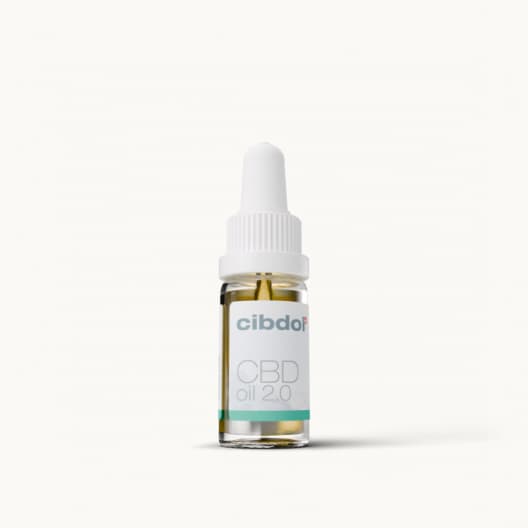
CBD oils
Premium Swiss CBD oils from Cibdol — available in multiple concentrations with full certificates of analysis.
Disclosure: We may earn a commission if you purchase via these links.
Frequently Asked Questions
Will full-spectrum CBD get me high?
No. Full-spectrum CBD contains trace THC (under 0.2%), which is not enough to produce any psychoactive effect. It is not possible to feel intoxicated from full-spectrum CBD oil taken at normal supplemental doses.
If CBD reduces THC's effects, will it reduce CBD's own effects?
No — CBD's other mechanisms (5-HT1A, TRPV1, etc.) are unaffected by its modulation of CB1 receptors. CBD does not counteract itself.
Is CBD the same as medical cannabis?
No. Medical cannabis typically involves THC-containing preparations prescribed by a doctor for specific conditions. CBD supplements are over-the-counter wellness products. Epidiolex (pharmaceutical CBD for epilepsy) is medical cannabis. Standard CBD oils are not.
Can I travel within the EU with CBD oil?
Generally yes, if the product contains less than 0.2% THC and you have proof of purchase. However, laws vary by country and enforcement can be inconsistent. Always check the destination country's regulations before travelling with CBD.
This article is for informational purposes only and is not intended as medical advice. Always consult a healthcare professional before starting any new supplement or using cannabis-based products.
Last updated: March 2026
New to CBD? Start with our Complete Beginner's Guide to CBD.
Related topics
Where to buy
Affiliate linksCBD oils
Premium Swiss CBD oils from Cibdol — available in multiple concentrations with full certificates of analysis.
CBD Gummies (25mg)
CBD Gummies — Chill Berry (25mg × 10)
- • 25mg CBD isolate per gummy — strong, precise dose
- • THC-free — CBD isolate, zero psychoactive compounds
- • Vegan formula — pectin-based, no gelatine
CBD capsules
Pre-measured CBD softgels and tablets for precise daily dosing — no taste, no measuring, just consistent CBD.
Disclosure: We may earn a commission if you purchase via these links.
Related articles
CBD vs CBN: What's the Difference?
CBD vs CBN: both cannabinoids, both used for sleep — but they work differently. The science, the evidence, and how to choose.
The Entourage Effect Explained: Why Full-Spectrum CBD Works Better
The entourage effect: why full-spectrum CBD may work better than isolate, what the research supports, and how to verify your product.
CBN: The Sleepy Cannabinoid You Haven't Heard Of
CBN is a minor cannabinoid formed as THC ages — and it's gained a reputation as a sleep aid. But does the science support the hype? Here's an honest look.