
Algae Vitamin D3: Why Source Matters More Than You Think
Written by Smart Supplements Editorial Team
Key takeaways
- Most vitamin D3 supplements are derived from lanolin (sheep's wool grease) or fish liver oil — algae D3 is the only plant-based source of true D3 (cholecalciferol).
- Vitamin D3 is fat-soluble — PLNKTN combines it with algae omega-3 oil for built-in absorption support.
- An estimated 40% of Europeans are vitamin D deficient, with rates highest in Northern Europe during winter months.
- D3 (cholecalciferol) is 87% more effective at raising blood vitamin D levels than D2 (ergocalciferol), the form found in most vegan supplements.
- Algae-derived D3 from lichen or microalgae is bioidentical to animal-sourced D3 — same molecule, different source.
Table of contents
The Vitamin D Crisis in Europe
Vitamin D deficiency is one of the most widespread nutritional deficiencies in the developed world — and Europe is particularly affected.
The Numbers
| Region | Estimated Deficiency Rate (<50 nmol/L) |
|---|---|
| Northern Europe (Scandinavia, UK, NL, DE) | 30–50% |
| Central Europe (FR, AT, CH) | 25–40% |
| Southern Europe (ES, IT, GR) | 20–30% (paradoxically high despite sun) |
| European average | ~40% |
The Northern European problem is straightforward: from October through March, UV-B radiation at latitudes above 52°N (Amsterdam: 52.4°N, London: 51.5°N, Berlin: 52.5°N) is insufficient for cutaneous vitamin D synthesis. For six months of the year, your skin physically cannot produce vitamin D3 regardless of sun exposure.
Southern Europe's surprisingly high deficiency rates are attributed to sun avoidance (cultural practices, air conditioning, indoor lifestyles) and darker skin pigmentation in some populations, which reduces UV-B conversion efficiency.
Who Is Most at Risk?
| Group | Why |
|---|---|
| Northern Europeans (Oct–Mar) | Insufficient UV-B radiation |
| Office workers | Limited sun exposure regardless of latitude |
| Elderly | Reduced skin synthesis capacity (↓ 75% by age 70) |
| Dark-skinned individuals in northern latitudes | Melanin reduces UV-B conversion |
| Vegans | Most D3 sources are animal-derived |
| Pregnant and breastfeeding women | Increased demand for fetal/infant development |
| Obese individuals | Vitamin D sequestered in adipose tissue |
Recommended Intake
| Organisation | Daily Recommendation |
|---|---|
| EFSA (EU) | 15 µg (600 IU) for adults |
| Dutch Health Council | 10 µg (400 IU) for adults; higher for risk groups |
| Endocrine Society (clinical) | 37.5–50 µg (1,500–2,000 IU) for at-risk adults |
| Upper tolerable limit (EFSA) | 100 µg (4,000 IU) |
Most experts consider EFSA's 15 µg recommendation conservative. The Endocrine Society's higher recommendation reflects clinical evidence that 25(OH)D levels above 75 nmol/L (vs EFSA's 50 nmol/L threshold) are associated with optimal health outcomes.

D3 vs D2: Why the Form Matters
This distinction is critical — especially for vegans, who have historically been limited to D2.
The Two Forms
| Property | Vitamin D3 (Cholecalciferol) | Vitamin D2 (Ergocalciferol) |
|---|---|---|
| Source | Animal (lanolin, fish) or algae/lichen | Fungi (UV-irradiated mushrooms, yeast) |
| Potency | Higher | Lower |
| Half-life in blood | ~15 days | ~7 days |
| Efficacy at raising 25(OH)D | Baseline (100%) | ~55% of D3 |
| Availability as vegan | Only from algae or lichen | Widely available |
The Landmark Meta-Analysis
Tripkovic et al. (2012) — American Journal of Clinical Nutrition
- Systematic review and meta-analysis of randomised controlled trials
- Finding: D3 was 87% more effective at raising serum 25(OH)D levels than D2
- D3 also maintained elevated levels for longer (longer half-life)
- Conclusion: D3 should be the preferred form for supplementation
This study effectively ended the debate about D2 vs D3 equivalence. They are not equivalent. D3 is substantially more effective at correcting and maintaining vitamin D status.
Why Most Vegan D Supplements Use D2
Until recently, D2 was the only plant-derived option. Ergocalciferol is produced by exposing fungi (mushrooms, yeast) to UV radiation — simple, cheap, and unambiguously vegan. But the 87% efficacy gap means vegans using D2 need significantly higher doses to achieve the same blood levels as D3 users.
The emergence of algae and lichen-derived D3 changes this equation entirely.
Where Does Vitamin D3 Come From?
Most consumers never check — and would be surprised.
Source Breakdown
| Source | Market Share (est.) | Process | Vegan |
|---|---|---|---|
| Lanolin (sheep wool grease) | ~90% | 7-dehydrocholesterol extracted from wool grease, UV-irradiated | No |
| Fish liver oil | ~5% | Extracted from cod/shark liver | No |
| Lichen | ~3% | Cholecalciferol from lichen species (Cladonia) | Yes |
| Microalgae | ~2% | Cholecalciferol from algae cultivation | Yes |
The lanolin process is industrial-scale: millions of kilograms of sheep's wool grease are processed annually to extract 7-dehydrocholesterol, which is then converted to cholecalciferol through UV irradiation. It is effective and cheap, but involves animal agriculture.
Fish liver oil is the traditional source — cod liver oil has been a D3 supplement for centuries. It provides D3 alongside omega-3 (EPA/DHA), but carries mercury and contaminant concerns.
Algae and Lichen: The Vegan D3 Sources
Certain organisms produce cholecalciferol naturally:
- Lichen (e.g., Cladonia rangiferina) — a symbiotic organism (fungus + algae). Some lichen species accumulate cholecalciferol. This is currently the most common vegan D3 source.
- Microalgae — specific strains produce cholecalciferol when cultivated under controlled conditions. This is the newer, emerging source.
Both produce genuine cholecalciferol — the exact same molecule as lanolin-derived D3. There is no structural difference. Your body cannot distinguish between D3 from sheep, fish, lichen, or algae.
Fat-Soluble Vitamins Need Fat
This is the most underappreciated factor in vitamin D supplementation — and it is where PLNKTN's formulation genuinely shines.
The Problem with Dry Tablets
Vitamin D3 is a fat-soluble compound. It dissolves in fat, not water. When you take a dry D3 tablet on an empty stomach, absorption is severely compromised because there is no fat matrix for the D3 to dissolve into.
The Evidence
| Study | Finding |
|---|---|
| Mulligan & Licata (2010) | Taking D3 with the largest meal of the day increased blood levels by 50% vs taking with a light meal |
| Dawson-Hughes et al. (2015) | Fat co-ingestion significantly increased D3 absorption; the effect was dose-dependent on fat content |
| Raimundo et al. (2011) | Oil-based D3 formulations showed 32% higher absorption than dry tablet formulations |
PLNKTN's Solution
PLNKTN's Vitamin D3 product dissolves algae-derived cholecalciferol in algae omega-3 oil. This achieves two things simultaneously:
- Built-in fat matrix — the omega-3 oil ensures D3 has the lipid environment needed for absorption, regardless of whether you take it with a meal
- Dual supplementation — you get a meaningful omega-3 dose alongside your D3
This is not a gimmick — it is pharmacologically sound formulation. Oil-based D3 delivery is the gold standard recommended by most clinical nutritionists.


Vitamine D3 (algen)
Daily vitamin D3 from algae with omega-3 for optimal absorption. Supports immune system, muscles and bones.
- • Vitamine D3 uit algen, geschikt voor vegetariërs en veganisten
- • Ondersteunt immuunsysteem, spieren en sterk botweefsel
- • Bevat ook 250 mg omega-3 DHA per capsule
Disclosure: We may earn a commission if you purchase via these links.

Who Needs Vitamin D3 Most?
Northern Europeans (October–March)
At latitudes above 37°N (which includes all of the Netherlands, UK, Germany, Scandinavia, and most of France), winter UV-B is insufficient for vitamin D synthesis. Supplementation during these months is not optional — it is a physiological necessity.
The Dutch Health Council explicitly recommends vitamin D supplementation for:
- All adults aged 0–70: 10 µg/day during October–March
- Adults aged 70+: 20 µg/day year-round
- People with dark skin at northern latitudes: 10 µg/day year-round
- People with minimal sun exposure: 10 µg/day year-round
Vegans
With algae-derived D3 now available, vegans no longer need to choose between their ethical framework and optimal D3 supplementation. Algae D3 provides the superior form (cholecalciferol) from a fully plant-based source.
Pregnant and Breastfeeding Women
Vitamin D3 is critical for fetal skeletal development, immune system maturation, and infant growth. Deficiency during pregnancy is associated with increased risk of preeclampsia, gestational diabetes, and low birth weight. Most obstetric guidelines recommend 25–50 µg (1,000–2,000 IU) daily during pregnancy.
Dosage Guide
| Purpose | Daily Dose | Blood Level Target |
|---|---|---|
| General maintenance | 10–25 µg (400–1,000 IU) | 50–75 nmol/L |
| Optimal health | 25–50 µg (1,000–2,000 IU) | 75–125 nmol/L |
| Deficiency correction | 50–100 µg (2,000–4,000 IU) | >75 nmol/L |
| Upper limit (EFSA) | 100 µg (4,000 IU) | — |
Practical Guidance
- Test first — a simple 25(OH)D blood test tells you exactly where you stand. Available through your GP or private labs.
- Target range — most experts now recommend 75–125 nmol/L (30–50 ng/mL) as the optimal range
- Take with fat — if using a dry tablet, take with your fattiest meal. If using PLNKTN's oil-based format, the fat matrix is built in.
- Consistency matters — daily dosing is more effective than weekly bolus doses for maintaining stable blood levels
- Season-adjust — consider higher doses in October–March (Northern Europe) and reducing or testing in summer
D3 + K2: The Synergy
Vitamin K2 deserves mention alongside D3 because they work synergistically in calcium metabolism.
How They Interact
- Vitamin D3 increases calcium absorption from the gut
- Vitamin K2 activates osteocalcin (directs calcium to bones) and matrix-GLA protein (prevents calcium depositing in arteries)
Without adequate K2, increased calcium absorption from D3 may deposit in soft tissues (arteries, kidneys) rather than bones. This is the theoretical rationale for combining D3 with K2 — D3 brings calcium in, K2 tells it where to go.
K2 Forms
| Form | Source | Half-Life | Preferred |
|---|---|---|---|
| MK-4 | Animal products, synthesis from K1 | ~1 hour | Less preferred (short half-life) |
| MK-7 | Natto (fermented soy), bacterial fermentation | ~72 hours | Preferred (sustained activity) |
Practical note: PLNKTN's Vitamin D3 does not include K2. If you follow the D3+K2 protocol, consider adding a separate MK-7 supplement (45–200 µg daily is the typical range).
Quality Markers for Vitamin D3 Supplements
| Marker | What to Check |
|---|---|
| Form | Cholecalciferol (D3), not ergocalciferol (D2) |
| Source declared | Algae, lichen, lanolin, or fish — should be specified |
| Delivery format | Oil-based preferred over dry tablet for absorption |
| IU/µg per serving | Clearly stated; match to your dosage target |
| Third-party tested | Verified potency and purity |
| Vegan certification | If important to you — check for algae or lichen source |
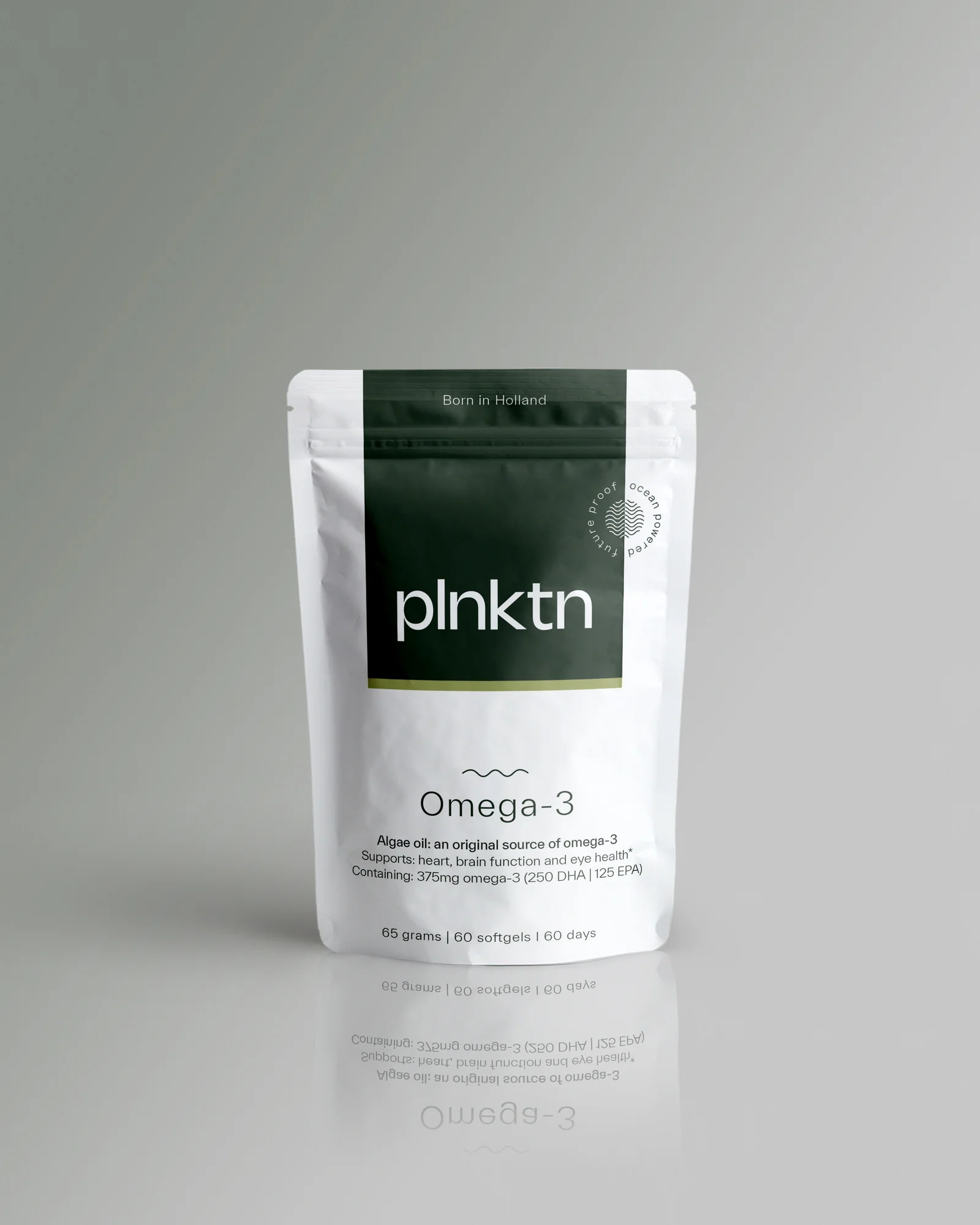
Omega-3 (algenolie)
Daily omega-3 from the original source: algae. With essential EPA and DHA for heart, brain and eyes.
- • 250 mg DHA and 125 mg EPA per capsule
- • 100% fish-free, plant-based algenolie
- • No fishy aftertaste, clean and controlled source
Disclosure: We may earn a commission if you purchase via these links.
Frequently Asked Questions
Is algae vitamin D3 effective?
Yes. Algae-derived D3 is chemically identical (bioidentical) to lanolin-derived D3 — it is the same molecule, cholecalciferol. Your body processes it identically. The source affects the production ethics and sustainability, not the biological activity.
What is the best vegan vitamin D3?
Algae-derived or lichen-derived cholecalciferol (D3) in an oil-based formulation. Avoid vegan D2 (ergocalciferol) if D3 is available — D3 is 87% more effective at raising blood levels. PLNKTN's formulation (algae D3 in algae omega-3 oil) represents the current gold standard for vegan D3 supplementation.
Do I need vitamin D in the Netherlands?
Yes, almost certainly during October–March. At 52°N latitude, UV-B radiation is insufficient for cutaneous D3 synthesis during winter. The Dutch Health Council recommends supplementation for all adults during these months. A blood test can confirm your individual status.
Can I get enough vitamin D from food?
It is very difficult. Fatty fish (salmon, mackerel) provides 10–20 µg per 100g — the best dietary source. Egg yolks provide ~1 µg per yolk. Fortified foods (milk, cereals) vary. For most people, food alone does not provide adequate vitamin D, especially during winter.
How long does it take to correct vitamin D deficiency?
With appropriate supplementation (50–100 µg/day), blood levels typically reach the target range within 8–12 weeks. Maintenance dosing (10–25 µg/day) then sustains these levels. Retest after 3 months to confirm your dose is appropriate.
Is it possible to take too much vitamin D?
Yes, but toxicity is rare at standard supplement doses. EFSA sets the upper tolerable limit at 100 µg (4,000 IU) daily. Toxicity symptoms (hypercalcaemia) typically occur only at sustained doses above 250 µg (10,000 IU) daily. Always stay within recommended ranges unless under medical supervision.

Where to Buy
Affiliate disclosure: Smart Supplements earns a commission on purchases made through partner links. This doesn't affect our editorial content or recommendations.
When choosing a vitamin D3 supplement, prioritise: cholecalciferol (not ergocalciferol), oil-based delivery, and declared source. For the complete algae supplement picture, see our algae supplements beginner's guide.
This article is for informational purposes only and is not intended as medical advice. Always consult a healthcare professional before starting any new supplement, especially if you take prescription medication.
Related topics
Where to buy
Affiliate links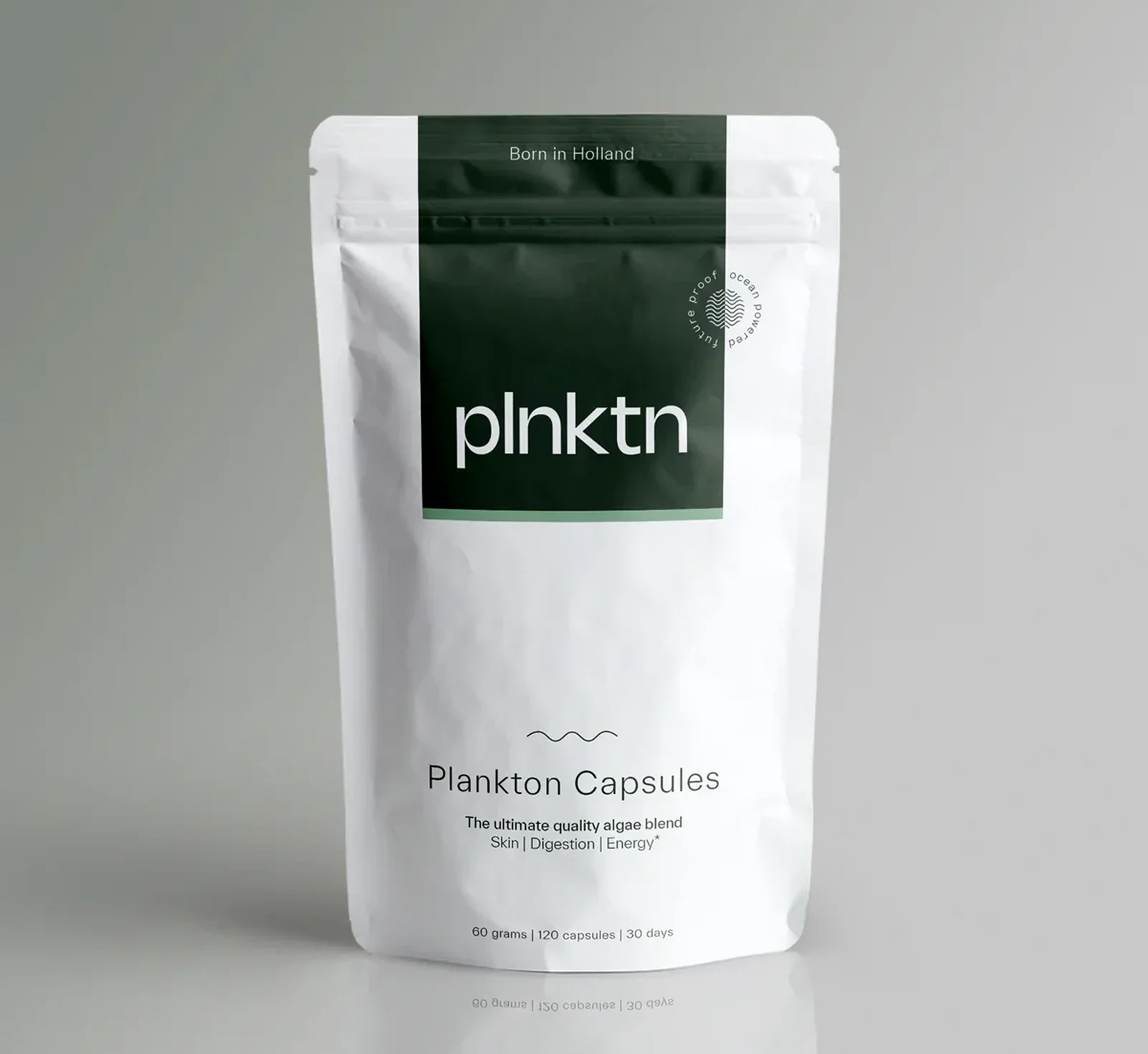
Plankton Capsules
Blend of 4 nutrient-dense micro- and macroalgae from European cultivation. Daily support for gut, skin and energy.
- • 75+ nutrients: minerals, vitamins, pigments, antioxidants and complete proteins
- • 100% natural, plant-based and responsibly grown
- • Supports digestion, energy metabolism and skin health
Omega-3 (algenolie)
Daily omega-3 from the original source: algae. With essential EPA and DHA for heart, brain and eyes.
- • 250 mg DHA and 125 mg EPA per capsule
- • 100% fish-free, plant-based algenolie
- • No fishy aftertaste, clean and controlled source
Vitamine D3 (algen)
Daily vitamin D3 from algae with omega-3 for optimal absorption. Supports immune system, muscles and bones.
- • Vitamine D3 uit algen, geschikt voor vegetariërs en veganisten
- • Ondersteunt immuunsysteem, spieren en sterk botweefsel
- • Bevat ook 250 mg omega-3 DHA per capsule

Magnesium (algen)
Magnesium supplement for an active lifestyle, derived from marine algae.
- • Supports normal muscle function and energy metabolism
- • Plant-based source, gentle on stomach
- • Designed for active lifestyles and recovery
Disclosure: We may earn a commission if you purchase via these links.
Related articles
PLNKTN Omega-3 vs Omega-3 Plus: Which Should You Choose?
PLNKTN offers three algae omega-3 products at three price points. Here is which one fits your needs — and which is the best value per mg of DHA+EPA.
Algae Omega-3 vs Fish Oil: Why Plant-Based Omega-3 Is the Future
Fish don't make omega-3 — they eat it from algae. So why are we still relying on fish as the middleman? Here is the full comparison: bioavailability, purit
PLNKTN Review: Are Algae-Based Supplements Worth It?
We tested the full PLNKTN range — Omega-3, Astaxanthin, Vitamin D3, Magnesium, Spirulina Nibs, and Plankton Capsules. Here is our honest review of this Dut