Functional mushrooms and adaptogens: what the terms mean
What do 'functional mushroom' and 'adaptogen' mean, and are they real categories?
In short
- 'Adaptogen' was coined in 1947 for substances said to raise resistance to stress. The EU herbal committee wrote in 2008 that the term is not accepted in the pharmacological and clinical terminology commonly used in the EU.
- 'Functional mushroom' is a trade phrase. The EU records and Dutch authority pages we read name a species and a part, not the phrase, and the shelf mixes mushrooms with a root, a conk and a resin.
- On a label, three details do most of the work: which part (fruiting body or mycelium, sometimes grown on grain), what an extract ratio refers to, and what a beta-glucan figure counts.
- A health claim on a pack has to fit EU claims rules; novel-food status can differ between mycelium and fruiting body, and between two cordyceps species.
- Each of the six ingredients has its own guide with the trials, funding and dated rules.
One shelf, a tub of lion's mane next to a jar of ashwagandha next to a lump of black resin, and a label that files all three under the same two words. "Functional mushroom" and "adaptogen" sound like categories. They behave more like shelf labels, and it helps to know what each one does and doesn't tell you before you compare products.
The short version: both are descriptive terms, not legal or scientific categories. "Adaptogen" was coined in 1947 for substances said to raise the body's resistance to stress, and the EU's herbal medicines committee wrote in 2008 that the term isn't accepted in the pharmacological and clinical vocabulary used in the EU. "Functional mushroom" is a trade phrase for fungi sold for more than their nutrition. What matters on a pack is the species, the part used and how it was processed, and that is what the rest of this page is about.
Where "adaptogen" comes from
The word is Soviet. The European Medicines Agency's paper on the adaptogenic concept traces it to the pharmacologist N. V. Lazarev, who in 1947 used it for a substance "claimed to increase 'non-specific' resistance to adverse influences to organism and stress". Israel Brekhman later set out the characteristics of an adaptogen: it is almost non-toxic, it tends to act non-specifically against a broad spectrum of stressors, and it tends to have a normalising effect on the body's systems (EMA/HMPC reflection paper on the adaptogenic concept, 8 May 2008).
The same paper is blunt about where that leaves the idea. It says the principle of adaptogenic action "needs further clarification", that "the term is not accepted in pharmacological and clinical terminology that is commonly used in the EU", and that the molecular targets behind one proposed mechanism were still unknown. Its example herbs were Eleutherococcus, Asian ginseng, schisandra and rhodiola, not the ones this hub covers. So an "adaptogen" label is a way of grouping herbs sold for stress and tiredness. It isn't a status the herb has earned, and it says nothing about safety. Brekhman's first criterion, "almost non-toxic", is exactly what some of today's safety questions put to the test.
What "functional mushroom" covers, and what it doesn't
The sources below that carry legal weight, the EU's novel food records and the Dutch food authority's pages, don't use the phrase. They name a species and a part of the fungus.
That matters because one shelf mixes very different things: real mushrooms (lion's mane, reishi), a fungus that grows on an insect or on grain (cordyceps), a sterile black lump that grows on birch (chaga), a plant root (ashwagandha) and a resin from mountain rock (shilajit). Only the first few are mushrooms in the everyday sense. And functional mushrooms aren't magic mushrooms; those live in the truffles and microdosing corner of the library.
Reading the label: part, ratio and beta-glucan
Three label details do most of the work.
The part. A mushroom has a fruiting body, the bit people eat, and a mycelium, the thread-like body that does the growing. Supplement makers use either, or a blend. Mycelium is often grown on grain, and then the pack contains fungus and grain together. Our lion's mane guide lays out how each trial tested one specific version, which is why "which part?" is the first question.
The extract ratio. "10:1" describes how much raw material went into an extract, not how much of anything useful comes out. Take an invented pack that says "500 mg, 10:1 extract". That could mean 500 mg of extract made from about 5 g of mushroom, or 500 mg of mushroom in total, and the pack should say which (reishi guide). A ratio alone also doesn't tell you how much of any single compound is in the capsule.
The beta-glucan figure. Beta-glucans are polysaccharides often quoted on mushroom labels. Cereal grain has beta-glucans too, with a different structure from the fungal kind, so a bare figure leaves open which was counted. A 2026 analysis of eleven mushroom products bought online, ten labelled for animals and one for people, found two profiles: high beta-glucan with low alpha-glucan, which fitted mushrooms, and lower beta-glucan with more alpha-glucan and a strong starch reaction, which fitted mycelium grown on cereal grain. Some products labelled as mushroom-derived fitted the grain profile (Atuahene and Silver, 2026, Animals). It's a small study, mostly of pet products, but it shows why the number alone is thin. Our guide to reading supplement labels covers asking what a figure measures.
The rules, in short
This hub has no separate rules article, so here are the two questions that come up, with dates.
Health claims. In the EU a claim about a relationship between a food and health has to follow Regulation (EC) No 1924/2006, which has applied since 1 July 2007. The Commission describes the aim as claims that are "clear, accurate and based on scientific evidence", and keeps a public register of authorised and non-authorised claims (European Commission, read 28 November 2026). Function claims are authorised through a list set up by Regulation (EU) No 432/2012, which the Commission says is updated as new claims are authorised (European Commission, read 28 November 2026). So "supports focus" or "calms stress" on a pack is a wording to check against that register. The word "adaptogen" doesn't authorise it.
Novel food. Whether a fungus counts as a novel food depends on the species and the part. A 2019 consultation record on the Commission's site shows Spain's food agency assessing Hericium erinaceus (lion's mane) dehydrated mycelium powder as a novel food, because use before 15 May 1997 couldn't be shown for the mycelium, while noting that the fruiting body does have a history of consumption before that date (record of 29 October 2019). That is one product in one year, not today's catalogue entry. The Dutch food authority (NVWA) calls Cordyceps militaris an unauthorised novel food in the EU, and describes Cordyceps sinensis as listed in the EU catalogue as not novel in food supplements (NVWA, read 28 November 2026). Two products that look alike on a shelf can sit on opposite sides of that line. Rules differ by country and change, so each ingredient guide dates its own.
The six, one paragraph each
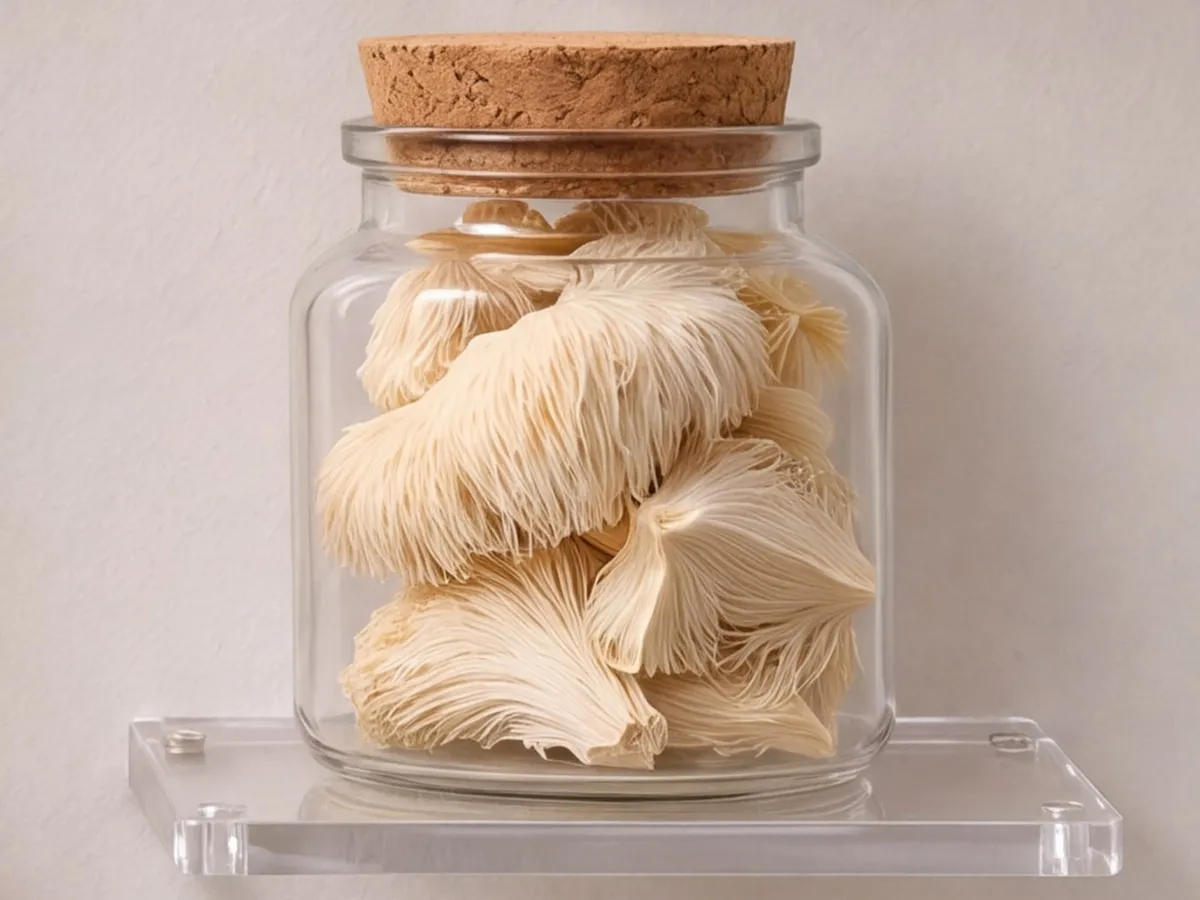
Lion's mane (Hericium erinaceus) is a toothed fungus that grows on hardwood and a culinary mushroom in East Asia. Its focus reputation starts in cell and animal work; the human trials are small, and the two recent ones in healthy young adults found a result on one or two tests. The lion's mane guide has the trial table, who funded each and the label questions.
Reishi (Ganoderma lucidum, also lingzhi) is a long-used medicinal fungus whose calming reputation rests mainly on tradition and animal studies, and even its Latin name is less settled than shelf labels suggest. Case reports of liver injury are the reason the reishi guide has a safety section.
Ashwagandha (Withania somnifera) is a nightshade-family plant, not a mushroom, and product pages nearly always call it an adaptogen. Small trials of a few branded root extracts report modest changes in self-rated stress and sleep, and case reports describe rare liver injury. Denmark doesn't allow it as food and the Dutch position was still being worked out when the guide last checked it on 8 October 2026, so the ashwagandha guide has the dated picture.
Cordyceps is a name that covers wild Ophiocordyceps sinensis, cultured mycelium such as Cs-4 and Cordyceps militaris, and trial results for one don't describe the others. The endurance evidence is a handful of small trials with mixed results. The cordyceps guide sorts out which version each trial used.
Chaga (Inonotus obliquus) is a sterile black conk that grows on birch, not a typical mushroom with a cap and stem. The research is mainly laboratory and animal work, with no randomised human trial found, and case reports link long-term chaga powder to oxalate kidney damage. The chaga guide explains what is in the extract.
Shilajit is a humic-rich exudate collected from mountain rock, so it joins this shelf by marketing rather than biology. Its origin and composition are still debated and vary by region, and we found no human trial that tested whether it changes lifespan or the biology of ageing. The shilajit guide covers the small trials and what a label can and can't tell you.
Where to go next
Pick the ingredient that brought you here and read its guide; each one says what was actually tested and who paid for it. If a pack still leaves questions, the label-reading guide and the note on supplements and medicines are the two to keep open next to it.
This article is for informational purposes only and is not intended as medical advice. Always consult a healthcare professional before starting any new supplement, especially if you take prescription medication.
Sources
The 6 outside pages this article links to, in the order it first cites them.
- EMA/HMPC reflection paper on the adaptogenic concept, 8 May 2008 ema.europa.eu
- Atuahene and Silver, 2026, Animals doi.org
- European Commission, read 28 November 2026 food.ec.europa.eu
- European Commission, read 28 November 2026 food.ec.europa.eu
- record of 29 October 2019 food.ec.europa.eu
- NVWA, read 28 November 2026 nvwa.nl
More on mushrooms & adaptogens
- Lion's mane: the mushroom behind the focus claimsWhere does the focus reputation come from, and which part of the mushroom does a trial actually apply to?
- Ashwagandha: the plant behind the stress and sleep claimsWhat did trials of branded root extracts test, and what is an adaptogen?
- Lion's mane, reishi, cordyceps, chaga: functional mushrooms comparedHow do lion's mane, reishi, cordyceps, chaga, ashwagandha and shilajit compare, and how do I read a label across them?
- Reishi and sleep: what the research showsHow does reishi's calming reputation compare with what has been measured in people?