
How to Prepare for Your First Psychedelic Trip: A Practical Guide
Written by Smart Supplements Editorial Team
Key takeaways
- Set (mindset) and setting (environment) are the two most important factors for trip quality
- A sober trip sitter is strongly recommended for all first-time psychedelic experiences
- Start with a moderate dose of a mild strain — you can always take more next time
- The come-up phase (30-60 minutes) is often the most anxious; surrendering to the experience is key
- Integration after the trip is where lasting benefit is built — journal, rest, and make small changes
- People with psychosis history, bipolar disorder, or on SSRIs should not take psychedelics
Table of contents
- Before We Begin: The Legal Reality
- Understanding Set and Setting
- The Trip Sitter: Your Safety Net
- Choosing Your Substance and Dose
- The Day Before: Preparation Checklist
- During the Experience: A Timeline
- Navigating Difficult Moments
- After the Experience: Integration
- Who Should Not Take Psychedelics
- Frequently Asked Questions
- Further Reading
Your first psychedelic experience will be unlike anything you have done before — and that is precisely why preparation matters. Not the kind of preparation that involves memorising facts or watching YouTube videos until 3am. The kind that means creating the conditions where a profound, unfamiliar experience can unfold safely. Whether you are planning to take magic truffles in the Netherlands, attending a psilocybin retreat, or have another legal setting available to you, this guide covers everything practical.
Before We Begin: The Legal Reality
Full-dose psychedelic experiences are legal in very few places. In the Netherlands, psilocybin truffles can be purchased legally at smartshops and consumed without legal risk. Some other jurisdictions offer decriminalised or clinical access. This guide assumes legal access — we do not encourage breaking the law.
If your current options are limited to microdosing (sub-perceptual doses), that is a valid and valuable practice in its own right. Many people microdose for months before deciding whether to explore a full-dose experience.
Understanding Set and Setting
The concept of "set and setting" was formalised by psychedelic researcher Timothy Leary in the 1960s, but the wisdom is much older. Indigenous traditions have always emphasised the importance of mental preparation and sacred space for psychedelic ceremonies.
Set: Your Mindset
Your psychological state going into a psychedelic experience significantly influences the experience itself. Psilocybin amplifies what is already present — if you are anxious, it can amplify anxiety. If you are curious and open, it can amplify those qualities.
Preparing your set:
- Intention: What do you hope to explore, understand, or experience? This is not a rigid goal — it is a direction. "I want to understand my relationship with my mother" is an intention. "I want to have a mystical experience" is an expectation (and expectations can backfire)
- Emotional baseline: Are you in a relatively stable emotional place? Acute stress, recent trauma, or active crisis are reasons to postpone. Psychedelics are not an escape hatch — they tend to bring you closer to difficult material, not further away
- Openness: The willingness to surrender control is perhaps the most important quality. Psychedelic experiences involve ego dissolution, unfamiliar perceptions, and emotional intensity. Resisting these produces difficult experiences; accepting them produces transformative ones
- Information: Know what you are taking, how it works, what effects to expect, and how long they last. Uncertainty about basic facts creates unnecessary anxiety
Setting: Your Environment
Where you take a psychedelic matters enormously. The same dose in a crowded festival, a sterile clinic, and a cosy living room will produce three radically different experiences.
Ideal first-trip setting:
- Indoors, comfortable, familiar: Your own home or a trusted friend's home. Familiar surroundings reduce anxiety and provide psychological safety
- Clean and tidy: A cluttered or dirty space can feel oppressive during a psychedelic experience. Tidy up beforehand
- Temperature controlled: You may feel warm or cold unpredictably. Have blankets available and the ability to adjust heating
- Nature-adjacent: Ideally with access to a garden, balcony, or park. Nature is profoundly beautiful during psychedelic experiences, and having the option to step outside is valuable
- Private: No unexpected visitors, delivery people, or phone calls from work. Turn off notifications. Tell people you are unavailable
- Comfortable surfaces: Couch, cushions, blankets, a bed to lie on if needed
Avoid for your first time:
- Public spaces, festivals, or parties
- Unfamiliar locations
- Anywhere you might encounter authority figures
- Water bodies (swimming pools, lakes, the sea) — impaired coordination + water = danger
- Driving (obviously, but it bears stating)
The Trip Sitter: Your Safety Net
A trip sitter is a sober, trusted person who is present during your experience. For your first time, a sitter is not optional — it is essential.
What a Good Trip Sitter Does
- Stays sober — this is non-negotiable. A sitter who takes psychedelics too cannot help you if needed
- Provides calm presence — simply being there is reassuring, even if you do not interact much
- Does not direct the experience — they follow your lead, not the other way around
- Handles logistics — water, blankets, music changes, dealing with any real-world intrusions
- Offers reassurance during difficult moments — "You took a substance. It is temporary. You are safe. I am here"
- Does not panic — a sitter who gets scared will make everything worse. Choose someone emotionally resilient
What a Good Trip Sitter Does NOT Do
- Take psychedelics with you
- Try to "guide" or direct your experience
- Ask lots of questions ("What are you seeing? What are you feeling?")
- Film or photograph you
- Invite other people over
- Leave you alone for extended periods
Who to Choose
The ideal sitter is someone who:
- You trust deeply
- Has experience with psychedelics (ideally, but not required)
- Is emotionally stable and calm under pressure
- Will not judge you for anything you say, do, or feel
- Can commit to being present for 6–8 hours
Choosing Your Substance and Dose
Psilocybin Truffles (Netherlands)
For a first experience, we recommend:
Strain: Mexicana or Tampanensis — both are mild, forgiving strains with a gentle character. See our complete truffle strain guide for details.
Dose for a first experience:
| Level | Fresh Truffle Weight | What to Expect |
|---|---|---|
| Light | 5–7g | Mood lift, enhanced senses, mild body sensation |
| Medium | 8–12g | Clear psychedelic effects, visual changes, emotional depth |
| Strong | 13–15g | Full experience, significant visual and cognitive changes |
Our recommendation: Start at 7–10g of Mexicana for your first time. This produces a genuine psychedelic experience while remaining manageable. You can always take more next time — you cannot take less once consumed.
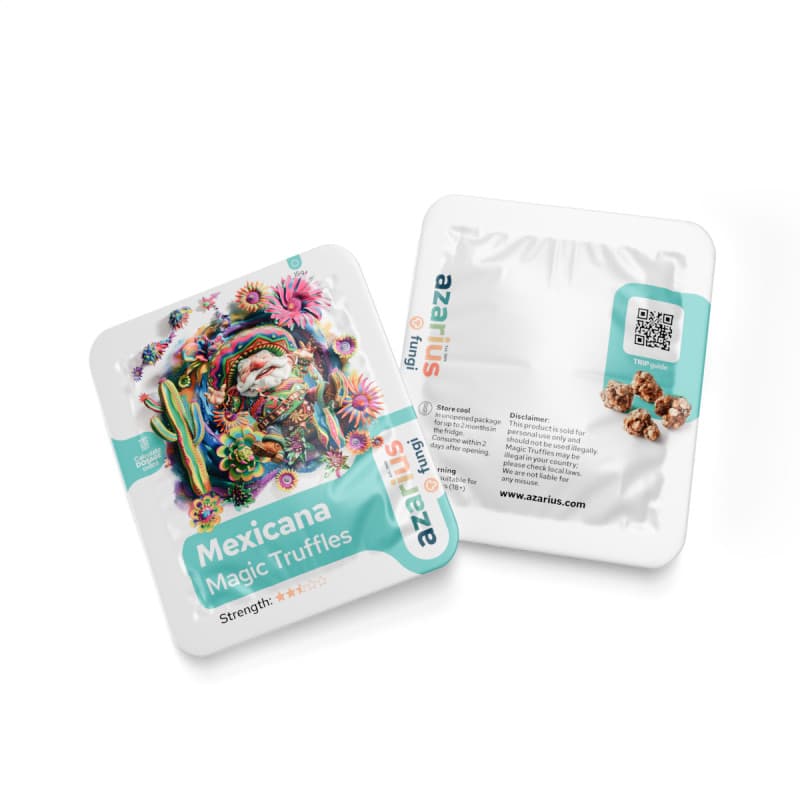

Magic Truffles Mexicana
The original magic truffle — Psilocybe mexicana was the first sclerotia species studied by Albert Hofmann. Mexicana offers warm euphoria, creative thinking, and light visuals, and remains one of the most popular beginner strains in the world.
- • The original Hofmann strain — a true classic
- • Warm euphoria, creativity boost, and mild visuals
- • 15g pack — legally sold in Dutch smartshops
Disclosure: We may earn a commission if you purchase via these links.
Consumption Methods
- Eat them directly: The simplest method. Chew thoroughly. The taste is earthy and unpleasant — not terrible, but not enjoyable
- Truffle tea: Chop or grind the truffles, steep in hot (not boiling) water for 15 minutes, add honey or ginger. Faster onset, possibly reduced nausea
- With chocolate: Eat a small piece of dark chocolate immediately after consuming truffles. The chocolate masks the taste and cacao contains synergistic compounds
- Lemon tek: Soak ground truffles in lemon juice for 20 minutes before consuming. The acid pre-converts some psilocybin to psilocin, potentially producing a faster onset and slightly more intense but shorter experience. NOT recommended for first-timers
What to Eat Before
- Light meal 2–3 hours before dosing: Something gentle — fruit, toast, light soup. Not heavy, greasy, or large
- Empty stomach intensifies effects — which is why many retreats recommend fasting. For your first time, a light meal is preferable to reduce nausea and moderate the come-up
- Stay hydrated — water, herbal tea. Avoid alcohol for 24+ hours before
The Day Before: Preparation Checklist
Physical:
- Get a good night's sleep (7–8 hours minimum)
- No alcohol for 24+ hours
- Reduce caffeine (none on the day if possible)
- Prepare your space (clean, comfortable, stocked with water and snacks)
- Have your truffles weighed and ready
Practical:
- Trip sitter confirmed and briefed
- Phone on silent or off, notifications disabled
- No commitments for 24 hours (trip day + recovery day)
- Comfortable clothes laid out
- Music playlist prepared (see below)
- Journal or notebook available
- Blankets, pillows, eye mask accessible
Emotional:
- Write down your intention (1–2 sentences)
- Acknowledge any anxiety — it is normal and does not predict a bad experience
- Remind yourself: this is temporary, this is safe, I have support
Safety:
- Trip stopper available (see below)
- Trip sitter has your emergency contact information
- No one in the house who might create unexpected stress
- No access needed to cars, sharp objects, or anything that requires coordination
Trip Stopper
The Azarius Trip Stopper — an essential harm reduction product for any psychedelic experience. Contains maltodextrin and valerian to help calm an overwhelming trip. Keep one accessible any time you use psychedelics.
- • Essential harm reduction product for psychedelic use
- • Contains maltodextrin and valerian to calm overwhelming trips
- • Affordable — always keep one on hand
Disclosure: We may earn a commission if you purchase via these links.
During the Experience: A Timeline
Everyone's experience is different, but here is a general timeline for psilocybin truffles:
0–30 minutes: Onset
Take your truffles in a comfortable position. You may feel nothing for 20–45 minutes. Use this time to settle in — put on gentle music, sit or lie comfortably, close your eyes.
Early signs: slight restlessness, mild stomach awareness, yawning (surprisingly common), subtle shift in how light looks.
30–60 minutes: Come-Up
Effects build steadily. You may notice: colours becoming brighter, surfaces appearing to "breathe" or shift, emotional sensitivity increasing, physical sensations (warmth, tingling, heaviness or lightness).
This is often the most anxious phase. The unfamiliarity of losing normal control can trigger resistance. If anxiety arises: breathe slowly, remind yourself this is the substance working, and let go. Fighting the come-up is the most common source of difficult experiences.
1–3 hours: Peak
The most intense phase. Depending on dose, you may experience:
- Visual effects: Geometric patterns, colour enhancement, objects seeming to shift or transform, closed-eye imagery
- Emotional intensity: Deep feelings of love, grief, awe, fear, joy — sometimes cycling rapidly
- Thought changes: Philosophical insights, unusual connections between ideas, sense of profound meaning
- Ego dissolution: At higher doses, the boundary between "you" and "everything else" may soften or dissolve
- Physical effects: Waves of energy, desire to move or be very still, altered body awareness
3–5 hours: Plateau and Descent
Intensity gradually decreases. This phase often feels warmer, more grounded, more reflective. Many people have their most meaningful insights during the descent rather than the peak. Conversation with your sitter becomes easier. Appetite may return.
5–7 hours: Return
Effects diminish to subtle mood and perceptual shifts. You may feel tired, emotionally open, and reflective. Some people experience euphoria and profound gratitude. Others feel contemplative or quietly emotional. Sleep may come easily, or you may feel too stimulated to sleep immediately.
Navigating Difficult Moments
Challenging experiences during a psychedelic trip are not "bad trips." They are often the most therapeutically valuable moments — confrontations with fears, grief, shadow material, or uncomfortable truths. But they feel terrible in the moment.
If Anxiety or Fear Arises
- Breathe: Slow, deep breaths. In for 4, hold for 4, out for 6. Focus entirely on the breath
- Surrender: Resistance creates suffering. Say to yourself: "I accept what is happening. I am safe. This is temporary"
- Change position: Sit up if lying down. Lie down if sitting. Physical change can shift mental state
- Change music: Switch to something calming, or remove music entirely
- Go outside: If you have safe outdoor access, fresh air and nature can dramatically shift the experience
- Talk to your sitter: Say "I'm having a hard time." Let them reassure you
- Use the trip stopper: If the experience becomes genuinely unbearable, a trip stopper (containing valerian or dextrose) can take the edge off
The Mantra
Every difficult moment during a psychedelic experience is temporary. The substance will wear off. Your normal consciousness will return. You will be okay. Reminding yourself of this — or having your sitter remind you — is often all that is needed to move through challenging terrain.
After the Experience: Integration
The trip ends. The integration begins. This is where lasting benefit is built — or lost.
The First 24 Hours
- Rest. Do not rush back to normal life. Take the next day off if possible
- Journal. Write down everything you remember — visions, emotions, insights, challenges. Memory of psychedelic experiences fades quickly
- Eat nourishing food. Your body has been through something. Treat it well
- Avoid screens and social media. The contrast between the depth of your experience and the superficiality of Instagram can be jarring
- Spend time in nature. Walk, sit outside, breathe
- Talk to your sitter about what happened. Their perspective from outside the experience is valuable
The Following Weeks
- Continue journaling. New insights often emerge days or weeks later as your brain processes the experience
- Identify action items. Did you have insights about relationships, work, health, or habits? Make small, concrete changes — not dramatic life overhauls
- Consider therapy. A psychedelic-informed therapist can help you integrate difficult material
- Be patient. Integration is a process, not a moment. The experience may continue to reveal its meaning over months
- Consider microdosing as a way to sustain the openness and insights from your experience
Microdosing XP Truffles
Pre-portioned psilocybin truffle strips designed specifically for microdosing — consistent dosing without a scale.
- • Pre-portioned for accurate microdosing
- • No scale needed — ready to use
- • Consistent psilocybin content per portion
Disclosure: We may earn a commission if you purchase via these links.
Who Should Not Take Psychedelics
This section is critical. Psilocybin is not for everyone, and the contraindications are serious:
- Personal or family history of psychosis or schizophrenia — psilocybin can trigger psychotic episodes
- Bipolar disorder — risk of manic episodes
- Currently taking SSRIs, lithium, or MAOIs — dangerous interactions (see side effects guide)
- Pregnancy or breastfeeding — no safety data
- Severe cardiovascular conditions — psilocybin mildly increases heart rate and blood pressure
- Under 18 — developing brains should not be exposed to psychedelics
- Acute psychological crisis — active suicidality, severe anxiety disorders, recent trauma
- Feeling pressured — if you are not genuinely willing and ready, do not proceed
If any of these apply, stop here. No psychedelic experience is worth the risk.
Frequently Asked Questions
How do I know I am ready for my first trip?
You are probably ready if: you have researched the substance, you have realistic expectations, you have a safe setting and a sitter arranged, you are in a stable emotional place, and you genuinely want to do it (not being pressured). You are probably not ready if: you are hoping to escape something, you are in acute crisis, or you feel significant fear that does not diminish with preparation.
What if I do not feel anything?
Some people have naturally higher thresholds. If you feel nothing after 90 minutes, the dose may have been too low. Do NOT take more during the same session — the effects may still be building slowly. Wait until your next opportunity to try a slightly higher dose. Individual variation is enormous.
Can I trip alone for my first time?
We strongly recommend against it. Even experienced psychonauts value having a sitter for high doses. For your first time, the unfamiliarity of the experience means you cannot predict how you will respond. A sitter provides safety, reassurance, and practical help.
How long until I feel normal again?
Most people feel back to baseline within 6–8 hours. You may feel emotionally tender or reflective for a day or two. By 48 hours, you should feel entirely normal. If unusual psychological symptoms persist beyond 72 hours, consult a healthcare professional.
Should I microdose before my first full trip?
It is optional but can be helpful. A few weeks of microdosing before a full experience helps you understand how your body responds to psilocybin at very low doses, reducing the novelty factor. It is like dipping your toe in before swimming.
What music should I listen to?
Music profoundly shapes the psychedelic experience. For a first time, prepare a playlist of instrumental, calming music — ambient, classical, or specifically designed psychedelic therapy playlists (Johns Hopkins and Imperial College have published theirs). Avoid music with heavy lyrics, aggressive energy, or strong personal associations that might steer your emotions.
Further Reading
- Microdosing Psilocybin: The Complete Beginner's Guide — if you want to start smaller
- Magic Truffle Strain Guide — choosing the right strain
- Psilocybin Retreats in the Netherlands — supervised options
- Microdosing Side Effects — safety information relevant to full doses too
- Microdosing and Meditation — integration practice
This article is for informational purposes only. Psilocybin is a controlled substance in most countries. Psilocybin truffles are legal to purchase and consume in the Netherlands. Always check local laws and prioritise your physical and psychological safety above all else.
Last updated: March 2026
Related topics
Where to buy
Affiliate links
Microdosing Truffles
Cibdol microdosing truffle kits: FP (Fadiman), SP (Stamets), and OP (One-day-on/off). Lab-tested, 6×1g servings per pack. Choose by protocol and goal — inner calm, mental flexibility, or daily sharpness.
Microdosing XP Truffles
Pre-portioned psilocybin truffle strips designed specifically for microdosing — consistent dosing without a scale.
- • Pre-portioned for accurate microdosing
- • No scale needed — ready to use
- • Consistent psilocybin content per portion
Magic Truffles
Legal psilocybin truffles (sclerotia) available over the counter in the Netherlands. Multiple strains from mild to strong.
Mushroom Grow Kits
All-in-one psilocybin mushroom grow kits — just add water. Multiple strains available for home cultivation in the Netherlands.
Disclosure: We may earn a commission if you purchase via these links.
Related articles
Psilocybin Retreats in the Netherlands: What to Know Before You Go
A comprehensive guide to legal psilocybin truffle retreats in the Netherlands — covering types, costs, quality indicators, what to expect, and how to choos
How to Start Microdosing: Setting, Dose, and What to Expect
How to start microdosing step by step: choose your substance, set your dose, pick a protocol, and know what to expect in your first month. Practical beginn
Is Microdosing Legal? A Country-by-Country Guide for Europe
Is microdosing legal? Country-by-country guide to psilocybin and LSD microdosing laws in Europe — Netherlands, Czechia, Germany, UK, and more. Updated for 2026.