Microdosing and Meditation: Combining Psychedelics with Mindfulness
Written by Smart Supplements Editorial Team
Key takeaways
- Microdosing and meditation both modulate the default mode network
- The Beckley Foundation is formally studying the combination
- Dose-day meditation is consistently reported as deeper and more vivid
- Mindfulness and loving-kindness meditation are most synergistic
- Daily practice on both dose and off-days is essential
- Emotional amplification is the main risk — have support available
Table of contents
Microdosing and meditation share a common aim: making the invisible workings of your mind more visible. Combining them is one of the most consistently praised practices among experienced microdosers — and the Beckley Foundation is now studying it formally. Here's what we know.
Why the Combination Makes Sense
Meditation and psilocybin share a remarkable convergence at the neurological level. Both modulate the default mode network (DMN) — the brain network responsible for self-referential thinking, rumination, the inner monologue, and the persistent sense of a separate "self."
What meditation does to the DMN: Long-term meditation practice gradually reduces DMN activity during rest. Experienced meditators show less default-mode chatter, less rumination, and greater ability to observe thoughts without being captured by them. This takes months to years of consistent practice.
What psilocybin does to the DMN: Even at sub-perceptual doses, psilocybin appears to modestly reduce the rigidity of DMN activity. At full doses, this manifests as ego dissolution — the temporary loss of the sense of a separate self. At microdose levels, the effect is far subtler: a slight loosening of habitual thought patterns, a mild increase in present-moment awareness.
The hypothesis — supported by Dr. Roland Griffiths and the Beckley Foundation — is that microdosing can accelerate the benefits of meditation by creating a neurological window where the DMN is more flexible, making it easier to access the observing awareness that meditation cultivates.
As Griffiths put it: "Meditation and psychedelics can be very complementary. Meditation can help people develop a greater capacity for introspection and self-awareness."
What the Research Shows
The Beckley Foundation Micro-Meditation Study
The Beckley Foundation — one of the world's leading psychedelic research organisations — launched a remote observational study specifically examining the effects of regular microdosing on meditation practice. The study tracks experienced meditators who add microdosing to their existing practice, measuring:
- Depth and quality of meditation sessions
- Mindfulness scores (using validated psychological instruments)
- Emotional regulation
- Default mode network flexibility (via functional neuroimaging in a subset)
Results are pending, but the study design itself signals that the scientific community considers this combination worth rigorous investigation.
Supporting Evidence
Psychedelic Microdosing, Mindfulness, and Anxiety (2022) — a cross-sectional study published in the Journal of Psychoactive Drugs — found that mindfulness mediated the relationship between microdosing and reduced anxiety. In other words: microdosers who also practiced mindfulness showed greater anxiety reduction than microdosers who didn't.
Smigielski et al. (2019) — while studying full-dose psilocybin, found that combining psilocybin with meditation amplified both the acute mystical experience and the long-term positive outcomes (increased openness, life satisfaction). This study used full doses, but the principle — that psilocybin and meditation are synergistic — plausibly extends to the micro level.
Neuroimaging research consistently shows that both meditation and psilocybin reduce DMN connectivity and increase communication between brain networks that don't usually talk to each other (particularly the frontoparietal control network and the salience network). The overlap is striking.
How to Combine Microdosing and Meditation
The basic framework
Dose-day meditation — meditate 60–90 minutes after taking your microdose, during the window when the subtle neurochemical effects are most active. Even a 10–15 minute session can feel qualitatively different from baseline meditation.
Off-day meditation — maintain your normal practice. Off-days provide a comparison baseline and may benefit from the residual neuroplasticity window (Day 2 in the Fadiman protocol is often reported as the integration day).
Protocol recommendations
For beginners to both: Start the Fadiman microdosing protocol and a simple 10-minute daily meditation separately for 2 weeks before combining. This lets you establish a baseline for each practice independently.
For experienced meditators adding microdosing: You can start combining immediately, but begin at the lower end of the microdose range (0.5–0.7g truffle) to see how the substance interacts with your existing practice.
For experienced microdosers adding meditation: Start with guided meditations (apps like Waking Up, Insight Timer, or Headspace) to build the habit. Unguided sitting practice is more powerful but harder to sustain for beginners.
What to expect on dose-day meditation
Practitioners consistently report:
- Easier access to stillness — the mind settles faster, with less effortful "chasing" of the wandering mind
- Enhanced body awareness — physical sensations during body scan or breath awareness are more vivid
- Emotional material surfacing — memories, feelings, and insights may arise more readily than in baseline meditation
- Altered sense of time — 15 minutes may feel like 30 (in a positive way)
- Greater equanimity — the ability to observe thoughts and emotions without being pulled into them feels more accessible
What to watch for
- Emotional intensity. If meditation already surfaces difficult emotions (grief, anger, trauma), microdosing will amplify this. Ensure you have support — a therapist, a trusted friend, or a meditation teacher.
- Over-identification. Some people find that dose-day meditation produces insights that feel profound in the moment but don't hold up to later reflection. Journal these insights but evaluate them on an off-day.
- Substitution. Meditation's long-term value comes from consistent daily practice. Don't fall into the trap of only meditating on dose days because it "feels better." The off-day practice is where lasting neural changes consolidate.

Microdosing Truffles Spiritual
Azarius Spiritual microdosing truffles — designed for mindfulness, meditation and spiritual insight. Sub-perceptual psilocybin dose for introspective practices, journalling and inner exploration.
- • Target: mindfulness, meditation and spiritual awareness
- • Sub-perceptual psilocybin — supports reflection without a trip
- • Ideal for journalling or contemplative practice
Disclosure: We may earn a commission if you purchase via these links.
Which Meditation Styles Work Best
Not all meditation techniques interact with microdosing equally. Based on practitioner reports and the underlying neuroscience:
Highly synergistic
Mindfulness meditation (Vipassana) �� observing sensations, thoughts, and emotions without judgment. The increased present-moment awareness from microdosing directly supports the core skill Vipassana develops. This is the most commonly combined practice.
Loving-kindness meditation (Metta) — generating feelings of compassion toward self and others. Psilocybin's pro-social and empathy-enhancing effects amplify the emotional dimension of metta practice. Several practitioners describe dose-day metta sessions as "the most genuine compassion I've felt."
Body scan meditation — systematic awareness of physical sensations. The heightened interoception (body awareness) reported during microdosing makes body scans more vivid and detailed.
Moderately synergistic
Breath-focused meditation (Anapanasati) — attention on the breath as an anchor. Works well, though the mild cognitive flexibility from microdosing can make strict breath focus slightly harder for some people.
Walking meditation — particularly effective on dose days when combined with time in nature. The sensory enhancement of outdoor walking meditation is one of the most commonly praised combinations.
Less predictable
Concentration practices (Samatha/Jhana) — these require sustained single-pointed focus. The mild cognitive loosening from microdosing may actually make deep concentration harder, not easier. Some practitioners report benefit; others report distraction. Experiment carefully.
Transcendental Meditation (mantra-based) — limited reports. The repetitive mantra structure may or may not interact meaningfully with psilocybin's effects.
A Weekly Practice Schedule
Here's a template combining the Fadiman protocol with daily meditation:
| Day | Dose? | Meditation | Duration | Focus |
|---|---|---|---|---|
| Monday | ✅ Dose AM | Mindfulness or Metta | 15–20 min | Dose-day depth session |
| Tuesday | Off | Breath awareness | 10–15 min | Integration, observation |
| Wednesday | Off | Body scan or walking | 10–15 min | Baseline practice |
| Thursday | ✅ Dose AM | Mindfulness or Metta | 15–20 min | Dose-day depth session |
| Friday | Off | Free choice | 10–15 min | Integration |
| Saturday | Off | Longer sit or nature walk | 20–30 min | Weekend deepening |
| Sunday | Off | Reflection + journalling | 10 min | Weekly review |
Key principle: Meditate every day, not just dose days. The daily practice builds the neural pathways that microdosing may help accelerate. Skipping off-days undermines the entire purpose.
The Spiritual Dimension
For many people, the combination of microdosing and meditation is not primarily about cognitive enhancement or productivity — it's about spiritual development. This deserves honest acknowledgment.
Psilocybin has a long history of use in spiritual and ceremonial contexts — from Mesoamerican indigenous traditions to the Johns Hopkins psilocybin studies, which consistently find that participants rate their experiences among the most spiritually meaningful of their lives. At microdose levels, the spiritual dimension is more subtle but still present for many practitioners.
Experienced meditators who add microdosing frequently describe:
- A deeper sense of interconnection with others and with nature
- Increased gratitude and appreciation for ordinary experiences
- Greater ease with uncertainty and impermanence
- Moments of insight that feel qualitatively different from ordinary thinking
- A softening of the ego's habitual defences
Whether you frame these experiences in spiritual, psychological, or neurological terms is a personal choice. What matters practically is that the combination of microdosing and meditation appears to support this dimension of human experience in a way that neither practice does as effectively alone.
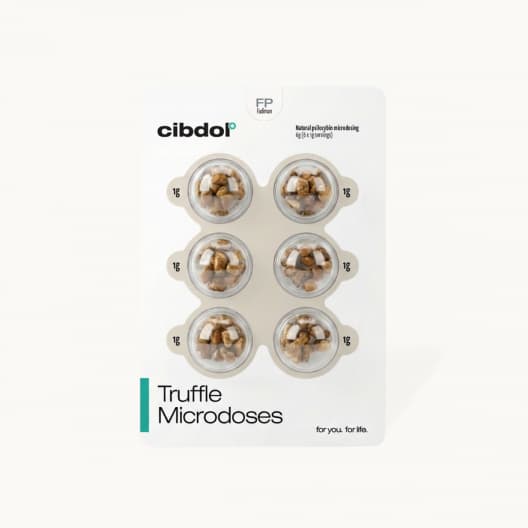

Truffle Microdoses (FP)
Cibdol Truffle Microdoses (FP), carefully prepared microdosing truffles designed for the Fadiman Protocol. Made with mild Psilocybe mexicana truffles, each pack contains 6 × 1g portions for subtle, non-psychoactive support. Ideal for those seeking inner calm through a gentle, structured microdosing approach.
- • For inner calm and emotional balance
- • Up to 1.0 mg psilocybin per dose (6×)
- • Up to 1.8 mg active tryptamines per dose
Disclosure: We may earn a commission if you purchase via these links.
Frequently Asked Questions
Does microdosing enhance meditation?
Many practitioners report that microdosing makes meditation sessions deeper, with faster access to stillness, greater body awareness, and more vivid emotional material. The Beckley Foundation is formally studying this. The neurological overlap — both practices modulate the default mode network — provides a plausible mechanism.
Should I meditate on dose days or off-days?
Both. Dose-day meditation may be qualitatively deeper. Off-day meditation provides your baseline and is where lasting changes consolidate. Daily practice regardless of dosing status is the goal.
What meditation style works best with microdosing?
Mindfulness (Vipassana) and loving-kindness (Metta) are most consistently praised. Body scan meditation also benefits from microdosing's enhanced interoception. Strict concentration practices (Jhana) may be harder on dose days for some people.
Can microdosing replace meditation?
No. They work on overlapping but different dimensions. Microdosing may create a temporary neuroplasticity window; meditation builds lasting attentional skills and emotional regulation. The combination is greater than either alone.
Is this combination safe?
For most people, yes. The main risk is emotional amplification — if meditation already surfaces difficult material, microdosing will intensify this. Have support available. People with a history of trauma should work with a therapist alongside any combined practice.
Which microdosing truffles are best for meditation?
Azarius Spiritual truffles are formulated specifically for mindfulness, meditation, and introspective practices. Cibdol FP (Fadiman Protocol) truffles are also well-suited — the gentle Psilocybe mexicana species matches the calm, observational quality of meditation.
Further Reading
- Microdosing Psilocybin: The Complete Guide — full overview
- Best Microdosing Truffles — product comparison including Spiritual truffles
- Microdosing and Creativity — the neuroplasticity connection
- The Stamets Stack Explained — Lion's Mane for long-term neurogenesis
- Microdosing for Anxiety and Depression — the mental health dimension
- Microdosing Journal — tracking your combined practice
This article is for informational purposes only. It does not constitute medical or spiritual advice. Always consult a healthcare professional before starting any new protocol.
Last updated: March 2026
Written by the Smart Supplements editorial team
Related topics
Where to buy
Affiliate linksMicrodosing Truffles
Cibdol microdosing truffle kits: FP (Fadiman), SP (Stamets), and OP (One-day-on/off). Lab-tested, 6×1g servings per pack. Choose by protocol and goal — inner calm, mental flexibility, or daily sharpness.
Microdosing XP Truffles
Pre-portioned psilocybin truffle strips designed specifically for microdosing — consistent dosing without a scale.
- • Pre-portioned for accurate microdosing
- • No scale needed — ready to use
- • Consistent psilocybin content per portion
Magic Truffles
Legal psilocybin truffles (sclerotia) available over the counter in the Netherlands. Multiple strains from mild to strong.
Mushroom Grow Kits
All-in-one psilocybin mushroom grow kits — just add water. Multiple strains available for home cultivation in the Netherlands.
Disclosure: We may earn a commission if you purchase via these links.
Related articles
Microdosing Journal: How to Track Your Experience
Microdosing journal: what to track, how to track it, and a structured template to measure your microdosing results objectively over 30 days.
Microdosing and PTSD: Can Sub-Perceptual Doses Help with Trauma?
Can microdosing psilocybin help with PTSD? An evidence-based look at the mechanisms, anecdotal reports, and critical safety considerations for using sub-pe
Microdosing for Focus and Productivity: What the Science Says
Microdosing for focus and productivity: what the science supports, which protocols work best for cognitive performance, and how to avoid common pitfalls.