
CBD for Stress: How It Works and When to Use It
Written by Smart Supplements Editorial Team
Key takeaways
- CBD reduces the physiological stress response through 5-HT1A serotonin receptor agonism and FAAH inhibition — blunting cortisol release and restoring endocannabinoid tone depleted by chronic stress.
- Bergamaschi et al. (2011) found 300mg CBD significantly reduced anxiety, cognitive impairment, and discomfort during a simulated public speaking test — a well-validated acute stress model.
- CBD has an inverted U-shaped dose-response curve for stress — very low doses may be stimulating; the calming sweet spot for most people is 25–75mg.
- For acute stress, take CBD sublingually 30–60 minutes before the stressor; for chronic stress, daily supplementation over 2–4 weeks is more effective than reactive dosing.
- CBD works best for stress as part of a broader approach including quality sleep, exercise, and magnesium — it compounds these interventions rather than replacing them.
Table of contents
Stress vs Anxiety — Why the Distinction Matters
Before examining the evidence, a useful clarification: stress is typically a response to an external trigger; anxiety is a state of apprehension that persists without a clear external cause. In practice they overlap significantly — chronic stress often transitions into anxiety disorders, and the neurological machinery involved is largely the same.
This matters because most CBD research uses anxiety as the primary outcome measure. When that research shows CBD reduces anxiety — and it does — it is reasonable to infer that the same mechanisms are relevant to stress. The 5-HT1A pathway, HPA axis modulation, and ECS tone restoration that underpin CBD's anxiolytic effect are exactly the systems involved in the stress response.
The Biology of Stress — and Where CBD Fits
When you encounter a stressor, the hypothalamic-pituitary-adrenal (HPA) axis activates: the hypothalamus releases corticotropin-releasing hormone (CRH), which signals the pituitary to release ACTH, which in turn triggers the adrenal glands to release cortisol. Cortisol prepares the body for action — increasing blood glucose, suppressing digestion and immune activity, and heightening alertness.
This is healthy and adaptive for short-term stress. The problem is chronic activation — when the HPA axis doesn't adequately shut down because feedback inhibition is impaired or because stressors are persistent.
CBD's interactions with the stress system:
5-HT1A receptor agonism: The serotonin 1A receptor plays a central role in regulating stress and anxiety. CBD acts as a partial agonist at 5-HT1A, increasing serotonergic tone in the prefrontal cortex and hippocampus — areas critically involved in regulating the HPA axis and appraising threat. Higher 5-HT1A activity is associated with reduced stress reactivity. This is the same receptor targeted by buspirone (an anxiolytic) and partially explains SSRIs' effect on anxiety.
Endocannabinoid system tone: The ECS acts as a buffer against stress. Anandamide, the endogenous CB1 agonist, suppresses the HPA axis and reduces cortisol release. Chronic stress depletes anandamide — and CBD inhibits FAAH, the enzyme that breaks it down. By slowing anandamide degradation, CBD may help restore the ECS buffering capacity that stress erodes.
Hippocampal neurogenesis: Chronic stress suppresses neurogenesis (new neuron formation) in the hippocampus, contributing to stress-related cognitive impairment and mood dysregulation. CBD has been shown to promote hippocampal neurogenesis in preclinical models — a mechanism also associated with antidepressant action.
What the Research Shows
Acute stress: the public speaking model
The most well-controlled CBD stress study uses a simulated public speaking test (SPST) — a validated acute stress model that reliably elevates cortisol, heart rate, and subjective anxiety in healthy volunteers.
Zuardi et al. (1993) first demonstrated CBD reduced SPST-induced anxiety. Bergamaschi et al. (2011) replicated this in a larger, double-blind trial: 300mg CBD significantly reduced anxiety, cognitive impairment, and discomfort during the SPST vs placebo. Remarkably, patients with social anxiety disorder who received CBD performed similarly to healthy controls — suggesting meaningful normalisation of the stress response.
The 300mg dose is higher than typical consumer products deliver, but the principle — that CBD attenuates the acute stress response — is well established.
Chronic stress and HPA axis modulation
Animal models consistently show CBD blunting cortisol release in chronic stress paradigms. Campos et al. (2013, Philosophical Transactions of the Royal Society B) found CBD reduced stress-induced neurobiological changes and prevented HPA axis hyperactivation in rodents exposed to repeated stress. Human chronic stress trial data is more limited, but the mechanistic basis is solid.
Sleep and recovery from stress
Chronic stress and poor sleep form a destructive cycle — stress impairs sleep, and poor sleep increases stress reactivity the following day. Shannon et al. (2019) found that CBD improved sleep in 66.7% of participants — a finding highly relevant to stress management even if sleep was the primary outcome. Addressing sleep quality is one of the most evidence-backed approaches to breaking the stress-sleep cycle.
The dose-response question
One important nuance for stress specifically: CBD appears to have an inverted U-shaped dose-response curve for anxiety-related outcomes. Very low doses (under 15mg) may have minimal or even stimulating effects; the anxiolytic sweet spot appears to be in the 25–75mg range for most people; very high doses (above 300mg) may show diminishing returns in healthy adults.
For stress management, this means calibrating dose is particularly important — and starting too low is a common reason people report CBD "not working."
Acute Stress vs Chronic Stress — Different Approaches
CBD can be used either reactively (for acute stressors) or proactively (as a daily supplement for chronic stress resilience). Both strategies have merit, but they work somewhat differently.
For acute, predictable stress (presentations, difficult conversations, travel anxiety):
- Take 25–50mg sublingually 30–60 minutes before the stressor
- Sublingual CBD acts within 15–25 minutes; the peak effect aligns well with this timing
- This approach is supported by the SPST research — CBD taken before the stressor shows the clearest effect
For chronic, ongoing stress:
- Daily CBD (15–40mg morning and/or evening) works with cumulative ECS tone restoration
- The daily approach allows anandamide levels to stabilise and HPA axis regulation to improve over 2–4 weeks
- Effects may be subtle week-to-week but meaningful over a month of consistent use
- Combine with sleep-supportive practices — CBD's sleep benefit compounds its stress benefit
Timing note: Some people find morning CBD mildly activating at lower doses (10–15mg), which may be counterproductive for stress. If this occurs, shift to an evening dose or increase to a dose in the clearly calming range (25–50mg).
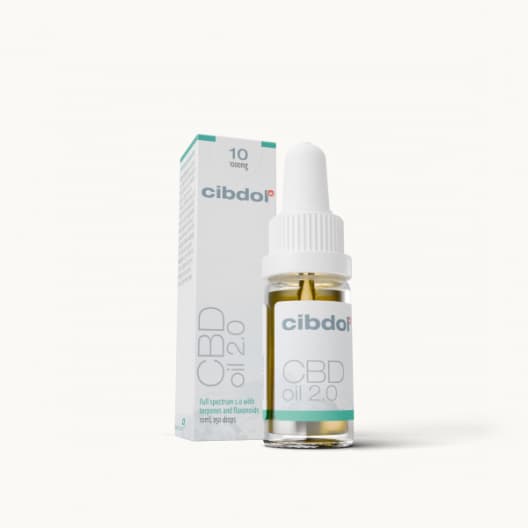

CBD Oil 2.0 10% (1000mg)
The most popular strength — 1000mg full-spectrum CBD oil for balanced, noticeable daily support without going too strong too fast.
- • 1000mg CBD per 10ml bottle
- • Full-spectrum entourage formula
- • Hemp seed oil base
Disclosure: We may earn a commission if you purchase via these links.
CBD as Part of a Stress Management Toolkit
CBD works best when it is one component of a broader stress management approach rather than a standalone solution. The evidence supports combining it with:
Sleep hygiene: CBD's sleep benefits and stress benefits reinforce each other. Consistent sleep and wake times, a cool dark room, and limiting screens before bed compound whatever CBD does for sleep quality.
Exercise: Physical activity reduces cortisol, increases anandamide (the "runner's high" is partly endocannabinoid-mediated), and improves HPA axis regulation. CBD and exercise are genuinely synergistic — both upregulate the ECS.
Magnesium: One of the most evidence-backed supplements for stress and HPA axis regulation. Magnesium glycinate (200–400mg before bed) pairs well with CBD for both stress and sleep.
Breathwork and mindfulness: Not a supplement, but the evidence for breath-focused practices in HPA axis downregulation is robust. CBD may lower the baseline level of stress reactivity that makes these practices easier to maintain.
CBD is not a substitute for addressing the actual sources of chronic stress — workload, relationships, sleep debt. But as a physiological support while working on those root causes, it has a reasonable evidence base.
Choosing the Right CBD for Stress
Full-spectrum CBD is generally preferred for stress over isolate — the entourage effect (CBD, CBG, trace THC, terpenes like linalool and myrcene) appears to produce more consistent results than CBD alone. See Full-Spectrum vs Isolate.
For stress specifically, terpene profile matters more than for many other uses. Terpenes such as linalool (lavender), myrcene (hops, mango), and β-caryophyllene (black pepper, cloves) all show anxiolytic activity in animal models and are present in full-spectrum hemp extracts. A CBD oil with a rich terpene profile offers more than one without.
Frequently Asked Questions
How quickly does CBD work for stress?
Sublingual CBD typically produces effects within 15–25 minutes — fast enough for acute stress situations. For chronic stress, meaningful change in baseline stress reactivity takes 2–4 weeks of consistent use.
Can I take CBD before a stressful event?
Yes. The SPST research directly supports pre-stressor dosing. Take 25–50mg sublingually 30–60 minutes before the event for best results.
Will CBD make me drowsy at work?
At moderate doses (15–40mg), most people do not find CBD sedating during the day — it reduces anxiety without the sedation of benzodiazepines. Higher doses (75mg+) are more likely to cause drowsiness. If daytime sedation is a concern, start with 15mg and increase gradually.
Is CBD addictive?
No. The WHO concluded in 2017 that CBD exhibits no abuse potential and no dependence profile. Unlike benzodiazepines, it does not produce tolerance or withdrawal symptoms with regular use at normal doses.
Can I take CBD with my antidepressants?
CBD can interact with some antidepressants via CYP450 enzyme inhibition — particularly SSRIs and SNRIs metabolised by CYP3A4 or CYP2C19. Consult your prescriber before combining. See CBD Oil Side Effects for a full interaction overview.
For further reading: CBD for Anxiety | CBD for Sleep | CBD Dosage Guide
CBD oils
Premium Swiss CBD oils from Cibdol — available in multiple concentrations with full certificates of analysis.
Disclosure: We may earn a commission if you purchase via these links.
This article is for informational purposes only and is not intended as medical advice. Always consult a healthcare professional before starting any new supplement, particularly if you take prescription medication.
Last updated: March 2026
New to CBD? Start with our Complete Beginner's Guide to CBD.
Related topics
Where to buy
Affiliate linksCBD oils
Premium Swiss CBD oils from Cibdol — available in multiple concentrations with full certificates of analysis.
CBD Gummies (25mg)
CBD Gummies — Chill Berry (25mg × 10)
- • 25mg CBD isolate per gummy — strong, precise dose
- • THC-free — CBD isolate, zero psychoactive compounds
- • Vegan formula — pectin-based, no gelatine
CBD capsules
Pre-measured CBD softgels and tablets for precise daily dosing — no taste, no measuring, just consistent CBD.
Disclosure: We may earn a commission if you purchase via these links.
Related articles
CBD for Pain Relief: What the Evidence Says
CBD for pain: what the research shows for chronic pain, neuropathic pain, and inflammation. An evidence-based guide with honest limitations.
CBD Bioavailability: Why Format Matters More Than Dose
CBD bioavailability explained: why the format you choose matters more than the mg on the label. Real absorption numbers for each method.
Best CBD Gummies in Europe: Top Picks for 2026
Best CBD gummies in Europe: Cibdol, Nordic Oil, and Zamnesia reviewed on potency, ingredients, value, and taste. Full buying guide.