
CBD Bioavailability: Why Format Matters More Than Dose
Written by Smart Supplements Editorial Team
Key takeaways
- Bioavailability describes the percentage of a dose that actually reaches your bloodstream — for CBD, this ranges from 4% (capsules, fasted) to 56% (inhalation).
- Taking CBD sublingually (held under the tongue for 60–90 seconds) gives 12–35% bioavailability vs just 4–8% if you swallow it immediately.
- A high-fat meal can increase oral CBD bioavailability by up to 5x — one of the most underrated and underused tips for CBD users.
- Water-soluble and nanoemulsion CBD formats improve absorption but real-world bioavailability is 20–40%, not the 80–90% sometimes claimed.
- MCT oil as a carrier (used by Cibdol) improves CBD absorption vs hemp seed oil due to lymphatic transport that partially bypasses first-pass liver metabolism.
Table of contents
- What Is Bioavailability and Why Does It Matter?
- Bioavailability by Format
- The Food Effect — Why Fat Changes Everything
- Sublingual Administration — The Sweet Spot for Most Users
- Inhalation — High Bioavailability, Real Trade-offs
- Water-Soluble CBD and Nanoemulsions — Hype vs Reality
- Carrier Oils — Why MCT Beats Hemp Seed Oil for Absorption
- Practical Guide: Getting Maximum Absorption From Your CBD
- Frequently Asked Questions
- Keep Reading
What Is Bioavailability and Why Does It Matter?
Bioavailability is a pharmacological term describing the proportion of an administered substance that reaches the systemic circulation unchanged. If you take 100mg of CBD with 10% bioavailability, 10mg reaches your bloodstream. The other 90mg is metabolised, excreted, or simply never absorbed.
For CBD, this matters enormously because CBD is highly lipophilic (fat-soluble) with very poor water solubility. This creates two problems:
- CBD doesn't dissolve easily in the aqueous environment of the gut
- When it does get absorbed via the digestive tract, it faces first-pass metabolism in the liver
The first-pass effect works like this: CBD absorbed through the intestinal wall travels to the liver via the portal vein before reaching general circulation. The liver's cytochrome P450 enzymes (particularly CYP3A4) metabolise a large proportion of the CBD before it has a chance to reach its targets. This is why oral bioavailability is so much lower than inhalation, which bypasses the digestive system entirely.
Understanding this means understanding why two people can take the same product, the same dose, and experience completely different results — and why changing how you take CBD often matters more than changing how much.
Bioavailability by Format
| Format | Bioavailability | Onset | Duration |
|---|---|---|---|
| Sublingual oil (held 60–90 sec) | 12–35% | 15–25 min | 4–6 hours |
| Swallowed oil | 4–8% | 30–90 min | 5–8 hours |
| Capsules / softgels | 6–15% | 30–90 min | 5–8 hours |
| Edibles / gummies | 4–12% | 45–90 min | 5–8 hours |
| Vape (inhalation) | 34–56% | 1–3 min | 1–3 hours |
| Topicals | ~0% systemic; local only | 15–45 min | 2–4 hours (local) |
| Nanoemulsion / water-soluble | 20–40% (real-world) | 10–20 min | 3–5 hours |
These figures are drawn from the comprehensive bioavailability review by Millar et al. (2019) in Molecules, which remains the most thorough synthesis of CBD pharmacokinetics across delivery methods. Huestis (2007) documented inhalation bioavailability of ~31% in controlled conditions; Devinsky et al.'s Epidiolex trials showed oral CBD bioavailability of approximately 6% fasted and 14% fed.
The practical implications are significant. At 6% bioavailability (oral, fasted), a 50mg capsule delivers roughly 3mg of active CBD. At 25% bioavailability (sublingual, well-administered), a 20mg sublingual dose delivers 5mg. The lower dose, taken correctly, delivers more.
The Food Effect — Why Fat Changes Everything
This is one of the most impactful and least-discussed CBD facts.
In 2019, researchers at the University of Minnesota (Birnbaum et al.) gave participants either a 99% pure CBD capsule fasted or with a high-fat, high-calorie meal. The result was striking: CBD taken with a high-fat meal produced five times higher blood concentrations than the fasted condition — area under the curve (AUC) increased from approximately 4.7 to 23.1 ng·h/mL.
Why? CBD is fat-soluble. When consumed alongside dietary fats, CBD can:
- Dissolve into lipid micelles in the gut, improving solubilisation
- Be absorbed via the lymphatic system (chylomicron pathway), partially bypassing portal vein first-pass metabolism
- Benefit from increased bile acid secretion, which aids fat-soluble compound absorption
Practical advice: Always take oral CBD — capsules, edibles, and swallowed oil — with a meal containing fat. Olive oil, avocado, eggs, nuts, or fatty fish all work well. This single change can meaningfully increase the active dose you receive without changing the product or price.
This applies less to sublingual oil held under the tongue (which absorbs directly through mucous membranes), but even then, taking it after a meal rather than on an empty stomach can improve absorption of the portion that is eventually swallowed.
Sublingual Administration — The Sweet Spot for Most Users
The sublingual route works because the underside of the tongue has a dense network of capillaries (the sublingual artery and its branches). When CBD oil is held against this tissue, lipophilic compounds diffuse through the mucous membrane directly into the bloodstream — bypassing the digestive tract and the first-pass effect entirely.
The critical detail most users miss: you must hold the oil for 60–90 seconds. Most people place the oil and swallow within 10–15 seconds. At that point, you've effectively converted the entire dose to oral administration (4–8% bioavailability) rather than sublingual (~12–35%).
Millar et al. (2019) report sublingual bioavailability in the range of 13–19% in human studies with proper administration. Some formulations, particularly those using MCT oil or penetration enhancers, may reach the higher end of the 35% range cited in some studies.
Cibdol's CBD oils use MCT oil as the carrier, which improves mucosal absorption compared to hemp seed oil carriers — a functional difference, not just a marketing choice. See the carrier oil section below for why.
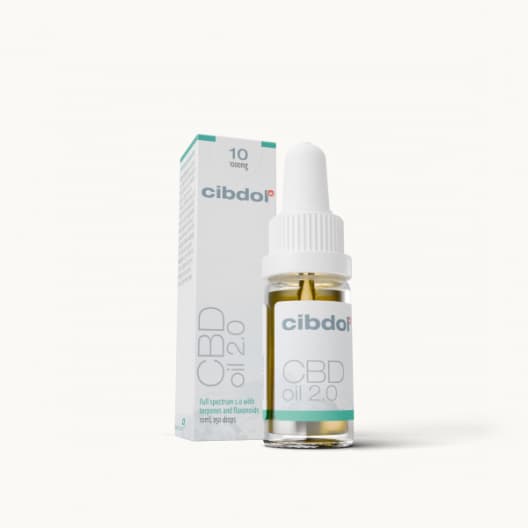

CBD Oil 2.0 10% (1000mg)
The most popular strength — 1000mg full-spectrum CBD oil for balanced, noticeable daily support without going too strong too fast.
- • 1000mg CBD per 10ml bottle
- • Full-spectrum entourage formula
- • Hemp seed oil base
Disclosure: We may earn a commission if you purchase via these links.
Inhalation — High Bioavailability, Real Trade-offs
Vaping or smoking CBD bypasses both the gut and the liver entirely. Absorption occurs directly through the alveoli in the lungs, which have an enormous surface area and thin walls adjacent to dense capillary networks. CBD moves straight into pulmonary circulation.
The bioavailability advantage is real: 34–56% absorption, with onset in 1–3 minutes. For someone who needs rapid effect and maximises absorption efficiency above all else, inhalation is pharmacologically superior.
The trade-offs, however, are significant:
- Duration is shorter (1–3 hours vs 4–6 hours for sublingual)
- Respiratory risks — even "clean" vape aerosols deposit particulates in airways; long-term effects of CBD vaping specifically are not well studied
- Dosing is less precise — it's difficult to quantify exactly how many milligrams are absorbed per puff
We don't recommend inhalation as a primary delivery method for wellness use. The bioavailability advantage doesn't outweigh the respiratory concerns for most people. Where rapid onset is essential (acute anxiety, acute pain), it becomes more relevant.
Water-Soluble CBD and Nanoemulsions — Hype vs Reality
The logic is sound: if CBD's fat-solubility is the bioavailability problem, making it water-compatible should solve it. Nanoemulsion technology breaks CBD into particles smaller than 100nm, which disperse in water and are absorbed more readily than large lipid droplets.
Some manufacturers claim 80–90% bioavailability for their nanoemulsion products. These figures are not supported by independent human clinical trials. They typically derive from in vitro (test tube) studies or pharmacokinetic models, not from actual blood concentration measurements in humans.
Real-world human data suggests well-formulated nanoemulsions improve bioavailability to approximately 20–40% — a meaningful improvement over standard oral formats, but not the revolutionary leap some marketing implies.
What nanoemulsions do offer reliably:
- Faster onset (10–20 minutes vs 30–90 minutes for standard capsules)
- More consistent absorption (less variability between doses and individuals)
- Better dose-response linearity (absorption scales more predictably with dose)
For now, water-soluble CBD is most available in drink powders and some next-generation softgels. Availability from reputable European brands with published pharmacokinetic data remains limited.
Carrier Oils — Why MCT Beats Hemp Seed Oil for Absorption
The oil used to carry CBD is not merely a neutral vehicle. It actively affects how well CBD absorbs.
A landmark 2016 study by Zgair et al. from the University of Nottingham found that lipid excipients significantly increased oral CBD bioavailability, with medium-chain triglycerides (MCT) performing particularly well. MCTs are transported through the lymphatic system via chylomicrons after absorption — a route that partially bypasses the portal vein and therefore reduces first-pass liver metabolism.
MCT oil (from coconut): Rapidly absorbed, efficiently forms chylomicrons, promotes lymphatic CBD transport. Best for absorption.
Hemp seed oil: Contains omega-3 and omega-6 fatty acids with health benefits, but the long-chain fatty acids are absorbed differently and offer less bioavailability benefit for CBD specifically.
Olive oil: Medium-length fatty acids, reasonable absorption enhancement, commonly used in lower-cost formulations.
Cibdol uses MCT oil as the carrier in all their CBD oils — the 2.0 range specifically. This is a quality and efficacy choice worth noting when comparing products.
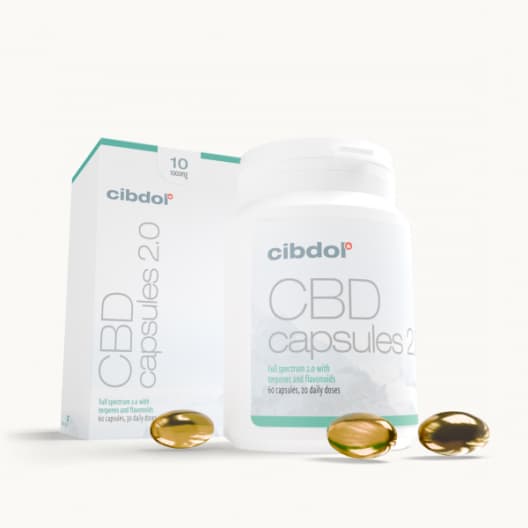
CBD Softgels 10% (1000mg)
The best-selling softgel strength — 1000mg full-spectrum CBD in 60 pre-dosed capsules for convenient daily dosing without any taste or measuring.
- • 1000mg CBD per box (60 caps)
- • Tasteless and odourless
- • Full-spectrum oil formula
Disclosure: We may earn a commission if you purchase via these links.
Practical Guide: Getting Maximum Absorption From Your CBD
Applying the science above to your actual CBD routine:
- Hold sublingual oil for 60–90 seconds — this is the single most impactful change most users can make. Set a timer if needed.
- Take oral CBD with a fat-containing meal — olive oil, eggs, avocado, or nuts. Particularly important for capsules and gummies.
- Choose softgels over hard capsules — softgels dissolve faster and more consistently, especially Cibdol's gelatin or vegan softgel format which releases in the upper GI tract.
- Account for lower oral bioavailability when dosing — if you're switching from sublingual oil to capsules, consider increasing the stated dose by 25–40% to achieve equivalent absorption.
- Be consistent — CBD accumulates in fatty tissue with regular daily use. Some research suggests that tissue saturation after 1–2 weeks of consistent use may improve effective absorption and duration of effects.
- Store your oil correctly — degraded oil absorbs less efficiently. Keep CBD oil in a cool, dark place; refrigerate after opening for MCT-based oils. Hemp seed oil carriers degrade faster and should be used within 6 months of opening.
See our CBD dosage guide for guidance on starting doses and adjustment strategies, and CBD oil vs capsules for a deeper comparison of the two most popular formats.
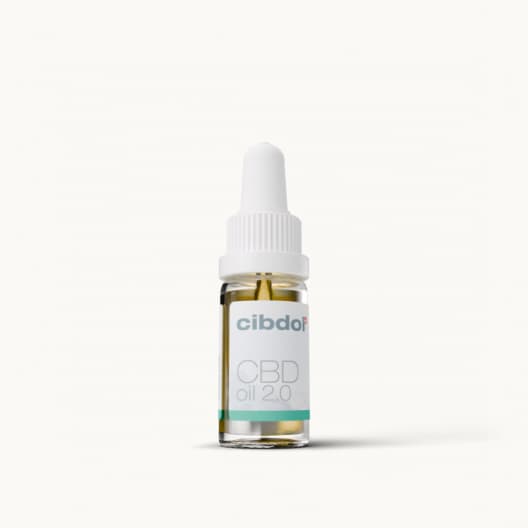
CBD oils
Premium Swiss CBD oils from Cibdol — available in multiple concentrations with full certificates of analysis.
Disclosure: We may earn a commission if you purchase via these links.
Frequently Asked Questions
Does it matter when I take CBD?
Timing affects onset and duration but not total bioavailability as much as format and food. For sleep, take 30–60 minutes before bed. For daytime anxiety, morning or split dosing works well.
Does CBD bioavailability change with body weight?
CBD is lipophilic and distributes into fatty tissue. Higher body fat percentage creates a larger "reservoir" — which can mean slower onset of effects but also longer duration. This is one reason dosing is highly individual.
Are more expensive CBD oils more bioavailable?
Not automatically. Price correlates better with concentration (mg/ml) and extraction quality than with bioavailability. What matters for absorption is the carrier oil and how you take it — not the price tag.
Does sublingual CBD work if I've just eaten?
Yes, and potentially better. A small amount of fat in the mouth from a recent meal may actually aid mucosal absorption. The key is still to hold the oil for 60–90 seconds.
This article is for informational purposes only and is not intended as medical advice. Always consult a healthcare professional before starting any new supplement.
Last updated: March 2026
Keep Reading
Related topics
Where to buy
Affiliate linksCBD oils
Premium Swiss CBD oils from Cibdol — available in multiple concentrations with full certificates of analysis.
CBD Gummies (25mg)
CBD Gummies — Chill Berry (25mg × 10)
- • 25mg CBD isolate per gummy — strong, precise dose
- • THC-free — CBD isolate, zero psychoactive compounds
- • Vegan formula — pectin-based, no gelatine
CBD capsules
Pre-measured CBD softgels and tablets for precise daily dosing — no taste, no measuring, just consistent CBD.
Disclosure: We may earn a commission if you purchase via these links.
Related articles
CBD for Stress: How It Works and When to Use It
CBD for stress: how it interacts with the stress response, what the research shows, and practical tips for acute and chronic stress.
CBD for Pain Relief: What the Evidence Says
CBD for pain: what the research shows for chronic pain, neuropathic pain, and inflammation. An evidence-based guide with honest limitations.
CBD Oil vs CBD Capsules: Which Is Better for You?
CBD oil or capsules? Compare bioavailability, onset times, dosing precision, cost, and taste to find the right CBD format for your needs.