
Spermidine: The Longevity Supplement Hiding in Your Food
Written by Smart Supplements Editorial Team
Key takeaways
- Spermidine induces autophagy — cellular self-cleaning — without requiring fasting or caloric restriction
- The Bruneck Study found a ~24% lower all-cause mortality risk with higher dietary spermidine intake over 20 years
- Wheat germ (24–48 mg/100g), natto, aged cheese, and mushrooms are the richest food sources
- Supplemental doses range from 1–6 mg/day; wheat germ extract and synthetic trihydrochloride are the main forms
- Clinical evidence on cognition is promising but mixed — the SmartAge pilot showed benefit; the full 12-month trial did not hit its primary endpoint
- Excellent safety profile for most adults; active cancer patients should consult their oncologist before supplementing
Table of contents
You're probably already eating spermidine every day — in your wheat bread, aged parmesan, or morning mushrooms. What you might not know is that this naturally occurring compound is one of the most scientifically credible longevity tools discovered in the last decade, capable of triggering the cellular self-cleaning process that slows ageing from the inside out.
What Is Spermidine?
Spermidine is a polyamine — a small, positively charged molecule present in virtually every living cell. Its name comes from where scientists first isolated it in 1678, but set that aside: it's ubiquitous in biology, found in plants, fungi, bacteria, and throughout the animal kingdom.
Think of polyamines as molecular regulators. They interact with DNA, RNA, and cell membranes, playing essential roles in cell growth, gene expression, and stress adaptation. Spermidine sits alongside putrescine and spermine as one of the three major polyamines in human cells — and it's the one that has attracted the most serious longevity research attention in recent years.
What separates spermidine from most supplement trends is the quality of its evidence. Research has held up across yeast, worms, flies, mice, and now humans — a rare consistency in longevity science. And unlike fasting or rapamycin, it's something you can add to your routine without significant effort or side effects.
If you're new to longevity-adjacent compounds, our beginner's guide to nootropics covers the broader landscape of cognitive and wellness supplements.
The Science: How Spermidine Triggers Autophagy
Autophagy means "self-eating" in Greek, but it's actually the opposite of destructive. It's your cells' housekeeping system — a process that identifies damaged proteins, worn-out organelles, and cellular debris, then breaks them down and recycles the useful components.
Declining autophagy is one of the recognised hallmarks of biological ageing. As the process slows, cellular junk accumulates — and that accumulation is now associated with neurodegenerative diseases, cardiovascular decline, and metabolic disorders. Restoring autophagic activity is one of the central goals of longevity research.
Spermidine activates autophagy through a specific mechanism: it inhibits EP300, an enzyme (acetyltransferase) that normally blocks autophagy proteins by acetylating them. When EP300 is inhibited, those autophagy proteins activate and cellular cleaning begins (Pietrocola et al., 2015, Cell Metabolism).
A landmark 2024 study in Nature Cell Biology added another layer of understanding. Researchers found that fasting produces a surge of endogenous spermidine, which then triggers a process called EIF5A hypusination — this favours translation of TFEB, the master regulator of autophagy, increasing autophagic flux. In short: spermidine is an essential molecular link between fasting and autophagy. Madeo et al., 2024, Nature Cell Biology
Beyond autophagy, evidence suggests spermidine also:
- Supports mitochondrial health — improves mitochondrial membrane integrity and promotes biogenesis
- Reduces inflammation — inhibits pro-inflammatory signalling including NF-κB pathways
- Modulates epigenetics — emerging data indicates influence on histone acetylation patterns associated with ageing
Evidence-Based Benefits
Longevity and Reduced Mortality
The most compelling human evidence comes from the Bruneck Study, a prospective cohort study following 829 Italians aged 45–84 for 20 years in South Tyrol. Researchers assessed dietary spermidine intake across four time points and tracked mortality.
The results were striking. All-cause mortality dropped from 40.5 deaths per 1,000 person-years in the lowest spermidine intake third, to just 15.1 in the highest third. After adjusting for age, sex, lifestyle, and other dietary factors, each standard deviation increase in dietary spermidine was associated with a 24% lower risk of all-cause death (HR 0.76, 95% CI 0.67–0.86). Kiechl, Eisenberg et al., 2018, American Journal of Clinical Nutrition
This is an epidemiological association, not proof of causation. But it's unusually robust for a single dietary variable, and it aligns with the animal data: lifespan extension of 10–25% in yeast, worms, and flies with spermidine supplementation, with autophagy as the required mechanism. Remove autophagy genetically, and the longevity effect disappears.
Cardiovascular Health
Spermidine appears to protect the ageing heart. In aged mice, 6-month supplementation attenuated cardiac inflammation and improved diastolic function — one of the earliest markers of cardiac ageing. The Bruneck Study found the mortality benefit was particularly pronounced for cardiovascular deaths. (Eisenberg et al., 2016, Nature Medicine)
The epidemiological data from the US National Health and Nutrition Examination Survey (2003–2014) also found an inverse association between dietary polyamine intake and CVD mortality, reinforcing the European findings in a different population.
Cognitive and Neuroprotective Effects
One of the most promising — and honestly, still unresolved — areas of spermidine research is cognition. The mechanism is biologically plausible: autophagy clears amyloid-beta plaques and tau tangles, the proteins implicated in Alzheimer's disease. Lower endogenous spermidine levels in older adults correlate with higher rates of cognitive impairment.
Clinical evidence: the Wirth et al. 2018 pilot RCT (n=30, 3 months) gave participants wheat germ extract providing ~1.2 mg spermidine/day. The spermidine group showed improved mnemonic discrimination — a measure of hippocampal memory function — compared to placebo. Wirth et al., 2018, Cortex
The larger SmartAge trial (n=85, 12 months, 2022) did not show significant improvement on the primary memory endpoint, though secondary outcomes trended positively. Schwarz et al., 2022, JAMA Network Open
Honest take: the cognitive evidence is interesting and mechanistically grounded, but not yet definitive. Worth watching, not worth overstating.
For a broader look at cognitive supplements, see our guide on nootropics for studying.
Immune Function
A 2022 study found spermidine supplementation improved CD4+ T-cell responses and vaccine efficacy in elderly participants — a potentially significant finding given that immune ageing (immunosenescence) is a major driver of vulnerability in older adults. Autophagy plays a direct role in T-cell renewal, which likely explains the mechanism.
Additionally, a 2024 randomised controlled trial found that a supplement combination including spermidine decreased biological age markers and improved oxidative-inflammatory status over 12 weeks. (Buendía-Romero et al., 2024, Antioxidants)
Hair, Skin, and Body Composition
Less clinically robust, but relevant to many readers: some animal research suggests spermidine reduces age-related hair loss by supporting hair follicle stem cell renewal. Early human data is limited to cosmetic formulations. This isn't the headline benefit, but it's a genuine signal worth noting.
Spermidine-Rich Foods
One of spermidine's most underappreciated features is that you don't need supplements to get meaningful doses. Many common European foods are naturally rich in it.
| Food | Approximate Spermidine Content |
|---|---|
| Wheat germ | 24–48 mg/100g |
| Dried natto (fermented soybeans) | 23–25 mg/100g |
| Aged hard cheese (e.g. Parmesan, Gouda) | 8–12 mg/100g |
| Chicken liver | 10–14 mg/100g |
| Green peas | 4–7 mg/100g |
| Mushrooms (button, shiitake, oyster) | 4–8 mg/100g |
| Broccoli / cauliflower | 3–5 mg/100g |
| Soybeans (cooked) | 3–5 mg/100g |
| Corn / maize | 3–4 mg/100g |
Values vary by preparation method and source. Wheat germ is the most concentrated widely available food source.
Average Western dietary intake is estimated at 7–12 mg/day. The Bruneck cohort's highest intake tertile — associated with the best outcomes — averaged around 12–15 mg/day from food alone. That's genuinely achievable: a tablespoon of wheat germ on morning yoghurt, regular mushroom consumption, and aged cheese with meals gets you there.
Supplementation Guide
If you're already eating wheat germ, natto, and mushrooms regularly, you may not need a supplement. But for consistent therapeutic dosing — or if you want intakes closer to those used in clinical research — supplementation is a reasonable next step.
Dosing:
- Most clinical studies use 1–6 mg/day of supplemental spermidine
- The Wirth 2018 pilot used ~1.2 mg/day via wheat germ extract
- Newer protocols push 3–6 mg/day; short-term safety data exists up to 40 mg/day without serious adverse effects
- For context: a tablespoon of wheat germ (~10g) provides ~2.4 mg
Forms:
- Wheat germ extract — most commercially available form; preserves food matrix; typically standardised to spermidine mg/serving
- Synthetic spermidine trihydrochloride — higher purity; used in most clinical trials; allows precise dosing; wheat-free
- Look for: clearly stated spermidine content per serving (not just extract weight), third-party testing, gluten/allergen information
Timing: Morning, with or without food. Some protocols suggest taking spermidine in a fasted state to compound the autophagy signal — the 2024 Nature Cell Biology findings give this biological rationale.
Synergy with intermittent fasting: Fasting raises endogenous spermidine → spermidine activates TFEB → autophagy increases. Supplementing during a fasted window adds to this naturally elevated baseline. For those already practising time-restricted eating, spermidine may amplify the autophagic benefit.
For more on how natural compounds compare to synthetic alternatives, see our guide to natural vs synthetic nootropics.
How Spermidine Compares to Other Longevity Compounds
Spermidine doesn't compete with other longevity interventions — it occupies a distinct mechanistic niche and is potentially complementary to all of them.
| Compound | Primary Mechanism | Human RCT Evidence | European Availability |
|---|---|---|---|
| Spermidine | Autophagy (EP300 inhibition) | Moderate (SmartAge, Bruneck) | Good (spermidineLIFE, wheat germ) |
| NMN / NR | NAD+ restoration | Growing | Good (Purovitalis, AVEVA) |
| Resveratrol | SIRT1 activation | Weak / inconsistent | Good |
| Rapamycin | mTOR inhibition | Limited (off-label only) | Prescription only |
| Fisetin | Senolytic | Early-stage | Limited |
| Metformin | AMPK activation | Epidemiological (TAME trial ongoing) | Prescription |
| Quercetin | Senolytic + anti-inflammatory | Limited | Good |
Spermidine's autophagy pathway works upstream of — and potentially synergises with — NAD+ restoration (which also supports mitochondrial function) and mTOR inhibition (which suppresses growth signals that compete with autophagy). The stack of spermidine + NMN is one of the more theoretically coherent longevity combinations.
For cognitive-focused stacking strategies, our best nootropic stack for focus covers how to combine compounds intelligently.
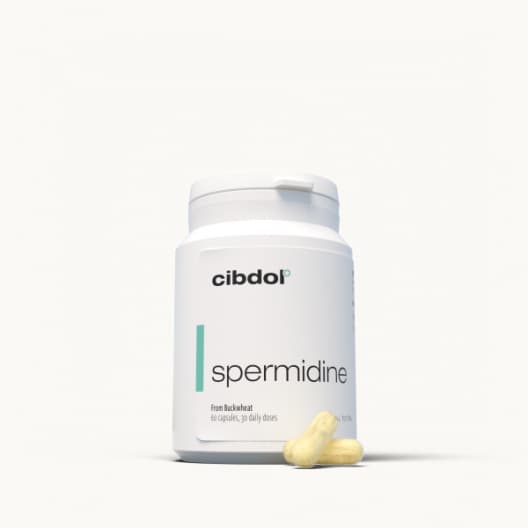

Spermidine
Spermidine supplement to support autophagy, cellular renewal, and healthy aging.
- • Promotes autophagy
- • Supports cellular renewal
- • Wheat germ extract source
Disclosure: We may earn a commission if you purchase via these links.
Functional mushrooms like lion's mane and cordyceps also have complementary mechanisms — supporting neuroplasticity and mitochondrial function respectively. If you're interested in the Stamets stack or mushroom-based protocols, these pair well with spermidine's autophagy focus.
Safety and Side Effects
Spermidine has an unusually clean safety profile for a longevity compound. This shouldn't be surprising — you've been eating it your entire life in bread, cheese, and vegetables.
For most adults, supplemental spermidine is well-tolerated:
- No significant adverse effects at standard doses (1–6 mg/day)
- 40 mg/day for 28 days was safe and well-tolerated in healthy older men (2024 clinical trial)
- No known drug interactions at food-level or standard supplemental doses
- Common in traditional European and Japanese diets without any observed population-level harm
The cancer nuance — important: Polyamines are required for cell division. This means they theoretically could support rapidly dividing cancer cells as well as healthy ones. Current mechanistic evidence suggests that autophagy is generally protective against cancer initiation, but the picture is complex and context-dependent. If you have an active cancer diagnosis, consult your oncologist before taking supplemental spermidine.
Pregnancy and breastfeeding: Insufficient clinical data for supplementation. Dietary spermidine is naturally present in breast milk and presumably safe from food, but supplements are not recommended without medical guidance.
Wheat allergy / coeliac disease: Most spermidine supplements use wheat germ extract and are not suitable if you have wheat allergy or coeliac disease. Opt for synthetic spermidine trihydrochloride products, which are wheat-free.
For a comprehensive look at supplement safety and potential interactions, see our supplement and drug interactions guide.
Where to Buy Spermidine in Europe
Spermidine supplements are becoming more widely available in Europe, though they remain far less mainstream than NMN or magnesium.
spermidineLIFE Original 365+
The original spermidine supplement — pioneered by Longevity Labs Austria based on 10+ years of research by Dr Frank Madeo at the University of Graz. Natural spermidine-rich wheat germ extract, multi-stage lab tested.
- • The original spermidine supplement — first to market
- • Based on 10+ years University of Graz research
- • Natural wheat germ extract (800mg per capsule)
Disclosure: We may earn a commission if you purchase via these links.
spermidineLIFE (Longevity Labs, Graz, Austria) is the leading European brand and the most scientifically credible option. The company has direct connections to Frank Madeo's research group at the University of Graz — the scientists responsible for much of the foundational spermidine science. Products use standardised wheat germ extract with clearly stated spermidine content per serving, manufactured within the EU.
What to look for when choosing any brand:
- Exact milligrams of spermidine per serving (not just extract weight)
- Third-party testing certification
- EU manufacturing and quality standards
- Wheat-free option if you have gluten sensitivity
Purovitalis, a Netherlands-based longevity supplement brand, also offers a broader longevity stack including NMN and NAD+ precursors if you're building a more comprehensive protocol.
Frequently Asked Questions
What does spermidine actually do in the body?
Spermidine's primary mechanism is autophagy induction — it activates your cells' housekeeping system by inhibiting an enzyme (EP300) that normally blocks the process. This allows damaged proteins and worn-out organelles to be identified, broken down, and recycled. Beyond autophagy, research suggests it supports mitochondrial health, reduces inflammation, and influences epigenetic ageing markers.
How much spermidine should I take?
Most clinical studies use 1–6 mg/day from a supplement. Starting at 1–2 mg/day from wheat germ extract is a reasonable approach. If you're regularly eating wheat germ, aged cheese, and mushrooms, you may already be approaching the 10–15 mg/day dietary intake associated with longevity benefits in the Bruneck Study.
Is spermidine the same as spermine?
They're related but distinct. Spermine is a longer-chain polyamine that the body produces from spermidine via the enzyme spermine synthase. Both have biological roles, but spermidine is more directly linked to autophagy induction and longevity in current research.
Can I get enough spermidine from food alone?
Potentially, yes. The Bruneck Study found protective effects at dietary intakes achievable through food. A tablespoon of wheat germ daily, regular mushroom consumption, and aged cheese provides a meaningful dose. Supplements offer more consistency and higher doses for those targeting therapeutic ranges.
Does spermidine work the same way as intermittent fasting?
They overlap mechanistically — fasting raises endogenous spermidine, and spermidine drives autophagy. They're not identical: fasting activates multiple longevity pathways (AMPK, mTOR inhibition, ketosis) beyond spermidine alone. But spermidine is accurately described as a "caloric restriction mimetic" that partially replicates autophagy signalling without food restriction.
Who should avoid spermidine supplements?
People with active cancer (consult your oncologist first), those with wheat allergy or coeliac disease (choose synthetic form), and pregnant or breastfeeding women (insufficient safety data for supplements). If you take immunosuppressive medications, check with your doctor — polyamines interact with immune cell activity.
Medical Disclaimer
This article is for informational purposes only and is not intended as medical advice. Always consult a healthcare professional before starting any new supplement, especially if you take prescription medication.
Last updated: March 2026 | Written by Smart Supplements Editorial Team
Related topics
Where to buy
Affiliate linksPurovitalis Liposomal NMN
European-made NMN capsules using patented liposomal delivery for 2x better absorption. 125mg NMN per capsule, 99% purity, third-party tested for heavy metals and contaminants.
- • Patented liposomal technology for 2x better absorption
- • 99% pure European-sourced NMN
- • GMP-certified, third-party tested
MASI Premium NMN
German-made, Swiss-tested NMN supplement. 500mg per serving from raw materials sourced exclusively from top-tier German suppliers. Every production batch independently tested in Swiss laboratories.
- • 500mg NMN per serving
- • German-made, Swiss-tested
- • Raw materials exclusively from German suppliers
AVEA NMN
Swiss-formulated NMN using clinically studied Longevir NMN — a highly stable, 99% pure European-produced form. 100% traceable, free from additives and fillers. Every batch independently verified in Switzerland.
- • Longevir NMN — clinically studied, European-produced
- • 99% pure, 100% traceable NMN
- • Third-party tested in Switzerland per batch
DoNotAge Pure NMN
Research-grade NMN at 99.8% purity, enjoyed by over 2.5 million people worldwide. Available in capsules and powder. Scientifically verified every batch with transparent purity testing.
- • 99.8% purity — highest available
- • Used by 2.5 million+ people worldwide
- • Every batch scientifically verified
Disclosure: We may earn a commission if you purchase via these links.
Related articles
What Is Autophagy? How Fasting, Exercise & Supplements Activate Cell Renewal
Learn how autophagy works, why it declines with age, and the three proven ways to activate it: fasting, exercise, and targeted supplements like spermidine.
The 12 Hallmarks of Aging: What They Mean for Your Supplement Choices
A practical guide to the 12 hallmarks of aging and which supplements target each one. From NAD+ decline to senescent cells, learn the science behind longev
Fasting + Supplements: How Intermittent Fasting Enhances Your Longevity Stack
Intermittent fasting activates many of the same longevity pathways that supplements target — autophagy, AMPK, sirtuins, and NAD+. Learn how to combine fast