Microdosing LSD vs Psilocybin: Key Differences
Written by Smart Supplements Editorial Team
Key takeaways
- Psilocybin microdoses last 4–6 hours; LSD microdoses last 8–12 hours — a meaningful difference for daily scheduling and sleep
- LSD activates dopamine and adrenergic receptors in addition to 5-HT2A, producing more stimulation than psilocybin
- Psilocybin truffles are legally available in the Netherlands; LSD is illegal across the entire EU
- Psilocybin has a significantly stronger clinical research base — more trials, better safety data, regulatory acceptance
- For most European microdosers, psilocybin is both the legal and evidentially stronger choice
Table of contents
- The Core Difference in a Sentence
- Duration: Why This Is More Important Than It Sounds
- Mechanism: Same Family, Different Profile
- Effects Profile Comparison
- Legal Status: This Is Decisive for Most European Readers
- Research Base: Where the Evidence Actually Stands
- Who Should Choose Psilocybin
- Who Might Prefer LSD (Where Legally Accessible)
- Can You Use Both? Alternating Protocols
- Comparison at a Glance
- Frequently Asked Questions
- Affiliate Disclosure
LSD and psilocybin are both used for microdosing — but they're not interchangeable. The differences in duration, receptor profile, and legal status are significant enough to affect whether a protocol actually works for you. Here's an honest, evidence-based breakdown of what actually sets them apart, and how to decide which one makes sense for your situation.
The Core Difference in a Sentence
Psilocybin is shorter, warmer, and more emotionally oriented. LSD is longer, more stimulating, and more cognitively driven. They belong to the same class of classic psychedelics, but their character — even at sub-perceptual microdose levels — is noticeably different.
If you've read about the Fadiman vs Stamets protocols, you'll know that protocol structure matters for microdosing. But the substance itself matters just as much. Choosing the wrong one for your goals — or your lifestyle — can undermine the whole approach.
Duration: Why This Is More Important Than It Sounds
One of the most practical differences is how long each substance stays active in your system.
A psilocybin microdose typically produces mild, noticeable effects for 4–6 hours. Most people take it in the morning and find it has cleared by early afternoon. This makes it compatible with afternoon naps, early bedtimes, and fairly normal evening routines.
An LSD microdose, by contrast, tends to remain active for 8–12 hours. If you take it at 8am, you may still feel a low-level stimulatory effect at 8pm. For people sensitive to LSD's effects on sleep architecture, a dose taken even reasonably early in the morning can delay sleep onset or reduce sleep quality.
This is not a minor inconvenience. Sleep disruption is one of the most common complaints among LSD microdosers in naturalistic studies, and it's one reason many experienced practitioners reserve LSD dose days for days when they don't need to be asleep before midnight.
If you're following a Fadiman vs Stamets protocol — say, dosing every third day — an LSD dose on a Monday means Tuesday's recovery day may partly overlap with residual stimulation. Psilocybin's shorter window makes scheduling more forgiving.
Mechanism: Same Family, Different Profile
Both LSD and psilocybin (via its active metabolite psilocin) are 5-HT2A serotonin receptor agonists. This shared mechanism is why they're both classified as classic psychedelics and why they produce overlapping effects — altered perception, increased neural connectivity, changes in mood and cognition.
But the similarity stops there.
Psilocin is relatively selective for serotonin receptors. LSD is a far less selective molecule — it binds to a wide range of targets including dopamine receptors (D1, D2) and adrenergic receptors. This broader receptor activity is what gives LSD its characteristic stimulant quality: the increased heart rate, the mental energy, the sharper (sometimes jagged) focus.
This pharmacological difference is meaningful at microdose levels, not just at full doses. LSD microdosers consistently report more stimulation, more cognitive drive, and sometimes more anxiety than psilocybin microdosers — even when the subjective psychedelic effect is negligible.
For context on how psychedelics interact with brain chemistry more broadly, see our guide to What Are Nootropics? — which covers the serotonin-cognition connection in more detail.
Effects Profile Comparison
The table below draws on self-reported data from the largest naturalistic microdosing studies — including Polito & Stevenson (2019, Macquarie University) and the Fadiman/Vashkevich dataset — as well as general pharmacological knowledge. Ratings are relative comparisons, not absolute claims.
| Effect | Psilocybin Microdose | LSD Microdose |
|---|---|---|
| Focus / concentration | Moderate | High |
| Creativity / divergent thinking | High | Moderate–High |
| Mood elevation | High | Moderate |
| Emotional openness | High | Low–Moderate |
| Social ease | High | Moderate |
| Physical energy | Low–Moderate | High |
| Anxiety risk | Low–Moderate | Moderate–High |
| Sleep impact | Minimal | Moderate–High |
| Duration of effects | 4–6 hours | 8–12 hours |
What this means in practice: Psilocybin tends to be more useful for emotional regulation, social situations, and creative work with an introspective flavour. LSD tends to be more useful for sustained analytical work or physical tasks requiring energy — for those in jurisdictions where it is legally accessible.
It's worth noting that Polito & Stevenson (2019, PLOS ONE) found that over a 6-week naturalistic study, microdosers as a group showed significant reductions in neuroticism and improvements in focus — but these results were not substance-specific. The sample included both substances, and placebo effects were not controlled.
A more rigorous self-blinding study by Szigeti et al. (2021, eLife) using psilocybin specifically found that placebo effects were large and accounted for a significant portion of reported benefits. This is an important caveat: the evidence for microdosing in general remains largely observational, and the evidence comparing LSD to psilocybin at microdose levels specifically is thin.
Legal Status: This Is Decisive for Most European Readers
Let's be direct about this, because it shapes everything else.
Psilocybin truffles (sclerotia) are legally available in the Netherlands. They're sold openly in smart shops and online, shipped within the EU from NL-based vendors. Magic mushrooms (fruiting bodies) remain prohibited in the Netherlands, but truffles occupy a different legal category and have been commercially available since 2008.
As of January 1, 2026, Czechia became the first EU country to authorise medical use of psilocybin — a significant development, though it applies to clinical settings rather than personal use.
LSD, by contrast, is a Schedule I controlled substance across every EU member state. There is no legal source for personal use anywhere in the EU. This guide will not suggest sourcing it illegally, and we'd encourage extreme caution about any claims to the contrary.
For practical purposes: if you're a European reader interested in microdosing, psilocybin is your legal option. LSD comparisons are academically interesting and relevant for readers in other jurisdictions, but psilocybin is where actionable guidance applies.
See our full guide to Magic Truffles Explained for more on what's available and legal in the Netherlands.
Research Base: Where the Evidence Actually Stands
The clinical research picture is not equal between the two substances.
Psilocybin has been the subject of major clinical trials at Johns Hopkins, Imperial College London, and through COMPASS Pathways. These have focused primarily on high-dose therapeutic use (for depression, end-of-life anxiety, PTSD), not microdosing. But they have generated robust safety data, dosing knowledge, and mechanistic understanding that informs microdosing practice.
For microdosing specifically, the foundational naturalistic data comes from Fadiman & Vashkevich's ongoing self-reporting project (starting ~2010) and the Polito & Stevenson (2019) study — the largest controlled naturalistic study to date. Both included psilocybin and LSD respondents, but most structured follow-up has focused on psilocybin.
LSD microdosing research is genuinely growing. A 2020 pre-registered placebo-controlled study by Szigeti et al. included both substances. Bershad et al. (2019, Neuropsychopharmacology) found that 13μg of LSD improved mood and psychomotor performance without perceptual changes. But the evidence base for LSD is smaller, less replicated, and less connected to clinical frameworks than psilocybin.
The honest summary: both substances lack robust microdosing-specific clinical trial evidence. Psilocybin is simply further ahead on every relevant metric — trials, safety data, regulatory acceptance.
For more on the broader research landscape, our Microdosing Psilocybin: The Complete Beginner's Guide covers the evidence in depth.
Who Should Choose Psilocybin
Psilocybin is the better starting point for most people, and not just because of legality. Consider it if:
- You're new to microdosing and want a gentler introduction with a more forgiving effect window
- Your goals are primarily emotional — processing difficult feelings, improving mood, reducing anxiety, improving social ease
- You want the shorter duration to fit more naturally into a normal day and evening
- Legal access matters to you — you're in the Netherlands, or ordering from a NL-based vendor
- You're interested in the Stamets Stack, which specifically uses psilocybin mushrooms/truffles alongside Lion's Mane and niacin
Psilocybin truffles can be ordered legally from Azarius — one of the most established vendors in the Netherlands with a long track record of quality and safe supply.

Microdosing Truffles Mental
Azarius Mental microdosing truffles — formulated for cognitive enhancement, focus and mental clarity. Sub-perceptual psilocybin dose (approx. 1g) designed for use in a Fadiman or similar protocol.
- • Target: focus, mental clarity and cognitive performance
- • Sub-perceptual psilocybin dose — no trip
- • Pre-packaged for Fadiman-style protocols
Disclosure: We may earn a commission if you purchase via these links.
Who Might Prefer LSD (Where Legally Accessible)
If you're in a jurisdiction where LSD is legally accessible (currently nowhere in the EU for personal use, but relevant for some readers), LSD microdosing may suit you better if:
- You're an experienced user who has previously worked with both substances at standard doses
- Your goals are primarily cognitive — sustained analytical focus, extended work sessions, intellectual performance
- You want longer sustained energy without stimulants like caffeine or modafinil
- You're comfortable managing the higher anxiety risk and sleep planning requirements
- You don't need the emotional warmth or introspective quality that psilocybin tends to produce
This is not an invitation to source LSD illegally. It's an accurate picture of why some people who have legal access to it choose it over psilocybin for certain contexts.
Can You Use Both? Alternating Protocols
Some experienced microdosers — typically those who have used both substances for years — use alternating protocols. The broad logic: use psilocybin on emotionally demanding weeks, LSD on weeks requiring sustained cognitive output.
A few important pharmacological notes if you're considering this:
Cross-tolerance is real. Classic psychedelics share the 5-HT2A mechanism, and tolerance at that receptor develops quickly — typically within 1–3 days of a dose. If you take psilocybin on Monday, you should not expect full effect from LSD (if accessible) on Wednesday. Most protocols suggest at least a 3-day gap between dose days, regardless of substance, and a full week between switching substances.
Stacking complexity increases risk. Managing two different substances with different durations, different effect profiles, and different sleep implications is significantly more demanding than a single-substance protocol. This is not recommended for beginners.
Tracking matters. If you're experimenting with rotation, careful journalling becomes essential — otherwise you can't meaningfully distinguish which substance is producing which effects. Our guide to Microdosing and Creativity has a section on tracking methods that applies here.
For those looking for a legal, accessible option that works as a standalone protocol, Cibdol's truffle microdose capsules provide a standardised psilocybin truffle dose — useful for consistency.
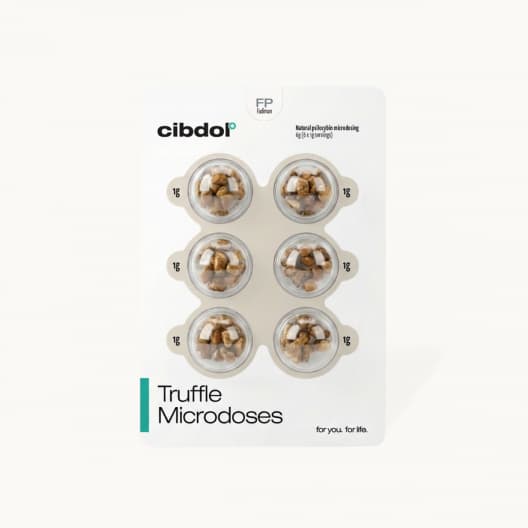

Truffle Microdoses (FP)
Cibdol Truffle Microdoses (FP), carefully prepared microdosing truffles designed for the Fadiman Protocol. Made with mild Psilocybe mexicana truffles, each pack contains 6 × 1g portions for subtle, non-psychoactive support. Ideal for those seeking inner calm through a gentle, structured microdosing approach.
- • For inner calm and emotional balance
- • Up to 1.0 mg psilocybin per dose (6×)
- • Up to 1.8 mg active tryptamines per dose
Disclosure: We may earn a commission if you purchase via these links.
Comparison at a Glance
| Factor | Psilocybin | LSD |
|---|---|---|
| Legal in EU (personal use) | Yes (NL truffles; CZ medical) | No |
| Duration | 4–6 hours | 8–12 hours |
| Primary receptor | 5-HT2A (selective) | 5-HT2A + dopamine + adrenergic |
| Stimulant quality | Low | High |
| Emotional warmth | High | Low |
| Sleep disruption risk | Low | Moderate–High |
| Research evidence (microdosing) | Moderate | Limited |
| Best for | Emotional goals, beginners, NL users | Cognitive focus, experienced users, non-EU only |
For a deeper dive into building a full nootropic protocol around microdosing, see Best Nootropic Stack for Focus.
Frequently Asked Questions
Is LSD or psilocybin better for microdosing?
There's no universal answer. Psilocybin suits most beginners, emotional goals, and European users (given legal access). LSD may suit experienced users seeking sustained cognitive stimulation, where legally accessible. Research evidence favours psilocybin across the board — more studies, better safety data, greater regulatory clarity. For the majority of readers, psilocybin is both the practical and evidentially stronger choice.
What's the difference between microdosing mushrooms and microdosing LSD?
"Mushrooms" in a microdosing context typically means psilocybin mushrooms or, in the Netherlands, psilocybin truffles. The active compound — psilocybin, metabolised to psilocin — is the same. The key differences from LSD: shorter duration (4–6 vs 8–12 hours), more emotional/warm effect profile, lower stimulation, legal availability in NL, and a stronger clinical research base. LSD is more stimulating, longer-lasting, and illegal across the EU.
Can you microdose LSD legally in Europe?
No. LSD is a controlled Schedule I substance in all EU member states. There is no legal route to personal-use LSD in the EU. Psilocybin truffles are the legal psychedelic microdosing option available in the Netherlands. Czechia authorised medical psilocybin from January 2026, but this applies to supervised clinical settings only.
Do LSD and psilocybin cause cross-tolerance?
Yes. Both substances primarily act on 5-HT2A serotonin receptors, and tolerance at that receptor develops rapidly after a dose — often within 24–48 hours. This means taking one substance reduces the effect of the other if taken soon after. Most protocols recommend at least 3 days between dose days; many practitioners suggest a full week when switching between substances. This is also why daily dosing doesn't work — tolerance accumulates faster than it clears.
How much do psilocybin truffles cost for microdosing?
Legal psilocybin truffle microdose products in the Netherlands typically range from €12–20 for a 6–10 dose supply. Azarius Microdosing Truffles Mental and Cibdol's truffle microdose capsules are both in this price range and are designed specifically for sub-perceptual dosing. This is a realistic ongoing cost if you're following a standard protocol like Fadiman (every third day, 4–6 weeks on, 2–4 weeks off).
Is there clinical trial evidence specifically for microdosing?
Less than many people assume. Most psilocybin clinical trials use full therapeutic doses (25mg+), not microdoses (1–3mg). The clearest microdosing-specific study is Szigeti et al. (2021, eLife), a self-blinding psilocybin study that found significant placebo effects alongside real benefits. Polito & Stevenson (2019, PLOS ONE) is the largest naturalistic study — showing reduced neuroticism and improved focus over 6 weeks, but without placebo controls. The field is active; expect more rigorous trials in the next 2–3 years.
Affiliate Disclosure
This article is for informational purposes only and is not intended as medical advice. Always consult a healthcare professional before starting any new supplement, especially if you take prescription medication.
Last updated: March 2026
Written by the Smart Supplements editorial team
Related topics
Where to buy
Affiliate linksMicrodosing Truffles
Cibdol microdosing truffle kits: FP (Fadiman), SP (Stamets), and OP (One-day-on/off). Lab-tested, 6×1g servings per pack. Choose by protocol and goal — inner calm, mental flexibility, or daily sharpness.
Microdosing XP Truffles
Pre-portioned psilocybin truffle strips designed specifically for microdosing — consistent dosing without a scale.
- • Pre-portioned for accurate microdosing
- • No scale needed — ready to use
- • Consistent psilocybin content per portion
Magic Truffles
Legal psilocybin truffles (sclerotia) available over the counter in the Netherlands. Multiple strains from mild to strong.
Mushroom Grow Kits
All-in-one psilocybin mushroom grow kits — just add water. Multiple strains available for home cultivation in the Netherlands.
Disclosure: We may earn a commission if you purchase via these links.
Related articles
Microdosing vs Nootropics: Two Paths to Cognitive Enhancement
A head-to-head comparison of microdosing psilocybin and nootropic supplements for cognitive enhancement — covering mechanisms, evidence, safety, and which
Microdosing for Focus and Productivity: What the Science Says
Microdosing for focus and productivity: what the science supports, which protocols work best for cognitive performance, and how to avoid common pitfalls.
Microdosing Stacks Beyond Stamets: Advanced Combinations for Experienced Users
Beyond the Stamets Stack: explore advanced microdosing combinations for neuroplasticity, focus, mood, creativity, and physical performance — with honest ev