
Blue Light and Sleep: Why Your Phone Is Ruining Your Rest
Written by Smart Supplements Editorial Team
Key takeaways
- Blue light (460–480 nm) is the most potent wavelength for suppressing melatonin via melanopsin-containing retinal cells
- Tablet reading before bed delayed melatonin onset by 1.5 hours in a landmark PNAS study
- The problem is more than blue light — screen engagement triggers dopamine and cortisol that independently disrupt sleep
- Blue light glasses have weak evidence; night mode helps but doesn't solve the problem
- The 90-minute rule (screens off 90 min before bed) is the most effective intervention
- Morning bright light exposure is the flip side — it improves evening melatonin timing and is free
Table of contents
- How Light Controls Your Sleep
- The Key Research
- It's Not Just Blue Light: The Engagement Problem
- Light Sources Ranked by Melatonin Impact
- Blue Light Solutions: What Works and What's Marketing
- The 90-Minute Rule: A Practical Evening Timeline
- What About E-Readers?
- Morning Bright Light: The Flip Side
- When Blue Light Management Isn't Enough: Supplemental Support
- Practical Tips for Screen-Dependent Workers
- Our Top Recommendations for Screen-Affected Sleep
- Frequently Asked Questions
- The Bottom Line
That late-night scroll through your phone isn't just stealing your time — it's actively suppressing the hormone your brain needs to fall asleep. Research shows that screen use before bed can delay melatonin onset by up to 1.5 hours, and the problem goes deeper than just blue light. Here's what the science actually says, what works, and what's just marketing.
How Light Controls Your Sleep
To understand why your phone is a sleep problem, you need to understand how light governs your circadian rhythm.
The Melanopsin Pathway
Your retina contains specialised cells called intrinsically photosensitive retinal ganglion cells (ipRGCs). Unlike the rods and cones that help you see, ipRGCs contain a photopigment called melanopsin — and their sole job is detecting ambient light levels to calibrate your circadian clock.
Melanopsin is most sensitive to short-wavelength light in the 460–480 nm range — which happens to be the peak emission spectrum of LED screens, LED room lighting, and smartphone displays. When these cells detect blue-enriched light, they send a "it's daytime" signal to the suprachiasmatic nucleus (SCN), your brain's master clock.
The SCN responds by telling the pineal gland to suppress melatonin production. This is perfectly appropriate during the day — but devastating when it happens at 11 PM because you're scrolling Instagram.
The Melatonin Suppression Problem
Under natural conditions, your pineal gland begins producing melatonin 2–3 hours before your natural bedtime — a process called dim light melatonin onset (DLMO). This is the biological signal that opens your "sleep gate."
Blue-enriched light from screens disrupts DLMO by:
- Directly suppressing melatonin synthesis in the pineal gland
- Phase-shifting your circadian clock later (telling your brain it's earlier than it is)
- Increasing alertness-promoting signals from the SCN
The result: you feel alert when you should feel sleepy, your sleep gate opens later, and your sleep architecture is compromised even after you finally fall asleep.
The Key Research
The iPad Study (Chang et al., 2015)
The most cited study in this field comes from Chang et al. (2015, PNAS — https://pubmed.ncbi.nlm.nih.gov/25535358/). Researchers had participants read on an iPad for 4 hours before bed, then compared results with reading a printed book under identical conditions.
The iPad reading group showed:
- Melatonin onset delayed by 1.5 hours
- 50% reduction in evening melatonin levels
- Increased time to fall asleep
- Reduced REM sleep
- Increased next-morning sleepiness (even after 8 hours in bed)
This wasn't a marginal effect — 1.5 hours of delayed melatonin onset is equivalent to a moderate case of jet lag, happening every single night.
LED Lighting Effects (Cajochen et al., 2011)
Cajochen et al. (2011, Journal of Applied Physiology — https://pubmed.ncbi.nlm.nih.gov/21164152/) studied the effects of LED-backlit computer screens versus non-LED screens. LED screens produced:
- Greater melatonin suppression
- Increased cognitive arousal
- Higher subjective alertness before sleep
- Delayed circadian timing
Dose-Response Relationship
West et al. (2011, Journal of Clinical Endocrinology and Metabolism — https://pubmed.ncbi.nlm.nih.gov/21193540/) established that brighter light and longer exposure produce greater melatonin suppression, with even relatively dim room lighting (~100 lux) capable of suppressing melatonin by 50% in some individuals.
It's Not Just Blue Light: The Engagement Problem
Here's what most "blue light" articles miss: the content on your screen matters as much as the light itself.
Dopamine and Social Media
Every notification, every like, every new piece of content triggers a small dopamine hit. Dopamine is a wakefulness-promoting neurotransmitter. Scrolling social media before bed creates a state of mild but persistent dopaminergic arousal that counteracts your brain's attempts to wind down.
Cortisol and News/Email
Reading stressful news or checking work emails before bed can elevate cortisol — the stress hormone that's supposed to peak in the morning and decline through the evening. Even a single stressful email can spike cortisol enough to delay sleep onset by 30+ minutes.
Cognitive Activation
Video games, intense TV shows, and engaging content activate your prefrontal cortex and default mode network in ways that are incompatible with sleep onset. Your brain needs 20–30 minutes of reduced cognitive stimulation to transition to a sleep-ready state.
The takeaway: Even if you could perfectly filter all blue light from your screen, the content itself would still be a sleep disruptor. This is why screen-free wind-down time is more effective than any blue light filter.
Light Sources Ranked by Melatonin Impact
| Light Source | Colour Temperature | Approx. Lux (typical use) | Relative Melatonin Suppression | Notes |
|---|---|---|---|---|
| Midday sunlight | 5500–6500K | 10,000–100,000 lux | Maximum | Great for morning, terrible for evening |
| LED overhead lighting | 4000–6500K | 300–500 lux | High | Most modern home/office lighting |
| Smartphone screen (full brightness) | 6500–7000K | 40–80 lux (at eye distance) | Moderate–high | Held close to face, high blue content |
| Tablet/laptop screen | 6000–7000K | 30–60 lux | Moderate–high | Chang et al. study used this |
| TV (viewed from couch distance) | Varies | 10–30 lux | Low–moderate | Distance reduces impact significantly |
| E-reader (front-lit, warm mode) | 2700–3500K | 5–15 lux | Low | Much better than tablet |
| Incandescent bulb | 2700K | 50–150 lux | Low | Warm spectrum, minimal blue |
| Candlelight | 1800K | 5–15 lux | Minimal | Our ancestors' evening lighting |
| Red light | 620–750 nm | Variable | Negligible | Outside melanopsin sensitivity range |
Blue Light Solutions: What Works and What's Marketing
Blue Light Glasses: Mostly Marketing
This might be controversial, but the evidence is weak.
Lawrenson et al. (2017, Ophthalmic and Physiological Optics — https://pubmed.ncbi.nlm.nih.gov/28211140/) reviewed the evidence for blue light-filtering lenses and found insufficient evidence to recommend them for sleep improvement or reduced eye strain. A more recent Cochrane review (Singh et al., 2023) reached similar conclusions.
The problem: most blue light glasses only filter 10–25% of blue light — nowhere near enough to meaningfully shift melatonin timing. The "blue light blocking" label suggests more protection than they actually provide.
Exception: Amber or orange-tinted glasses that block 90%+ of blue and green wavelengths (below 550 nm) may be more effective, but the evidence is still limited and they make everything look orange.
Night Mode Software: Helpful but Insufficient
iOS Night Shift, Android Night Light, and f.lux reduce blue light emission by shifting the display toward warmer tones. This helps — but studies show the reduction is only partial.
Nagare et al. (2019, Lighting Research & Technology) found that Night Shift on its maximum warm setting reduced melatonin suppression by about 50% compared to standard display — helpful, but still not as good as no screen at all.
Best practice: Use night mode AND reduce brightness AND limit screen time. The combination is more effective than any single measure.
The Real Solution: Time-Based Restriction
The most effective intervention is the simplest and requires no products: stop using screens 60–90 minutes before bed.
This gives your brain time to:
- Recover from blue light-induced melatonin suppression
- Wind down from content-driven arousal
- Begin natural DLMO
- Transition from sympathetic (active) to parasympathetic (rest) nervous system dominance
For a full guide to building an effective wind-down routine, see our sleep hygiene tips.
The 90-Minute Rule: A Practical Evening Timeline
| Time Before Bed | Action | Why |
|---|---|---|
| 3 hours | Last caffeine, last intense exercise | Half-life management, core temp |
| 2 hours | Dim overhead lighting to 50%, warm tones | Begin melatonin-friendly environment |
| 90 min | Screens off — switch to books, music, conversation | The critical threshold for melatonin recovery |
| 60 min | Herbal tea, journaling, gentle stretching | Chamomile or passionflower ritual |
| 45 min | Warm bath or shower (optional) | Post-bath core temp drop promotes sleepiness |
| 30 min | Melatonin or sleep supplement if using | Optimal timing for most sleep compounds |
| 15 min | In bed, read a few pages of fiction | Final wind-down |
| 0 min | Lights out | Sleep gate should be open |
What About E-Readers?
Not all screens are equal. Dedicated e-readers like the Kindle Paperwhite use front-lit e-ink technology that produces far less blue light than LCD/OLED screens:
| Device | Blue Light Output | Melatonin Impact | Verdict |
|---|---|---|---|
| iPad / tablet | High (LCD backlit) | Significant | Avoid before bed |
| Smartphone | High (OLED/LCD) | Significant | Avoid before bed |
| Laptop | High (LCD backlit) | Significant | Avoid before bed |
| Kindle Paperwhite (warm mode) | Very low | Minimal | Generally okay |
| Physical book + dim light | None (from device) | Minimal | Best option |
If you must read on a device before bed, a dedicated e-reader on warm display mode at low brightness is dramatically better than a tablet or phone.
Morning Bright Light: The Flip Side
The discussion about blue light and sleep is incomplete without addressing its beneficial role in the morning.
Morning bright light exposure (within 30–60 minutes of waking) is one of the most powerful tools for:
- Suppressing residual melatonin (helping you feel alert)
- Advancing your circadian phase (helping you feel sleepy earlier in the evening)
- Boosting cortisol at the appropriate time (morning peak)
- Improving mood and energy throughout the day
Mistlberger & Skene (2004, Sleep Medicine Reviews — https://pubmed.ncbi.nlm.nih.gov/15033149/) reviewed the evidence for light therapy and circadian regulation, confirming that timed bright light exposure is one of the most effective non-pharmacological interventions for circadian-related sleep problems.
Practical tips:
- Get outside within 30 minutes of waking, even on cloudy days (outdoor light: 2,000–100,000 lux vs indoor: 100–500 lux)
- If you can't get outside, use a 10,000 lux light therapy box for 20–30 minutes
- Don't wear sunglasses during your morning light session
- In northern European winters (Netherlands, Scandinavia), light therapy boxes become especially important due to limited natural light
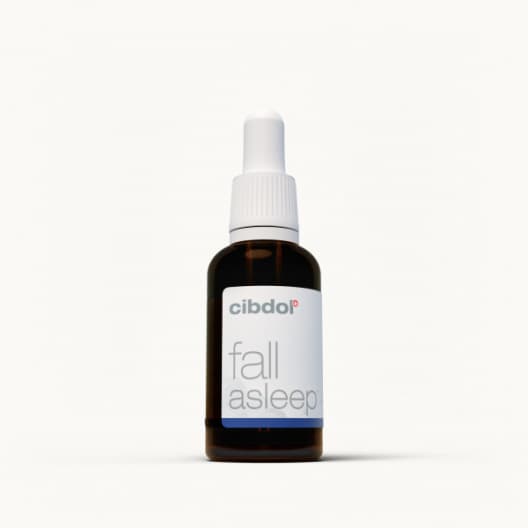

Fall Asleep (Meladol)
Liposomal CBD + melatonin for faster sleep onset.
- • CBD + melatonin
- • Liposomal formula
- • 30ml bottle
Disclosure: We may earn a commission if you purchase via these links.
When Blue Light Management Isn't Enough: Supplemental Support
If you've optimised your evening light environment and still struggle with sleep onset, targeted supplements can bridge the gap — particularly those that support the melatonin pathway that screens have been suppressing.
Melatonin as a Bridge
For people whose melatonin timing has been chronically disrupted by evening screen use, a short course of low-dose melatonin (0.3–1 mg) can help reset the circadian clock while you establish better light habits. Take it 30 minutes before your target bedtime and combine it with screen-free wind-down time.
GABA Support for Screen-Induced Arousal
If the issue is less about melatonin timing and more about the mental arousal from screen content, GABA-supporting compounds like magnesium (300 mg glycinate) or valerian root may help calm an activated mind.
Multi-Compound Approaches
Several products combine melatonin with calming compounds to address both the circadian disruption and the arousal components of screen-related sleep issues.
Dream Mist Sleep Spray
Zamnesia Dream Mist — a fast-acting oral sleep spray combining GABA (84mg), lemon balm 10:1 extract (88mg), and melatonin (0.81mg) per 3-spray dose. Refreshing spearmint flavour for easy nighttime use. Spray sublingually 30–45 minutes before bed for rapid absorption.
- • GABA + lemon balm + melatonin — triple-action oral spray
- • Fast-acting sublingual absorption — no capsules needed
- • Refreshing spearmint flavour
Disclosure: We may earn a commission if you purchase via these links.
Practical Tips for Screen-Dependent Workers
Not everyone can simply put their phone down at 8 PM. Shift workers, remote workers, gamers, and anyone whose work or social life revolves around screens needs practical compromises:
- Use the biggest screen possible: A TV across the room delivers far less blue light to your retina than a phone 30 cm from your face
- Enable night mode always after sunset — set it to automatic
- Reduce brightness to minimum readable levels in the evening
- Use dark mode on apps and operating systems — fewer bright pixels, less total light output
- Set a "last scroll" alarm — a non-negotiable cutoff for social media and news
- Switch to audio after your cutoff — podcasts, audiobooks, and music are screen-free entertainment
- If you must use screens late: amber-tinted glasses + night mode + minimum brightness is the best compromise
Super Sleep
Zamnesia Super Sleep — a fast-acting liposomal sleep formula combining golden-grade CBD (75mg total), melatonin, and liposomal delivery for enhanced absorption. All-natural ingredients from European organic hemp with no detectable THC. 30ml dropper bottle, take before bed.
- • Fast-acting liposomal formula for enhanced CBD absorption
- • Golden-grade CBD + melatonin — dual-action sleep support
- • All-natural ingredients, no detectable THC
Disclosure: We may earn a commission if you purchase via these links.
Our Top Recommendations for Screen-Affected Sleep
For fast-acting melatonin replacement, the Zamnesia Dream Mist spray (GABA + melatonin + lemon balm) delivers melatonin quickly to compensate for screen-suppressed production.
For CBD + melatonin in a liposomal formula, the Cibdol Fall Asleep (Meladol) addresses both the melatonin suppression and the anxiety/arousal from screen engagement.
For a comprehensive liposomal approach, Zamnesia Super Sleep combines golden-grade CBD with melatonin for dual-action circadian and relaxation support.
Affiliate disclosure: Smart Supplements earns a commission on purchases made through partner links. This doesn't affect our editorial content or recommendations.
Dream Gummies Cherry
Zamnesia Dream Gummies Cherry — vegan sleep gummies combining valerian root extract (25mg, 10:1), passionflower extract (20mg, 10:1), and melatonin (0.29mg) per gummy. Delicious cherry flavour with natural colouring. 60 gummies per tub. Take one gummy 45 minutes before bed.
- • Valerian + passionflower + melatonin — herbal sleep gummies
- • Vegan-friendly pectin-based formula, no gelatine
- • Delicious cherry flavour with natural colouring
Disclosure: We may earn a commission if you purchase via these links.
Frequently Asked Questions
Do blue light glasses actually work for sleep?
The evidence is weak. Most blue light glasses filter only 10–25% of blue light, which isn't enough to meaningfully shift melatonin timing. The Cochrane review by Singh et al. (2023) found insufficient evidence that blue light-filtering lenses improved sleep quality. Amber-tinted glasses that block 90%+ of short wavelengths may be more effective, but the most reliable intervention remains reducing screen time before bed rather than filtering light through it.
How much screen time before bed is too much?
The Chang et al. (2015) study used 4 hours of iPad reading to produce a 1.5-hour melatonin delay — but even shorter sessions have effects. Most sleep researchers recommend limiting screen exposure to zero within 60–90 minutes of bedtime. If that's not feasible, even a 30-minute screen-free buffer with night mode on beforehand is better than nothing. The relationship is dose-dependent: less screen time = less melatonin suppression.
Is TV before bed as bad as phone use?
Not quite. TV watched from a couch (2–3 metres away) delivers significantly less light to your retina than a phone held 30 cm from your face. The blue light impact is lower, though the content stimulation still matters. A calm documentary is far better for sleep than a thriller or social media scroll on a phone. If you need a screen in the evening, TV at a distance is the better choice.
Does dark mode help with sleep?
Dark mode reduces the total amount of light emitted by your screen, which modestly reduces melatonin suppression. However, the bright elements that remain (white text, images, videos) still emit blue-enriched light. Dark mode is a useful addition to night mode and reduced brightness, but not a solution on its own. Think of it as one layer in a multi-layer strategy.
Can morning sunlight really improve my evening sleep?
Yes — and the evidence is strong. Morning bright light exposure (ideally natural sunlight within 30–60 minutes of waking) advances your circadian phase, meaning your body starts producing melatonin earlier in the evening. This is particularly important for people who tend to be "night owls" or those in northern Europe where winter daylight hours are limited. It's free, has zero side effects, and improves both mood and sleep.
Should I use a light therapy box in winter?
If you're in the Netherlands or northern Europe, where winter daylight can be limited to 7–8 hours with low intensity, a 10,000 lux light therapy box used for 20–30 minutes each morning can significantly improve circadian timing and mood. It's one of the most evidence-based interventions for seasonal sleep disruption and seasonal affective disorder (SAD). Position it at arm's length, slightly above eye level, and don't stare directly at it.
The Bottom Line
Blue light from screens is a real, measurable sleep disruptor — but it's only part of the story. The content you consume matters just as much as the light it emits. The most effective solution isn't a pair of fashionable blue-light glasses or a night mode filter — it's a screen-free wind-down period of 60–90 minutes before bed, combined with bright morning light to anchor your circadian rhythm.
If you implement the 90-minute rule and get morning light exposure, you've addressed the two most powerful light-based interventions for sleep. Layer in a low-dose melatonin supplement if needed while your circadian rhythm recalibrates, and build your broader sleep approach using our sleep supplement stack guide.
For the complete foundation, start with our sleep hygiene guide — light management is just one piece of the puzzle.
This article is for informational purposes only and is not intended as medical advice. Always consult a healthcare professional before starting any new supplement, especially if you take prescription medication.
Last updated: March 2026
Written by the Smart Supplements editorial team
Related topics
Where to buy
Affiliate linksMADMONQ ZEN PLUS
Advanced evening drink for sleep and stress recovery — without melatonin or sedatives. Six natural ingredients: Cyracos® (600mg lemon balm extract), Saffron, Magnesium (170mg elemental), Chamomile, L-Theanine, and Myo-Inositol. Dissolve in hot water 30–60 minutes before bed. Zero morning fog, no habit-forming ingredients. 28 sachets per pack.
- • Cyracos® lemon balm — clinically studied for sleep quality
- • No melatonin — zero morning grogginess or dependency
- • Saffron + Chamomile for natural relaxation
Super Sleep
Zamnesia Super Sleep — a fast-acting liposomal sleep formula combining golden-grade CBD (75mg total), melatonin, and liposomal delivery for enhanced absorption. All-natural ingredients from European organic hemp with no detectable THC. 30ml dropper bottle, take before bed.
- • Fast-acting liposomal formula for enhanced CBD absorption
- • Golden-grade CBD + melatonin — dual-action sleep support
- • All-natural ingredients, no detectable THC
Solid Sleep
Zamnesia Solid Sleep — a multi-compound sleep capsule combining CBD (12.5mg), CBN (12.5mg), hops (50mg), and Griffonia simplicifolia (167mg, 30% 5-HTP) per capsule. Designed for deep, uninterrupted sleep with effects in approximately 20 minutes. 30 plant-based HPMC capsules per bottle.
- • CBD + CBN + hops + 5-HTP — four-compound sleep formula
- • Promotes deep, uninterrupted sleep
- • Fast-acting — effects in approximately 20 minutes
Dream Gummies Cherry
Zamnesia Dream Gummies Cherry — vegan sleep gummies combining valerian root extract (25mg, 10:1), passionflower extract (20mg, 10:1), and melatonin (0.29mg) per gummy. Delicious cherry flavour with natural colouring. 60 gummies per tub. Take one gummy 45 minutes before bed.
- • Valerian + passionflower + melatonin — herbal sleep gummies
- • Vegan-friendly pectin-based formula, no gelatine
- • Delicious cherry flavour with natural colouring
Disclosure: We may earn a commission if you purchase via these links.
Related articles
Melatonin: Benefits, Dosage, and When You Should (and Shouldn't) Take It
Most people take too much melatonin. Research shows lower doses (0.3–1 mg) often work better than the 5–10 mg tablets commonly sold — and timing matters mo
Building a Sleep Supplement Stack: What to Combine (and What Not To)
Most sleep supplements work better together than alone — but only if you combine them correctly. Here are specific stacks for anxiety-driven insomnia, earl
5-HTP: The Serotonin Precursor That Helps You Sleep
Your body makes melatonin from serotonin, and serotonin from 5-HTP. Supplementing this natural amino acid can improve sleep by boosting your body's own mel