
San Pedro and Peyote: Mescaline Cacti Explained
Written by Smart Supplements Editorial Team
Key takeaways
- Peyote and San Pedro are the two primary mescaline-producing cacti, with thousands of years of ceremonial use.
- Mescaline is a 5-HT2A agonist producing a warm, visual, euphoric psychedelic experience lasting 8–12 hours.
- Seeds are legal to buy and grow in the Netherlands. Extracting mescaline is illegal.
- San Pedro grows much faster than peyote and is more practical for home cultivation.
- Both cacti have deep ceremonial traditions that deserve respect and understanding.
Table of contents
What Are Mescaline Cacti?
Mescaline (3,4,5-trimethoxyphenethylamine) is a naturally occurring psychedelic compound found in several cactus species. It belongs to the phenethylamine class — chemically distinct from tryptamine psychedelics like psilocybin and DMT, and from ergoline psychedelics like LSD.
The two primary mescaline-producing cacti available as seeds in European smartshops are:
Peyote (Lophophora williamsii)
A small, spineless, button-shaped cactus native to the Chihuahuan Desert of Mexico and southern Texas. Peyote has been used ceremonially by indigenous peoples for at least 5,000 years — making it one of the oldest continuously used psychoactive plants in human history.
San Pedro (Echinopsis pachanoi)
A tall, fast-growing columnar cactus native to the Andes mountains of Peru, Bolivia, and Ecuador. San Pedro has been used in traditional healing ceremonies (mesa rituals) for an estimated 3,000+ years. Archaeological evidence from the Chavín de Huántar temple complex in Peru shows San Pedro use dating to at least 1300 BCE.
Peyote vs San Pedro: Key Differences
| Property | Peyote | San Pedro |
|---|---|---|
| Species | Lophophora williamsii | Echinopsis pachanoi |
| Appearance | Small, round, spineless button | Tall columnar cactus, ribbed |
| Height | 2–7 cm above ground | Up to 6 metres |
| Growth rate | Extremely slow (years per cm) | Fast (30–40 cm per year) |
| Mescaline content | ~1–6% of dry weight | ~0.1–2.4% of dry weight |
| Time to maturity from seed | 5–15+ years | 2–5 years |
| Traditional context | Native American Church (NAC) | Andean mesa ceremonies |
| Seed price (Azarius) | €6.95 | €6.50 |
| Cultivation difficulty | Challenging (very slow, rot-prone) | Moderate (hardy, fast-growing) |
For practical purposes, San Pedro is the more accessible cactus. It grows significantly faster, tolerates a wider range of conditions, and is far easier to cultivate from seed. Peyote is a rewarding but patience-testing collector plant that may take a decade or more to reach a meaningful size.
Mescaline: How It Works
Mescaline is a classic serotonin 5-HT2A receptor agonist — the same primary mechanism as psilocybin and LSD. However, mescaline's phenethylamine structure gives it a subjective character that users consistently distinguish from tryptamine psychedelics.
Pharmacological Profile
| Property | Mescaline |
|---|---|
| Chemical class | Phenethylamine |
| Primary receptor | 5-HT2A (serotonin) |
| Secondary receptors | 5-HT2B, 5-HT2C, dopamine D1/D2 |
| Active dose (pure) | 200–400mg |
| Onset | 45–90 minutes |
| Peak | 2–4 hours |
| Total duration | 8–12 hours |
| LD50 (estimated) | Very high — no documented human fatalities from mescaline alone |
How Mescaline Differs from Psilocybin
While both act on 5-HT2A receptors, mescaline's additional dopaminergic activity contributes to its distinctive character:
- More body euphoria and physical warmth than psilocybin
- Stronger visual effects (vivid colour enhancement, geometric patterns) at equivalent subjective doses
- A more stimulating, outward quality compared to psilocybin's introspective tendency
- Significantly longer duration (8–12 hours vs 4–6 hours)
Effects of Mescaline
Mescaline produces a full psychedelic experience that is widely regarded as one of the most beautiful and emotionally warm of any psychedelic substance.
Visual Effects
- Intense colour enhancement — the world appears brighter, more saturated
- Geometric patterns and fractal imagery (eyes closed and open)
- "Breathing" surfaces and flowing textures
- Light halos and trails
- Visual clarity that many users describe as "seeing things as they truly are"
Emotional and Cognitive Effects
- Deep emotional warmth and empathy
- Profound sense of connection to nature and the living world
- Euphoria and joy — mescaline is often described as the "happiest" psychedelic
- Philosophical and spiritual insights
- Enhanced appreciation of art, music, and natural beauty
- Time dilation — hours can feel much longer or shorter
Physical Effects
- Nausea during the come-up (common with cactus preparations, less so with pure mescaline)
- Stimulation and energy (more stimulating than psilocybin)
- Pupil dilation
- Mild jaw tension
- Increased heart rate
Duration Timeline
| Phase | Time |
|---|---|
| Onset | 45–90 minutes |
| Come-up (often with nausea) | 1–2 hours |
| Peak | 2–4 hours after onset |
| Plateau | 4–8 hours |
| Come-down | 8–12 hours |
| Afterglow | 12–24 hours |
Traditional and Ceremonial Use
Peyote and the Native American Church
Peyote has been central to indigenous spiritual practices in North America for thousands of years. The Native American Church (NAC), established in the late 19th century, formally incorporated peyote as a sacrament in ceremonial practices that blend indigenous traditions with Christian elements.
Peyote ceremonies typically involve:
- An all-night gathering led by a "road chief" (ceremonial leader)
- Consumption of peyote buttons as a sacrament
- Singing, drumming, and prayer
- A communal breakfast at dawn
In the United States, peyote use is legally protected for enrolled members of the NAC under the American Indian Religious Freedom Act. This protection does not extend to non-indigenous use.
San Pedro and Andean Ceremonies
San Pedro (huachuma in Quechua) is used in traditional Andean healing ceremonies led by curanderos (traditional healers). The mesa ceremony involves:
- Preparation of San Pedro tea by boiling cactus slices for several hours
- Ceremonial context with offerings, prayers, and healing rituals
- Guidance through the experience by an experienced curandero
- Focus on healing, cleansing, and spiritual connection
San Pedro ceremonies remain practiced throughout Peru, Bolivia, and Ecuador, and have gained international interest through the psychedelic retreat movement.
Respect for Tradition
If you grow mescaline cacti, it is worth understanding the cultures that have used them for millennia. Peyote in particular is considered sacred by multiple indigenous nations, and its overharvesting in the wild is a serious conservation concern. Growing peyote from seed (rather than wild-harvesting) is the ethically responsible approach.
Growing Mescaline Cacti from Seed
Both cacti can be grown from seed in the Netherlands and across Europe. This is legal — you are growing an ornamental plant.
San Pedro (Easier)
| Stage | Timeline | Key Requirements |
|---|---|---|
| Germination | 1–3 weeks | Moist soil, warmth (20–25°C), indirect light |
| Seedling | 1–6 months | Keep soil slightly moist, avoid direct sun |
| Juvenile | 6 months–2 years | Gradually increase sun exposure, reduce watering |
| Mature | 2–5 years | Full sun, well-draining soil, minimal water in winter |
San Pedro is remarkably hardy once established. It tolerates a wider temperature range than peyote and can be grown outdoors in mild European climates during summer (bring indoors for winter).
Peyote (Challenging)
| Stage | Timeline | Key Requirements |
|---|---|---|
| Germination | 1–4 weeks | Mineral soil, warmth, humidity dome |
| Seedling | 1–12 months | Very slow growth, minimal water, avoid overwatering |
| Juvenile | 1–5 years | Extremely slow, rot-prone if over-watered |
| Mature | 5–15+ years | Desert conditions: full sun, minimal water, mineral soil |
Peyote is notoriously slow-growing. Many growers graft young peyote onto faster-growing rootstock (Pereskiopsis or Echinopsis) to accelerate growth — a technique that is well-documented in cactus cultivation communities.
General Tips
- Use well-draining cactus/succulent soil mix
- Terracotta pots are better than plastic (they breathe)
- Water sparingly — overwatering is the #1 cause of cactus death
- Provide a cool, dry winter dormancy period for best growth
Legal Status in Europe
The legal status of mescaline cacti in Europe involves a key distinction: the plants and seeds are generally legal; the extracted compound mescaline is not.
| Country | Seeds Legal? | Growing Legal? | Mescaline (extracted) | Notes |
|---|---|---|---|---|
| Netherlands | ✅ | ✅ | ❌ | Seeds sold in smartshops, cultivation for ornamental purposes legal |
| Germany | ✅ | ⚠️ Grey area | ❌ | Seeds legal, cultivation for ornamental purposes tolerated |
| UK | ✅ | ✅ | ❌ | Mescaline is Class A; live plants not specifically prohibited |
| Spain | ✅ | ✅ | ❌ | Live plants legal, extraction prohibited |
| France | ⚠️ | ⚠️ | ❌ | Some restrictions on certain cactus species |
| Italy | ✅ | ✅ | ❌ | Similar to UK framework |
The Legal Line
The general principle across Europe: growing mescaline cacti as ornamental plants is legal or tolerated. Extracting, concentrating, or preparing mescaline for consumption crosses into controlled substance territory. This is a meaningful legal distinction — possession of a potted San Pedro cactus is a horticultural activity; possession of mescaline powder is a criminal offence.
Safety and Harm Reduction
While this article focuses on mescaline cacti as collectible plants, understanding the safety profile of mescaline is part of responsible education.
Physical Safety
Mescaline has a very wide therapeutic index — the lethal dose is estimated to be many times higher than the active dose. There are no documented fatalities from mescaline alone in modern medical literature. However:
- Nausea is extremely common with cactus preparations (less so with purified mescaline)
- Cardiovascular stimulation — caution for people with heart conditions
- Duration — 8–12 hours requires planning and commitment
- Dehydration — stay hydrated, especially in warm environments
Psychological Safety
As a full serotonergic psychedelic, mescaline carries the same psychological considerations as psilocybin:
- Set and setting are critical
- Not appropriate for people with psychosis, schizophrenia, or bipolar disorder
- Challenging experiences are possible, especially at higher doses
- A sitter is recommended for inexperienced users
- Integration support is valuable after profound experiences
Contraindications
| Condition | Risk |
|---|---|
| Heart conditions | Cardiovascular stimulation |
| Psychosis / Schizophrenia | May trigger episodes |
| Pregnancy | No safety data |
| SSRIs | Reduced effects, theoretical serotonin concerns |
| Lithium | Seizure risk (as with all serotonergic psychedelics) |
For general smartshop safety guidance, see: Smartshop Safety Guide
Frequently Asked Questions
Are mescaline cactus seeds legal?
Yes, in the Netherlands and most European countries. Seeds are sold as ornamental collector items in smartshops. Growing the plants is legal. Extracting or possessing purified mescaline is illegal in most jurisdictions.
How long does it take to grow peyote from seed?
Peyote grows extremely slowly — expect 5–15+ years to reach a mature size from seed without grafting. Grafting onto faster rootstock can accelerate growth significantly. San Pedro is a much faster alternative, reaching meaningful size in 2–5 years.
What does mescaline feel like?
Mescaline produces a warm, visual, emotionally rich psychedelic experience lasting 8–12 hours. It is often described as the "happiest" psychedelic — characterised by intense colour enhancement, profound empathy, nature connection, and euphoria. Nausea during the come-up is common with cactus preparations.
Is peyote endangered?
Wild peyote populations in Mexico and Texas are under significant pressure from overharvesting and habitat loss. Growing peyote from seed is the ethically responsible approach — it reduces demand for wild-harvested specimens and supports conservation.
Can you buy mescaline cacti online?
You can buy seeds online from smartshops like Azarius. Some specialist nurseries also sell live San Pedro cuttings or seedlings. Peyote plants are less commonly available and more expensive due to their slow growth rate.
Where to Buy Seeds
Affiliate disclosure: Smart Supplements earns a commission on purchases made through partner links. This doesn't affect our editorial content or recommendations.

San Pedro Seeds
San Pedro cactus seeds (Echinopsis pachanoi) from Azarius — a fast-growing columnar cactus from the Andes with deep shamanic roots. Popular as an ornamental plant and collector item.
- • Echinopsis pachanoi — fast-growing Andean cactus
- • Deep shamanic and ceremonial history
- • Popular collector and ornamental plant
Disclosure: We may earn a commission if you purchase via these links.
Peyote Seeds
Peyote cactus seeds (Lophophora williamsii) from Azarius — sold as ornamental cactus seeds. The Peyote cactus has a long history of ceremonial use in Native American traditions. Slow-growing, collector plant.
- • Lophophora williamsii — ornamental collector cactus
- • Deep ceremonial significance in Native American tradition
- • Slow-growing, long-lived cactus plant
Disclosure: We may earn a commission if you purchase via these links.
This article is for informational purposes only and is not intended as medical advice. Always consult a healthcare professional before starting any new supplement, especially if you take prescription medication.
Related topics
Where to buy
Affiliate linksSmartshop
Azarius' full smartshop range — psychoactive herbs, party supplements, relaxation products, and functional caps.
Herbshop
Natural herbs and botanical products — from Blue Lotus and Kanna to Valerian and Damiana. Traditional and functional herbs.
Kanna (Sceletium tortuosum)
Kanna extract — South African mood-lifting herb used as a natural anxiolytic and mood enhancer.
- • Traditional South African ethnobotanical
- • Mood lift and anxiolytic
- • Serotonin reuptake inhibitor mechanism
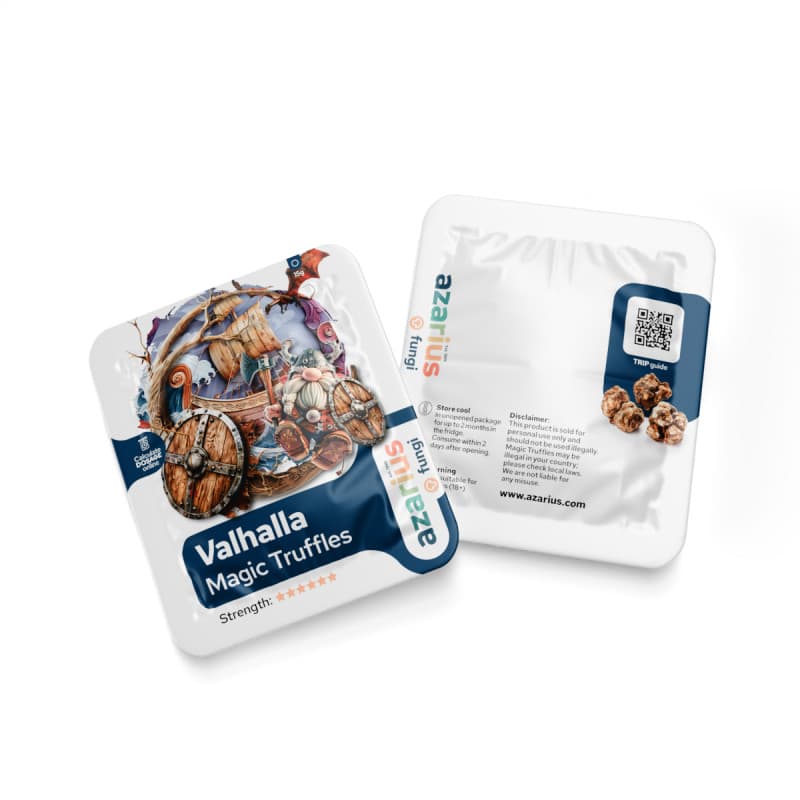
Magic Truffles Valhalla
The strongest truffle in the Azarius range. Valhalla is named after the Norse realm of the gods — and it lives up to the legend. Expect a full-on psychedelic odyssey with overwhelming visuals, a warrior's sense of clarity, and transformative depth. Experienced users only.
- • The most potent truffle Azarius offers — handle with care
- • Full-intensity visuals, clarity, and transformative experience
- • 15g pack — legally sold in Dutch smartshops
Disclosure: We may earn a commission if you purchase via these links.
Related articles
LSA Seeds: Morning Glory and Hawaiian Baby Woodrose Explained
LSA is LSD's natural cousin — found in ordinary seeds you can buy legally in the Netherlands. Here is everything you need to know about this overlooked psy
Salvia Divinorum: Effects, Risks, and What to Know
Salvia divinorum is one of the most intense legal psychoactive plants on Earth — a trip that can feel like an eternity but lasts only minutes. Here is the
Smartshop Products in Europe: What Is Legal Where? (2026 Country Guide)
Smartshop product legality varies wildly across Europe. This country-by-country guide covers truffles, kanna, kratom, salvia, blue lotus, and more — so you