
Kanna vs SSRIs: Natural SRI vs Pharmaceutical Antidepressants
Written by Smart Supplements Editorial Team
Key takeaways
- Kanna (mesembrine) and SSRIs both inhibit serotonin reuptake, but the similarity largely ends there.
- SSRIs have hundreds of randomised controlled trials supporting their use. Kanna has a handful of small studies.
- Kanna is NOT a proven treatment for clinical depression — it is a botanical supplement with mood-boosting properties.
- Combining kanna with SSRIs, SNRIs, or MAOIs risks serotonin syndrome, a potentially fatal medical emergency.
- Anyone considering kanna as an alternative to prescribed medication must consult their doctor first.
Table of contents
How SSRIs Work
Selective serotonin reuptake inhibitors (SSRIs) are the most widely prescribed class of antidepressant medication worldwide. They work by blocking the reuptake of serotonin (5-HT) in the synaptic cleft — the tiny gap between nerve cells where neurotransmitters do their work.
The Mechanism
Under normal conditions, after serotonin is released by a presynaptic neuron, it crosses the synapse, activates receptors on the postsynaptic neuron, and is then reabsorbed ("reuptaken") back into the presynaptic neuron by a protein called the serotonin transporter (SERT). SSRIs block SERT, preventing this reabsorption and leaving more serotonin available in the synapse.
Clinical Profile
| Property | SSRIs |
|---|---|
| Mechanism | Selective SERT blockade |
| Onset of therapeutic effect | 2–6 weeks |
| Prescribed for | Major depression, generalised anxiety, OCD, PTSD, panic disorder, social anxiety |
| Evidence base | Hundreds of RCTs, meta-analyses, decades of clinical use |
| Regulatory status | FDA/EMA approved |
| Common side effects | Sexual dysfunction, weight gain, nausea, insomnia, emotional blunting |
| Withdrawal | Discontinuation syndrome (dizziness, irritability, "brain zaps") in many patients |
| Availability | Prescription only |
SSRIs are effective for many people. They are also imperfect — side effects are common, and not everyone responds. Approximately 30–40% of patients with major depressive disorder do not achieve remission with first-line SSRI treatment (Rush et al., 2006, STAR*D trial).
How Kanna Works
Kanna's active compound mesembrine also inhibits the serotonin transporter (SERT), making it a natural serotonin reuptake inhibitor. But kanna's pharmacology is more complex than just SRI activity.
Beyond Serotonin Reuptake
Research has identified additional mechanisms in kanna:
- PDE4 inhibition — mesembrine inhibits phosphodiesterase-4, an enzyme involved in inflammatory signalling and cognitive function. PDE4 inhibition is being researched independently as a pathway for treating depression and cognitive decline (Harvey et al., 2011).
- VMAT2 inhibition — kanna alkaloids may affect vesicular monoamine transport, influencing how monoamines (serotonin, dopamine, norepinephrine) are stored and released.
- 5-HT receptor activity — some kanna alkaloids appear to interact directly with serotonin receptor subtypes, not just the transporter.
The Terburg Study (2013)
The most significant human study on kanna's psychological effects was conducted by Terburg et al. (2013), published in Neuropsychopharmacology. Using functional MRI, the researchers showed that a single 25mg dose of a standardised kanna extract (Zembrin) reduced amygdala reactivity to fearful faces — the same brain region and response pattern that SSRIs modulate over weeks of treatment.
Critically, this effect was observed after a single dose, whereas SSRIs typically require 2–6 weeks of daily administration to produce comparable anxiolytic effects.
Clinical Profile
| Property | Kanna (Mesembrine) |
|---|---|
| Mechanism | SERT inhibition + PDE4 inhibition + additional pathways |
| Onset of effect | Minutes to hours (single dose) |
| Used for | Mood support, anxiety reduction, social confidence (not clinically indicated) |
| Evidence base | Handful of small studies (Terburg 2013, Nell 2013, Zembrin trials) |
| Regulatory status | Herbal supplement — NOT FDA/EMA approved for any medical condition |
| Common side effects | Headache, nausea, insomnia (uncommon at standard doses) |
| Withdrawal | Not reported in available literature |
| Availability | Over-the-counter (smartshops, online vendors) |
Mechanism Comparison
| Factor | SSRIs | Kanna (Mesembrine) |
|---|---|---|
| Primary mechanism | Selective SERT blockade | SERT blockade + PDE4 inhibition |
| Selectivity | Highly selective (designed to target SERT specifically) | Less selective (multiple active alkaloids, multiple targets) |
| Potency at SERT | High (nanomolar affinity) | Moderate (micromolar range) |
| Onset | 2–6 weeks for full therapeutic effect | Minutes to hours per dose |
| Duration per dose | Continuous (daily dosing, steady state) | 1–5 hours depending on format |
| Half-life | Long (hours to days) | Short (estimated 1–3 hours) |
| Dosing regimen | Daily, continuous | As needed or periodic |
| Additional mechanisms | Minimal (some 5-HT receptor effects) | PDE4 inhibition, possible VMAT2 effects |
What This Means Practically
SSRIs create a sustained, constant increase in synaptic serotonin levels through daily dosing. The brain gradually adapts to this new baseline over 2–6 weeks, which is when therapeutic effects emerge.
Kanna produces a shorter, more acute effect on serotonin reuptake with each dose. The mood-boosting effects come and go with each administration rather than building to a new neurochemical steady state. This makes kanna fundamentally different in how it is experienced — more like a "mood boost on demand" than a background neurochemical shift.
The Evidence Gap
This is where intellectual honesty is essential. The evidence supporting SSRIs and the evidence supporting kanna are in entirely different leagues.
SSRIs: A Deep Evidence Base
- Hundreds of randomised controlled trials across multiple decades
- Large meta-analyses confirming moderate efficacy for depression (Cipriani et al., 2018, The Lancet)
- FDA and EMA approval based on rigorous clinical trial programmes
- Post-marketing surveillance from millions of patient-years of real-world use
- Known limitations — well-characterised side effect profiles, treatment-resistant populations, withdrawal effects
Kanna: An Emerging Evidence Base
- Terburg et al., 2013 — fMRI study showing reduced amygdala threat reactivity with 25mg Zembrin (n=16, healthy volunteers, not depressed patients)
- Nell et al., 2013 — preclinical study on mesembrine's SRI and PDE4 inhibition mechanisms
- Zembrin clinical trials — small-scale studies on a specific standardised extract showing improvements in mood and cognitive flexibility
- Harvey et al., 2011 — review of Sceletium tortuosum pharmacology
- Ethnobotanical evidence — centuries of traditional use by the Khoikhoi and San peoples of South Africa
The Honest Assessment
Kanna has promising pharmacology and intriguing preliminary results. It does not have the evidence base to be recommended as a treatment for clinical depression, anxiety disorders, or any other psychiatric condition. The studies that exist are small, often in healthy volunteers rather than clinical populations, and mostly funded by companies with commercial interests in kanna products.
This does not mean kanna does not work. It means we cannot make claims about its clinical efficacy with the same confidence we can for SSRIs.
Potential Advantages of Kanna Over SSRIs
Based on available evidence and user reports, kanna may offer certain advantages in specific contexts:
Faster Onset
SSRIs take 2–6 weeks to produce full therapeutic effects. Kanna's mood-boosting effects are felt within minutes to hours of a single dose. For people who need immediate mood support (situational anxiety, social events, acute stress), kanna's rapid onset is a practical advantage.
Fewer Reported Side Effects
The most common SSRI side effects — sexual dysfunction (affecting 30–70% of users), weight gain, and emotional blunting — are not commonly reported with kanna. However, kanna has not been studied in the large populations needed to fully characterise its side effect profile. Absence of evidence is not evidence of absence.
No Reported Withdrawal Syndrome
SSRI discontinuation syndrome is well-documented and can include dizziness, nausea, anxiety, insomnia, and "brain zaps" (electric shock-like sensations). Kanna withdrawal has not been reported in the available literature. Again, this may partly reflect the lack of long-term studies rather than a confirmed absence of withdrawal effects.
Over-the-Counter Availability
Kanna can be purchased without a prescription from smartshops and online vendors. For people in countries with limited access to mental healthcare, or for those who want to try a mood-boosting supplement before seeking pharmaceutical treatment, this accessibility is meaningful.
PDE4 Inhibition as Bonus Mechanism
Kanna's dual SRI + PDE4 inhibition is pharmacologically interesting. PDE4 inhibitors are being independently researched for their anti-inflammatory and cognitive-enhancing properties. This additional mechanism may contribute to kanna's subjective effects in ways that pure SSRIs do not.
Why Kanna Is NOT a Replacement for SSRIs
This section is the most important in this article.
Clinical Depression Requires Medical Supervision
Major depressive disorder is a serious, potentially life-threatening medical condition. It is not the same as feeling sad, stressed, or low-energy. Clinical depression involves persistent changes in brain chemistry, sleep, appetite, motivation, and cognitive function that significantly impair daily life.
SSRIs, despite their imperfections, are a proven treatment for clinical depression. Kanna is not. Using kanna instead of prescribed medication for clinical depression could have serious consequences including:
- Worsening of symptoms
- Increased risk of self-harm
- Loss of functional capacity (work, relationships, daily tasks)
- Delayed access to treatments that actually work
The Evidence Is Not There Yet
Kanna has promising preliminary results. It does not have:
- Large randomised controlled trials in depressed populations
- FDA or EMA approval for any psychiatric indication
- Long-term safety data
- Established dosing protocols for psychiatric conditions
- Head-to-head comparison trials against SSRIs
Recommending kanna as a depression treatment based on current evidence would be irresponsible.
Stopping SSRIs Is Dangerous
If you are currently taking SSRIs and want to try kanna:
- Do not stop your SSRI without medical supervision. Abrupt discontinuation can cause withdrawal symptoms and relapse.
- Do not take kanna while still on SSRIs. The combination risks serotonin syndrome (see next section).
- Talk to your doctor about tapering your SSRI if you want to explore alternatives. A supervised taper typically takes 4–12 weeks depending on the medication and dose.
The Dangerous Interaction
Kanna and SSRIs must never be combined. This is the single most important safety message in this article.
Why It Is Dangerous
Both kanna (mesembrine) and SSRIs block serotonin reuptake. Taking both simultaneously can cause an excessive accumulation of serotonin in the synaptic cleft — a condition called serotonin syndrome.
Serotonin Syndrome
| Severity | Symptoms |
|---|---|
| Mild | Restlessness, anxiety, rapid heartbeat, dilated pupils, sweating |
| Moderate | Muscle twitching (myoclonus), hyperreflexia, agitation, high blood pressure, diarrhoea |
| Severe | Hyperthermia (>40°C), muscle rigidity, seizures, respiratory failure, cardiovascular collapse |
Severe serotonin syndrome is a medical emergency that can be fatal.
Other Dangerous Combinations
| Medication | Risk with Kanna |
|---|---|
| SSRIs (fluoxetine, sertraline, citalopram, escitalopram, paroxetine, fluvoxamine) | Serotonin syndrome |
| SNRIs (venlafaxine, duloxetine, desvenlafaxine) | Serotonin syndrome |
| MAOIs (phenelzine, tranylcypromine, moclobemide, selegiline) | Severe serotonin syndrome |
| Tricyclic antidepressants (amitriptyline, nortriptyline) | Serotonin excess |
| MDMA / ecstasy | Serotonin syndrome |
| Tramadol | Serotonin syndrome + seizure risk |
| St. John's Wort | Serotonin excess |
| Triptans (sumatriptan, rizatriptan) | Potential serotonin excess |
Washout Period
If you are stopping an SSRI with the intention of trying kanna (under medical supervision):
| SSRI | Recommended Washout Before Kanna |
|---|---|
| Fluoxetine (Prozac) | 5–6 weeks (long half-life, active metabolite norfluoxetine) |
| Sertraline (Zoloft) | 2 weeks |
| Citalopram (Celexa) | 2 weeks |
| Escitalopram (Lexapro) | 2 weeks |
| Paroxetine (Paxil) | 2–3 weeks |
| Venlafaxine (Effexor) | 2 weeks |
Fluoxetine requires special attention because its active metabolite (norfluoxetine) has a half-life of 4–16 days, meaning the drug remains active in your system for weeks after the last dose.
Who Might Consider Kanna
Kanna may be appropriate for people who:
- Want mild, occasional mood support — not treatment for a diagnosed condition
- Experience situational anxiety (social events, public speaking, travel) rather than clinical anxiety disorder
- Are interested in botanical supplements as part of a general wellness routine
- Have discussed kanna with their doctor and are not taking any serotonergic medication
- Want to complement (not replace) therapy, exercise, sleep hygiene, and other evidence-based mood interventions
Kanna Is NOT Appropriate For:
- Anyone with diagnosed major depression, bipolar disorder, or psychotic disorders
- Anyone currently taking SSRIs, SNRIs, MAOIs, or other serotonergic medication
- Anyone who is self-medicating to avoid seeking professional mental health care
- Anyone who is suicidal or in crisis — call your local crisis line or go to an emergency department
The Research Pipeline
Kanna research is in its early stages, but interest is growing:
Zembrin Standardised Extract
Zembrin is a patented, standardised kanna extract that has been the subject of most clinical research. It contains a defined mesembrine content and has been used in several small trials examining mood, cognitive function, and amygdala reactivity.
What Studies Are Needed
For kanna to move from "interesting botanical" to "evidence-based intervention," the following research is needed:
- Large RCTs in clinical populations — studies of kanna in people with diagnosed depression, not just healthy volunteers
- Head-to-head trials vs SSRIs — direct comparison of efficacy and side effects
- Long-term safety studies — what happens with months or years of regular kanna use?
- Dose-response studies — optimal dosing for different indications
- Drug interaction studies — formal pharmacokinetic studies of kanna + common medications
Until this research exists, claims about kanna's efficacy for depression remain scientifically premature.
Frequently Asked Questions
Is kanna a natural antidepressant?
Kanna contains mesembrine, a natural serotonin reuptake inhibitor, and has demonstrated mood-boosting effects in preliminary studies. However, it has not been clinically proven to treat depression in randomised controlled trials. It is more accurately described as a "natural mood-boosting supplement" than a "natural antidepressant."
Can you take kanna with antidepressants?
No. Never. Combining kanna with SSRIs, SNRIs, MAOIs, or other serotonergic antidepressants risks serotonin syndrome — a potentially fatal condition. If you want to try kanna, talk to your doctor about safely tapering off your current medication first. The washout period varies by medication (2–6 weeks).
Is kanna safer than SSRIs?
This is not a question current evidence can answer definitively. Kanna appears to have fewer commonly reported side effects, but it has not been studied in the large populations needed to fully characterise its safety profile. SSRIs have well-documented side effects but also have decades of safety data. "Safer" depends on context, dose, individual factors, and which specific outcomes you are comparing.
How long does kanna take to work compared to SSRIs?
Kanna's mood-boosting effects begin within minutes to hours of a single dose (depending on the format and administration method). SSRIs require 2–6 weeks of daily dosing to reach full therapeutic effect. This is a fundamental difference in how the two substances work — kanna provides acute, dose-by-dose effects, while SSRIs create a sustained neurochemical shift.
Can kanna help with anxiety?
The Terburg et al. (2013) fMRI study showed reduced amygdala threat reactivity after a single dose of standardised kanna extract, which is consistent with anxiolytic (anxiety-reducing) effects. Many users report that kanna helps with situational anxiety. However, kanna has not been clinically validated for generalised anxiety disorder or other diagnosed anxiety conditions.
Will my doctor know about kanna?
Most doctors are not familiar with kanna. If you want to discuss it with your healthcare provider, bring printed information about mesembrine's mechanism of action and the key studies (Terburg 2013, Harvey 2011). Expect your doctor to be cautious — they are right to be, given the limited evidence base.
Further Reading
For practical guidance on using kanna, see these companion articles:
- Kanna (Sceletium Tortuosum): The Natural Mood Booster You Should Know
- Best Kanna Extracts in 2026: A Buyer's Guide
- Kanna Dosage Guide: How Much to Take by Format
- Smartshop Products Explained
Where to Buy Kanna
Affiliate disclosure: Smart Supplements earns a commission on purchases made through partner links. This doesn't affect our editorial content or recommendations.
If you have confirmed that you are not taking any serotonergic medication and want to explore kanna, these are reputable European vendors with lab-tested products.
Nano Kanna
Ultra-fine kanna powder for faster absorption — dissolves completely under the tongue or in the nose. 1g (20–50 doses). No gritty residue.
- • Ultra-fine powder — dissolves completely, no residue
- • Faster absorption than standard kanna
- • 1g — approx. 20–50 doses
Disclosure: We may earn a commission if you purchase via these links.

Kanna (Sceletium tortuosum)
Kanna extract — South African mood-lifting herb used as a natural anxiolytic and mood enhancer.
- • Traditional South African ethnobotanical
- • Mood lift and anxiolytic
- • Serotonin reuptake inhibitor mechanism
Disclosure: We may earn a commission if you purchase via these links.
This article is for informational purposes only and is not intended as medical advice. Always consult a healthcare professional before starting any new supplement, especially if you take prescription medication.
Related topics
Where to buy
Affiliate linksSmartshop
Azarius' full smartshop range — psychoactive herbs, party supplements, relaxation products, and functional caps.
Herbshop
Natural herbs and botanical products — from Blue Lotus and Kanna to Valerian and Damiana. Traditional and functional herbs.
Kanna (Sceletium tortuosum)
Kanna extract — South African mood-lifting herb used as a natural anxiolytic and mood enhancer.
- • Traditional South African ethnobotanical
- • Mood lift and anxiolytic
- • Serotonin reuptake inhibitor mechanism
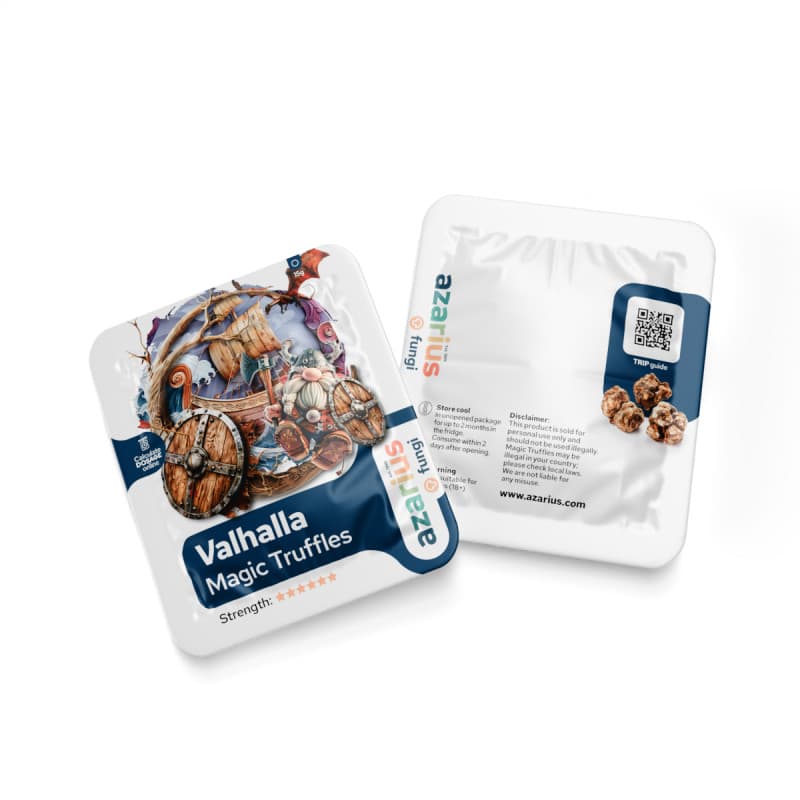
Magic Truffles Valhalla
The strongest truffle in the Azarius range. Valhalla is named after the Norse realm of the gods — and it lives up to the legend. Expect a full-on psychedelic odyssey with overwhelming visuals, a warrior's sense of clarity, and transformative depth. Experienced users only.
- • The most potent truffle Azarius offers — handle with care
- • Full-intensity visuals, clarity, and transformative experience
- • 15g pack — legally sold in Dutch smartshops
Disclosure: We may earn a commission if you purchase via these links.
Related articles
Kanna Dosage Guide: How Much to Take by Format
Kanna dosage is not one-size-fits-all — the right amount depends on which extract you are using and how you take it. Here is the complete dosing guide for
Best Kanna Extracts in 2026: A Buyer's Guide
With 9+ kanna products on the market — from raw herb to Nano Extreme — choosing the right extract is confusing. We compare every format by potency, method,
Natural Aphrodisiac Herbs: 7 Botanicals That Actually Work (With Evidence)
From kanna to damiana and blue lotus — these are the smartshop aphrodisiacs with real science behind them. Full dosage guide, stacking tips, and safety war