
5 Mistakes Beginners Make with CBD Oil (And How to Fix Them)
Written by Smart Supplements Editorial Team
Key takeaways
- Most CBD failures come down to dose, timing, patience, or product quality — not CBD not working.
- Sublingual absorption requires holding oil under the tongue for 60–90 seconds — swallowing immediately cuts bioavailability by 2–3x.
- CBD works cumulatively: commit to at least three weeks of daily use before evaluating whether it is working for you.
- Start at 10–15mg/day and increase gradually every 5–7 days — most studies showing benefits use doses of 25–75mg/day.
- Always verify a product's Certificate of Analysis (COA) from an accredited lab before buying — many products contain significantly less CBD than labelled.
Table of contents
- Mistake 1: Expecting Instant Results
- Mistake 2: Taking Too Little and Never Adjusting
- Mistake 3: Taking Oil Sublingually — But Swallowing Too Quickly
- Mistake 4: Buying a Poor Quality Product
- Mistake 5: Being Inconsistent
- Bonus: The Wrong Format for Your Goal
- A Quick Reference: The Most Common CBD Mistakes
- Frequently Asked Questions
Mistake 1: Expecting Instant Results
This is the most common reason people give up on CBD too early. They take it for three days, feel nothing, and conclude it doesn't work.
CBD is not a conventional pharmaceutical with a predictable on/off effect. For most use cases — anxiety, sleep quality, chronic inflammation, general wellbeing — CBD works cumulatively. Research suggests that the endocannabinoid system requires consistent supplementation over time before changes become noticeable. Most studies showing benefits run for 4–8 weeks, not 4–8 hours.
The timeline reality:
- Days 1–3: Unlikely to notice much. Your endocannabinoid system is adjusting.
- Days 4–14: Many users begin to notice subtle shifts — slightly better sleep, less tension at the end of the day, a calmer baseline.
- Weeks 3–6: Effects are typically at their most consistent. This is when most clinical trial benefits are measured.
There are exceptions — some people notice a calming effect from their first dose, particularly at higher doses for acute anxiety. But for the majority of use cases, patience is not optional.
The fix: Commit to a minimum of three weeks of daily use before evaluating whether CBD is working for you. Keep a simple journal noting your dose, time, and any relevant observations. Changes are often gradual enough that you only notice them looking back.
Mistake 2: Taking Too Little and Never Adjusting
The CBD industry's "start low, go slow" advice is correct — but many beginners start low and then never adjust upwards. They take 5mg for three weeks, feel nothing, and conclude CBD doesn't work for them.
The reality of CBD dosing:
- A typical 5mg dose is genuinely too low for most adults to notice any effect
- Most studies showing benefits for anxiety and sleep use doses between 25–75mg daily
- CBD has a biphasic effect — at very low doses it can be mildly stimulating; at higher doses it becomes calming and sleep-supportive
- There is no universal dose. Body weight, metabolism, the condition being targeted, and the specific product all influence the effective dose
The fix: Start at 10–15mg/day for 5–7 days. If you notice no change, increase by 5–10mg and hold for another week. Continue until you find your effective dose or reach 75mg/day. If you reach 75mg with no noticeable effect, it is worth reconsidering the product quality (see Mistake 4) or consulting a healthcare professional.
For a full dosing framework, see our CBD dosage guide.
Mistake 3: Taking Oil Sublingually — But Swallowing Too Quickly
Sublingual absorption is CBD oil's primary advantage over capsules. But it only works if you actually absorb it sublingually.
Here is what frequently happens: someone drops CBD oil under their tongue and swallows within 5–10 seconds because it tastes strong or they forget the instructions. The oil goes straight to the digestive system, where it is processed through first-pass liver metabolism — the same route as a capsule, with the same lower bioavailability (6–15%).
Genuine sublingual absorption — holding oil under the tongue for 60–90 seconds — bypasses the digestive system and delivers CBD directly through the mucous membranes into the bloodstream. Bioavailability jumps to 12–35%. That is a 2–3x difference in how much CBD actually reaches your bloodstream from the same dose.
The fix: Drop the oil under your tongue (not on top of your tongue). Hold it there for a full 60–90 seconds. Resist swallowing. Some people use a phone timer the first few times to build the habit. After 90 seconds, swallow whatever remains — the residual amount that goes to the digestive system adds a small secondary wave of effect.
Taking CBD oil with a fatty meal also improves absorption for the portion that enters the digestive system, since CBD is fat-soluble.
Mistake 4: Buying a Poor Quality Product
The CBD market in Europe is largely unregulated at the product level. This means the gap between the best and worst products on the market is enormous. Many products contain significantly less CBD than labelled. Some contain nothing but hemp seed oil. A few contain contaminants.
The most common quality problems:
Mislabelled CBD content. Multiple independent studies testing commercial CBD products have found significant discrepancies between labelled and actual CBD content. A 2020 study in Molecules found that around 45% of tested products contained less CBD than claimed, and some contained more. Both directions are problems.
Hemp seed oil vs CBD extract. Hemp seed oil (pressed from hemp seeds) contains no CBD whatsoever. It is a nutritious oil, but it is not a CBD product. Some products — particularly lower-cost ones — use "hemp" or "hemp extract" in their labelling when the active ingredient is hemp seed oil, not CBD extract. The product page should explicitly state milligrams of CBD.
Missing or outdated Certificates of Analysis. A COA from an accredited independent lab is the baseline quality standard. It should show CBD content (matching the label), THC content (below 0.2% for EU), and testing for heavy metals, pesticides, and residual solvents. If a brand does not publish COAs, do not buy from them. For a full guide on reading COAs, see our third-party testing guide.
The fix: Before buying, find the product's COA. Verify the lab is accredited (ISO/IEC 17025). Check the CBD content matches the label. Check THC is within legal limits. Check the batch date is recent. Buy from brands that make this information easy to find.
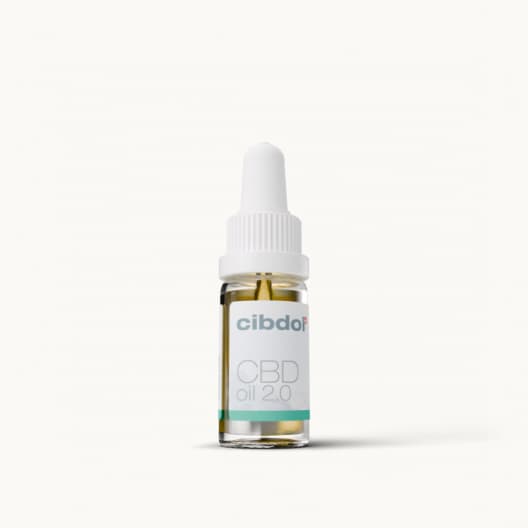

CBD oils
Premium Swiss CBD oils from Cibdol — available in multiple concentrations with full certificates of analysis.
Disclosure: We may earn a commission if you purchase via these links.
Mistake 5: Being Inconsistent
CBD works best as a daily supplement, not an occasional intervention. Taking 50mg on Tuesday, skipping Wednesday and Thursday, then taking 20mg on Friday is not an effective protocol — and it is also the reason many people struggle to evaluate whether CBD is actually doing anything.
The endocannabinoid system responds to consistent input. Regular CBD use maintains a steadier level of cannabinoids in your system, allowing more consistent interaction with ECS receptors over time. Sporadic use produces unpredictable plasma levels and makes it essentially impossible to identify your effective dose.
Common reasons people are inconsistent:
- Forgetting — no routine built around CBD use
- Anxiety about taking "too much" — this is generally unfounded at typical supplement doses
- Waiting until symptoms are bad rather than maintaining a preventive baseline
- Taking CBD at different times of day with no fixed routine
The fix: Anchor CBD to an existing daily habit — morning coffee, evening toothbrushing, or a meal. Same time, same dose, every day. Set a phone reminder for the first two weeks if needed. Decide in advance whether you are taking it morning or evening based on your primary goal: morning for daytime anxiety and focus, evening for sleep and stress recovery.
Bonus: The Wrong Format for Your Goal
Not a "mistake" in itself, but worth addressing: the CBD format you choose should match what you are trying to achieve.
| Goal | Recommended Format | Why |
|---|---|---|
| Anxiety (daytime) | Sublingual oil | Fast onset, adjustable dose |
| Sleep | Oil or capsules taken 1 hour before bed | Slower capsule release may be better for sleep maintenance |
| Localised joint or muscle discomfort | Topical cream or gel | Works locally without systemic absorption |
| Convenience / travel | Capsules or gummies | Pre-dosed, discreet, no taste |
| Acute anxiety (immediate) | Sublingual oil at higher dose | Fastest onset of non-inhaled formats |
| Skin conditions | Topical specifically formulated for the condition | See our CBD for skin guide |
For a full comparison of formats and their bioavailability, see our CBD bioavailability guide.
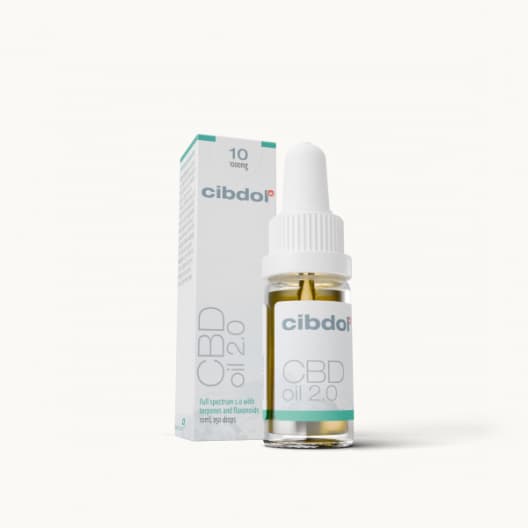
CBD Oil 2.0 10% (1000mg)
The most popular strength — 1000mg full-spectrum CBD oil for balanced, noticeable daily support without going too strong too fast.
- • 1000mg CBD per 10ml bottle
- • Full-spectrum entourage formula
- • Hemp seed oil base
Disclosure: We may earn a commission if you purchase via these links.
A Quick Reference: The Most Common CBD Mistakes
| Mistake | What Happens | The Fix |
|---|---|---|
| Giving up too early | 3 days, no effect, quit | Commit to 3+ weeks of daily use |
| Dose too low | No perceptible effect | Start 10–15mg, adjust weekly |
| Swallowing oil too fast | Loses sublingual advantage | Hold under tongue 60–90 seconds |
| Buying poor quality | May contain no CBD at all | Always verify COA from accredited lab |
| Inconsistent use | Cannot build baseline, cannot evaluate | Same dose, same time, every day |
Frequently Asked Questions
How long should I give CBD before deciding it doesn't work?
Give it a minimum of three weeks of daily, consistent use at a dose you have gradually built to (not just the starting dose). If you have used a quality product consistently for four weeks at 25–50mg/day and noticed absolutely nothing, it is worth reconsidering whether CBD is the right tool for your specific situation.
Can I take too much CBD?
CBD has a very wide safety margin. The WHO's 2017 assessment found no evidence of public health risks from CBD and noted it is well tolerated in doses up to 1500mg/day in human studies. At typical consumer supplement doses (10–75mg/day), toxicity is not a concern. More is not always better — many people find an optimal dose beyond which extra CBD produces diminishing returns.
Should I take CBD with food?
Yes, ideally. CBD is fat-soluble — taking it with a meal containing healthy fats (avocado, nuts, olive oil) increases the bioavailability of the portion that enters the digestive system. For the sublingual portion, food is not relevant since absorption happens before swallowing.
This article is for informational purposes only. CBD affects individuals differently — consult a healthcare professional if you have specific health concerns.
See also: CBD Dosage Guide | CBD Bioavailability | What Is Third-Party Testing?
Last updated: March 2026
New to CBD? Start with our Complete Beginner's Guide to CBD.
Related topics
Where to buy
Affiliate linksCBD oils
Premium Swiss CBD oils from Cibdol — available in multiple concentrations with full certificates of analysis.
CBD Gummies (25mg)
CBD Gummies — Chill Berry (25mg × 10)
- • 25mg CBD isolate per gummy — strong, precise dose
- • THC-free — CBD isolate, zero psychoactive compounds
- • Vegan formula — pectin-based, no gelatine
CBD capsules
Pre-measured CBD softgels and tablets for precise daily dosing — no taste, no measuring, just consistent CBD.
Disclosure: We may earn a commission if you purchase via these links.
Related articles
Best CBD Gummies in Europe: Top Picks for 2026
Best CBD gummies in Europe: Cibdol, Nordic Oil, and Zamnesia reviewed on potency, ingredients, value, and taste. Full buying guide.
Where to Buy CBD Oil in Germany (2026)
Where to buy CBD oil in Germany in 2026: regulations, best online shops, pharmacy options, and which brands dominate the market.
Where to Buy CBD Oil in the Netherlands (2026)
Where to buy CBD oil in the Netherlands: online shops, health stores, pharmacies, and what to look for in one of Europe's best markets.