
CBD for Skin: Can It Help Acne, Eczema, and Psoriasis?
Written by Smart Supplements Editorial Team
Key takeaways
- Skin has its own endocannabinoid system — CBD interacts with CB1, CB2, TRPV1, and PPARγ receptors in skin cells to regulate sebum, inflammation, and barrier function.
- Olah et al. 2014 showed CBD inhibits excess sebum production in sebocytes — the core mechanism behind its potential in acne treatment.
- Most mass-market CBD creams contain too little CBD (under 1%) to produce therapeutic effects — look for products with at least 150–300mg per 100ml.
- Cibdol's Aczedol, Zemadol, and Soridol are condition-specific CBD skincare formulations designed for acne, eczema, and psoriasis respectively.
- Topical CBD works locally and does not enter the bloodstream in significant amounts — for systemic skin conditions, combining topical with oral CBD may be more effective.
Table of contents
Why CBD Ended Up in Skincare
CBD didn't end up in skincare because of marketing trends. It ended up there because skin turns out to be a major site of endocannabinoid activity.
Your skin has its own endocannabinoid system (eCBS) — a complete local signalling network independent of the brain and central nervous system. CB1 and CB2 cannabinoid receptors are expressed in keratinocytes (the main skin cells), sebocytes (sebum-producing cells), immune cells within the skin, and hair follicle cells. TRPV1 (the capsaicin receptor) and PPARγ (a nuclear receptor involved in inflammation and cell differentiation) are also present and responsive to cannabinoids.
This local eCBS plays a direct role in skin homeostasis: regulating how much sebum is produced, controlling inflammatory responses to pathogens or irritants, managing cell proliferation and turnover, and maintaining the skin's barrier integrity. When any of these processes go wrong — too much sebum, chronic inflammation, runaway cell division — you get acne, eczema, psoriasis, or other dermatological conditions.
CBD can interact with all of these receptor pathways locally, without reaching significant concentrations in the bloodstream. That's what makes topical application scientifically coherent, not just cosmetically trendy.
CBD for Acne
Acne is primarily a disease of the sebaceous gland. Excess sebum production, combined with the proliferation of Cutibacterium acnes (formerly P. acnes) and a secondary inflammatory response, produces the comedones, papules, and pustules that characterise the condition.
CBD's most well-evidenced mechanism in acne comes from a 2014 study by Olah et al. at the University of Debrecen, published in the Journal of Clinical Investigation. The researchers found that CBD powerfully inhibited lipogenesis (fat/sebum production) in human sebocytes — and it did this via TRPV4 channel activation and A2A adenosine receptor engagement, not through CB1 or CB2. This was a significant finding because it identified a novel, skin-specific mechanism for CBD's action.
Beyond sebum control, CBD also suppresses pro-inflammatory cytokines relevant to acne pathology, including TNF-α and IL-1β. These are the same signalling molecules that drive the redness and swelling of inflammatory acne lesions. CBD's anti-proliferative effects on sebocytes also reduce comedone formation — blocking the early stage of acne before it becomes visibly inflamed.
The practical implication: CBD addresses acne through at least three distinct mechanisms — sebum reduction, inflammation suppression, and anti-comedogenic activity. That's a broader mechanistic profile than many conventional topicals, which typically target only one pathway.
Cibdol's Aczedol is formulated specifically for acne-prone skin, combining CBD with complementary ingredients at concentrations designed to engage these pathways.

CBD Skincare
Cibdol's medical-grade CBD skincare range for eczema, psoriasis, acne, and sensitive skin.
Disclosure: We may earn a commission if you purchase via these links.
CBD for Eczema (Atopic Dermatitis)
Eczema (atopic dermatitis) is more complex than acne. It involves three interacting problems: an impaired skin barrier that allows irritants and allergens to penetrate, chronic immune-mediated inflammation, and intense pruritus (itch) that compounds the inflammatory cycle through scratching.
CBD has mechanistic relevance to all three:
Inflammation: CBD suppresses inflammatory signalling through CB2 receptor activation and TLR4 inhibition, reducing the production of the cytokines (IL-4, IL-13, IL-31) that drive atopic inflammation. This is the same family of cytokines targeted by newer biologic eczema treatments, though via a different mechanism.
Itch: Pruritus in eczema is mediated in part through TRPV1 activation and histamine signalling. CBD desensitises TRPV1 receptors, reducing their response to pruritogenic stimuli. This is a pharmacologically credible mechanism for the itch-relief reported anecdotally by many eczema patients using CBD topicals.
Barrier support: Many CBD skincare formulations include hemp seed oil, which has an optimal omega-6 to omega-3 ratio (approximately 3:1). This lipid profile supports the ceramide-rich skin barrier, addressing the structural deficiency that underlies eczema susceptibility.
The key clinical study is Palmieri et al. (2019), published in Clinical Therapeutics. Over three months, a CBD-enriched ointment produced significant improvements in SCORAD (eczema severity) scores in 20 patients — reducing inflammation, dryness, and itch — without adverse effects. The study was small and uncontrolled, so it cannot be taken as definitive. But the results are consistent with the mechanistic evidence, and no safety concerns emerged.
Cibdol's Zemadol is specifically formulated for eczema-prone skin, with CBD concentrations and a barrier-supportive carrier designed for chronic use on compromised skin.
For more on how CBD's anti-inflammatory mechanisms work systemically, see our guide to CBD oil and side effects.
CBD for Psoriasis
Psoriasis is an autoimmune condition in which T-cells mistakenly attack skin tissue, triggering runaway keratinocyte (skin cell) proliferation. Normal skin renews itself every 28–30 days; in psoriatic skin, this cycle compresses to 3–5 days. The result is the characteristic raised, scaly plaques.
CBD addresses psoriasis through two principal mechanisms:
Anti-proliferative effect: Wilkinson and Williamson (2007) demonstrated that CBD slows keratinocyte proliferation via PPARγ activation. PPARγ is a nuclear receptor that regulates cell growth and differentiation — activating it puts a brake on the excessive cell division that produces psoriatic plaques.
Anti-inflammatory effect: Psoriasis involves a Th1/Th17-dominant inflammatory profile, with elevated TNF-α, IL-17, and IL-23. CBD suppresses this cytokine network, addressing the immune driver of the condition rather than just the surface symptom.
A 2016 study by Olah et al. further demonstrated that combining CBD with CBG (cannabigerol) produced a stronger anti-proliferative effect than either cannabinoid alone — suggesting that broad-spectrum formulations may be more effective for psoriasis than CBD isolate.
Cibdol's Soridol is formulated specifically for psoriasis, combining CBD with CBG and a penetration-optimised carrier to maximise delivery to the affected layers of skin.
CBD for General Skin Inflammation and Sensitivity
Not all inflammatory skin conditions have the specific research profile of acne, eczema, or psoriasis — but that doesn't mean CBD lacks relevance.
Seborrhoeic dermatitis (dandruff, facial redness around the nose and eyebrows) involves sebum overproduction and inflammatory response to Malassezia yeast. CBD's dual action on sebum and inflammation gives it theoretical utility here, though no dedicated clinical trials exist.
Rosacea involves chronic facial flushing and inflammation, with a TRPV1-mediated neurogenic component. CBD's TRPV1 desensitisation mechanism is directly relevant, though again without condition-specific RCT data.
Contact dermatitis — allergic or irritant — involves a localised inflammatory cascade that CBD's broad anti-inflammatory mechanisms could modulate.
The honest summary: for these conditions, the mechanistic rationale is sound, but clinical confirmation is lacking. CBD can reasonably be tried as an adjunct to conventional management, with realistic expectations about what the evidence currently supports.
Does Oral CBD Help Skin Conditions?
Most of the evidence for CBD in dermatology involves topical application. But oral CBD has systemic anti-inflammatory effects — and chronic inflammatory skin conditions are driven by systemic immune dysregulation, not just localised skin pathology.
The direct evidence for oral CBD improving skin conditions is limited. There are no large RCTs specifically testing oral CBD for eczema or psoriasis. However, the pharmacology is coherent: CBD reduces systemic TNF-α, IL-6, and other pro-inflammatory cytokines that contribute to autoimmune skin flares.
The practical approach most consistent with the evidence: use topical CBD for local, targeted symptom control, and consider oral CBD (10–20mg/day) as a systemic anti-inflammatory complement, particularly for moderate-to-severe inflammatory skin conditions. This mirrors the dual approach used with conventional treatments — a topical agent for skin-directed action, a systemic agent for immune modulation.
For guidance on oral CBD dosing, see our CBD dosage guide. For context on how full-spectrum CBD's broader cannabinoid profile may add anti-inflammatory synergy, see our guide to full-spectrum vs isolate CBD.
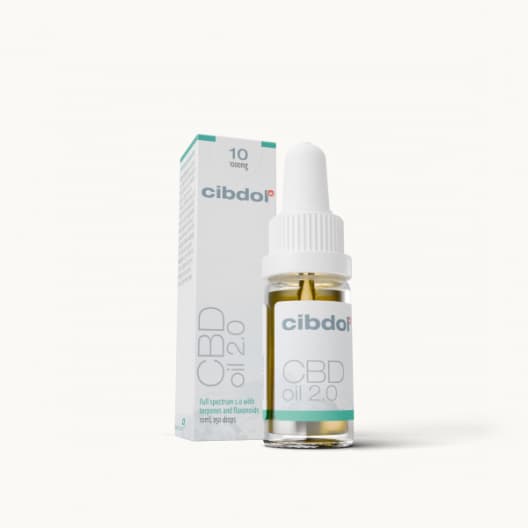
CBD Oil 2.0 10% (1000mg)
The most popular strength — 1000mg full-spectrum CBD oil for balanced, noticeable daily support without going too strong too fast.
- • 1000mg CBD per 10ml bottle
- • Full-spectrum entourage formula
- • Hemp seed oil base
Disclosure: We may earn a commission if you purchase via these links.
How to Choose a CBD Skincare Product
This is where most consumers go wrong — and where the market most comprehensively exploits them.
Concentration is everything. Most mass-market CBD creams contain 0.1–1% CBD. At these concentrations, there is no credible mechanism for therapeutic activity. The studies showing CBD's effects on sebocytes, keratinocytes, and inflammatory pathways were not conducted at homeopathic doses. Look for products with at least 150–300mg CBD per 100ml (equivalent to 0.15–0.3%) — and ideally higher for therapeutic use.
Check what you're actually buying. Many products labelled as "CBD cream" or "hemp cream" contain only hemp seed oil — the cold-pressed oil from hemp seeds, which contains no significant cannabinoids. Hemp seed oil has nutritional value for skin (its lipid profile supports the barrier) but it is not CBD. A legitimate CBD skincare product will specify the CBD content in milligrams, not just "hemp extract."
Demand a Certificate of Analysis (COA). Any reputable CBD product should have a third-party lab report confirming actual CBD content and the absence of contaminants. If a COA is not available, the product should be considered unreliable.
Carrier and delivery matter. CBD is a large, lipophilic molecule — it does not penetrate skin easily on its own. Effective topical formulations use penetration enhancers such as MCT oil, liposomal encapsulation, or nanoemulsion technology to drive CBD into the relevant skin layers. A high CBD concentration in a poor carrier is less effective than a well-formulated product at the same nominal dose.
Cibdol's medical-grade CBD skincare range — Aczedol (acne), Zemadol (eczema), and Soridol (psoriasis) — are condition-specific formulations developed with pharmaceutical-grade CBD and optimised delivery systems. These are not cosmetic products with a token CBD inclusion; they are designed around the specific mechanisms relevant to each condition.
CBD Skincare
Cibdol's medical-grade CBD skincare range for eczema, psoriasis, acne, and sensitive skin.
Disclosure: We may earn a commission if you purchase via these links.
For a broader understanding of what makes CBD products effective or ineffective, see our guides to the entourage effect and what CBD is.
What CBD Can't Do for Skin
Honest expectation management matters here, because the market is full of overclaiming.
CBD is not a cure for autoimmune skin conditions. Eczema and psoriasis involve complex immune dysregulation that no single topical can resolve. CBD can reduce symptoms, improve quality of life, and potentially reduce reliance on corticosteroids — but it will not eliminate the underlying condition.
CBD will not fix hormonally-driven acne. If your acne is primarily driven by androgens (as in polycystic ovary syndrome, adolescent hormonal shifts, or steroid use), CBD's sebum-suppressive action will be limited. The hormonal stimulus will override the local inhibition.
There is no credible evidence for anti-ageing effects. The market is full of CBD anti-wrinkle creams and CBD collagen serums. There is no clinical evidence that CBD reduces wrinkles, stimulates collagen synthesis, or reverses photoageing. These claims are marketing, not science.
Topical CBD does not produce systemic effects. Unlike oral CBD, topical application does not result in meaningful blood concentrations of CBD. This is actually reassuring from a safety perspective — but it means topical CBD will not improve mood, reduce anxiety, or produce any of the systemic effects associated with oral use.
Frequently Asked Questions
Does CBD cream actually work for acne?
Preclinical evidence is promising. A 2014 study (Olah et al.) showed CBD reduced sebum production and had anti-inflammatory effects on human sebocytes. Clinical trials are limited, but the mechanism is well understood. CBD is most effective for inflammatory acne, not hormonal or comedonal types.
How much CBD should a skin product contain?
Look for at least 100–300 mg CBD per container for localised use. Products below 50 mg are unlikely to deliver a meaningful dose. Check the COA — some products list hemp seed oil (which contains no CBD) as an ingredient while marketing themselves as "CBD skincare."
Can I use CBD cream alongside prescription treatments?
Generally yes. Topical CBD does not enter systemic circulation in meaningful amounts, so interactions with oral medications are unlikely. However, apply them at different times to avoid diluting either product. Ask your dermatologist if you are using retinoids or topical steroids.
How long does CBD take to work on skin conditions?
For acute inflammation or itch relief, 30–60 minutes. For chronic conditions like eczema or psoriasis, consistent use over 2–4 weeks is typically needed to assess whether it is helping. Set realistic expectations — CBD manages symptoms, it does not cure the underlying condition.
Is CBD skincare legal in Europe?
Yes. Topical CBD products are legal across the EU provided they contain less than 0.2% THC. They are regulated as cosmetics, not medicines, which means they cannot make therapeutic claims on the label.
Summary
CBD's presence in skincare is scientifically justified — but only when the product is formulated correctly and at appropriate concentrations. The endocannabinoid system in skin provides multiple points of intervention for acne (sebum, inflammation, comedogenesis), eczema (inflammation, itch, barrier), and psoriasis (proliferation, immune cytokines). The evidence base is strongest for acne mechanisms (Olah 2014) and growing for eczema (Palmieri 2019) and psoriasis (Wilkinson 2007, Olah 2016).
For practical use: choose condition-specific formulations with verified CBD content, demand a COA, and set realistic expectations. CBD is a useful tool in managing these conditions — not a cure, but a mechanistically coherent one.
This article is for informational purposes only and is not intended as medical advice. Always consult a dermatologist for persistent skin conditions.
Last updated: March 2026
Related topics
Where to buy
Affiliate links
CBD oils
Premium Swiss CBD oils from Cibdol — available in multiple concentrations with full certificates of analysis.
CBD Gummies (25mg)
CBD Gummies — Chill Berry (25mg × 10)
- • 25mg CBD isolate per gummy — strong, precise dose
- • THC-free — CBD isolate, zero psychoactive compounds
- • Vegan formula — pectin-based, no gelatine
CBD capsules
Pre-measured CBD softgels and tablets for precise daily dosing — no taste, no measuring, just consistent CBD.
Disclosure: We may earn a commission if you purchase via these links.
Related articles
Best CBD Gummies in Europe: Top Picks for 2026
Best CBD gummies in Europe: Cibdol, Nordic Oil, and Zamnesia reviewed on potency, ingredients, value, and taste. Full buying guide.
Where to Buy CBD Oil in Germany (2026)
Where to buy CBD oil in Germany in 2026: regulations, best online shops, pharmacy options, and which brands dominate the market.
Where to Buy CBD Oil in the Netherlands (2026)
Where to buy CBD oil in the Netherlands: online shops, health stores, pharmacies, and what to look for in one of Europe's best markets.