
CBD for Dogs and Cats: Is It Safe?
Written by Smart Supplements Editorial Team
Key takeaways
- CBD has been shown to reduce pain and improve mobility in dogs with osteoarthritis in a peer-reviewed Cornell RCT (Gamble et al. 2018).
- Cats have different liver enzyme profiles than dogs — they process cannabinoids differently, requiring lower doses and more caution.
- Never give pets products containing THC: it is toxic to dogs even at low doses.
- Start dogs at 0.1–0.2mg CBD per kg of body weight twice daily; start cats even lower at 0.05mg/kg.
- Cibdol CBD oils are free from xylitol, artificial flavours, and additives — making them suitable for dose adjustment for pets.
Table of contents
Why Pet Owners Are Turning to CBD
The conditions that drive pet owners to look at CBD will be familiar to anyone who has watched an animal suffer: the dog that shakes during thunderstorms, the cat that destroys furniture when left alone, the ageing Labrador who struggles to stand up from his bed in the morning.
Anxiety is one of the most common reasons. Separation anxiety, noise phobia (fireworks are a particular problem), car travel, vet visits — these are stressful experiences for many animals, and conventional pharmaceutical options often come with sedation or dependency concerns.
Chronic pain, particularly from osteoarthritis in older dogs, is another major driver. Non-steroidal anti-inflammatory drugs (NSAIDs) are effective but can cause gastrointestinal and kidney problems with long-term use. Pet owners are looking for alternatives.
Seizures, end-of-life palliative care, and general inflammatory conditions round out the picture. Across the EU, the market for pet CBD products has grown significantly over the past five years, with the UK, Netherlands, and Germany among the leading markets.
What the Research Shows
This is where honesty matters. The evidence for CBD in pets is real — but it is not uniform across species or conditions.
Dogs: Promising Data from Controlled Trials
Two studies stand out.
Gamble et al. (2018) — Cornell University College of Veterinary Medicine conducted the first randomised, placebo-controlled trial of CBD in dogs with osteoarthritis. Dogs receiving 2 mg/kg of CBD twice daily showed significant reductions in pain scores and improvements in mobility compared to placebo. Importantly, no significant adverse effects were observed. This is the most rigorous evidence to date that CBD has a measurable therapeutic effect in dogs.
McGrath et al. (2019) — Colorado State University examined CBD in dogs with idiopathic epilepsy. Dogs receiving CBD in addition to standard anticonvulsant medication showed a reduction in seizure frequency, with 89% of dogs in the CBD group experiencing fewer seizures. The effect size was clinically meaningful, though the study was small.
These are genuinely encouraging results. They are not proof of efficacy for all uses, but they are the kind of controlled data that gives responsible clinicians — and pet owners — reason to take CBD seriously.
Cats: Very Limited Data
For cats, the honest answer is that we do not have comparable data. Most feline CBD research consists of pharmacokinetic studies (how the body handles the compound) rather than therapeutic trials. One study found that cats tolerated oral CBD reasonably well at lower doses, but safety data is limited. The research simply hasn't been done yet.
If you have a cat, you are working with a thinner evidence base. That doesn't mean CBD is unsafe for cats — it means more caution is warranted.
How CBD Works in Animals
Dogs and cats, like humans, have an endocannabinoid system — a network of receptors (CB1 and CB2), endogenous cannabinoids, and metabolic enzymes that help regulate pain, mood, inflammation, and immune response.
This is why CBD has biological plausibility as a therapeutic agent in animals: the mechanism exists.
There are some important species-specific differences, however.
Dogs have a notably high density of CB1 receptors in the cerebellum — higher than humans. This may explain why dogs can be more sensitive to cannabinoids than people, and why THC, which binds directly to CB1 receptors, is particularly toxic to dogs (more on this below).
Cats have a different CYP450 enzyme profile from both dogs and humans. CYP450 enzymes in the liver are responsible for metabolising many compounds, including cannabinoids. Cats lack or have reduced activity of certain CYP enzymes, meaning they process CBD more slowly. This is the same reason cats cannot safely metabolise paracetamol or aspirin. It doesn't make CBD toxic — but it does mean doses should be lower and frequency more conservative.
Is CBD Safe for Pets?
Dogs
At appropriate doses, CBD appears to be reasonably safe for dogs. The studies above reported no serious adverse events. The most commonly observed side effects in dogs are:
- Sedation — particularly at higher doses
- Ataxia (wobbliness, loss of coordination) — dose-related
- Gastrointestinal upset — loose stools, reduced appetite initially
These are dose-dependent. They are generally mild and reversible upon dose reduction. Elevated liver enzymes have been noted in some dogs on CBD — monitoring via blood work is advisable for long-term use.
Cats
Cats can experience the same side effects as dogs, potentially at lower doses due to their different metabolic profile. The key is to start low, observe carefully, and never increase the dose rapidly. Given the limited safety data in cats, caution and veterinary involvement are especially important.
CRITICAL: What to Avoid
This section is not a caution — it is a hard line.
Never give pets products containing THC. THC (tetrahydrocannabinol) is toxic to dogs. Unlike CBD, THC binds directly and powerfully to CB1 receptors. Dogs have a high density of these receptors in areas of the brain that regulate balance and vital functions. THC toxicity in dogs can cause severe neurological symptoms: tremors, extreme disorientation, vomiting, loss of bladder control, and in serious cases, coma. Even the small THC amounts found in some human full-spectrum oils can cause problems for small dogs.
Xylitol — a sweetener found in some human CBD products, gummies, and flavoured oils — is acutely toxic to dogs. It causes a rapid drop in blood sugar and can lead to liver failure. Always read the ingredient list in full.
Human full-spectrum CBD products may contain up to 0.2% THC by law in the EU. While this is a small amount, it can be significant depending on dog size and dose. If using a human product for your pet, use broad-spectrum (THC-free) or isolate-based products, or verify that the product's THC content is negligible at the dose you are giving.
Dosing Guidelines for Pets
These are starting-point guidelines based on available research and veterinary guidance. They are not a replacement for professional advice.
Dogs:
- Start at 0.1–0.2 mg CBD per kg of body weight, given twice daily
- A 10 kg dog would start at 1–2 mg CBD per dose
- Increase slowly (no more than 25% every 1–2 weeks) if needed
- The Gamble et al. study used 2 mg/kg twice daily — well above these starting doses
Cats:
- Start at 0.05 mg CBD per kg of body weight, once or twice daily
- A 4 kg cat would start at approximately 0.2 mg CBD per dose
- Monitor closely for any signs of sedation or GI upset
- Do not increase dose without veterinary guidance
Always consult your vet before starting your pet on CBD, particularly if your animal is on other medications (CBD can interact with drugs metabolised by the CYP450 enzyme system).
Choosing a Pet CBD Product in Europe
The EU pet CBD market is growing, but quality varies considerably. Here is what to look for:
- Third-party lab tested — a certificate of analysis (COA) from an independent laboratory confirming cannabinoid content and the absence of pesticides, heavy metals, and solvents
- Less than 0.2% THC — ideally verified as non-detectable (ND) for products intended for pets
- No xylitol, artificial sweeteners, or artificial flavourings
- Simple ingredient list — a carrier oil (MCT or hemp seed oil) and CBD extract; nothing else
- Appropriate concentration — lower-concentration oils (5% or less) are easier to dose accurately for smaller animals
- EU-sourced hemp — EU hemp is grown under regulated conditions with defined THC limits
Many dedicated pet CBD products exist, but they are not always higher quality than equivalent human products — and they are often more expensive. A well-formulated human CBD oil with a clean ingredient list and verified low THC content can be used for pets with appropriate dose adjustment.
Cibdol's 5% CBD oil fits this profile: it is made from EU-grown hemp, third-party tested, and contains no xylitol, no artificial flavours, and no unnecessary additives. Because the concentration is low, it is easy to calculate and administer small, accurate doses for animals of different sizes. You can learn more about CBD dosing principles to help calibrate the right amount for your pet.
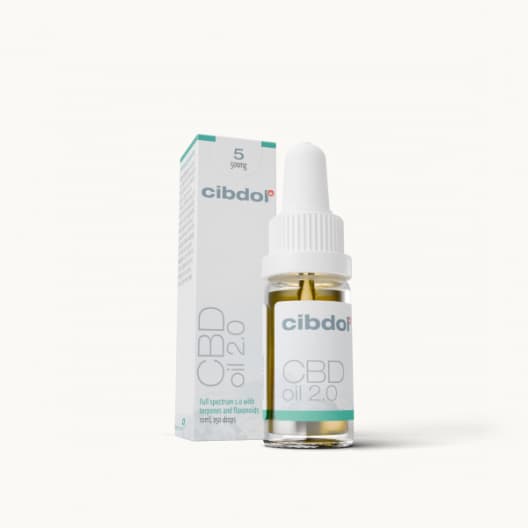

CBD Oil 2.0 5% (500mg)
The ideal starting point for CBD beginners. 500mg full-spectrum CBD oil with enhanced cannabinoid ratio for gentle, daily wellness support.
- • 500mg CBD per 10ml bottle
- • Full-spectrum entourage formula
- • Hemp seed oil base
Disclosure: We may earn a commission if you purchase via these links.
If you are new to CBD and want to understand the basics before giving it to your pet, the beginner's guide to CBD is a good starting point. It is also worth reviewing the known side effects of CBD oil so you know what to watch for.
Legal Note
CBD pet products exist in a regulatory grey area across the EU. They are not approved as veterinary medicines and therefore cannot legally be marketed with therapeutic claims. Most are sold as food supplements or wellness products.
This means there is no formal veterinary dose guidance backed by regulatory approval, and product quality is not overseen by veterinary authorities in the same way that licensed medicines are. Third-party testing and transparent labelling matter more in this context, not less.
Check with your vet before starting your pet on CBD — not because it is dangerous, but because they can help you monitor for interactions, side effects, and response to treatment.
Choosing Cibdol for Your Pet
When it comes to giving CBD to your dog or cat, the product you choose matters as much as the dose. Cibdol's pure 5% CBD oil — free from artificial additives, xylitol, and unnecessary ingredients — gives you a clean base to work from, with the concentration low enough to make accurate dosing straightforward for animals of any size.
CBD Oil 2.0 5% (500mg)
The ideal starting point for CBD beginners. 500mg full-spectrum CBD oil with enhanced cannabinoid ratio for gentle, daily wellness support.
- • 500mg CBD per 10ml bottle
- • Full-spectrum entourage formula
- • Hemp seed oil base
Disclosure: We may earn a commission if you purchase via these links.
This article is for informational purposes only and is not intended as veterinary advice. Always consult a vet before giving your pet any new supplement.
Last updated: March 2026
Frequently Asked Questions
Is CBD safe for dogs and cats?
CBD is generally well tolerated in pets at appropriate doses. The main risks are drowsiness, mild GI upset, and potential drug interactions. Cats metabolise cannabinoids more slowly than dogs, so lower doses and slower titration are advised.
How much CBD should I give my dog?
A common starting point is 1-2 mg CBD per 10 kg body weight, once or twice daily. Start low and increase gradually over 1-2 weeks. Response varies by condition, breed, and individual.
Can CBD make my pet high?
No. CBD is non-intoxicating. Full-spectrum products contain trace THC and dogs are more sensitive to THC than humans, so always use products with verified low THC and a COA.
How long does CBD take to work in pets?
Sublingual oil typically takes 30-60 minutes. Effects last 4-8 hours. For chronic conditions like arthritis, consistent daily dosing over 2-4 weeks may be needed.
Can I give my pet human CBD oil?
Yes, if it contains no xylitol, artificial sweeteners, or pet-toxic ingredients. However, pet-specific formulations are lower concentration, making accurate dosing easier.
Related topics
Where to buy
Affiliate links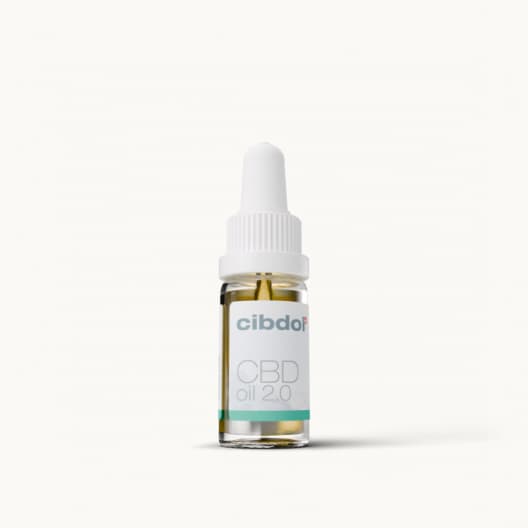
CBD oils
Premium Swiss CBD oils from Cibdol — available in multiple concentrations with full certificates of analysis.
CBD Gummies (25mg)
CBD Gummies — Chill Berry (25mg × 10)
- • 25mg CBD isolate per gummy — strong, precise dose
- • THC-free — CBD isolate, zero psychoactive compounds
- • Vegan formula — pectin-based, no gelatine
CBD capsules
Pre-measured CBD softgels and tablets for precise daily dosing — no taste, no measuring, just consistent CBD.
Disclosure: We may earn a commission if you purchase via these links.
Related articles
Best CBD Gummies in Europe: Top Picks for 2026
Best CBD gummies in Europe: Cibdol, Nordic Oil, and Zamnesia reviewed on potency, ingredients, value, and taste. Full buying guide.
Where to Buy CBD Oil in Germany (2026)
Where to buy CBD oil in Germany in 2026: regulations, best online shops, pharmacy options, and which brands dominate the market.
Where to Buy CBD Oil in the Netherlands (2026)
Where to buy CBD oil in the Netherlands: online shops, health stores, pharmacies, and what to look for in one of Europe's best markets.