
CBD for Focus and Concentration: Does It Actually Work?
Written by Smart Supplements Editorial Team
Key takeaways
- CBD has no direct stimulant or nootropic mechanism — it improves focus indirectly by reducing anxiety, improving sleep, and lowering the physiological stress that impairs working memory.
- Bhattacharyya et al. (2010) showed CBD reduced amygdala reactivity and increased prefrontal cortex engagement — shifting the brain from threat-reactive to task-focused mode.
- People with anxiety-driven focus problems benefit most from CBD; those looking for a stimulant effect or motivation boost are unlikely to find what they need.
- For daytime focus, 15–25mg is typically the sweet spot — enough to reduce anxiety without causing the mild sedation that higher doses (75mg+) can produce.
- CBD combined with caffeine and L-theanine is a well-reasoned productivity stack that addresses focus, alertness, and anxiety reduction through complementary mechanisms.
Table of contents
What "Focus" Actually Requires
Effective concentration depends on several underlying conditions:
- Low anxiety: Anxiety consumes attentional resources. The amygdala's threat-detection activity, when overactive, competes directly with the prefrontal cortex's executive function. You cannot focus well when your threat-detection system is running hot.
- Adequate sleep: A single night of poor sleep reduces working memory, processing speed, and sustained attention in ways comparable to mild alcohol intoxication. Sleep debt accumulates, and its cognitive effects compound.
- Low physiological stress: Elevated cortisol impairs prefrontal cortex function — the very region responsible for planning, decision-making, and sustained attention. Chronic stress is a focus killer with clear neurobiological mechanisms.
- Absence of pain or discomfort: Chronic pain diverts attentional resources, reducing the cognitive capacity available for complex tasks.
CBD's documented mechanisms — reducing anxiety, improving sleep, lowering cortisol and physiological stress, and modulating pain — address all four of these underlying conditions. This is why it can genuinely improve focus in many people, even without any direct nootropic effect.
The Evidence: What CBD Does for Cognition
Anxiety and attentional performance
The most direct evidence comes from studies measuring cognitive performance in anxious individuals. Bhattacharyya et al. (2010, Neuropsychopharmacology) used fMRI to show that CBD reduced amygdala activity and increased prefrontal cortex engagement in response to threatening stimuli — essentially shifting the brain from threat-reactive to task-focused mode.
Bergamaschi et al. (2011) found that CBD eliminated the cognitive impairment associated with social anxiety disorder during a simulated public speaking test — participants on CBD performed cognitively on par with healthy non-anxious controls. For people whose focus problems are anxiety-driven, this is directly relevant.
Memory and learning: a nuanced picture
CBD does not impair memory or learning — importantly, unlike THC, which clearly disrupts short-term memory via CB1 receptor activation. CBD does not activate CB1 directly and has no documented memory-impairing effect.
In fact, preclinical research suggests CBD may support hippocampal neurogenesis and protect against stress-related hippocampal damage — potentially preserving memory capacity under chronic stress. Campos et al. (2013) demonstrated CBD prevented stress-induced memory impairment in rodents.
However: there is no strong human evidence that CBD improves memory in non-anxious, non-stressed healthy individuals. The benefit appears to be protective and restorative, not enhancement of a healthy baseline.
CBD vs THC for cognitive performance
This contrast is worth stating clearly. THC — even at doses too low to cause obvious intoxication — impairs working memory, processing speed, and executive function via CB1 receptor activity in the prefrontal cortex and hippocampus. Full-spectrum CBD oil contains only trace THC (under 0.2%) — not enough to produce cognitive impairment, and CBD's CB1 modulation actually counteracts THC's cognitive effects.
Broad-spectrum CBD and CBD isolate carry zero THC risk. For tasks where cognitive precision is critical, these formats are safer choices.
Who Benefits From CBD for Focus?
Not everyone. The effect is conditional on having one of the underlying issues CBD addresses:
Most likely to benefit:
- People with anxiety-driven concentration problems — racing thoughts, inability to settle into tasks, constant distraction by worry
- People with poor sleep whose focus is impaired by fatigue and sleep debt
- People under high chronic stress with cortisol-related prefrontal cortex impairment
- People with mild chronic pain that competes for attentional resources
Less likely to benefit:
- People who already have low anxiety, good sleep, and low stress baseline
- People looking for a stimulant effect to power through fatigue — CBD won't do this
- People who need acute, immediate cognitive enhancement (a presentation in 30 minutes) — CBD's mechanism is too slow for this use case
If your focus problems are primarily due to fatigue, low motivation, or simply disliking what you're working on, CBD is not the right tool. Caffeine, sleep, exercise, and addressing work-life balance are more relevant interventions.
Dosing CBD for Focus
Dose matters particularly for focus because CBD's dose-response curve for alertness vs sedation follows an inverted U:
- Very low doses (5–10mg): May be mildly stimulating for some people via a hormetic effect — anecdotally reported but not well-studied
- Low-moderate doses (15–25mg): The sweet spot for daytime focus for most people — reduces anxiety without causing sedation; this is where most focus-oriented users find the best results
- Moderate doses (40–75mg): Clearly calming, may cause mild daytime fatigue in some people — better suited to evenings or situations where anxiety reduction is the primary goal
- High doses (100mg+): Clearly sedating for many people; generally not appropriate for daytime focus
For focus, start with 15–20mg in the morning, taken sublingually. Assess over 5–7 days. If mild sedation is a concern, try 10mg. If anxiety is the dominant issue, you may need to increase to 30–40mg before meaningful anxiety reduction — and thus focus improvement — occurs.
CBD + Caffeine + L-Theanine: The Productivity Stack
One of the most popular focus combinations in the biohacking community pairs CBD with caffeine and L-theanine. The rationale:
- Caffeine (100–200mg): Blocks adenosine receptors, increases dopamine and noradrenaline, produces alertness and motivation
- L-theanine (200mg): Promotes alpha brain wave activity, reduces caffeine-associated jitteriness and anxiety, promotes calm alertness
- CBD (15–25mg): Further reduces anxiety, counteracts any cortisol spike from caffeine, supports ECS balance
The combination addresses focus from multiple angles simultaneously: stimulant effect from caffeine, edge-smoothing from L-theanine, and anxiety/stress reduction from CBD. No interaction risks between these three compounds have been identified.
This stack is not evidence-based in the strict clinical trial sense — the combination hasn't been studied in RCTs. But the individual mechanisms are well characterised, and the combination has strong anecdotal support among people who use it regularly.
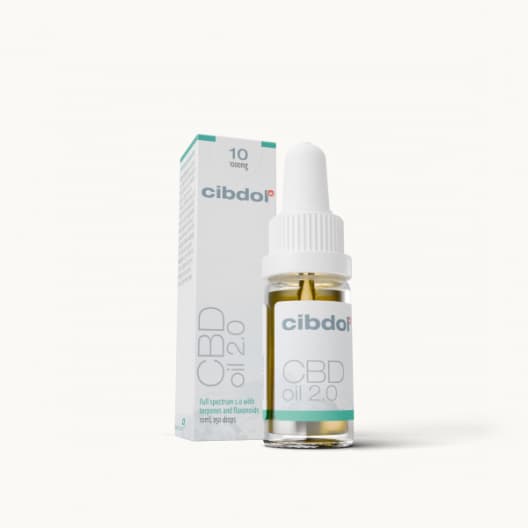

CBD Oil 2.0 10% (1000mg)
The most popular strength — 1000mg full-spectrum CBD oil for balanced, noticeable daily support without going too strong too fast.
- • 1000mg CBD per 10ml bottle
- • Full-spectrum entourage formula
- • Hemp seed oil base
Disclosure: We may earn a commission if you purchase via these links.
Common Mistakes When Using CBD for Focus
Taking too high a dose: The single most common reason CBD makes people feel foggy rather than focused. For daytime cognitive performance, less is often more. Start at 15mg and only increase if anxiety remains clearly disruptive.
Expecting an immediate effect: CBD's focus benefits come through anxiety reduction and sleep improvement — both of which take time. Judge after 2–3 weeks of consistent use, not after one dose.
Taking it at the wrong time: For focus, morning or early afternoon is ideal. Evening dosing (appropriate for sleep) doesn't carry over to next-day cognitive performance in any meaningful way.
Using the wrong format: Full-spectrum CBD is generally preferable for anxiety-related focus issues due to the entourage effect. If you're drug-tested at work, broad-spectrum is safer. CBD isolate is also fine but may be less consistent.
Ignoring sleep: If you're using CBD for focus but your sleep is still poor, you're addressing one lever while ignoring a larger one. CBD for sleep and CBD for focus are the same intervention if sleep quality is the root cause of your concentration problems.
Frequently Asked Questions
Does CBD improve memory?
Not directly in healthy people. It may protect memory under chronic stress and reverses anxiety-related cognitive impairment. Don't expect it to enhance memory in someone who already has low anxiety and good sleep.
Can I take CBD before an exam or important presentation?
Yes, if anxiety is your issue. 25–30mg sublingually 45–60 minutes before is a reasonable approach. But practice and preparation will do more for your performance than CBD.
Will CBD make me feel spaced out?
At appropriate doses (10–25mg), no. At higher doses (75mg+), some people experience mild sedation. If you feel foggy after CBD, reduce the dose.
Is CBD better for focus than Adderall or modafinil?
No — not as a direct comparison. CBD does not have stimulant or dopaminergic properties and is not in the same category. It is relevant for people whose focus problems stem from anxiety and stress, not for people with ADHD or attention deficits requiring pharmacological treatment.
Does CBD help with ADHD?
There is no reliable clinical evidence that CBD treats ADHD. Some small studies and case reports are suggestive, but this is very preliminary. Do not use CBD as a replacement for evidence-based ADHD treatment.
For further reading: CBD for Anxiety | CBD for Stress | CBD for Sleep | CBD Bioavailability
CBD oils
Premium Swiss CBD oils from Cibdol — available in multiple concentrations with full certificates of analysis.
Disclosure: We may earn a commission if you purchase via these links.
This article is for informational purposes only and is not intended as medical advice. Always consult a healthcare professional before starting any new supplement.
Last updated: March 2026
New to CBD? Start with our Complete Beginner's Guide to CBD.
Related topics
Where to buy
Affiliate linksCBD oils
Premium Swiss CBD oils from Cibdol — available in multiple concentrations with full certificates of analysis.
CBD Gummies (25mg)
CBD Gummies — Chill Berry (25mg × 10)
- • 25mg CBD isolate per gummy — strong, precise dose
- • THC-free — CBD isolate, zero psychoactive compounds
- • Vegan formula — pectin-based, no gelatine
CBD capsules
Pre-measured CBD softgels and tablets for precise daily dosing — no taste, no measuring, just consistent CBD.
Disclosure: We may earn a commission if you purchase via these links.
Related articles
Best CBD Gummies in Europe: Top Picks for 2026
Best CBD gummies in Europe: Cibdol, Nordic Oil, and Zamnesia reviewed on potency, ingredients, value, and taste. Full buying guide.
Where to Buy CBD Oil in Germany (2026)
Where to buy CBD oil in Germany in 2026: regulations, best online shops, pharmacy options, and which brands dominate the market.
Where to Buy CBD Oil in the Netherlands (2026)
Where to buy CBD oil in the Netherlands: online shops, health stores, pharmacies, and what to look for in one of Europe's best markets.