
CBD Cream and Topicals: When and How to Use Them
Written by Smart Supplements Editorial Team
Key takeaways
- Topical CBD works locally through the skin's own endocannabinoid system — it does not enter the bloodstream in significant amounts and has no systemic effects on anxiety, sleep, or mood.
- Most mass-market CBD creams contain too little CBD (under 50mg per 100ml) to produce meaningful effects — look for at least 150–300mg per 100ml for therapeutic use.
- Condition-specific formulations matter: Aczedol (acne) combines CBD with salicylic acid and niacinamide; Zemadol (eczema) with ceramides and panthenol; Soridol (psoriasis) with urea and allantoin.
- Topical CBD is generally safe for people on prescription medication because it does not enter the bloodstream — the CYP450 drug interactions relevant to oral CBD do not apply.
- For best absorption: apply to clean skin, use a generous amount, and massage in for 30–60 seconds — consistency over several weeks is needed for chronic skin conditions.
Table of contents
How Topical CBD Works
The skin's endocannabinoid system
Your skin is not just a passive barrier — it has a fully functional endocannabinoid system (ECS). CB1 and CB2 cannabinoid receptors are expressed in keratinocytes (the main skin cells), sebocytes (oil-producing cells), hair follicles, sweat glands, sensory nerve fibres, and resident immune cells (mast cells, macrophages).
Beyond the classic cannabinoid receptors, the skin also expresses TRPV1 (the "pain and heat" receptor, involved in itch and inflammation) and PPARγ (involved in cell proliferation and anti-inflammatory signalling). CBD interacts with all of these.
The skin's ECS plays a role in regulating:
- Sebum production and composition
- Skin barrier integrity and hydration
- Inflammatory responses to irritants, allergens, and pathogens
- Keratinocyte proliferation (relevant in psoriasis)
- Pain and itch perception via sensory nerve endings
This is why CBD topicals have legitimate scientific rationale — they are not simply moisturisers with a fashionable ingredient added.
Why topical CBD does not reach the bloodstream
The skin's outermost layer — the stratum corneum — is a highly effective barrier. CBD is a large, lipophilic molecule that penetrates this barrier poorly under normal conditions. Studies measuring plasma CBD levels after topical application consistently find little to no systemic absorption.
This is both a limitation and an advantage. It is a limitation because topical CBD cannot address systemic conditions — anxiety, sleep, systemic inflammation. It is an advantage because people on medication who cannot take oral CBD due to drug interactions can often use topical CBD safely (see our CBD drug interactions guide).
Types of CBD Topicals
Not all topical formats are the same. The base formulation affects how deeply the CBD penetrates, how quickly it acts, and which use cases it suits.
| Format | Texture | Penetration | Best For |
|---|---|---|---|
| Cream | Light-medium, water + oil emulsion | Moderate | Skin conditions, face, general use |
| Balm / salve | Heavy, wax-based | Moderate-high | Dry skin, targeted joint/muscle relief |
| Gel | Lightweight, water-based | Fast, superficial | Cooling relief, sports recovery, oily skin |
| Oil (topical) | Liquid | Variable — depends on carrier | Massage, facial care |
| Patch | Adhesive film | Slow, sustained release | Targeted long-duration relief |
Creams are the most versatile format — a water-in-oil or oil-in-water emulsion that spreads easily, absorbs relatively quickly, and suits most skin types and conditions.
Balms and salves are richer and thicker — better for very dry or cracked skin, or for creating a longer-lasting protective layer over a joint or muscle. They typically contain beeswax or similar thickeners.
Gels are lightweight and often cooling (many contain menthol or camphor alongside CBD). They absorb rapidly and are particularly popular for sports recovery, muscle soreness, and joint discomfort in people who prefer a non-greasy finish.
What Topical CBD Is Good For
Localised joint and muscle discomfort
This is the most evidence-supported use case for topical CBD. Via CB2 receptor activation and TRPV1 modulation in skin and underlying tissue, CBD can reduce localised inflammatory signalling. Animal studies show consistent anti-inflammatory and analgesic effects. Human evidence is limited but encouraging.
CBD topicals for joint and muscle use work best applied directly to the affected area and massaged in gently to encourage penetration. Balms and gels tend to work better than light creams for this use case — the occlusive effect of a balm improves local absorption, and the cooling effect of a gel reduces acute discomfort.
A key limitation: topical CBD reaches the subcutaneous tissue and joint capsule only partially. For deep-joint conditions like severe arthritis, combining a topical with oral CBD (which has systemic anti-inflammatory effects) may be more effective than topical alone.
Acne
CBD inhibits excess sebum production in sebocytes (the cells that produce skin oil) via TRPV4 and A2A receptor activation — this is the mechanism behind acne-targeted CBD formulations. CBD also suppresses pro-inflammatory cytokines (TNF-α, IL-1β) that drive the inflammatory phase of acne. A targeted CBD acne cream typically combines CBD with other proven actives.
Cibdol's Aczedol is specifically formulated for acne: CBD combined with salicylic acid (exfoliates pores) and niacinamide (reduces redness and sebum) in a non-comedogenic base.
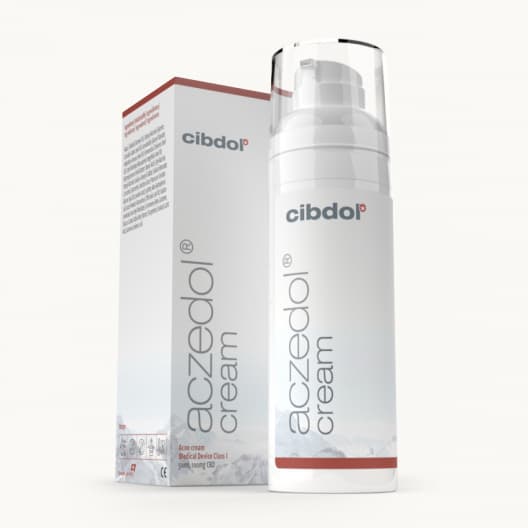

Aczedol Acne Cream
- • Formulated specifically for acne-prone skin
- • CBD + salicylic acid + niacinamide
- • Reduces sebum, inflammation, and comedones
Disclosure: We may earn a commission if you purchase via these links.
Eczema (Atopic Dermatitis)
Eczema involves three interconnected problems: impaired skin barrier, chronic inflammation, and itch. CBD addresses all three:
- Barrier repair: CBD supports ceramide synthesis, which is deficient in eczema-prone skin
- Anti-inflammatory: CB2 activation reduces inflammatory cytokine release in dermal immune cells
- Anti-itch: TRPV1 desensitisation reduces the histamine-independent itch cycle that worsens eczema
A 2019 study (Palmieri et al., Clinical Therapeutics) found that a CBD-enriched ointment significantly improved eczema symptoms over 3 months with no adverse effects. An eczema topical should combine CBD with skin-barrier actives: ceramides, panthenol (pro-vitamin B5), and emollients.
Cibdol's Zemadol is formulated specifically for eczema and atopic dermatitis: CBD with ceramides, panthenol, and colloidal oatmeal to calm inflammation and restore barrier function.
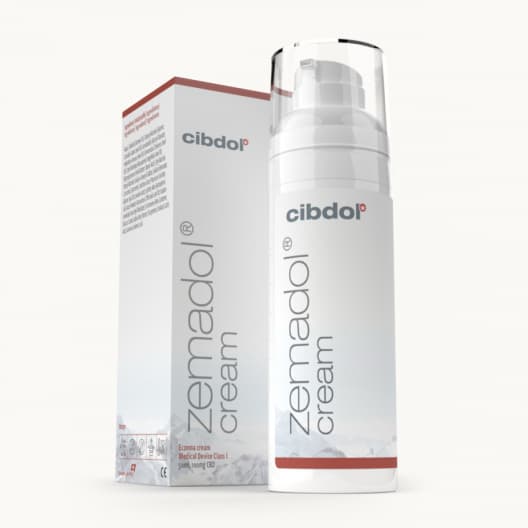
Zemadol Eczema Cream
- • Formulated specifically for eczema / atopic dermatitis
- • CBD + ceramides + panthenol to restore skin barrier
- • Reduces itch, inflammation, and dryness
Disclosure: We may earn a commission if you purchase via these links.
Psoriasis
Psoriasis is an autoimmune condition driven by keratinocyte hyperproliferation and T-cell-mediated inflammation. CBD slows keratinocyte proliferation via PPARγ activation — research by Wilkinson and Williamson (2007) established this mechanism. CBD also suppresses the Th1/Th17 inflammatory signalling that drives psoriasis plaques.
Cibdol's Soridol is formulated specifically for psoriasis: CBD with urea (softens plaques, promotes shedding of dead skin) and allantoin (soothes and heals irritated skin).
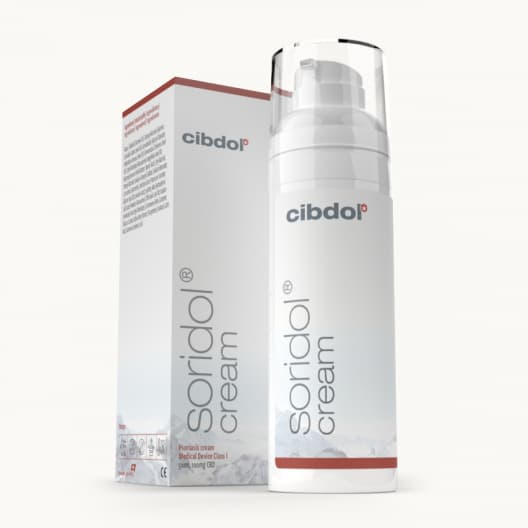
Soridol Psoriasis Cream
- • Formulated specifically for psoriasis
- • CBD + urea + allantoin to slow keratinocyte proliferation
- • Relieves scaling, redness, and itching
Disclosure: We may earn a commission if you purchase via these links.
General skin inflammation and sensitivity
Rosacea, contact dermatitis, seborrhoeic dermatitis, and general skin sensitivity all involve excess inflammatory activity in the skin. CBD's multi-receptor anti-inflammatory action — particularly via CB2 and PPARγ — makes it broadly applicable as a calming agent in these conditions. No condition-specific RCT data exists for these yet, but the mechanistic rationale is strong and anecdotal evidence is substantial.
What topical CBD is NOT suitable for
- Anxiety, stress, or mood — these require systemic effects that topical CBD cannot provide
- Sleep — same reason
- Internal or systemic inflammation — use oral CBD for this
- Chronic pain with a central nervous system component — oral CBD is more appropriate
- Sunburn — the skin is already compromised; CBD may help mildly but is not a treatment
Concentration: Why Most CBD Creams on the Market Are Ineffective
This is the critical issue that separates meaningful CBD topicals from marketing exercises.
Most mass-market CBD creams — available in pharmacies, supermarkets, and beauty retailers — contain between 10mg and 50mg CBD per 100ml of product. This is a concentration of 0.01–0.05%. Research on topical CBD uses concentrations several times higher. A product with 30mg CBD per 100ml jar is not meaningfully different from a CBD-free moisturiser with a fashionable label.
What to look for:
- Minimum effective threshold: approximately 150mg CBD per 100ml (0.15%)
- Well-formulated therapeutic range: 300–500mg CBD per 100ml (0.3–0.5%)
- Condition-specific formulations (acne, eczema, psoriasis) use this range alongside targeted co-ingredients
The concentration should be stated clearly on the label in mg per container and mg per ml or per application. If a brand only states the total CBD in the product without specifying the container size, calculate the concentration yourself.
How to Apply CBD Topicals
Clean the area first. Apply to clean, dry skin for best absorption. Skin residues, lotions, and oils can form a barrier that reduces CBD penetration.
Use enough product. The temptation is to apply sparingly to make the product last longer. For therapeutic use, use a generous amount — the amount you would apply of any moisturiser or cream.
Massage it in. Gentle massage increases local blood flow, warms the skin slightly, and improves penetration. For joint and muscle applications, spend 30–60 seconds massaging the product into the target area.
Be consistent. Like oral CBD, topical CBD works better with consistent use. Once or twice daily for skin conditions (following the product's specific instructions); as needed for acute muscle or joint discomfort.
Give it time. Most topical CBD effects develop over 15–45 minutes for localised relief, and over several weeks for chronic skin conditions.
Topical CBD and Drug Interactions
As noted above, topical CBD does not enter the bloodstream in meaningful amounts. This means the CYP450 enzyme interactions that matter for oral CBD are not relevant for topicals. People on warfarin, antiepileptics, immunosuppressants, or other medications who cannot take oral CBD can generally use CBD topicals safely.
If you have any doubts, consult your pharmacist — they can advise on topical product safety alongside your specific medications.
Choosing Between Cibdol, Nordic Oil, and CBD Vital Topicals
All three of our partner brands offer topical CBD, with different strengths:
Cibdol offers the most condition-specific topical range: Aczedol (acne), Zemadol (eczema), Soridol (psoriasis) — each formulated with condition-matched co-ingredients alongside pharmaceutical-grade THC-free CBD. Best choice if you have a specific skin condition.
CBD Skincare
Cibdol's medical-grade CBD skincare range for eczema, psoriasis, acne, and sensitive skin.
Disclosure: We may earn a commission if you purchase via these links.
Nordic Oil offers Norse-mythology-named topicals (Eyr for dry/eczema skin, Freyja for inflamed skin, Valkyrie for acne, Thor relief gel for muscles and joints) — classified as medical devices Class I in the EU. Good option for muscles/joints (Thor gel) and general inflammatory skin conditions.
CBD Vital offers an Austrian organic biocosmetic range: Akutbalsam (300mg/50ml, good concentration for targeted use), anti-wrinkle cream, HydraCalm for dry skin, and body lotion. Certified organic (NATRUE), paraben-free. Good option if organic certification is a priority.
Frequently Asked Questions
Will CBD cream show up on a drug test?
No. Topical CBD does not enter the bloodstream in significant amounts. Drug tests screen for THC metabolites in blood or urine — systemic absorption of THC from a topical is negligible. You can use full-spectrum CBD topicals without concern about drug testing.
How long does CBD cream take to work?
For acute localised relief (muscle soreness, joint discomfort), most people notice effects within 15–45 minutes of application. For chronic skin conditions (eczema, psoriasis, acne), consistent use over several weeks is needed before meaningful improvement is visible — just as with any topical treatment for chronic skin conditions.
Can I use CBD cream on my face?
Yes, provided the formulation is designed for facial use. Cibdol's Aczedol and Nordic Oil's Valkyrie are specifically formulated for the face (acne). General body balms and muscle gels typically contain ingredients (menthol, camphor, high concentrations of essential oils) that are too harsh for facial skin. Use face-specific formulations on the face.
Can I use CBD cream and CBD oil at the same time?
Yes. They work through different mechanisms — topical CBD acts locally in the skin, oral CBD works systemically. Using both for conditions with both local and systemic components (such as inflammatory skin conditions with an immune system driver) is rational and there is no interaction risk.
This article is for informational purposes only. Persistent skin conditions should be assessed by a dermatologist.
See also: CBD for Skin | CBD Drug Interactions | The Entourage Effect
Last updated: March 2026
New to CBD? Start with our Complete Beginner's Guide to CBD.
Related topics
Where to buy
Affiliate links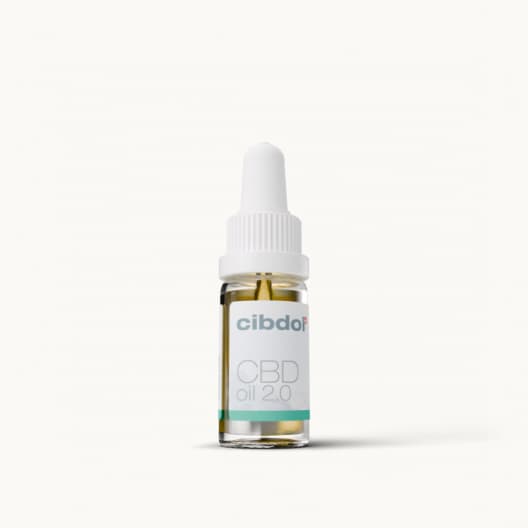
CBD oils
Premium Swiss CBD oils from Cibdol — available in multiple concentrations with full certificates of analysis.
CBD Gummies (25mg)
CBD Gummies — Chill Berry (25mg × 10)
- • 25mg CBD isolate per gummy — strong, precise dose
- • THC-free — CBD isolate, zero psychoactive compounds
- • Vegan formula — pectin-based, no gelatine
CBD capsules
Pre-measured CBD softgels and tablets for precise daily dosing — no taste, no measuring, just consistent CBD.
Disclosure: We may earn a commission if you purchase via these links.
Related articles
Best CBD Gummies in Europe: Top Picks for 2026
Best CBD gummies in Europe: Cibdol, Nordic Oil, and Zamnesia reviewed on potency, ingredients, value, and taste. Full buying guide.
Where to Buy CBD Oil in Germany (2026)
Where to buy CBD oil in Germany in 2026: regulations, best online shops, pharmacy options, and which brands dominate the market.
Where to Buy CBD Oil in the Netherlands (2026)
Where to buy CBD oil in the Netherlands: online shops, health stores, pharmacies, and what to look for in one of Europe's best markets.